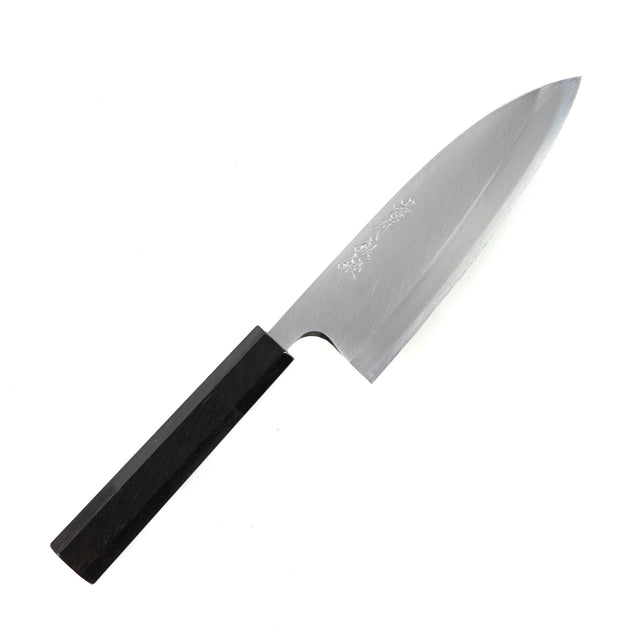
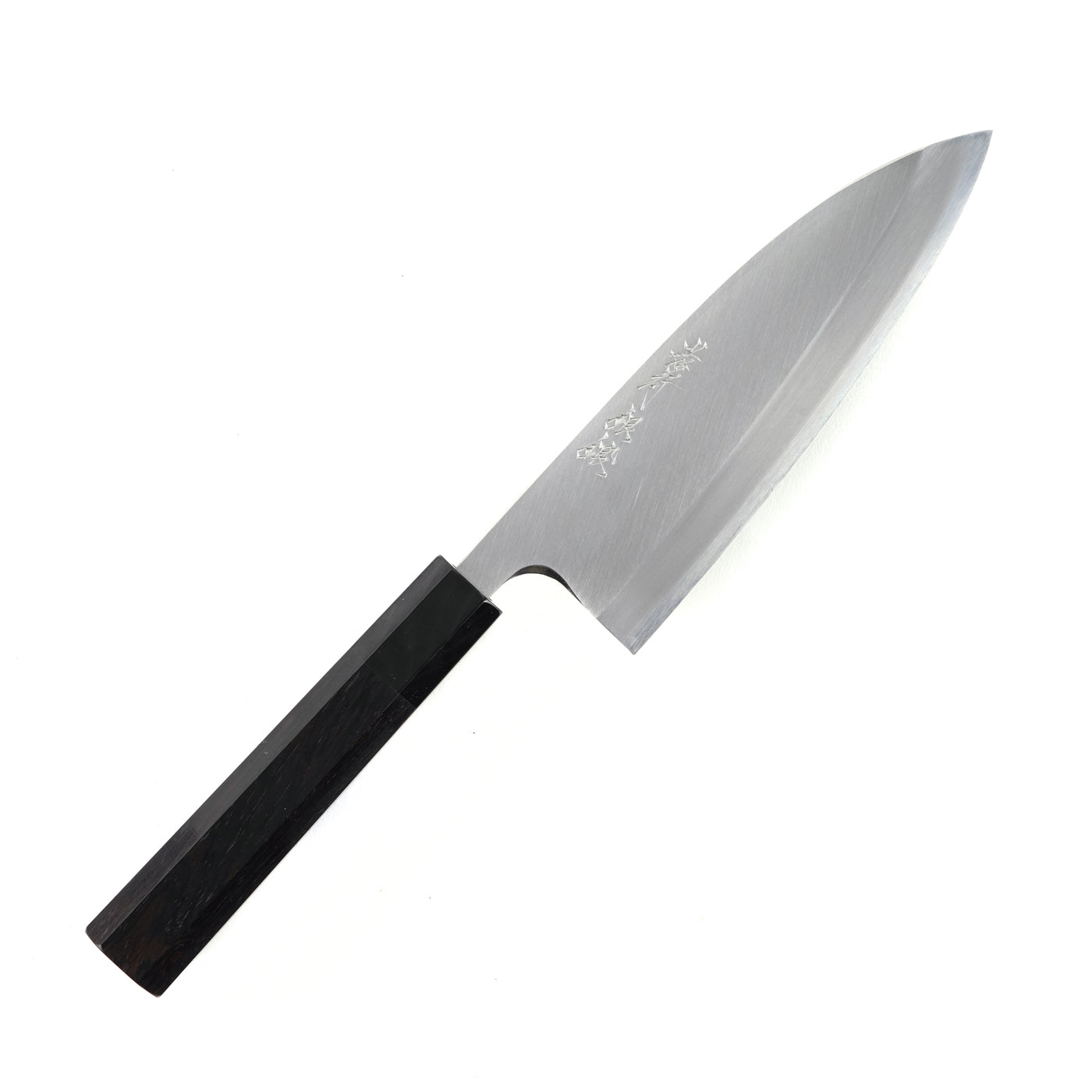
Sakai Takayuki Gintan Ginsanko Deba 150/165/180 mm, with K&S Ebony Handle
Sakai Takayuki Gintan Ginsanko Deba 150/165/180 mm, with K&S Ebony Handle - 150 mm is backordered and will ship as soon as it is back in stock.
Pickup in Australia only
In Stock Now
-
Sakai Takayuki Tokujou(別誂) White 2 Honesuki (Boning Knife) 150/180mmSale priceFrom $207.00 Regular price $243.00Unit price
-
Sakai Takayuki Tokujou Yanagiba 330mm White 2 Carbon SteelSale price $282.00 Regular price $331.00Unit price
-
Sakai Takayuki VG10 Gyuto 210mm (8.9") 33 Layer Hammered DamascusSale price $149.00 Regular price $175.00Unit price
-
Sakai Takayuki VG10 Petty - Utility 150mm (5.9") 33 Layer Hammered DamascusSale price $96.00 Regular price $113.00Unit price
-
Sakai Takayuki VG10 Santoku 180mm (7.1") 33 Layer Hammered DamascusSale price $133.00 Regular price $156.00Unit price
-
Sakai Takayuki VG10 Gyuto 240mm (9.4") 33 Layer Hammered DamascusSale price $176.00 Regular price $206.00Unit price
-
Sakai Takayuki VG10 Petty - Utility 120mm 33 Layer Hammered DamascusSale price $89.00 Regular price $104.00Unit price
-
Sakai Takayuki VG10 Kengata (K-tip) Gyuto 190mm 33 Layer Hammered DamascusSale price $149.00 Regular price $174.00Unit price
Availability
Delivery unavailable for this item. Available for in-store pickup only.
-
St Peters, NSW —2 Bishop St, Unit 2, St Peters NSW 2044
Goes well with
Detailed Specifications
| Line | Sakai Takayuki Gintan |
| Profile | Deba / Japanese fish knife |
| Bevel Type | Single Bevel |
| Steel | Ginsan / Silver #3 | Stainless |
| Blade Construction | Nimai - Stainless Clad |
| Typical hardness | 60 to 62 HRC |
| Surface Finish | Kasumi |
| Handle | |
| Region | Sakai |
| Best for |
|

| Pros | Cons |
|
|
- Don't cut hard things! Japanese knives are brittle so bone hacking is a NO NO!
- Wash with neutral detergent after use, and wipe dry;
- Please don't wash knife with dishwasher, it will damage the wood handle;
- Be careful not to leave the knife close to a heat source for a long time;
- It is a lot more dangerous to cut with a blunt knife than a sharp knife!
- It is best to sharpen a Japanese knife regularly on a waterstone.
Knife details
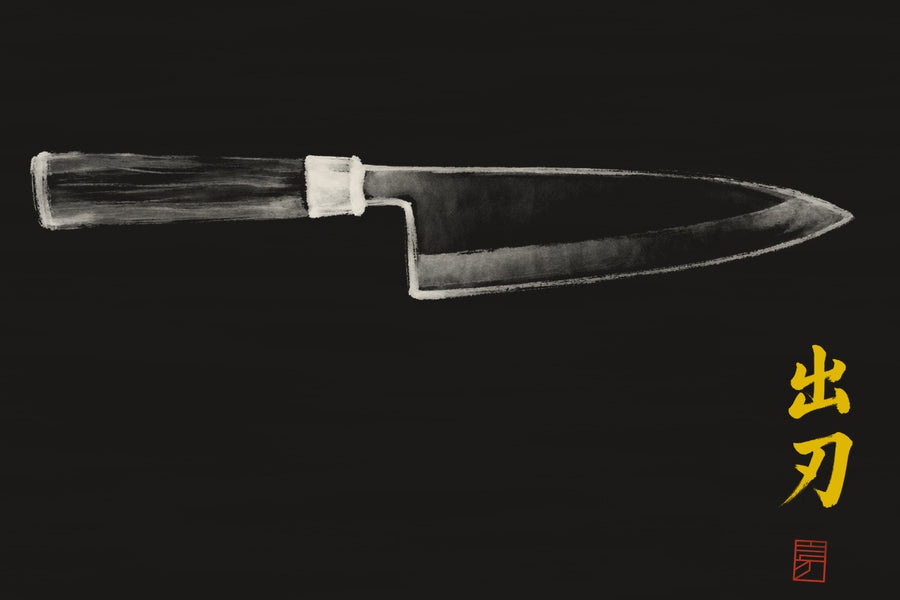
Deba
出刃
Japanese fish knife · Single or double bevel
A thick, heavy fish knife; dictionaries say it fillets and cuts fish and fowl bones.
Read more-
Hardness
Fair
How hard the steel is after heat treatment, measured in HRC. Harder steel can take a thinner, sharper edge but is more likely to chip. Typical hardness: 60 to 62 HRC
-
Edge retention
Fair
How long the edge stays sharp before it needs sharpening. Our number comes from a lab test that counts how much card a blade cuts before it dulls. Based on a lab wear test of this steel or the closest tested one. It measures how long an edge lasts, not how sharp it gets.
-
Toughness
High
How well the steel resists chipping and cracking from bones, hard boards or twisting.
-
Rust resistance
High
How slowly the steel rusts or stains when left wet.
-
Ease of sharpening
High
How quickly the steel comes back to sharp on a whetstone.
-
Sharpness
High
How fine an edge the steel can take and hold. Judged from the hard carbides inside it: smaller and fewer carbides allow a keener edge.
Our ratings, inferred from published lab tests and composition.
Ginsan / Silver #3
GIN3
Stainless · Hitachi Metals (now Proterial)
Proterial's GIN 3 stainless: 0.95 to 1.10% carbon, 13.00 to 14.50% chromium, hardening hardness over 59 HRC.
Read moreNimai - Stainless Clad
二枚・ステンレス
2 layers · single bevel
Two layers, single bevel: hard steel on the back, stainless cladding over the other.
Read more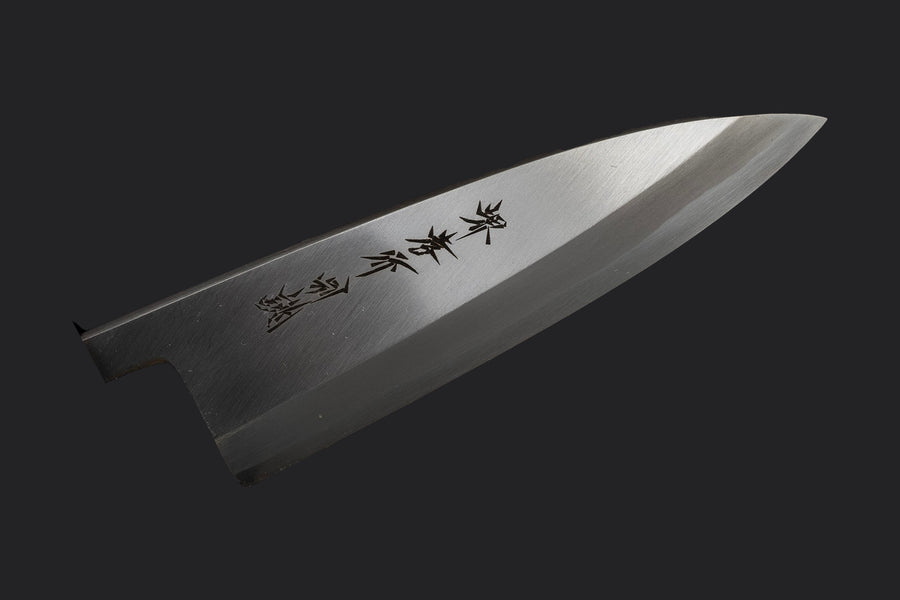
Kasumi
Misty polish
Hazy, matte bevel where soft iron meets hard core steel. The iron patinas and rusts.
Read more