Prahran, VIC store now open from Friday to Tuesday, 10am till 6pm.

Hatsukokoro  |  SKU: HT-GINGAATS34-GY240BB

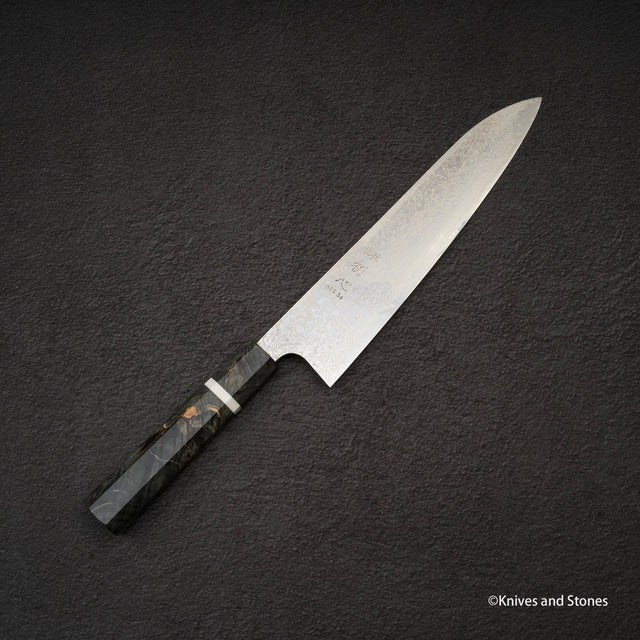
初心 銀河 ATS34 ダマスカス 牛刀 240mm

セール価格 $549.95 定価 $569.95

Availability

  • St Peters, NSW
    2 Bishop St, Unit 2, St Peters NSW 2044
  • Crows Nest, NSW
    107 West St, Shop 1, Crows Nest NSW 2065
    Pickup only
  • Prahran, VIC
    180 Commercial Road, Shop 1, Prahran VIC 3181
    Pickup only
詳細仕様
ライン 初心 弥氏 良寛 銀河 ATS-34 ミラーダマスカス
刃の形状 牛刀 / シェフナイフ
刃の種類 Double Bevel
重量 210 g | 7.4 oz
刃渡り 241 mm | 9 31/64″
あごの高さ 53 mm | 2 3/32″
あご部分の刃幅 2.7 mm | 7/64″
中央の刃幅 2.2 mm | 3/32″
切っ先から1cmの刃幅 0.9 mm | 1/32″
鋼材 ATS34 | ステンレス
刃の構造 三枚合わせ・ステンレスダマスカス clad
Hardness (HRC) 60 - 61
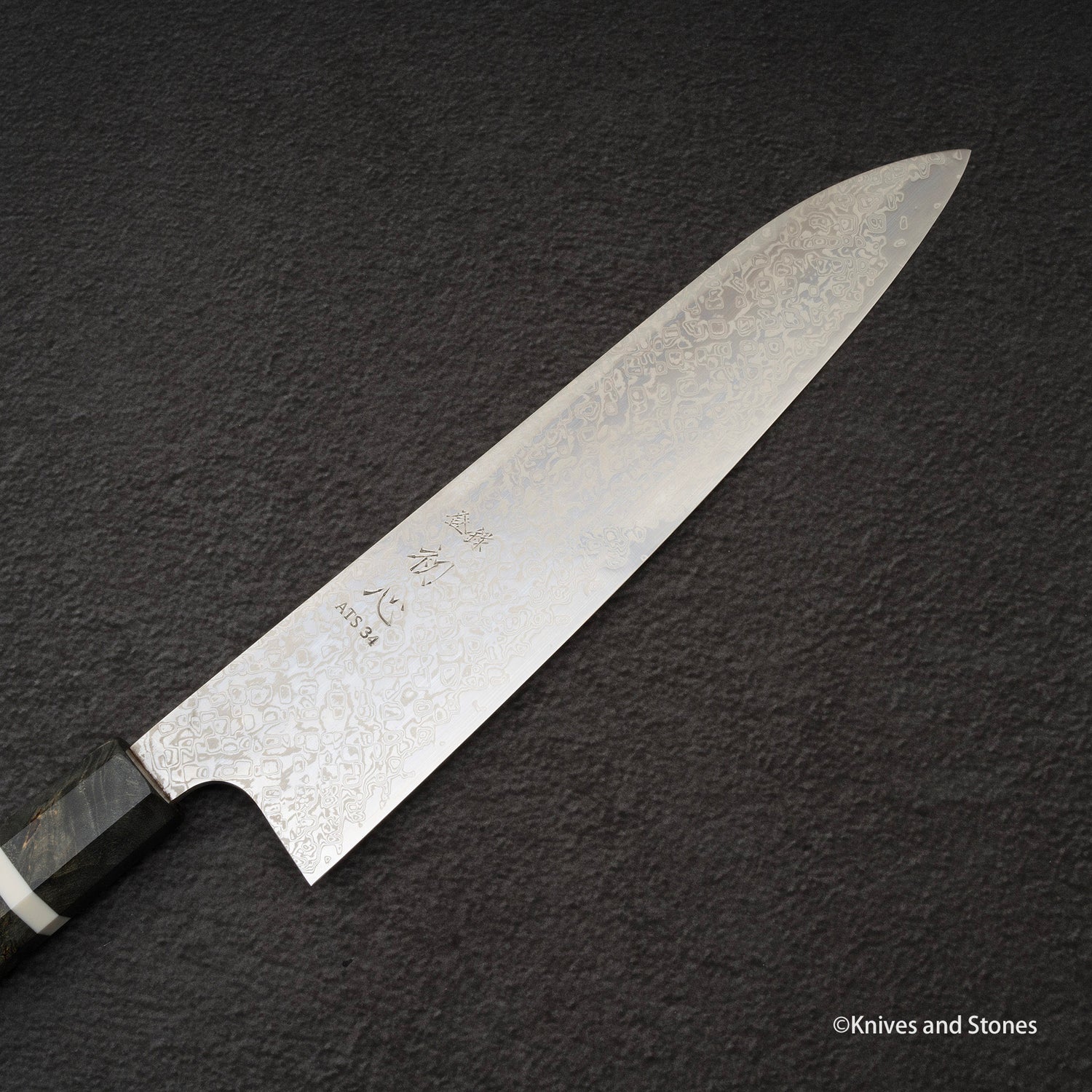
表面仕上げ ミラーポリッシュ
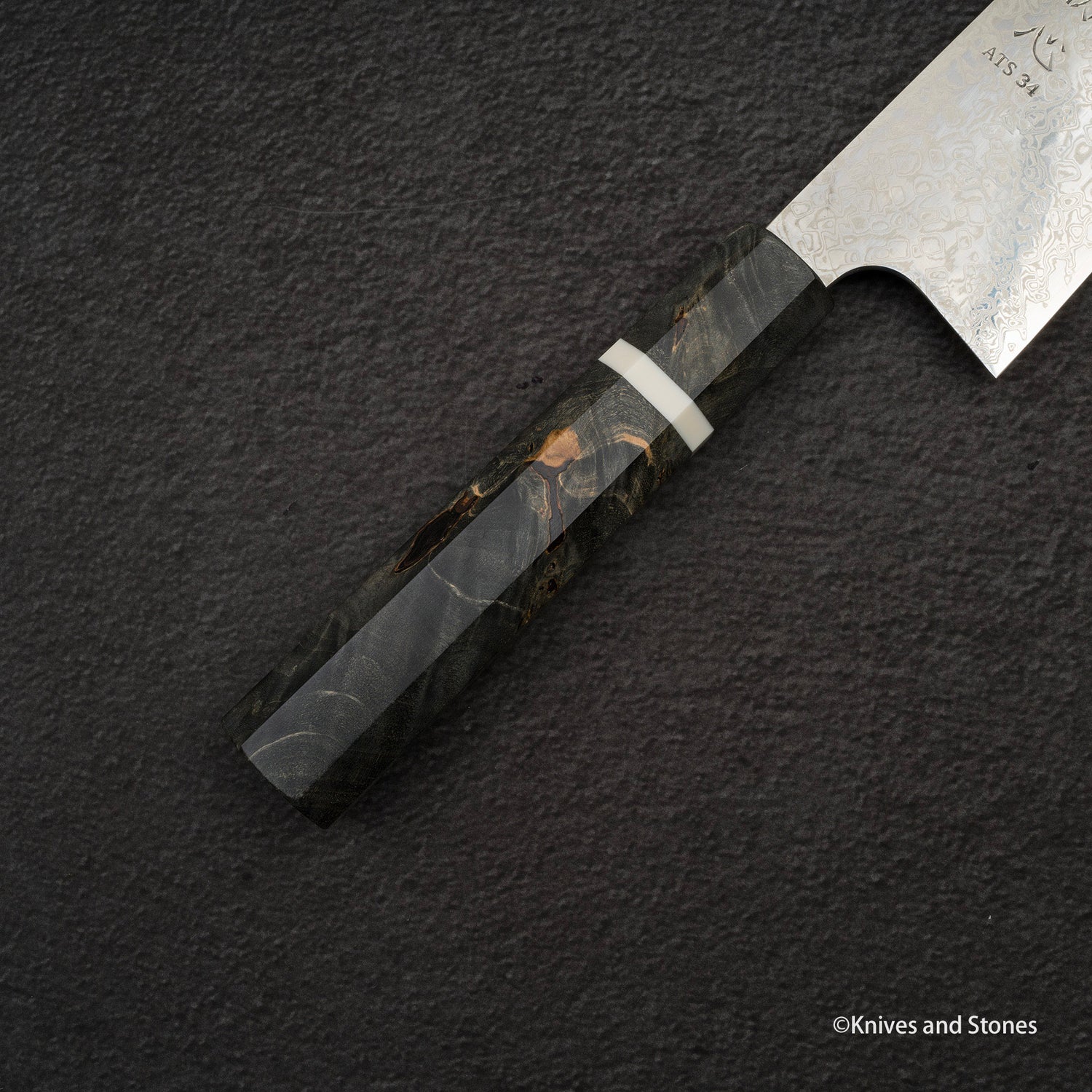
八角樺瘤杢(スペーサー付き)
産地 武生
最適な用途
  • プロのシェフ
  • 愛好家
  • オーストラリア国内でAU$200以上の包丁は送料無料
  • DHLエクスプレスによる世界配送、3〜5日でお届け


Introducting the Hatsukokoro Ginga(銀河) ATS-34 line: an excellent steel forged by a highly talented young smith.

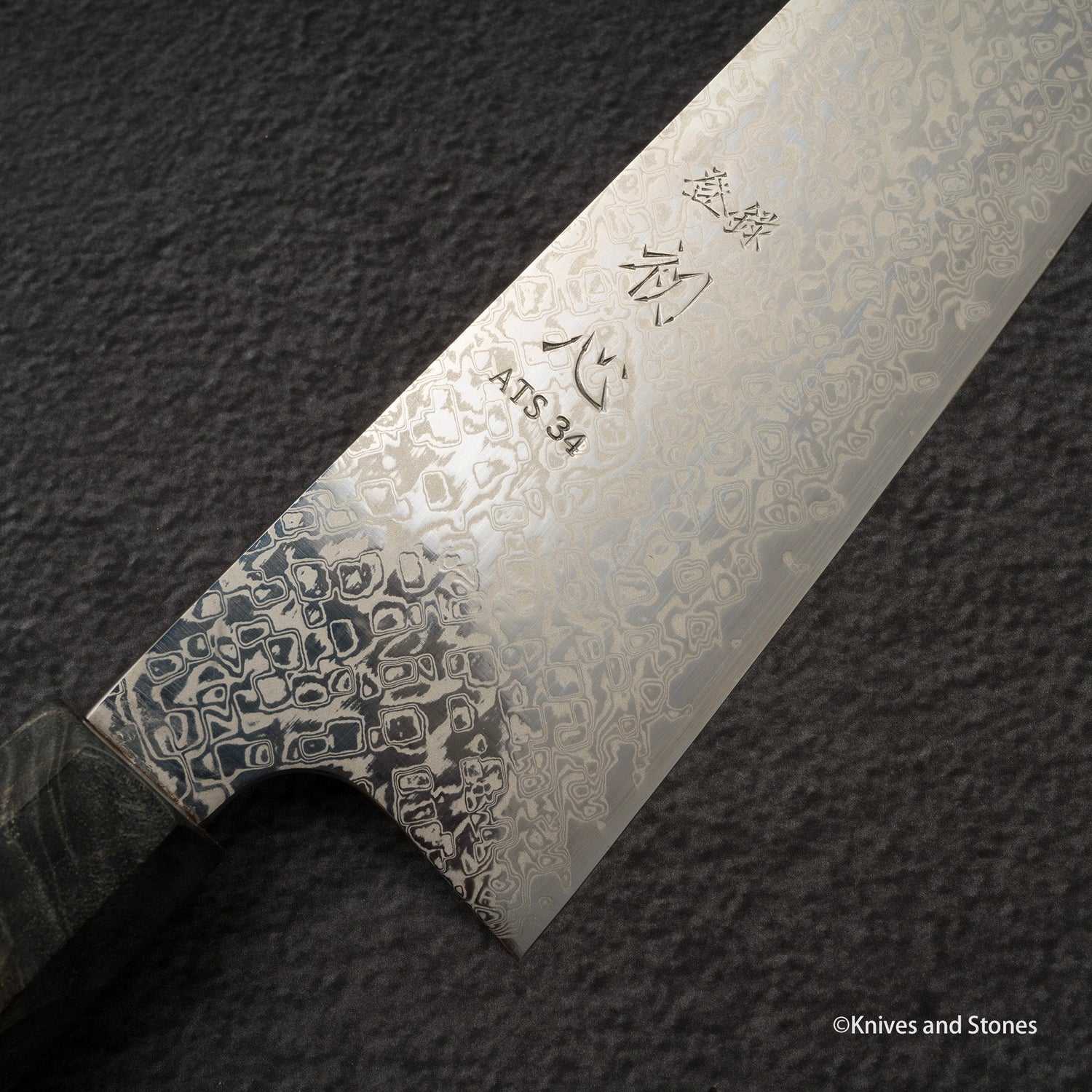
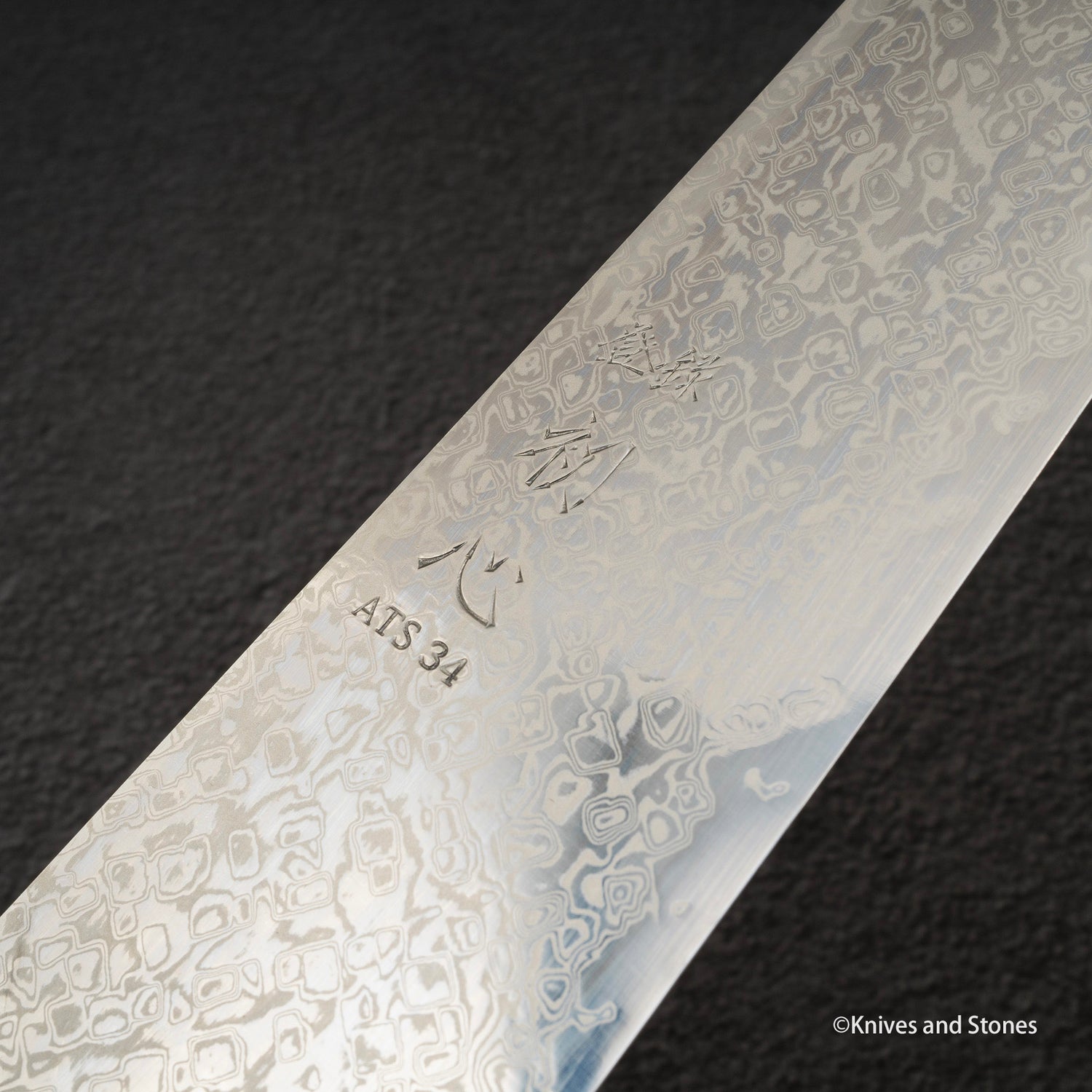
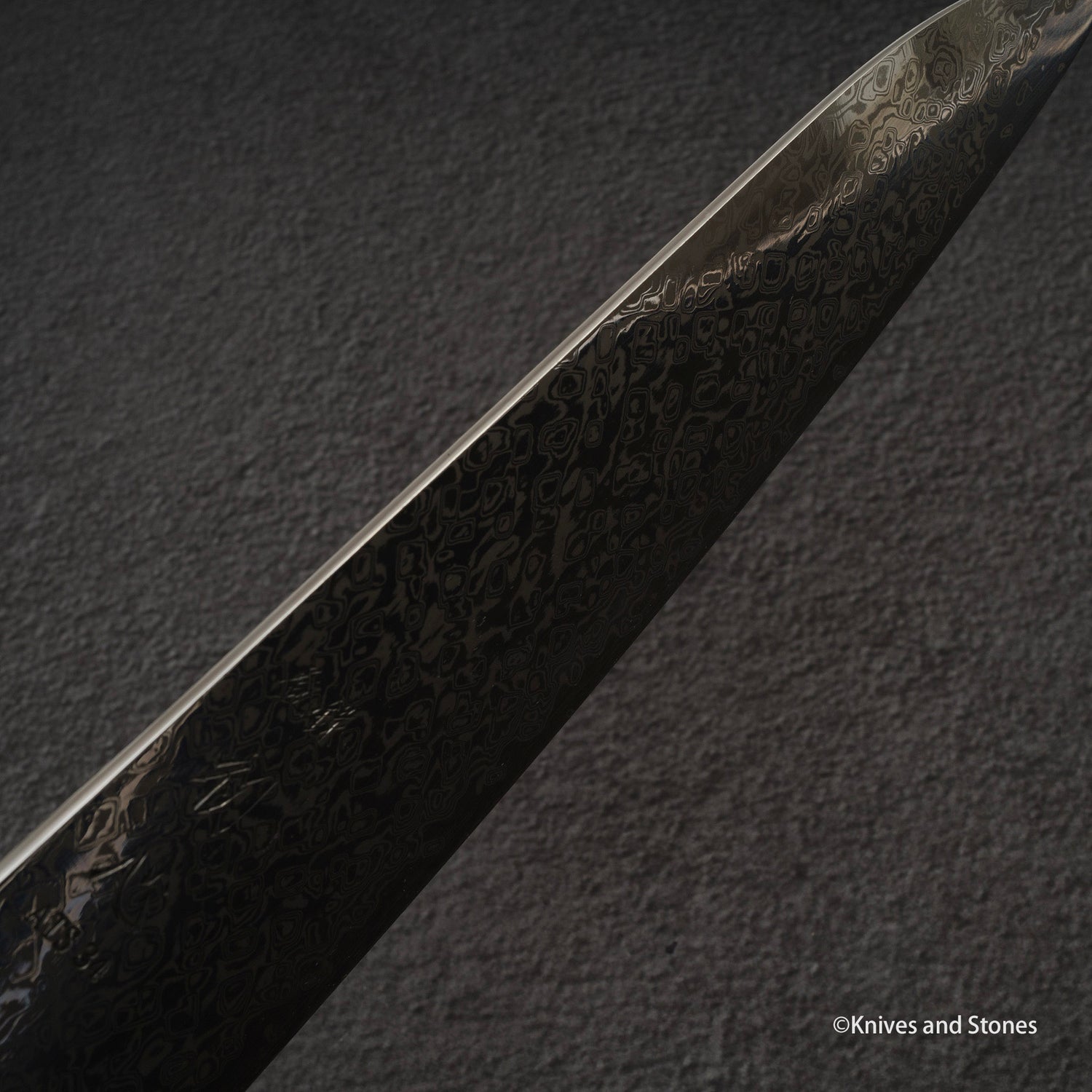
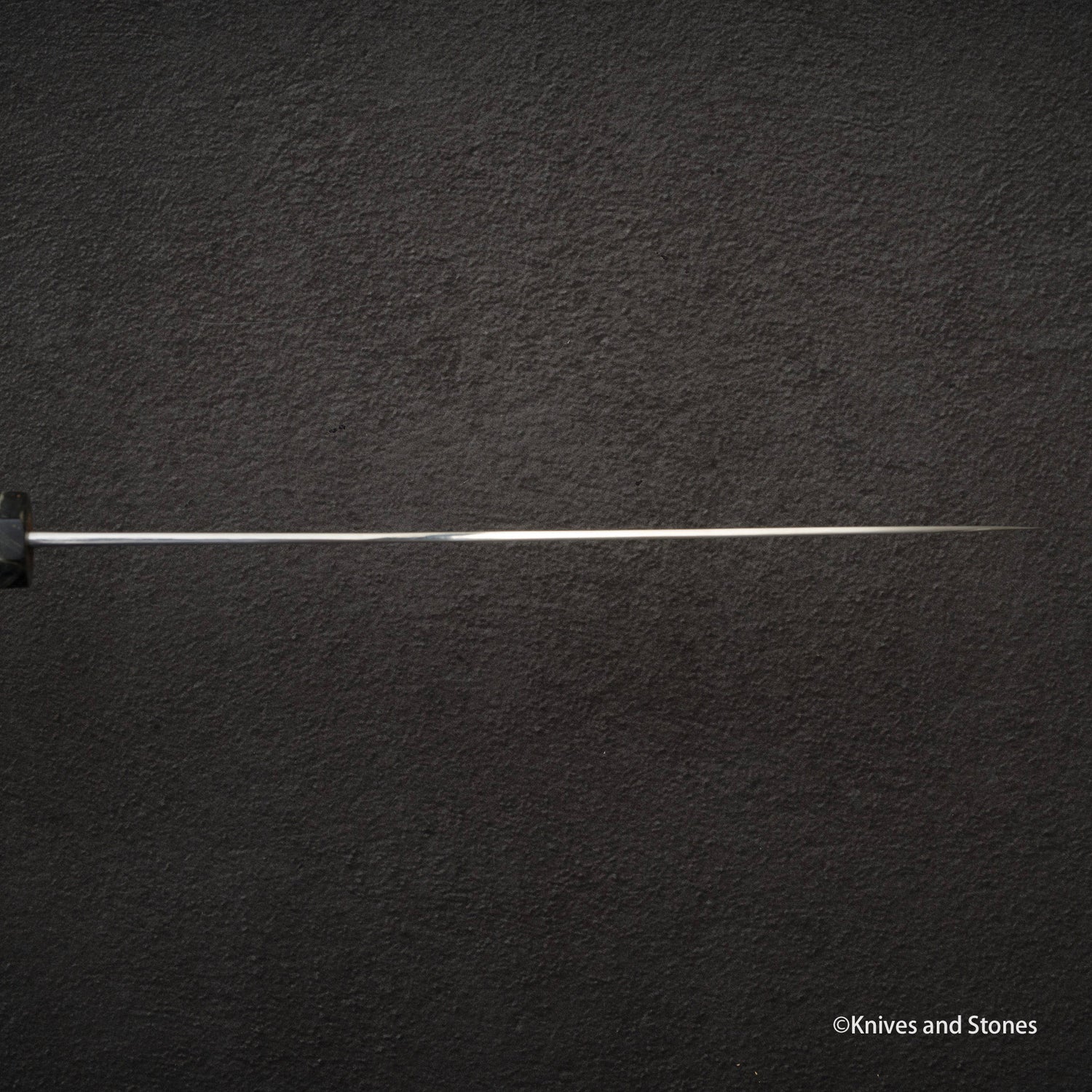
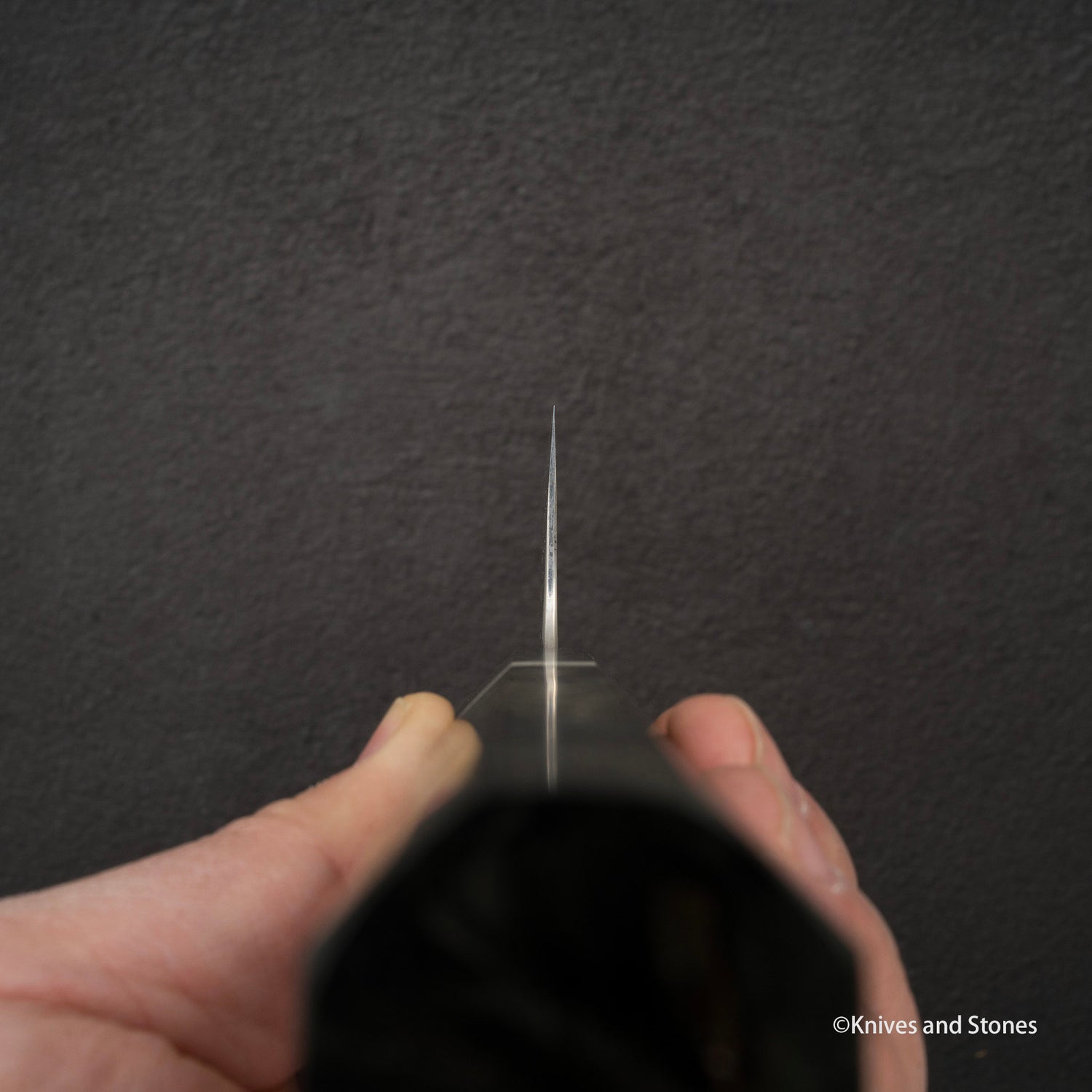
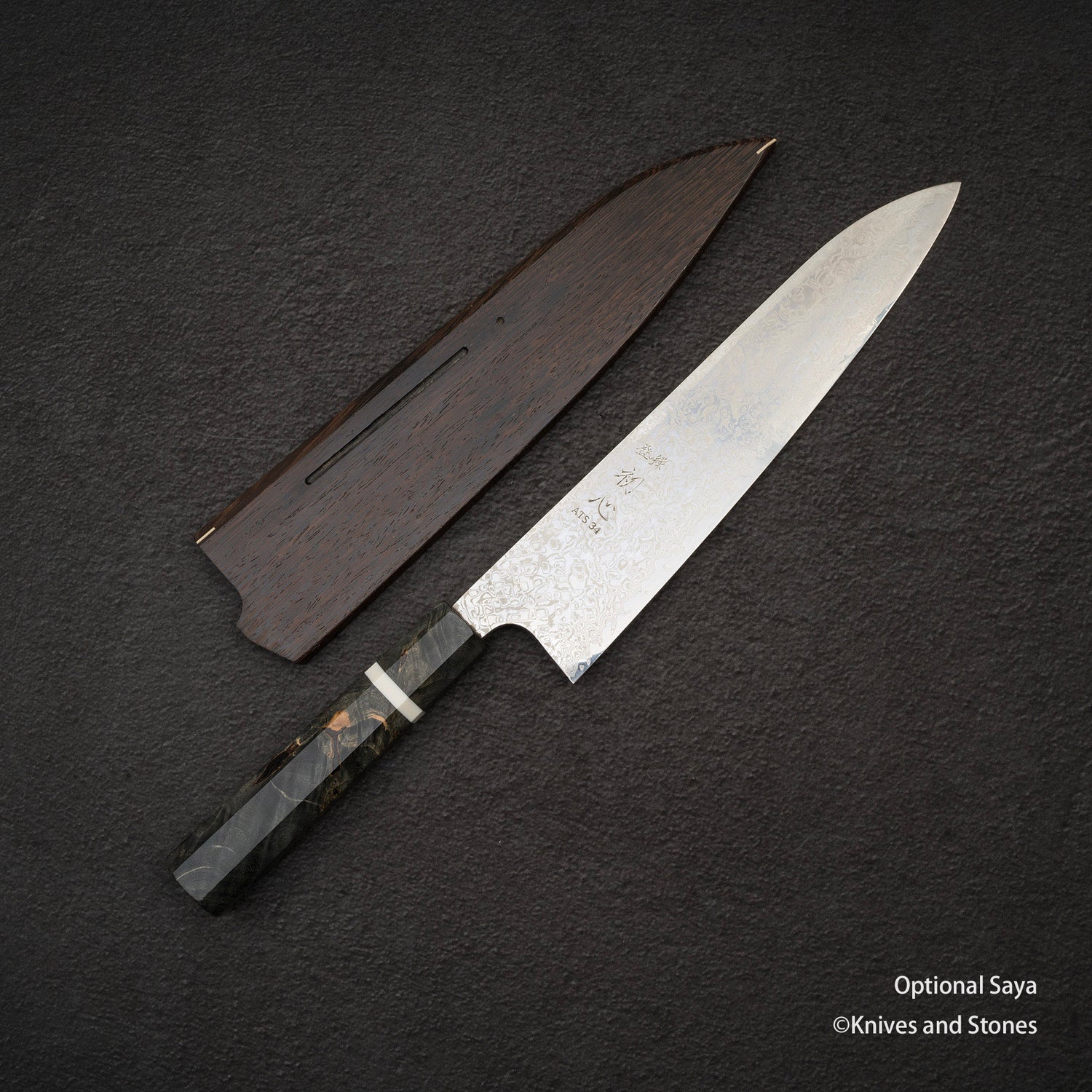
Hatsukorko, teamed up with Yoshihiro Yauji, one of the youngest Dentokogeshi (Traditional Craftsmen) in Takefu Knife Village, to create this beautiful line of knives that are extremely nimble yet tough enough to deal with every occasion in the kitchen. The high level of fit and finish is evident from the rounded and polished spine and choil, as well as the profile that tapers from heel to tip. The clean and uniform mirror polish across the entire blade not only displays the attention to detail, but also makes the damascus pop and shine, living up to its name Ginga(Milky Way).

The ATS-34 steel, manufacturerd by Hitachi Special Steel, is the Japanese equivalent of the 154CM, famous for its toughness, corrosion-resistance and "high-speed" properties. Bob Loveless brought the ATS-34 into fame in the 70s.

In recent years, the creation of the ATS-34 sanmai billets enabled the ATS-34 steel to appear in kitchen knife making. Notably introduced by RyuSen around 2015-2016.

Although this line has a mirror polish finish, the stickness found on typical mirror polished blade seems to be absent when cutting into a potato. It seems to us Yoshihiro Yauji put on a convex grind on the bevel, wich reduces the drag when the blade is contacting the food. Paring that with a rather thin grind, it glide effortlessly even when spliting a potato right through the middle.

One noteworthy freature about Yauji's knifes is that the Santoku he forges takes a rather unique profile, similar to a Sanjo Gyuto. These Santoku are thin and wide, offering them excellent stability when cutting vegetables. Their tips curves up significantly, resulting a round head compare with the flat belly of a typical Santoku. This geometry means that rocking motion is much easier to do on Yauji's Santoku, making them even better at handling vegetables of all kind, which is a perfect fit for Santoku's purpose.

This ATS34 line not only look good, but also cuts well, if you are fancying a shiny damascus knife, these blades can be a choice that pack some good performances.

長所 短所
  • 芸術性が高い
  • 刃先が薄い
  • ミラーポリッシュは維持が難しい
お手入れ方法
  1. 硬いものは切らないでください!日本の包丁は硬くてもろいため、骨を切るのは厳禁です。
  2. 使用後は中性洗剤で洗い、水気を拭き取ってください。
  3. 食器洗い機での洗浄はおやめください。木の柄を傷める原因となります。
  4. 包丁を熱源のそばに長時間放置しないよう、ご注意ください。
  5. 刃の鈍った包丁で切るほうが、よく切れる包丁で切るよりもはるかに危険です!
  6. 日本の包丁は、砥石で定期的に研ぐことをお勧めします。
  7. Error: Steel nature unknown

弥氏 良寛

弥氏 良寛――越前から台頭する新鋭の独立鍛冶

Yauji Yoshihiro(弥氏 良寬), born in Echizen, Fukui Perfecture in 1983. At age of 20 in 2003, he entered Kitaoka Knives to apprentice under Kitaoka Hideo(北岡 英雄), the third generation bladesmith of Kitaoka Knives. In 2019, he acquired the Traditional Craftsman Certification, which is quite remarkable, considering by average it take 25 years for a bladesmith to accomplish this goal.

In April of 2021, Yoshihiro Yauji left Kitaoka Knives and set up his own independent knife workshop Kutsurogi(寬), which shares a same Kanji with part of his name. Kutsurogi along with Yoshihiro Yauji is now a part of the Takefu Knife Village, which is an association that consists 14 knife companies and more than 40 bladesmiths, all located in Echizen area. With big names like Yu Kurosaki, Shiro Kamo and Yoshimi Kato, the Takefu Knife Village has a total of 17 Certified Traditional Craftsman, working and communicating with each others, they make the association a remarkable force in the industry.

Yoshihiro Yauji's knives are often found in damascus, with a color that is usually brighter than what you find on other makers. These blades seems to be grinded with a convex bevel, wich helps prevently food sticking greatly, especially when paired with a more"sticky" finish like a mirror polish. With this skillfull grinding and great fit and finish, Yoshihiro quickly gained fame and reputation as a relatively young bladesmith in Takefu Knife Village.

“越前最年少の伝統工芸士――北岡刃物での15年の修行を経て、現在タケフナイフビレッジで独立して鍛造を行う”

Est. 2021 | 令和3年
Known for 異例の若さで伝統工芸士に認定された一人作業の独立鍛冶
Website yoshihiro.com Instagram @yoshihiro_yaichi Read more about 弥氏 良寛
弥氏 良寛 — 武生
Profile: 牛刀
Profile

牛刀

シェフナイフ

日本のシェフナイフは牛刀(ぎゅうとう)と呼ばれ、文字通り「牛肉用の包丁」を意味します。その刃はフランスのシェフナイフをより平らにした形状をしています。日本の刃物は鋭い刃先ジオメトリと使用される鋼材の硬さにより高い切れ味で知られており、ロックウェル硬度計でHRC 60を超えることもあります。一般的な西洋のシェフナイフは20〜22°の刃先角度で研がれますが、日本の牛刀は通常15〜18°(またはそれ以下)の鋭い角度で研がれるため、より硬く脆いグレードの鋼材が必要です。近年、日本の牛刀は西洋のシェフの間でも人気を集めています。

現代のシェフナイフは、特定の作業に特化するのではなく、多様なキッチンタスクに対応できるよう設計された万能包丁です。野菜のみじん切り・スライス・刻み、肉のスライス、大きな塊肉の解体などに使用できます。
Composition

ATS34 Element Composition

Compare with
    ATS34
    13.5% 10.1% 6.8% 3.4% 0
    C Carbon 1.0%
    Primary hardening element. Raises hardness and wear resistance — but too much increases brittleness and corrosion susceptibility. As a reference: German 1.4112 (~0.5%) sits at the low end; VG-10 (~1.0%) is a common mid-range; SG2 (1.25–1.45%) and ZDP-189 (~3.0%) represent high and extreme ends respectively.
    C
    1.0%
    Cr Chromium 13.5%
    Raises corrosion resistance; 13%+ qualifies steel as stainless. Also improves hardenability and wear resistance. In kitchen use, higher chromium levels contribute to a slight drag or sticking sensation when cutting — a trade-off for the rust resistance it provides.
    Cr
    13.5%
    V Vanadium 0.4%
    Forms extremely hard carbides for superior edge retention. Also refines grain structure, improving toughness.
    V
    0.4%
    Mo Molybdenum 4.0%
    Improves hardenability and toughness. Boosts corrosion resistance and helps the steel hold hardness under heat.
    Mo
    4.0%
    Mn Manganese 0.4%
    Aids hardenability and strength. Acts as a deoxidiser during smelting. Excess can reduce toughness.
    Mn
    0.4%
    Si Silicon 0.5%
    Strengthens the steel matrix and acts as a deoxidiser. Improves hardness and resistance to oxidation.
    Si
    0.5%
    P Phosphorus 0.03%
    Impurity from the smelting process. Even small amounts cause brittleness — steelmakers keep this as low as possible.
    P
    0.03%
    S Sulfur 0.03%
    Impurity that reduces toughness and promotes brittleness. Intentionally added only in free-machining steels.
    S
    0.03%
    C — Carbon Cr — Chromium V — Vanadium Mo — Molybdenum Mn — Manganese Si — Silicon P — Phosphorus S — Sulfur
    Hardness 60–61 HRC
    555759616365+
    Steel
    ATS34
    Category
    ステンレス
    Manufacturer
    日立金属株式会社、日本
    Hardness
    60–61 HRC
    Steel

    ATS34

    • Manufacturer
      • 日立金属株式会社、日本
    • Nature ステンレス
    • Hardness60–61 HRC
    日立金属株式会社製のATS-34鋼は、154CMの日本版に相当し、その高い靭性、耐食性、「ハイスピード」特性で知られています。

    154CMは当初ジェットエンジンのタービン用に設計されましたが、伝説的なナイフメーカーであるボブ・ラブレスがハンティングナイフに採用したことで、ナイフの世界で名声を博しました。それ以降、多くの製作者によって154CM / ATS34は最高峰の鋼材と見なされ、現在でもその評価は変わりません。高マンガン合金により、延性、成形性、加工硬化性、強度などの特性が良好なバランスで組み合わされています。
    Construction: 三枚合わせ・ステンレスダマスカス clad
    Construction

    三枚合わせ・ステンレスダマスカス clad

    三枚合わせ(Sanmai)は両刃包丁に一般的な構造で、硬い芯鋼の両側に柔らかい地金を鍛接したものです。熱処理後、硬く脆い芯鋼が鋭い刃先を形成し、柔らかい地金が芯鋼を支えて刃全体の強度を高めます。

    ダマスカス三枚合わせは、地金にダマスカス鋼を使用した構造で、刃に装飾的な美しさを加えます。ステンレス芯鋼の包丁の場合、ダマスカス地金もステンレスとなるため、炭素鋼やセミステンレスの芯鋼を錆や変色から保護する役割も果たします。

    柔らかい地金は、本焼やモノスティール構造に比べて薄く削る工程を容易にします。ただし、地金がダマスカスの場合、エッチング・研磨・鏡面仕上げに関わらず、削りの過程で地金の模様が変化し、新品時の状態とは異なる見た目になります。

    Finish: ミラーポリッシュ
    Finish

    ミラーポリッシュ

    Mirror Polish is a simplistic yet hightly demanding process, where the roughness of the metal surface is gradually removed with higher and higher grit abrasives, leading to a extremly smooth surface with only specular reflection, just like a mirror.

    The Mirror Polish can be applied to various constructions, ranging from Damascus to Honyaki. It can reveal the beautiful Hamon on the Honyaki blade, and form textural contrast on damascus. The perfect surface is highly appreciated, but it also means a lot of care must be give to avoid it being scratched.

    Handle
    Handle

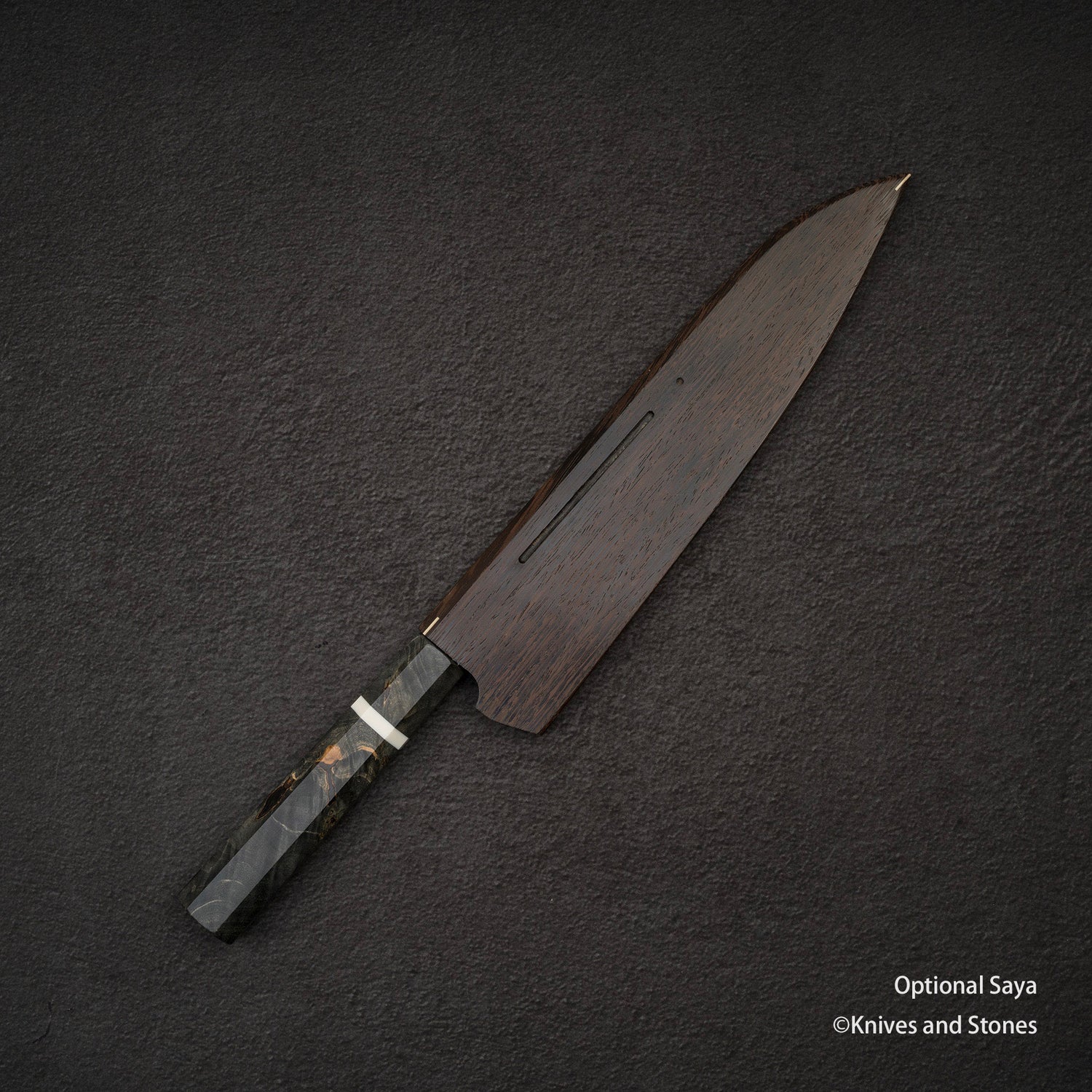
    八角樺瘤杢(スペーサー付き)

    • Profile 八角和柄
    • Material
      • 安定化処理済み樺瘤杢

    初心のシェフナイフに施された安定化処理済み樺瘤杢のハンドルは、卓越した職人技と自然美の結晶です。複雑な木目と独特の質感で珍重される樺瘤杢は、入念な安定化処理により耐久性と安定性が向上し、湿気や摩耗に対する耐性と長寿命を実現しています。

    人間工学に基づいたデザインは快適かつ確実なグリップ感を提供し、長時間の使用でも疲れにくくなっています。滑らかな輪郭とバランスの取れた重量配分により、調理作業中の精密なコントロールと軽やかな操作性が実現します。

    樺瘤杢特有の色合いや木目の個体差が視覚的に魅力的な美しさを生み出し、一つひとつのハンドルが唯一無二の個性を放ちます。機能性と美学の調和は、シェフナイフのパフォーマンスを高めるだけでなく、キッチンに優雅さを添え、初心の比類なきクラフトマンシップを反映しています。

    1 / 5

    よくあるご質問

    牛刀と三徳、どちらを選ぶべき?

    どちらも日本の万能包丁であり、ほとんどのご家庭での調理において、その大半をこなすことができます。選択の決め手は、長さ、刃の形状、そして好みの切り方にあります。

    牛刀は日本におけるシェフナイフです。一般的に210mmから240mmの長さがあり、緩やかにカーブした刃線によって、刻むだけでなく揺らしながら滑らせるような切り方も可能です。長いリーチと尖った切っ先により、肉類から大きな野菜まで幅広く対応できる汎用性を備えています。

    三徳はより短く、通常165mmから180mm程度で、平らな輪郭と丸みを帯びた羊足型の切っ先が特徴です。真っ直ぐに押し切る動作に適しており、小さな手や狭いキッチンでも軽快に取り回せます。日本の家庭における定番の包丁です。

    目安として、あらゆる作業をこなせる到達距離のある包丁が欲しければ牛刀を、コンパクトで制御しやすい刃がお好みであれば三徳を選んでみてください。実際、当店のお客様の中には両方を揃えられる方も多くいらっしゃいます。

    牛刀とは?どのような用途に使われますか?

    牛刀は、肉のスライスから野菜の刻み物まで幅広い作業に対応するよう設計された、両刃の汎用和包丁です。

    K&Sでは、エントリーモデルからプレミアムなコレクターズアイテムに至る306種類の牛刀を取り揃えており、在庫のある人気モデルとして中価格帯の初心流氷SG2ダマスカス青牛刀210mmや、よりお手頃な光輝青紙2号黒打ち牛刀150mmなどがございます。これらの包丁には一般的にVG10鋼、SG2鋼、青紙2号、白紙2号などの鋼材が使用されており、堺孝行、正本総本店、加藤義実などのブランドによって製造されています。

    どのサイズの牛刀を買うべきですか?

    ほとんどの家庭料理人やプロにとって、210mmの牛刀は汎用性と操作性のバランスが取れているため、最初に選ぶサイズとして最適です。その好例が、中価格帯の昌景 雪 白紙2号 牛刀 210mm ステンレスクラッドです。手が大きめの方や、大きな肉塊を扱う必要がある場合は、より高価格帯のYoshimi Kato Hyo SG2 牛刀のような240mmのオプションが、より広い刃面を提供してくれます。

    カタログでは、初心や昌景などの作り手による主なサイズとして210mmと240mmが紹介されており、中価格帯の選択肢として初心 黒風 白紙2号、より高価格帯の製品として初心 こもれび 青紙2号が挙げられています。標準的なまな板での取り回しを重視する場合は210mmを選び、大きなロースト肉や魚を食材の位置を頻繁に変えずに切り分けるために長い刃が必要な場合は、240mmが適しています。

    240mmと210mmの牛刀——どちらのサイズを選ぶべきか?

    大きな肉の塊をスライスしたり、大きなまな板で作業するために長いリーチが必要な場合は240mmの牛刀をお選びください。ただし、取り回しを重視する場合や調理台のスペースが限られている場合は、210mmの牛刀をお勧めします。

    240mmの刃渡りはストロークが長いため、大きなロースト肉や魚を丸ごと切り分ける際に有効です。一方、210mmは細かい作業でのコントロール性に優れ、一般的な家庭用キッチンでも扱いやすいサイズです。大きいサイズの具体例としては、SG2鋼を使用したカトウ打刃物製作所 氷 SG2 牛刀 240mmがございます。小さいサイズをご希望の場合は、ステンレスクラッドの昌景 雪 白紙2号 牛刀 210mmが在庫にございます。また、ハイプロファイル(背高)のステンレスクラッド仕様である初心 黒風 白紙2号 牛刀 210mmもお求めいただけます。結局のところ、240mmの長いリーチを取るか、210mmの軽い取り回しを取るかというトレードオフになります。お使いのまな板のサイズや手の力を考慮しなければ、どちらが客観的に優れているとは言えません。

    We trust this information is correct at the time of writing, but it is not an official document and details may change without notice. If you spot an error, tell us and we'll fix it.

    You May Also Like