Prahran, VIC store now open from Friday to Tuesday, 10am till 6pm.

Takeshi Saji  |  SKU: TAKE-R2BLKDA-BU180-IRW

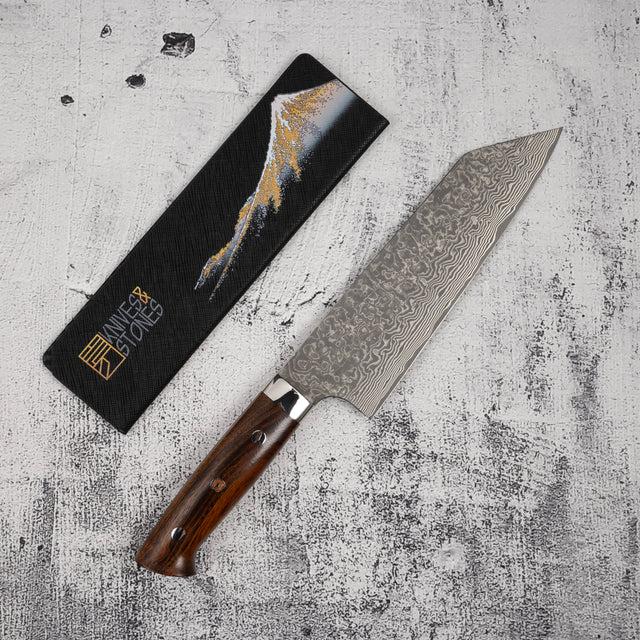
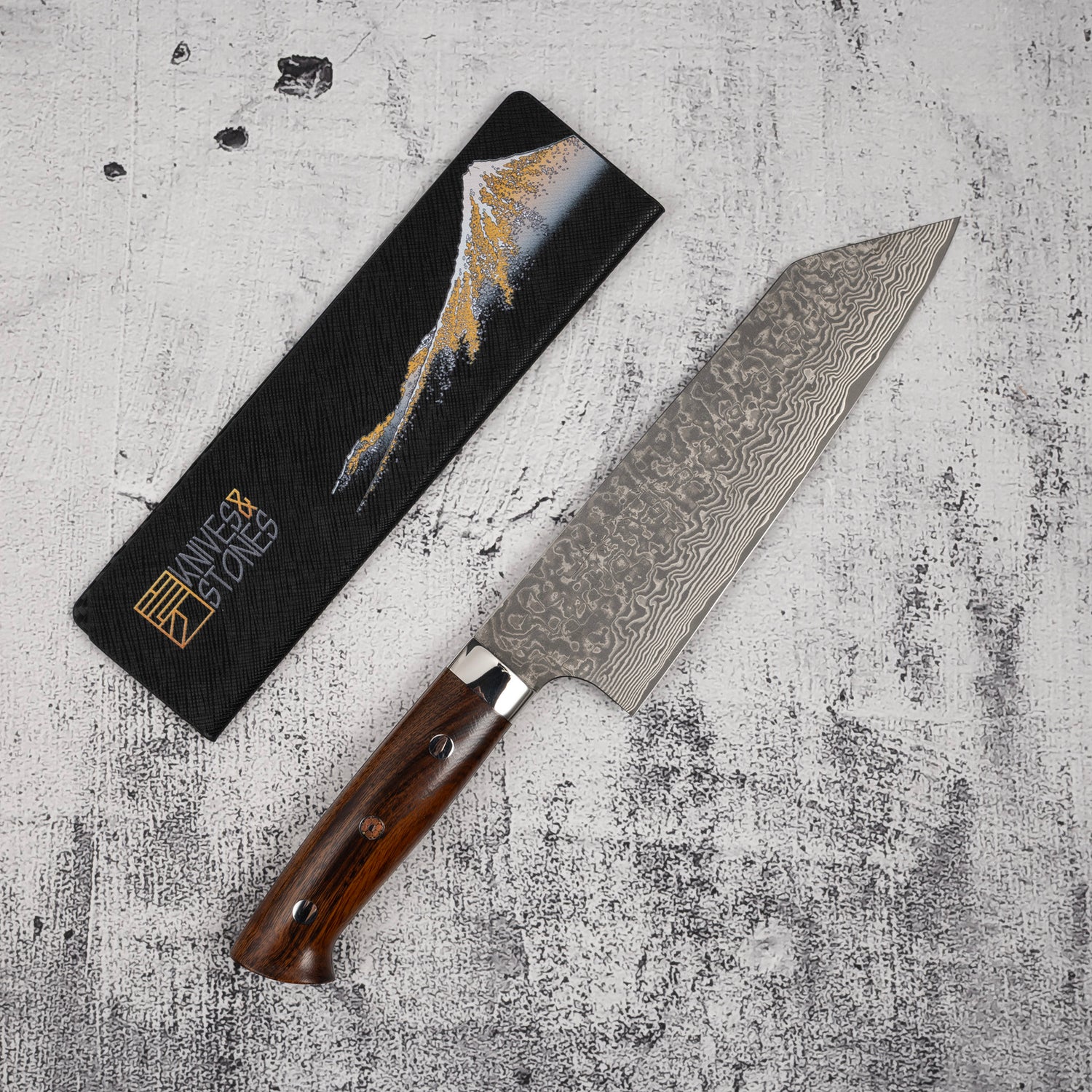
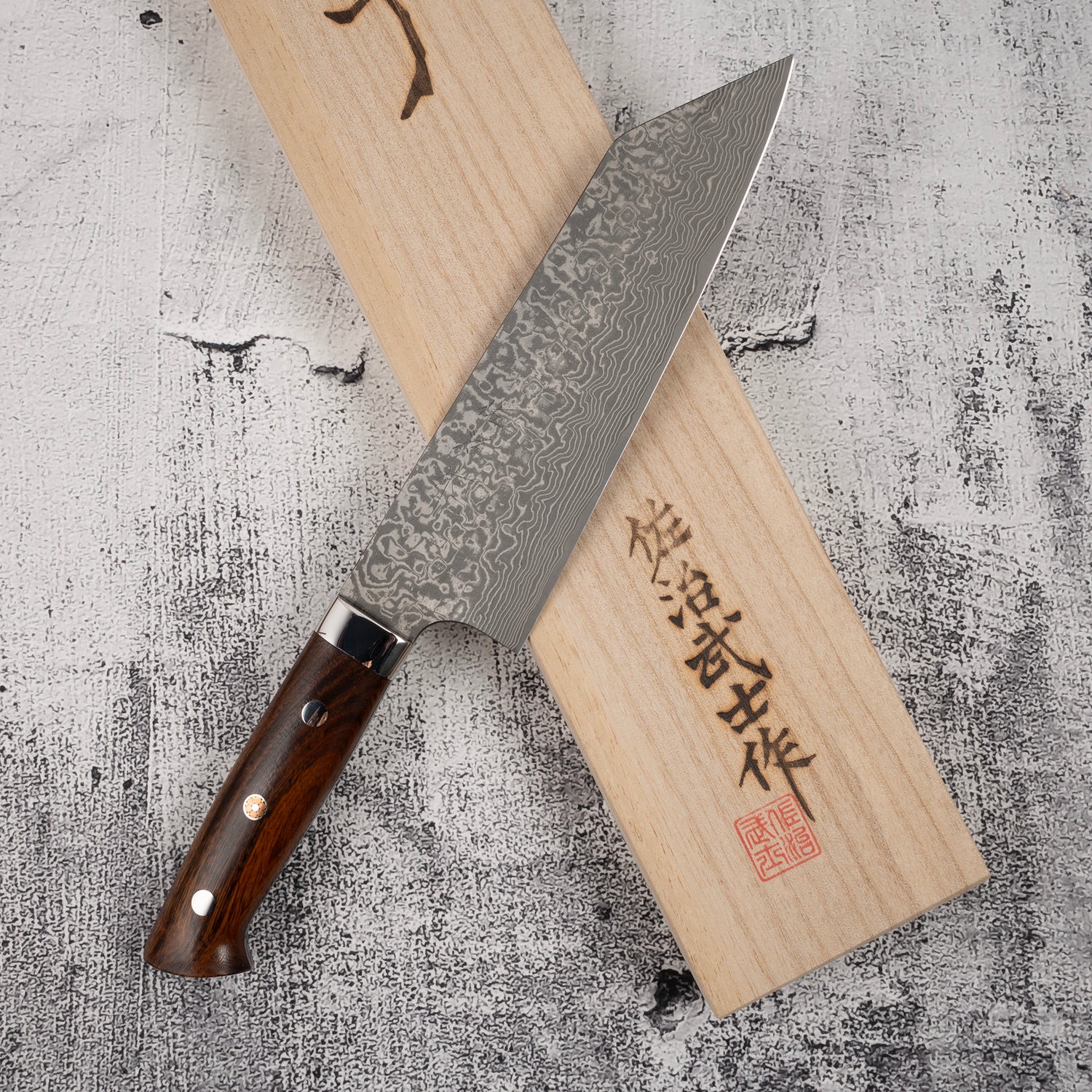
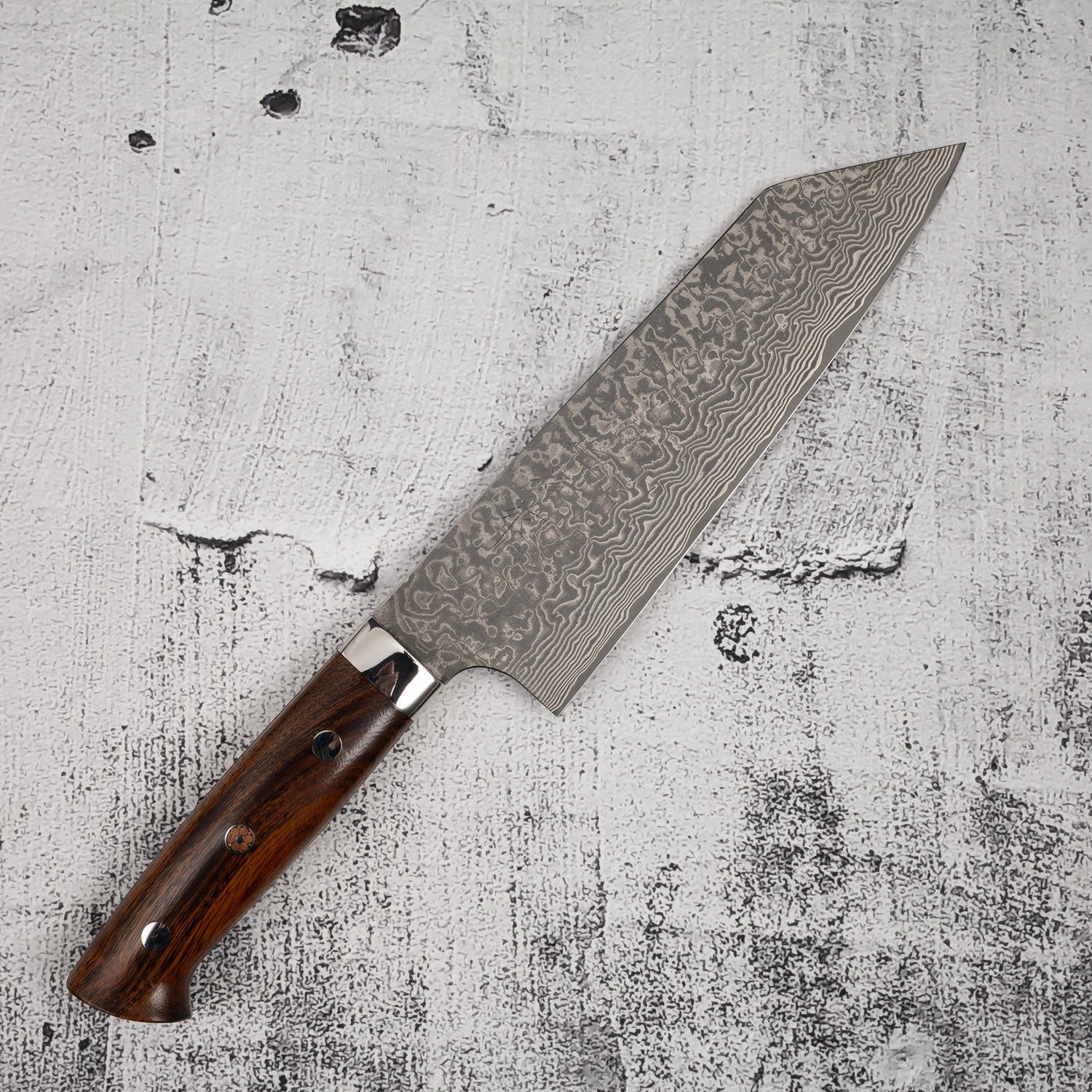
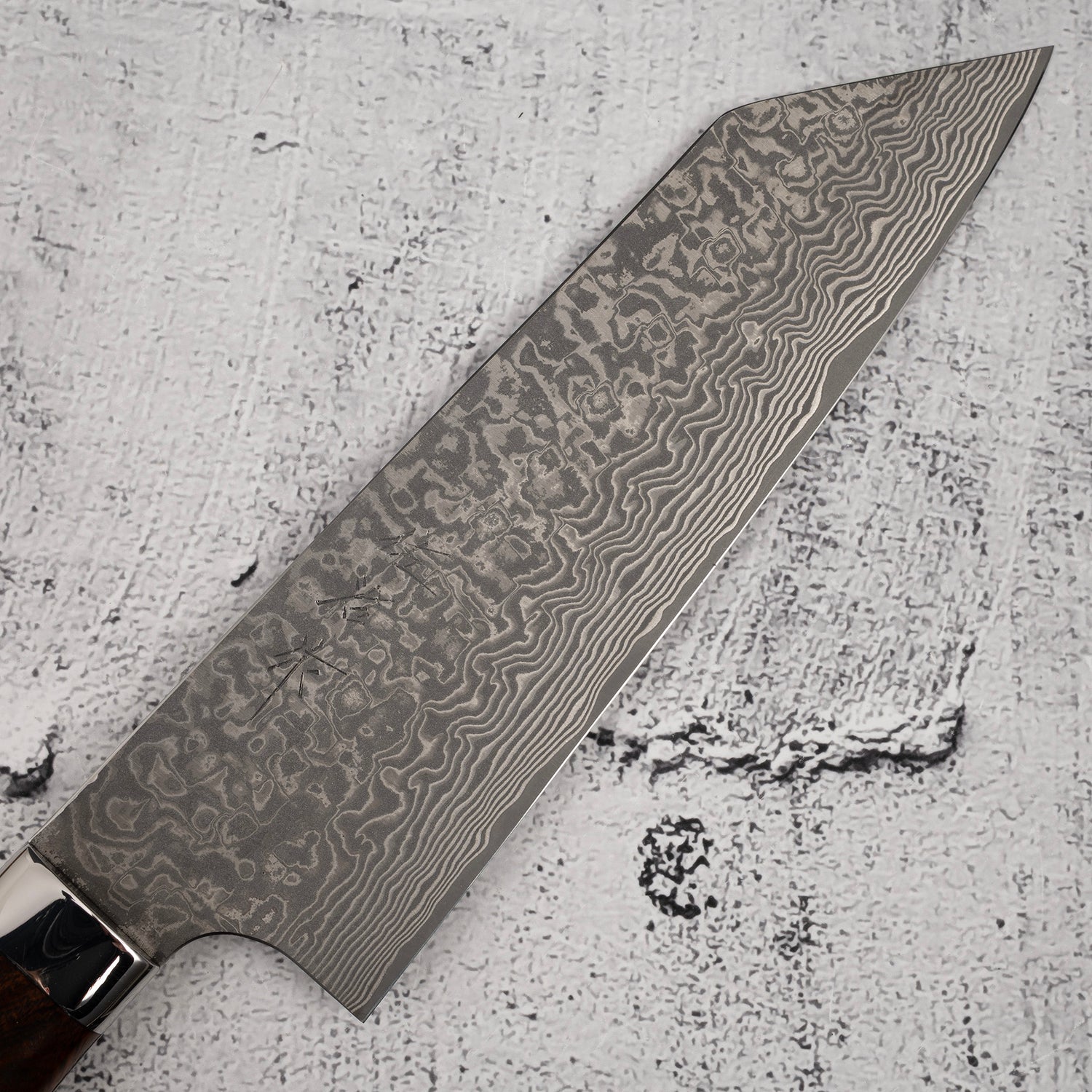
佐治打刃物 SG2 ブラックダマスカス 文化 180mm

定価 $699.95

Availability

  • St Peters, NSW
    2 Bishop St, Unit 2, St Peters NSW 2044
  • Crows Nest, NSW
    107 West St, Shop 1, Crows Nest NSW 2065
    Pickup only
  • Prahran, VIC
    180 Commercial Road, Shop 1, Prahran VIC 3181
    Pickup only
詳細仕様
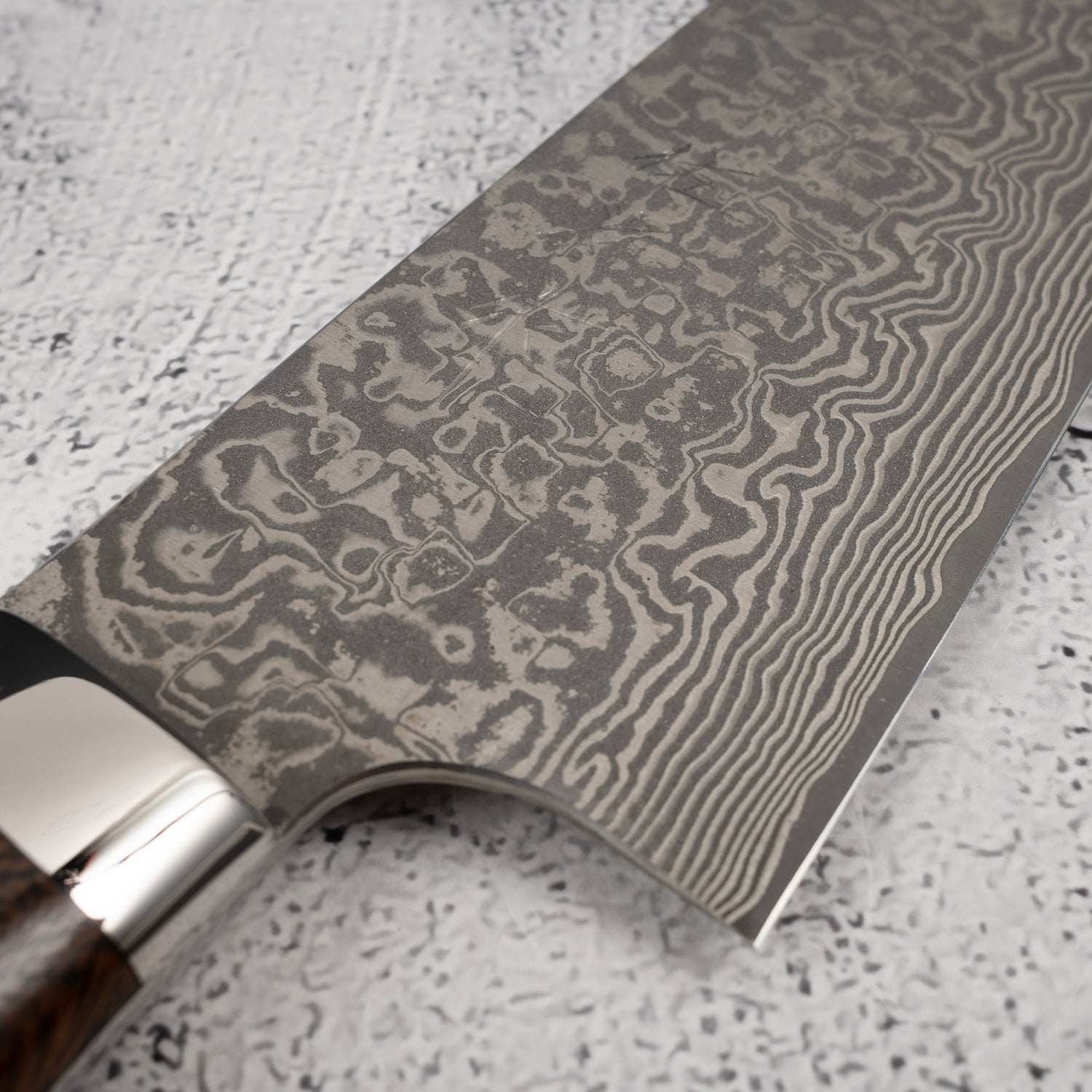
ライン 佐治打刃物 スーパーゴールド2 黒染めブラックダマスカス
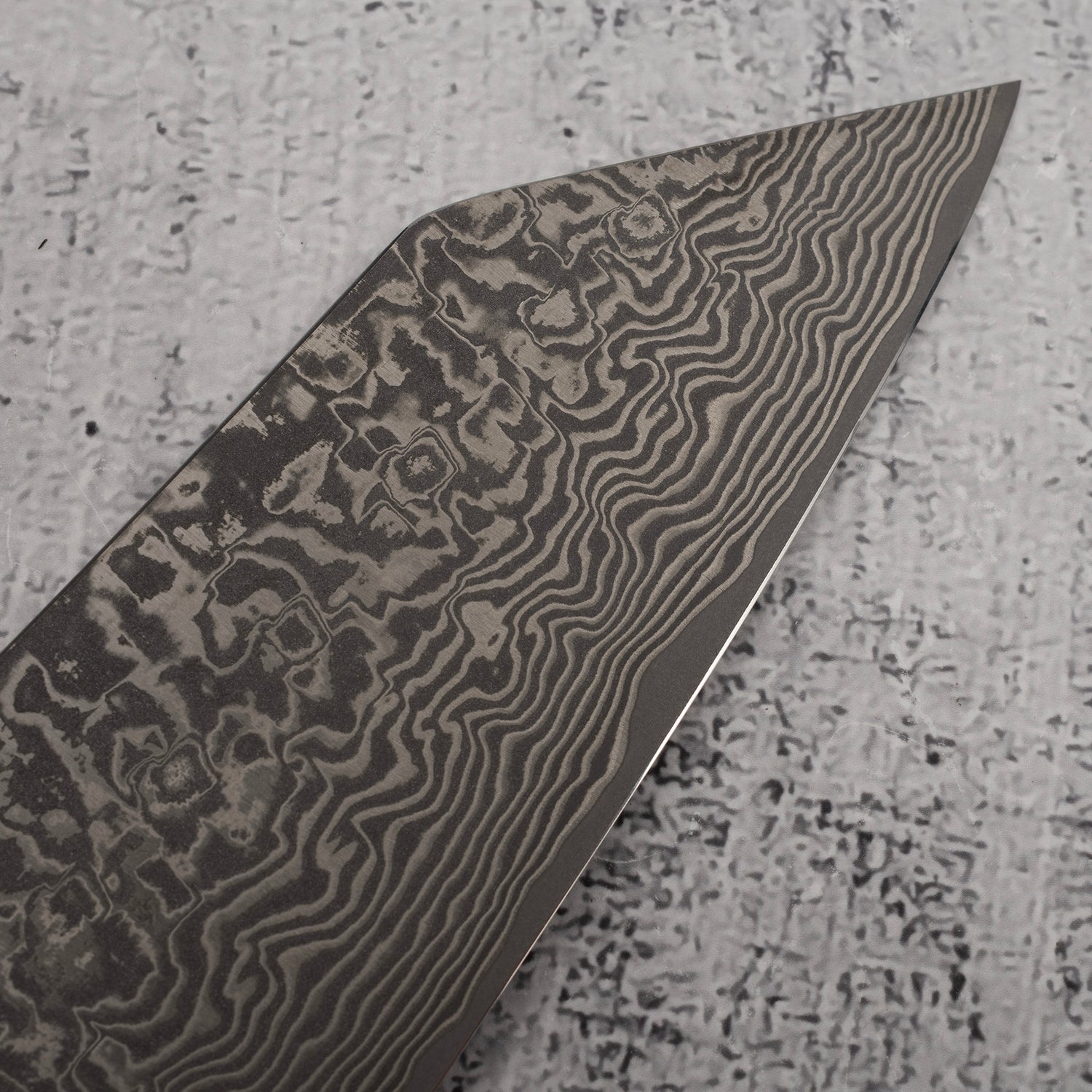
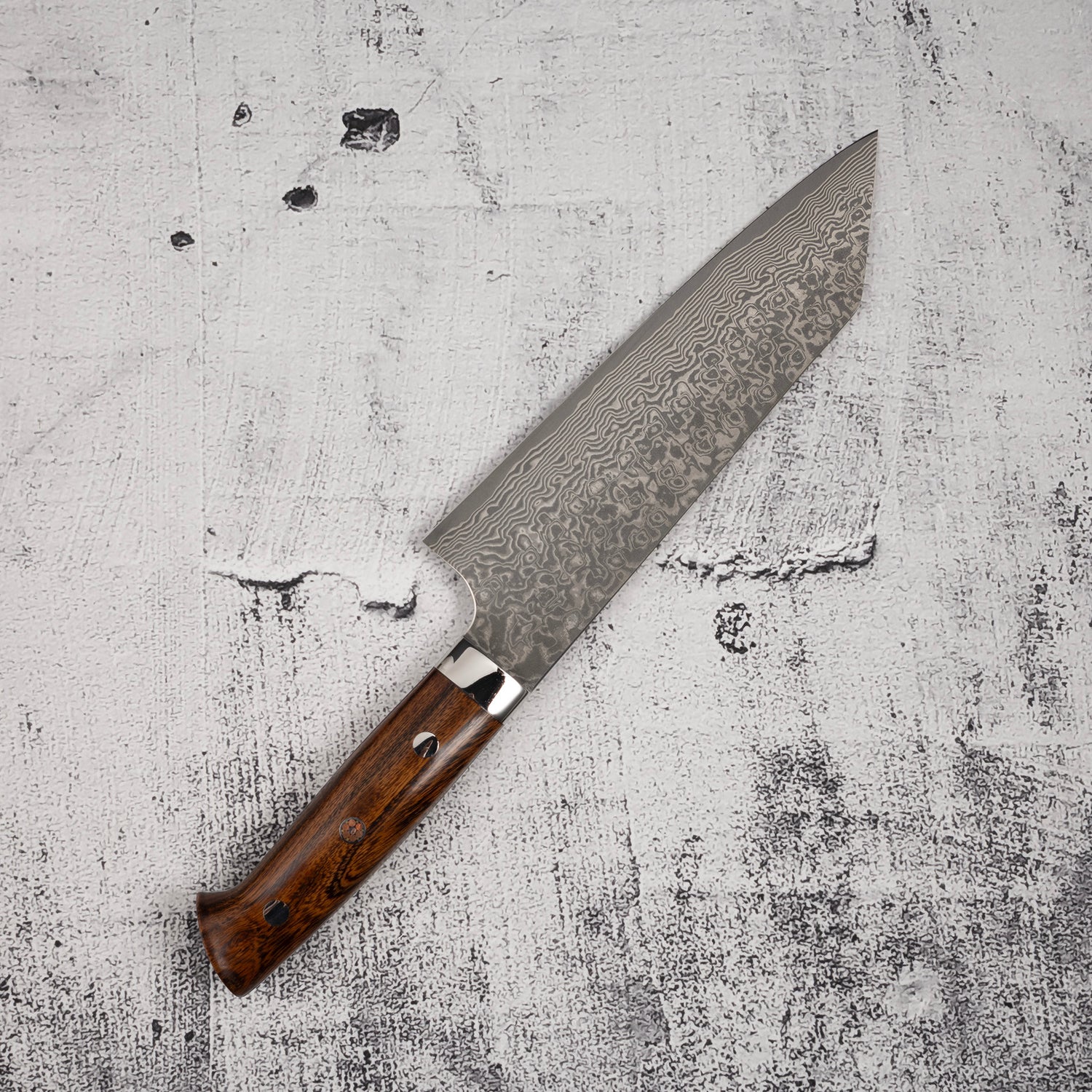
刃の形状 Bunka
刃の種類 Double Bevel
重量 243 g | 8.6 oz
刃渡り 180 mm | 7 3/32″
あごの高さ 52 mm | 2 3/64″
あご部分の刃幅 2.5 mm | 3/32″
中央の刃幅 2.5 mm | 3/32″
切っ先から1cmの刃幅 1.2 mm | 3/64″
鋼材 スーパーゴールド2 / スーパーゴールド2 | Powdered | ステンレス鋼
刃の構造 三枚合わせ・ステンレスダマスカス clad
Hardness (HRC) 62 - 64
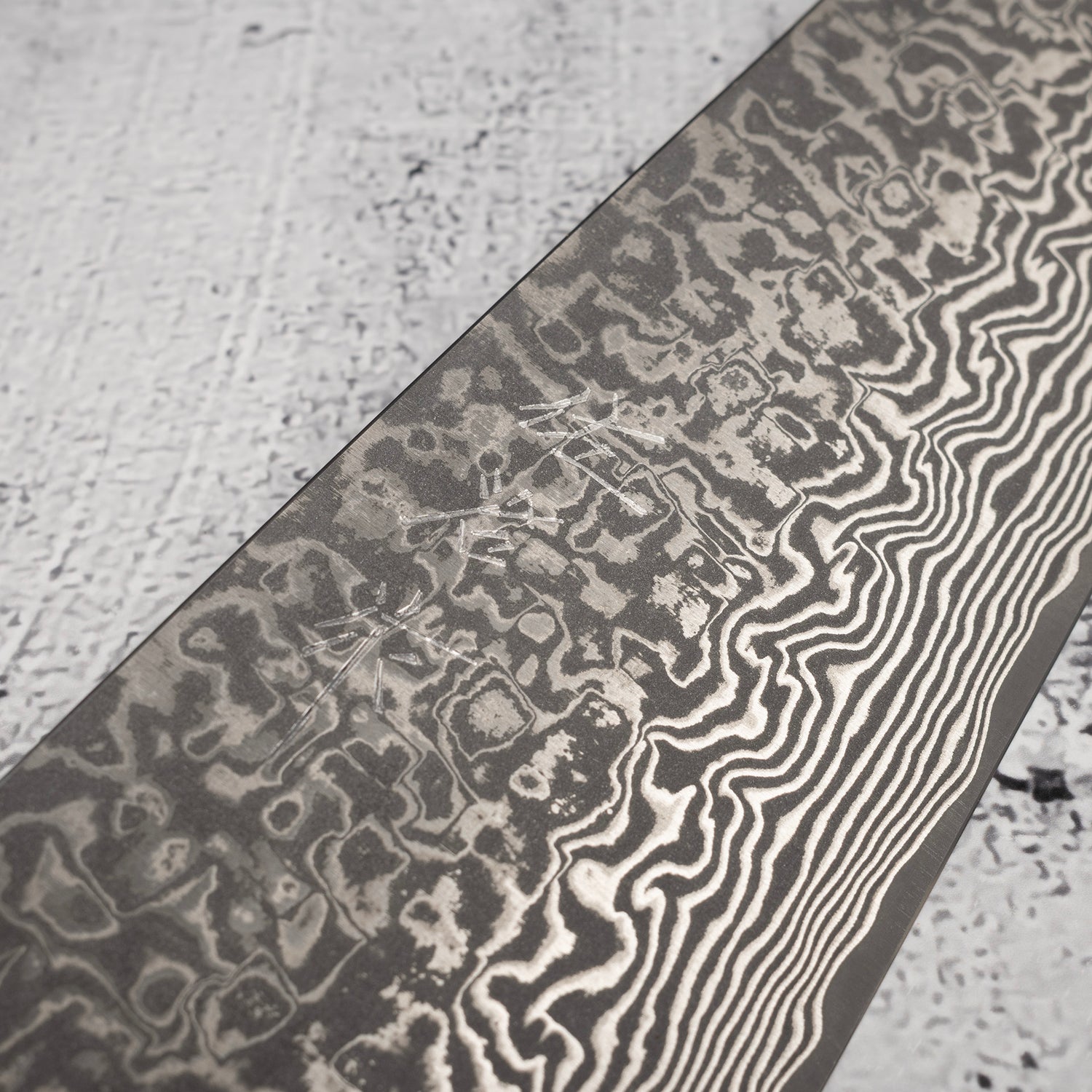
表面仕上げ エッチング仕上げ
佐治 洋包丁
産地 武生
最適な用途
  • プロシェフ
  • コレクター
  • 愛好家
  • オーストラリア国内でAU$200以上の包丁は送料無料
  • DHLエクスプレスによる世界配送、3〜5日でお届け


佐治打刃物のスーパーゴールド2黒染めブラックダマスカスは、佐治武志氏を代表するシリーズの一つです。高性能な鋼材、目を奪う美しさ、そして独自のブレードジオメトリによる滑らかな切れ味を兼ね備え、ハイエンド包丁の中でも万能性を発揮します。

タケフナイフビレッジの中核メンバーとして、佐治打刃物は越前打刃物の最高峰を象徴する名門でした。同工場は武生特殊鋼の積層ビレットを採用し、古来より伝わる伝統的な鍛造技術と融合させることで、外観の美しさと驚異的な切れ味を両立する包丁を生み出しています。ステンレスダマスカスの鍛造からレインボークラッドまで、当時の佐治氏は非常に先駆的な存在でした。これが彼の確固たる遺産の基盤となり、多くのデザインが時の試練に耐え、愛好家やシェフから称賛される定番となりました。このスーパーゴールド2黒染めダマスカスシリーズもその一つです。

ステンレスダマスカスとディープエッチングの組み合わせによる強いコントラスト自体は珍しくありませんが、それでもなお、この包丁の緻密な質感や刃先の仕上げは、使用する際も眺める際も魅了されます。この印象的な外観の下には、確かな性能を持つブレードが隠されています。粉末ステンレス鋼であるスーパーゴールド2は、完全なステンレスでありながら業界屈指の優れた刃持ちを提供する、最高峰の刃物鋼の一つとして今なお評価されています。

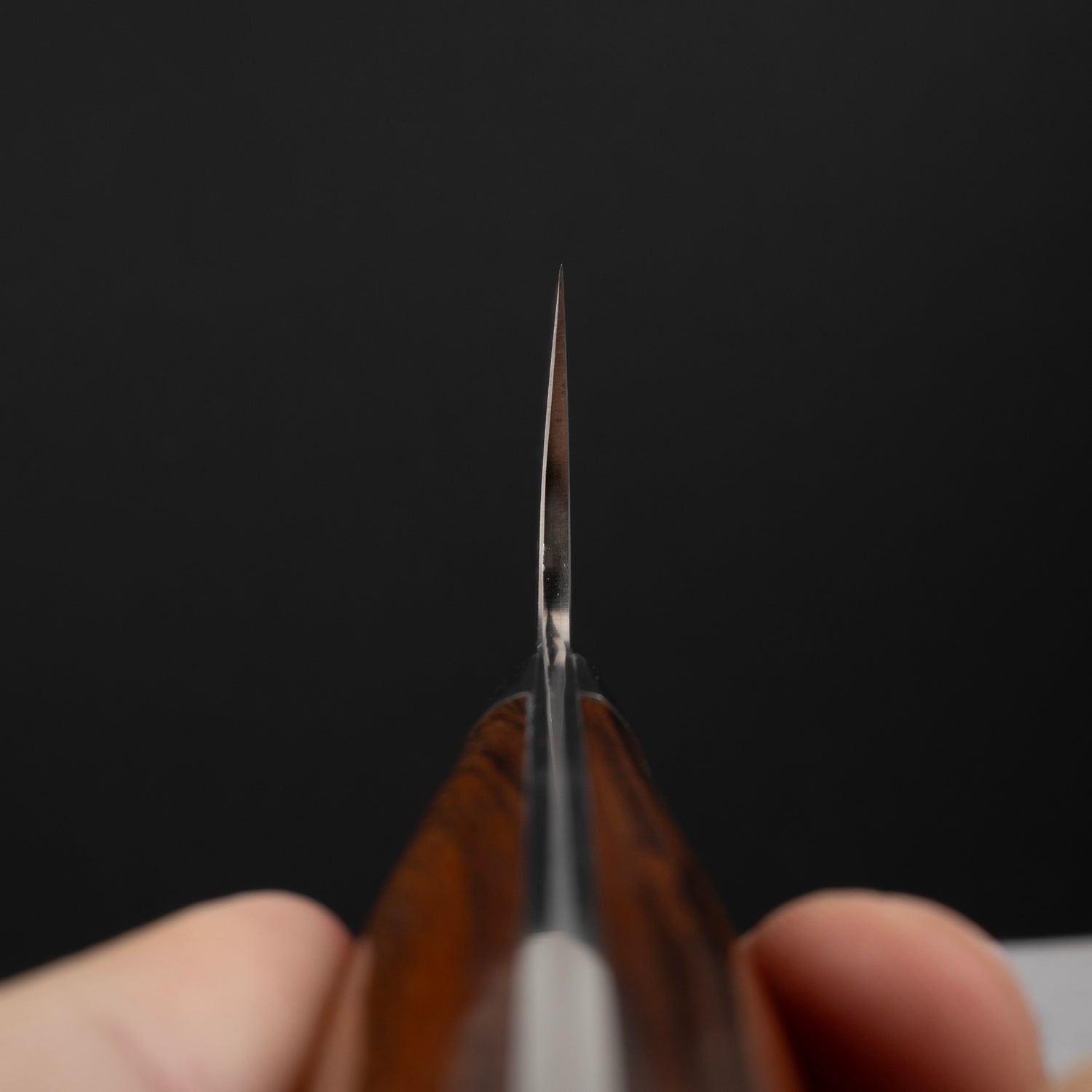
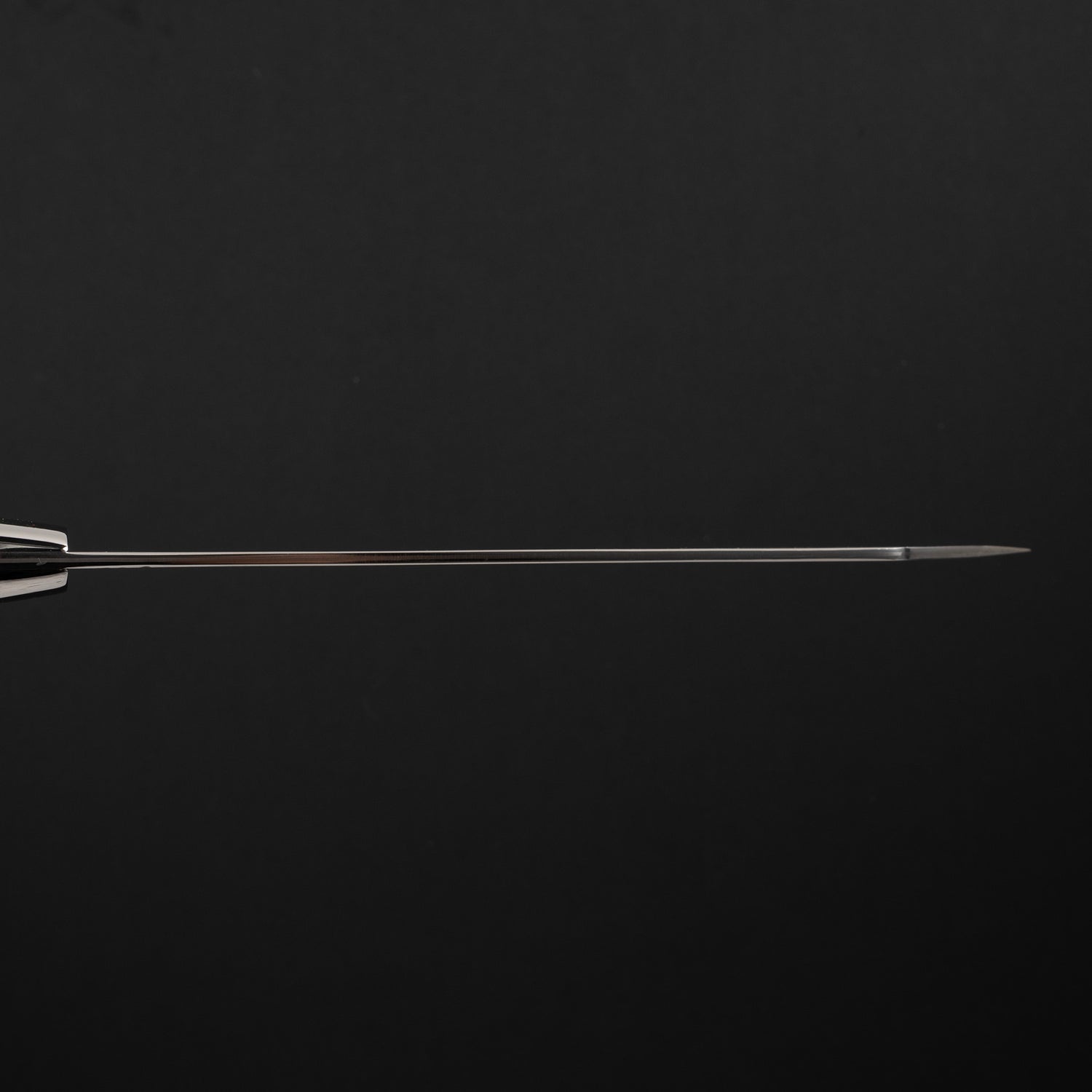
包丁の峰側から見下ろすと、この包丁の滑らかな切れ味の秘密が見えてきます。ブレードは適度な厚みを備えたコンベックスグラインドですが、特徴的なのはコンベックスが鎬線を越えて続き、紡錘形の断面になっている点です。つまり、ブレードの最も厚い部分は鎬線にあり、そこから峰と刃先に向かって薄くなっています。その結果、主切刃から平への移行部分により大きな曲線が生まれ、ブレードの厚みを増すことなく、優れた食材離れを実現しています。

この研ぎ上げにより、これらのブレードは切れ味の滑らかさにおいて容易に最上位クラスに位置します。もし欠点を挙げるとすれば、ホローグラインドなどの他の形状に比べて、早めに裏スキ(薄化)が必要になる場合があることです。コレクターや愛好家、あるいは高級ギフトをお探しの方に強くお勧めします。和柄に加え、アメリカの影響を受けたエキゾチックな鹿角・ターコイズ・デザートアイアンウッドなどのハンドルも展開しているため、プレミアムな料理体験を求める方にとって、非常にユニークな一品となるでしょう。

長所 短所
  • 芸術性の高さ
  • 実用的な研ぎ
  • やや厚め
お手入れ方法
  1. 硬いものは切らないでください!日本の包丁は硬くてもろいため、骨を切るのは厳禁です。
  2. 使用後は中性洗剤で洗い、水気を拭き取ってください。
  3. 食器洗い機での洗浄はおやめください。木の柄を傷める原因となります。
  4. 包丁を熱源のそばに長時間放置しないよう、ご注意ください。
  5. 刃の鈍った包丁で切るほうが、よく切れる包丁で切るよりもはるかに危険です!
  6. 日本の包丁は、砥石で定期的に研ぐことをお勧めします。
  7. Error: Steel nature unknown

佐治打刃物

佐治打刃物 - 越前のSG2ダイヤモンドダマスカス製作者

Takeshi Saji is a distinguished Japanese blacksmith from Takefu Village in Echizen, an area renowned for its centuries-old knife-making tradition. As a fourth-generation blacksmith, Saji was immersed in the craft from a young age, learning the intricacies of blade making from his family. With over 50 years of experience, he has become a master of his trade.

Saji is celebrated for his ability to blend traditional Japanese techniques with innovative designs, creating knives that are both functional and visually captivating. His knives are known for their distinctive handles made from materials like deer antler, ironwood, and colored pakkawood, paired with beautifully patterned blades, often in the Damascus style.

His work is highly valued by chefs and knife enthusiasts worldwide for its exceptional sharpness, durability, and aesthetic appeal. Each knife is a testament to Saji's meticulous craftsmanship and his commitment to preserving the heritage of Japanese knife-making while pushing its boundaries. His dedication to quality and innovation has earned him a revered place in the blacksmithing community, ensuring that his knives remain prized possessions in kitchens around the world.

Read more

Takeshi Saji, a master blacksmith from Takefu Village in Echizen, Japan, represents the fourth generation of a family deeply rooted in the art of knife making. This region, known for its 700-year-old knife-making tradition, has profoundly influenced Saji's approach to crafting blades. Born into a family of blacksmiths, he began learning the trade at an early age, immersing himself in the rich culture of Echizen’s blade-making heritage.

Over his extensive career spanning more than five decades, Takeshi Saji has distinguished himself by preserving traditional Japanese knife-making techniques while incorporating modern innovations. His work epitomizes a perfect fusion of age-old methods and contemporary design, resulting in knives that are both highly functional and visually stunning.

Saji’s knives are easily identifiable by their unique handles, crafted from an array of materials such as deer antler, ironwood, and colored pakkawood. These materials not only enhance the visual appeal of his knives but also provide a comfortable and secure grip. The blades are often adorned with intricate patterns, particularly the Damascus style, which involves layering different types of steel to create a beautiful and unique finish.

One of the key aspects of Takeshi Saji’s craftsmanship is his meticulous attention to detail and unwavering commitment to quality. Each knife undergoes a rigorous crafting process to ensure exceptional sharpness, durability, and balance. This meticulous approach has garnered him a loyal following among professional chefs, culinary enthusiasts, and collectors worldwide.

Saji’s artistic vision is another defining characteristic of his work. He possesses a keen eye for aesthetics, often incorporating intricate engravings and unique patterns into his blades. This blend of functionality and beauty has elevated his knives from mere culinary tools to coveted works of art.

Beyond his individual creations, Saji is a respected figure in the blacksmithing community. He actively promotes and preserves the traditional crafts of Echizen through workshops, demonstrations, and collaborations. By sharing his knowledge and passion with the next generation of knife makers, he ensures the continuation and evolution of Japanese bladesmithing traditions.

His contributions to the craft have been recognized with numerous awards and accolades, cementing his reputation as one of Japan’s premier knife makers. Despite his acclaim, Takeshi Saji remains deeply committed to his work, constantly striving to innovate and push the boundaries of his craft.

In recent years, Saji has embraced new technologies and materials, experimenting with different types of steel and handle materials to enhance the performance and appeal of his knives. This willingness to evolve while staying true to traditional methods exemplifies his approach to knife making.

Takeshi Saji’s knives are treasured by those who appreciate the artistry and skill involved in their creation. Each piece is a testament to his dedication, craftsmanship, and the enduring legacy of Japanese knife-making. For Saji, every knife is more than just a tool; it is a reflection of his heritage, his passion, and his relentless pursuit of perfection.

His enduring influence on the world of knife making and his commitment to excellence continue to inspire both established and aspiring blacksmiths. Takeshi Saji's legacy is not just in the knives he creates but also in the vibrant community of craftsmen he has nurtured and the rich traditions he has helped preserve for future generations.

4o到目前为止,此对话有帮助吗?

“エキゾチックなダイヤモンドダマスカスと銅ダマスカスの模様”

Est. 1948 | 昭和23年
Known for エキゾチックな洋風ハンドル、ダイヤモンドダマスカス
Read more about 佐治打刃物
佐治打刃物 — 武生
Profile: Bunka
Profile

Bunka

A pointier version of the Santoku. The Bunka knife features a distinctive profile with a straighter edge and a pointed tip, making it versatile for a variety of kitchen tasks. Its design is a blend of the Santoku and K-tip Gyuto knives, with a blade length typically around 165mm to 180mm. The Bunka is particularly adept at slicing, dicing, and chopping fruits, vegetables, and meats, thanks to the precision and control enabled by its length and flat edge profile. The angled tip, also known as a reverse tanto, provides additional precision for intricate tasks such as julienning. With its unique shape and functionality, the Bunka stands out as a multifunctional knife in the culinary world.
Composition

スーパーゴールド2 / スーパーゴールド2 Element Composition

Compare with
    スーパーゴールド2 / スーパーゴールド2
    14.0% 10.5% 7.0% 3.5% 0
    C Carbon 1.25%
    Primary hardening element. Raises hardness and wear resistance — but too much increases brittleness and corrosion susceptibility. As a reference: German 1.4112 (~0.5%) sits at the low end; VG-10 (~1.0%) is a common mid-range; SG2 (1.25–1.45%) and ZDP-189 (~3.0%) represent high and extreme ends respectively.
    C
    1.25%
    Cr Chromium 14.0%
    Raises corrosion resistance; 13%+ qualifies steel as stainless. Also improves hardenability and wear resistance. In kitchen use, higher chromium levels contribute to a slight drag or sticking sensation when cutting — a trade-off for the rust resistance it provides.
    Cr
    14.0%
    V Vanadium 1.8%
    Forms extremely hard carbides for superior edge retention. Also refines grain structure, improving toughness.
    V
    1.8%
    Mo Molybdenum 2.3%
    Improves hardenability and toughness. Boosts corrosion resistance and helps the steel hold hardness under heat.
    Mo
    2.3%
    Mn Manganese 0.4%
    Aids hardenability and strength. Acts as a deoxidiser during smelting. Excess can reduce toughness.
    Mn
    0.4%
    Si Silicon 0.5%
    Strengthens the steel matrix and acts as a deoxidiser. Improves hardness and resistance to oxidation.
    Si
    0.5%
    P Phosphorus 0.03%
    Impurity from the smelting process. Even small amounts cause brittleness — steelmakers keep this as low as possible.
    P
    0.03%
    S Sulfur 0.03%
    Impurity that reduces toughness and promotes brittleness. Intentionally added only in free-machining steels.
    S
    0.03%
    C — Carbon Cr — Chromium V — Vanadium Mo — Molybdenum Mn — Manganese Si — Silicon P — Phosphorus S — Sulfur
    Hardness 62–64 HRC
    555759616365+
    Steel
    スーパーゴールド2 / スーパーゴールド2
    Category
    ステンレス鋼
    Process
    粉末冶金鋼材
    Manufacturer
    武生特殊鋼材、日本
    Hardness
    62–64 HRC
    Steel

    スーパーゴールド2 / スーパーゴールド2

    • Manufacturer
      • 武生特殊鋼材、日本
    • Nature ステンレス鋼
    • Hardness62–64 HRC
    SG2はスーパーゴールド2またはR2鋼とも呼ばれ、武生特殊鋼材が製造する高級粉末工具鋼です。優れた刃持ちと耐摩耗性を備え、最大HRC 64の硬度を実現できます。神戸製鋼所のR2と同一の鋼材であり、鋭い切れ味と耐久性から高級包丁製作で高く評価されています。粉末冶金により炭化物が均一に分散されるため、靭性が向上し欠けにくくなります。SG2/R2は、切削工具に最高峰のパフォーマンスと長寿命を求める方に最適です。
    Construction: 三枚合わせ・ステンレスダマスカス clad
    Construction

    三枚合わせ・ステンレスダマスカス clad

    三枚合わせ(Sanmai)は両刃包丁に一般的な構造で、硬い芯鋼の両側に柔らかい地金を鍛接したものです。熱処理後、硬く脆い芯鋼が鋭い刃先を形成し、柔らかい地金が芯鋼を支えて刃全体の強度を高めます。

    ダマスカス三枚合わせは、地金にダマスカス鋼を使用した構造で、刃に装飾的な美しさを加えます。ステンレス芯鋼の包丁の場合、ダマスカス地金もステンレスとなるため、炭素鋼やセミステンレスの芯鋼を錆や変色から保護する役割も果たします。

    柔らかい地金は、本焼やモノスティール構造に比べて薄く削る工程を容易にします。ただし、地金がダマスカスの場合、エッチング・研磨・鏡面仕上げに関わらず、削りの過程で地金の模様が変化し、新品時の状態とは異なる見た目になります。

    Finish: エッチング仕上げ
    Finish

    エッチング仕上げ

    エッチング工程は、まず包丁を徹底的に洗浄し、油分や残留物を取り除くことから始まります。エッチングしない部分には保護マスクが施される場合があります。その後、刃体を塩化第二鉄などの酸性溶液に浸すと、鋼の層ごとに異なる速度で化学反応が起こります。これにより刃の表面に暗色の酸化皮膜が形成され、鋼の反応性に応じて皮膜の厚みが変化します。エッチング後は重曹溶液で中和処理を行い、すすいで乾燥させます。最後の工程では刃を研磨してエッチング模様を際立たせ、包丁の美しさを高めるとともに、作り手の技術を引き立てます。

    Handle
    Handle

    佐治 洋包丁

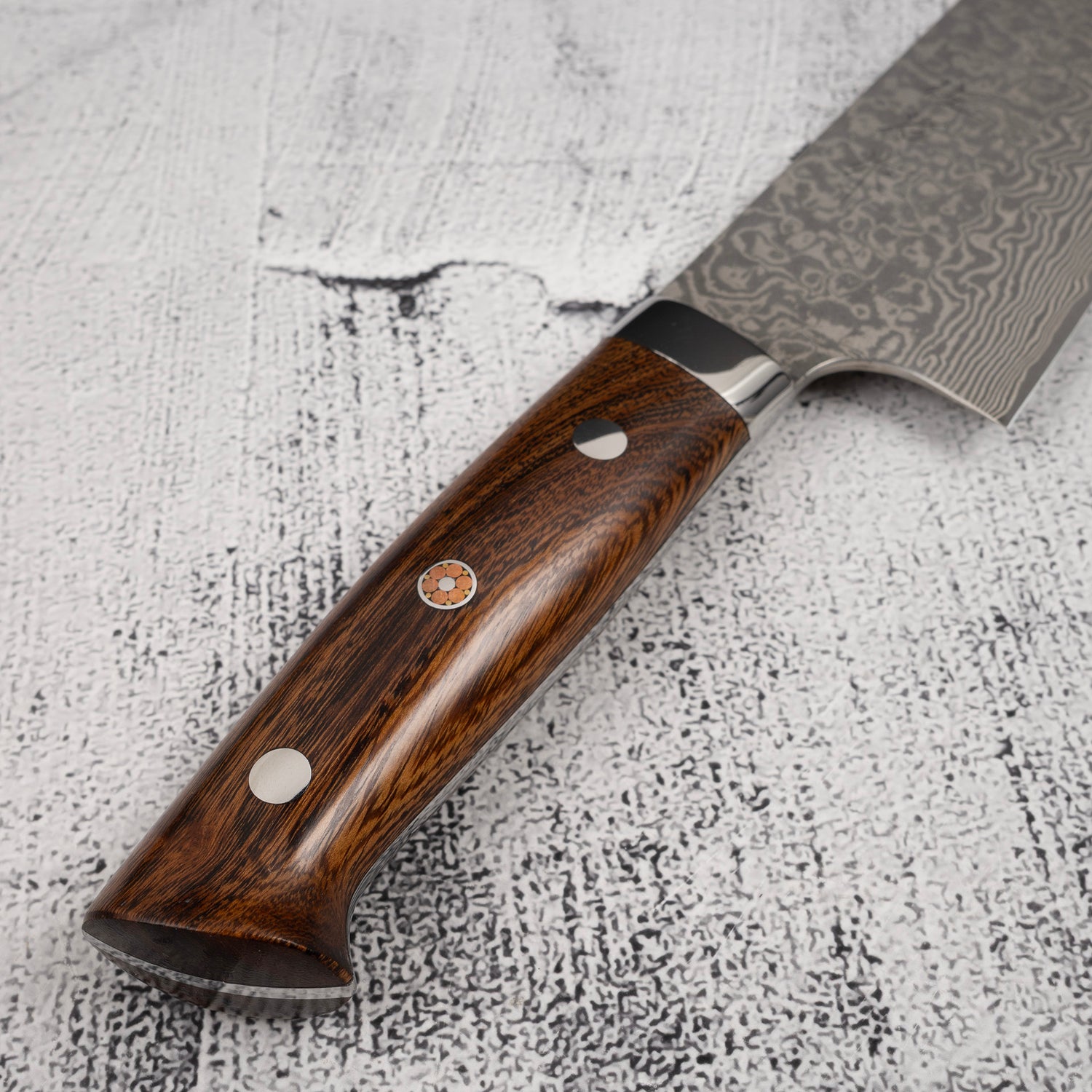
    • Profile ボルスター付き洋包丁
    • Material
      • スタッグ/ボーン
      • ターコイズ
      • デザートアイアンウッド

    佐治武志氏の洋包丁ハンドルは、素朴な魅力と実用的なデザインを兼ね備えた際立った特徴です。鹿角、アリゾナ産デザートアイアンウッド、合成ターコイズなどのエキゾチックな素材を使用しており、それぞれのハンドルが唯一無二の存在です。天然素材ならではの風合いや個体差が、独特のアースカラーの魅力を引き出しています。素材の力強く自然な佇まいはブレードの職人技と調和し、現代的な合成樹脂ハンドルとは一線を画す、時代を超えた素朴な美しさを放ちます。

    視覚的に美しいだけでなく、長時間の使用でも疲れにくい快適な握り心地を提供し、操作性にも優れています。このハンドルデザインは佐治氏の代名詞の一つであり、伝統と機能性を融合させた、彼の職人技と細部へのこだわりを証明する真の傑作です。

    1 / 5

    よくあるご質問

    Knives and Stonesのスーパーゴールド2鋼包丁

    SG2は、炭素鋼のような切れ味を持ちながら手入れの手間がかからないステンレス包丁をお探しの方に、私がまずおすすめする鋼材です。炭素含有量1.25%、硬度HRC 62-64で、驚くほど鋭い刃付けが可能であり、V金10号やAEB-L鋼よりもはるかに長く切れ味が持続します。それでいて錆にも完全に耐性があります。変色を気にする必要がなく、本格的な切れ味も兼ね備えた、まさに良いとこ取りの鋼材です。

    包丁の鋼材比較:SG2 vs AS鋼 — どちらが優れているか?

    どちらかが客観的に優れているわけではなく、ステンレスの手入れのしやすさを重視するか、炭素鋼ならではの鋭い切れ味を追求するかによります。メンテナンスの手間をかけずに抜群の切れ味が長持ちする包丁をお探しなら、SG2がおすすめです。究極の薄刃と切れ味を求め、使用後の拭き取りなどの手入れを厭わないのであれば、AS鋼を選んでください。

    SG2は武生特殊鋼製の粉末ステンレス鋼で、硬度は通常HRC 62〜64程度です。靭性が高く錆にも強いため、酸性の食材を扱う際にも安心して使えます。一方、青紙スーパーは高炭素鋼で、硬度はHRC 64〜66とさらに硬めです。剃刀のような極めて鋭い刃付けが可能で、切れ味の持続性もSG2よりわずかに優れていますが、手入れを怠ると錆が発生します。

    スーパーゴールド2とR2は同じ鋼材ですか?

    はい、R2とスーパーゴールド2は同一の鋼材です。R2は神戸製鋼所での呼称、スーパーゴールド2は武生特殊鋼での呼称であり、全く同じ粉末冶金製法の鋼材を指します。カタログにも記載されている通り、スーパーゴールド2/R2は日本の武生特殊鋼製の粉末ハイス鋼で、組成は炭素1.25%、クロム14.0%、バナジウム1.8%、モリブデン2.3%、硬度はHRC 62〜64です。したがって、R2またはスーパーゴールド2と表記された包丁は、どちらも全く同じ素材を使用しています。

    We trust this information is correct at the time of writing, but it is not an official document and details may change without notice. If you spot an error, tell us and we'll fix it.

    You May Also Like