Crows Nest store now open from Friday to Tuesday, in store specials!

Sakai Takayuki  |  SKU: SATA_TUS_GY300

Sakai Takayuki TUS Gyuto 300mm

Regular price $279.95

Pickup available at Crows Nest

Usually ready in 24 hours

Add a saya or K&S Knife Roll to receive $20 bundle discount!

Detailed Specifications
Line Sakai Takayuki TUS
Profile Gyuto / Chefs Knife
Weight 268 g | 9.5 oz
Edge Length 300 mm | 11 13/16″
Heel Height 58 mm | 2 9/32″
Width @ Heel 2.1 mm | 5/64″
Width @ Mid 1.9 mm | 5/64″
Width @ 1cm from Tip 0.8 mm | 1/32″
Steel Inox | Stainless
Blade Construction Monosteel
Hardness (HRC) 57 - 59
Surface Finish Migaki
Handle Western Pakka Wood with Bolster
Region Sakai
Best for
  • First-timers
  • Students
    • Free shipping for knives over AU$200 Australia wide.
    • World-wide shipping via DHL Express, 3 to 5 days.


    The Sakai Takayuki TUS line is a straightforward entry point into the world of Japanese kitchen knives, and it does what it sets out to do with little fuss. The name TUS stands for Takayuki Stainless, a house steel whose exact composition isn't disclosed — and much like the INOX label used elsewhere in the industry, this tells you it sits on the more accessible end of the stainless spectrum. Built in a monosteel construction, lower hardness and modest edge retention are to be expected from TUS steel, but for someone picking up their first Japanese knife, that trade-off comes with a silver lining: a more forgiving edge that is less prone to chipping when the habits built around European knives inevitably show up.

    What the TUS line does well is put a genuinely thin edge on the table at a price that doesn't ask too much. The blade cuts with more penetration than you'd expect at this price, and first-time users stepping over from a Wüsthof or Zwilling will immediately feel the difference in how the knife enters food. That said, the flat grind geometry does create a noticeable sticking issue. Unlike a convex grind or a knife with a pronounced Shinogi line — where the blade curves away from the slice and encourages food to peel off — a flat grind stays parallel to the food for longer, giving thin slices every reason to cling to the surface. It's a real limitation for anyone doing high volume prep of juicy or starchy produce, and something worth knowing before you commit.

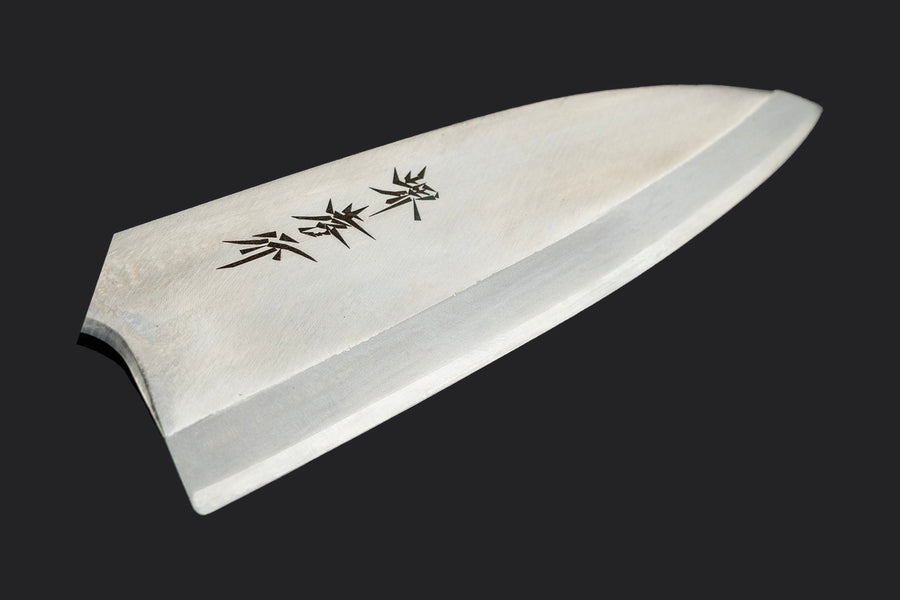
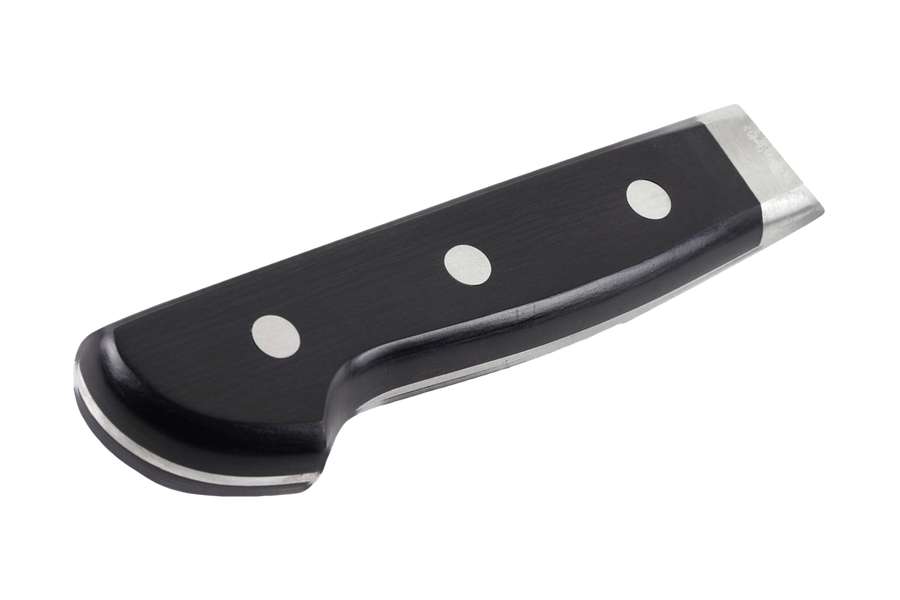
    The finish is clean and polished to a noticeably higher sheen than what you'd typically find at this price — the Migaki on these blades sits closer to a satin than a standard brushed finish, which gives the knife a more refined and premium look than its price tag suggests. Paired with the metal bolster and pakka wood handle scales in a western full tang construction, the overall package is tidy and familiar. The joinery is neat, the bolster sits flush, and the fit and finish lands comfortably on par with what else is available at this price.

    I'd point this line squarely at home cooks who are curious about Japanese knives but aren't ready to commit to a steep learning curve in either maintenance or technique. The stainless steel keeps care simple, the handle feels immediately familiar, and the thin edge will give you a genuine taste of what Japanese kitchen knives are all about. It won't be the last knife you buy — but it's a respectable place to start.

    Pros Cons
    • Budget friendly
    • Excellent fit and finish
    • Ideal for the household
    • Non-premium steel
    Care Instruction
    1. Don't cut hard things! Japanese knives are brittle so bone hacking is a NO NO!
    2. Wash with neutral detergent after use, and wipe dry;
    3. Please don't wash knife with dishwasher, it will damage the wood handle;
    4. Be careful not to leave the knife close to a heat source for a long time;
    5. It is a lot more dangerous to cut with a blunt knife than a sharp knife!
    6. It is best to sharpen a Japanese knife regularly on a waterstone.

    Sakai Takayuki

    Sakai is the largest knife making region of professional single bevel knives, with over 600 years of knife making history. Sakai Takayuki stands out as the largest brand in the region. These knives, celebrated for their precision slicing and unparalleled sharpness, cater to professional chefs and culinary enthusiasts who demand the highest quality. At the heart of Sakai Takayuki's operations is the Sanbo Factory, a dedicated hand forge knife plant. Contrary to the notion of it being a place of innovation, the Sanbo Factory is focused on the traditional art of knife-making, where skilled artisans employ time-honored techniques to create knives that are both functional and beautiful.

    Adding to the brand's allure are collaborations with famed Sakai craftsmen like Itsuo Doi, who works exclusively for Sakai Takayuki. Doi's contributions exemplify the brand's commitment to maintaining the highest standards of craftsmanship.

    • Profile: Gyuto

      Chefs Knife

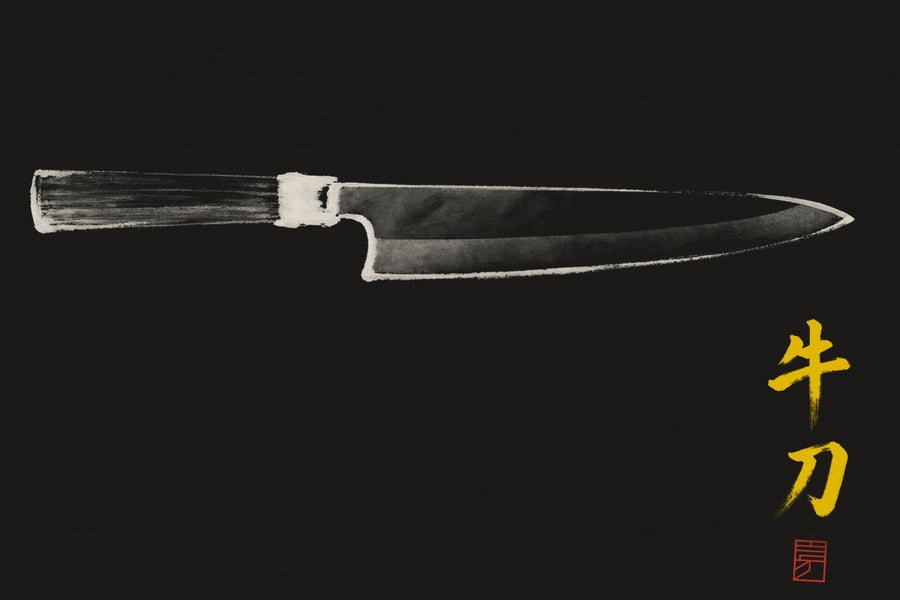
      A Japanese chef's knife is known as a gyuto (牛刀 ぎゅうとう) gyūtō?), literally meaning 'beef knife'. Its blade resembles a flatter version of a French chef's knife. Japanese cutlery is known for sharpness due to its acute blade geometry, and the hardness of the steel used, sometimes exceeding 60 HRC on the Rockwell Scale A typical western chef's knife may be sharpened to an edge angle of 20-22°, while a Japanese gyuto generally has a sharper edge angle of 15-18° (or even lower), which requires a harder, more brittle grade of steel. In recent years Japanese gyuto have gained in popularity with western chefs.

      A modern chef's knife is a multi-purpose knife designed to perform well at many differing kitchen tasks, rather than excelling at any one in particular. It can be used for mincing, slicing, and chopping vegetables, slicing meat, and disjointing large cuts.

      Slide for more >>

    • Steel: Inox

      The Sakai Takayuki Inox line uses stainless steel (“Inox” from inoxydable) designed to offer a practical balance of performance, durability, and low maintenance. Typically hardened to around 57–59 HRC, it takes a sharp edge while remaining easy to sharpen and more forgiving than harder, brittle steels. The stainless composition gives excellent resistance to rust and staining, making it suitable for users who prefer less upkeep compared to traditional carbon steels. While edge retention is moderate and may not match high-end carbon or powder steels, the Inox line excels in everyday kitchen use, especially for home cooks and professionals wanting reliability and ease of care.

      Manufacturer:

      Nature: Stainless

      Hardness: 57- 59

      << Slide for more >>

    • Construction: Monosteel

      A "monosteel" construction in the context of Japanese kitchen knives refers to knives that are made from a single type of steel. Unlike traditional Japanese knives that might use a layered steel construction (like "san mai," which sandwiches a hard core steel between softer steel layers), monosteel knives are crafted from a single piece of steel throughout the blade. This type of construction can offer a balance of durability, ease of sharpening, and maintenance.

      Monosteel knives are appreciated for their uniformity in material properties across the blade, providing a consistent cutting experience. This also means the characteristics of the steel will be applied to the whole blade, if a monosteel blade is made of carbon steel, the entire surface of the blade will require maintenance to prevent rust and discolouration. This too, applies to the hardness, an uniformly hardened blade can be difficult to manufacture, and can be quite difficult for uers to perform thinning.

      It should be noted that monosteel knives are usually not forged, as the forged knives, along with differential heat treatment line is called Honyaki.

      << Slide for more >>

    • Finish: Migaki

      "Migaki" means "polished" or "shined" in Japanese, The term "Migaki finish" in the context of Japanese kitchen knives indeed does not exclusively refer to a mirror polish but encompasses a broader range of polished finishes that can vary from semi-gloss to a more refined, subtle sheen, rather than a highly reflective surface. The primary goal of a Migaki finish is to enhance the knife's functionality and aesthetic appeal, focusing on a smooth finish that improves resistance to corrosion and minimizes drag during cutting, rather than achieving a purely mirror-like appearance.

      << Slide for more >>

    • Handle Specs

      Profile: Western with bolster

      Material:

      • Pakka Wood

      Western Pakka Wood handle is the common choice for entery level knives, in some cases, they will be made with bolster that is welded to the blade. The Pakka wood created by laminate wood with resin, creating a dense material that can have layers of different color. Compared with natural timber, this engineered wood is harder and absorb less water, in addition, the low cost of production makes it ideal of grip of entry level knife.

      << Slide for more