PRAHRAN STORE NOW OPEN · THU–MON · 10AM–6PM

Fujitora  |  SKU: FUJITORA_YN240

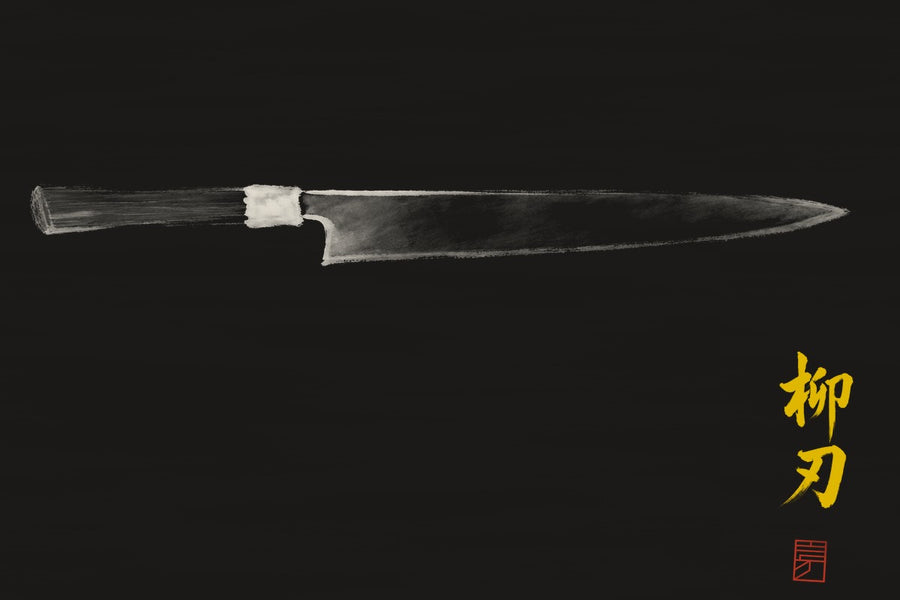
Fujitora Yanagiba 240mm Carbon Steel

Regular price $104.95

IMPORTANT: Carbon steel knives can rust or patina quickly if not cared for properly. They require regular cleaning, drying, and oiling. If you are unfamiliar with carbon steel maintenance, we recommend choosing a stainless steel option instead.

Sold out right now

Leave your email and we’ll send one message the moment it’s back in stock.

One email, no marketing. Privacy policy.

Availability

  • St Peters, NSW —
    2 Bishop St, Unit 2, St Peters NSW 2044
  • Crows Nest, NSW —
    107 West St, Shop 1, Crows Nest NSW 2065
    Pickup only
  • Prahran, VIC —
    180 Commercial Road, Shop 1, Prahran VIC 3181
    Pickup only
Detailed Specifications
Line Fujitora SK Steel Single Bevel
Profile Yanagiba / Sashimi knife
Steel SK Steel | Carbon
Hardness (HRC) 58 - 62
Handle
Region Tsubame
Best for
  • First-timers
  • Students
  • Pro chefs
  • Free shipping for knives over AU$200 Australia wide.
  • World-wide shipping via DHL Express, 3 to 5 days.


Fujitora is an entry level line of true Japanese single bevel knives, focused on the traditional profiles rather than the household-oriented designs. This SK Steel set covers the classics: a 150 mm deba and two yanagiba, at 240 and 270 mm, all in single bevel carbon steel.

The SK steel is a high carbon steel from Hitachi metal with 0.8 to 0.9% carbon content. It is not as high in carbon as White or Blue steel, but it is very easy to sharpen, which is exactly what you want when you are practising single bevel sharpening for the first time.

The ho wood handle is the traditional choice for these knives. Because this is carbon steel, hand wash and wipe the blade dry after every use, and never put it in the dishwasher. For apprentices and students who want real single bevel performance on a learning budget, this line is a strong place to start.

Pros Cons
  • Budget friendly
  • Ideal entry point to Japanese knives
  • Great for professionals
  • Prone to rust
  • Non-premium steel
Care Instruction
  1. Don't cut hard things! Japanese knives are brittle so bone hacking is a NO NO!
  2. Wash with neutral detergent after use, and wipe dry;
  3. Please don't wash knife with dishwasher, it will damage the wood handle;
  4. Be careful not to leave the knife close to a heat source for a long time;
  5. It is a lot more dangerous to cut with a blunt knife than a sharp knife!
  6. It is best to sharpen a Japanese knife regularly on a waterstone.
  7. Oil the (carbon) knife if storing for an extended period of time to prevent rust.

Tojiro

Tojiro (藤次郎), Tsubame, Niigata

Tojiro (藤次郎株式会社) is a knife maker in Tsubame, Niigata, founded on 1 May 1953. Its president's message says that since its founding the company has pursued sharpness, the basic quality of a knife, carrying on traditional techniques while taking on new ones.

Read more

We stock Tojiro's DP3 knives in shapes from a paring knife to a sujihiki, its Zen series, its SG2 powdered steel gyuto and santoku, and its MV stainless deba and yanagiba, along with some of its kitchen tools.

“Tsubame knife maker since 1953.”

Est. 1953 | 昭和28年
Known for The DP, Zen and SG2 knife lines
Website tojiro-japan.com Instagram @tojiro_jp Read more about Tojiro

Tojiro · Tsubame

Knife details

Frequently asked questions

What is a yanagiba knife used for in sushi preparation?

A yanagiba (柳刃包丁) is a sashimi knife for slicing raw fish. A knife maker's guide says a sashimi knife cuts without breaking the fibres of the flesh, and that it is longer and narrower than other knives because slicing sashimi with crisp edges needs the length.

The whole length goes through one pulling cut. The Sakai cutlery association calls the yanagiba the sashimi knife used mainly in the Kansai region.

What size yanagiba should I buy?

Size a yanagiba to the fish you prepare: a knife maker's guide gives 270 to 360 mm for professional use and 240 to 270 mm for home use, with 270 mm at home if you slice larger fish.

The guide says the whole length goes through one pulling cut, so do not choose too short a knife, and at home it points to the size of your board and your work space. We list the yanagiba (柳刃) from 210 to 360 mm, some made for left-handed use.

Can a yanagiba cut through fish bones?

No. The Sakai cutlery association describes the yanagiba (柳刃包丁) edge as so acute that it cannot be used on hard things such as bones.

For bones the association describes the deba (出刃包丁), whose heel is used to hit them.

You May Also Like