PRAHRAN STORE NOW OPEN · THU–MON · 10AM–6PM

Iron Clad  |  SKU: HIGONOKAMI-SK-SML

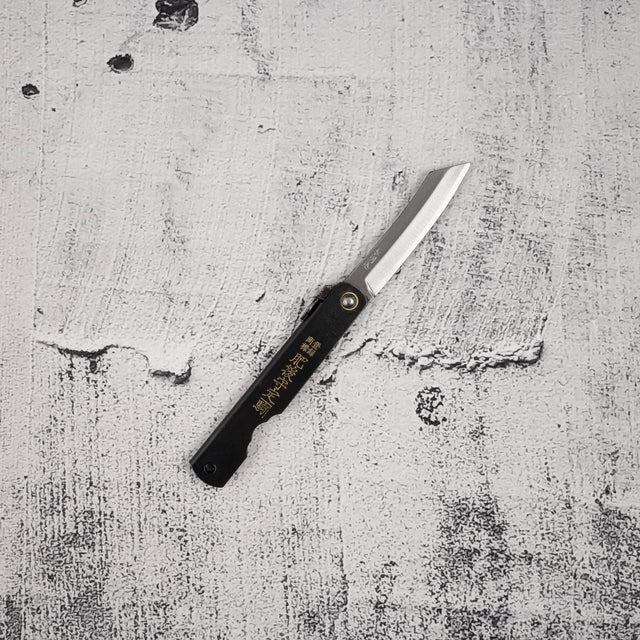
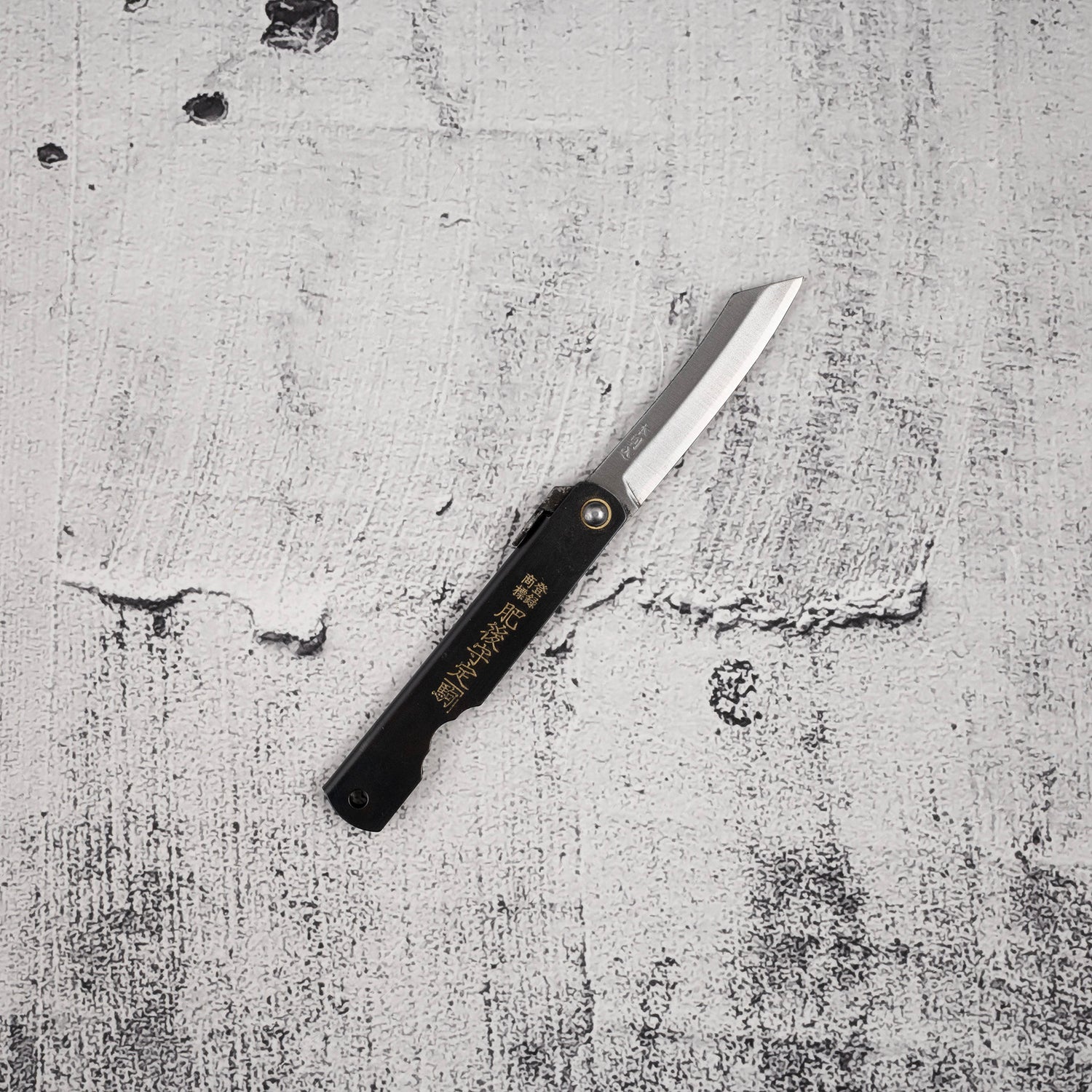
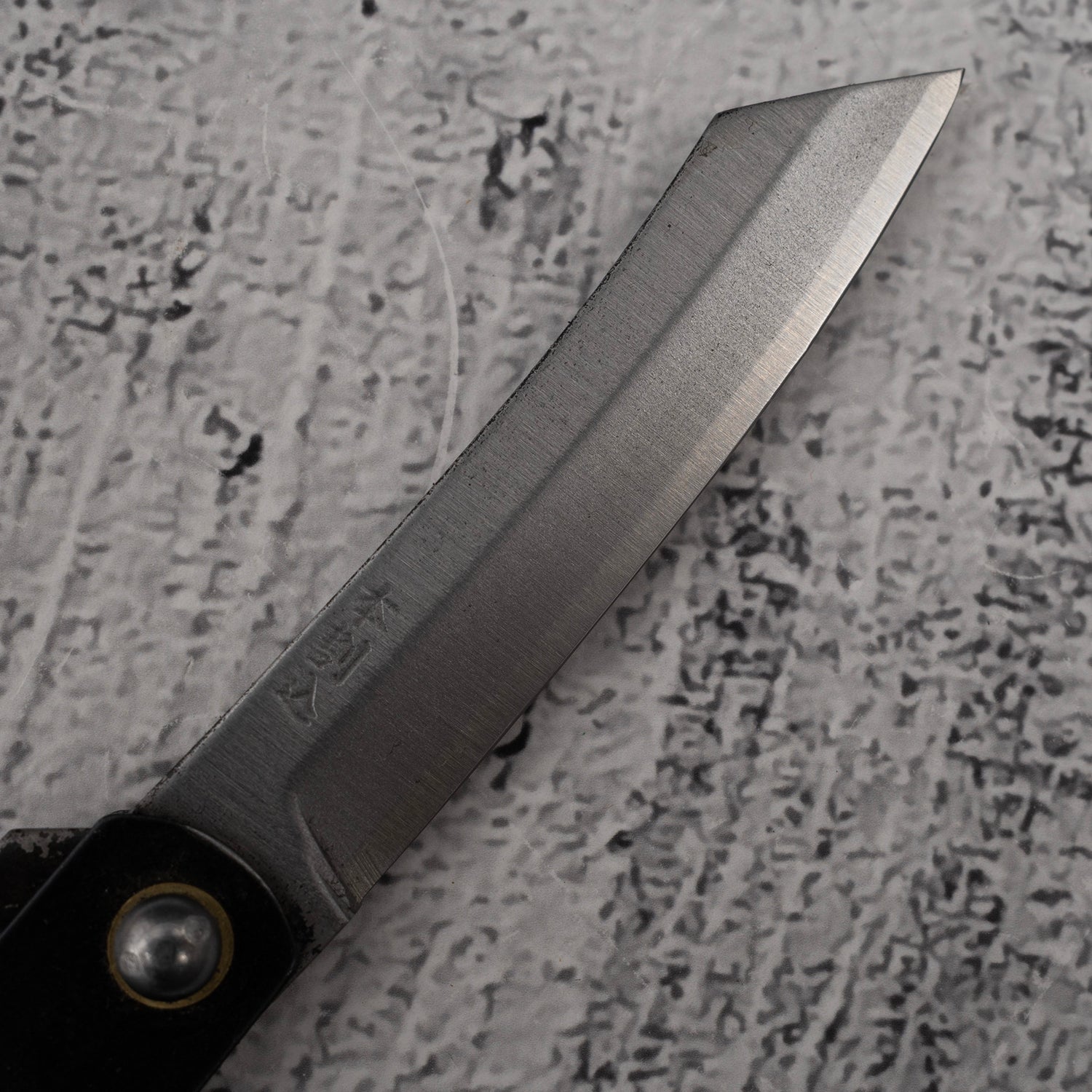
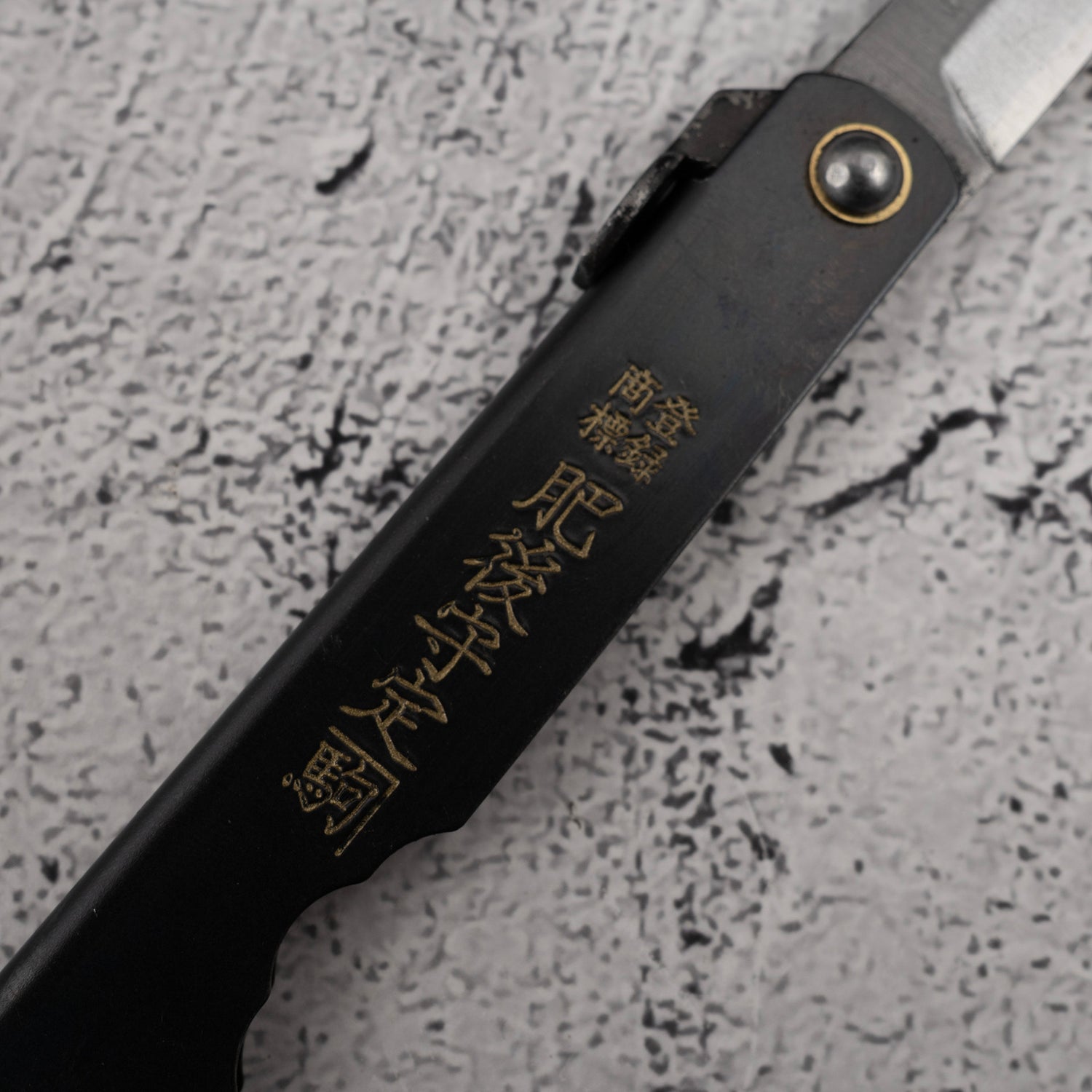
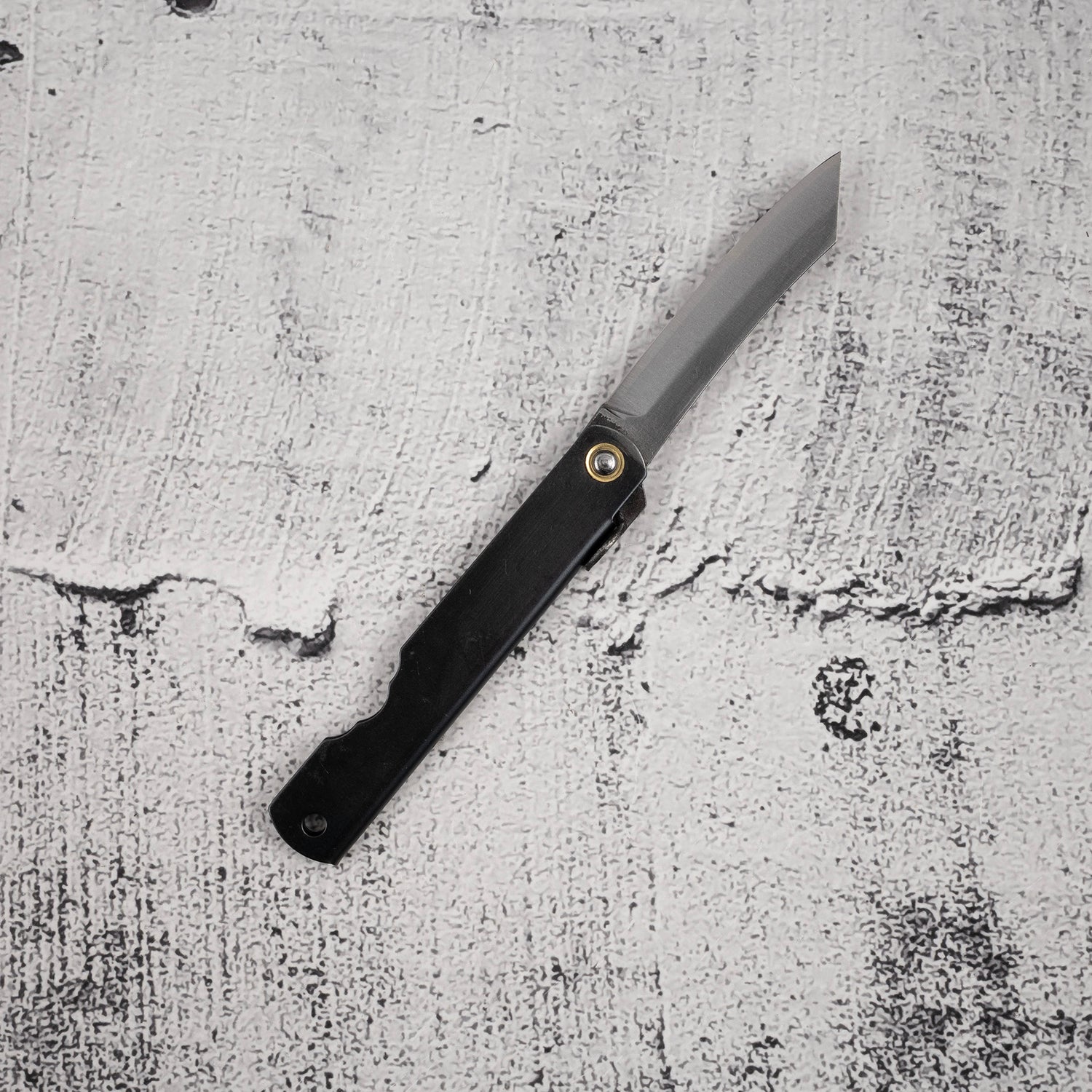
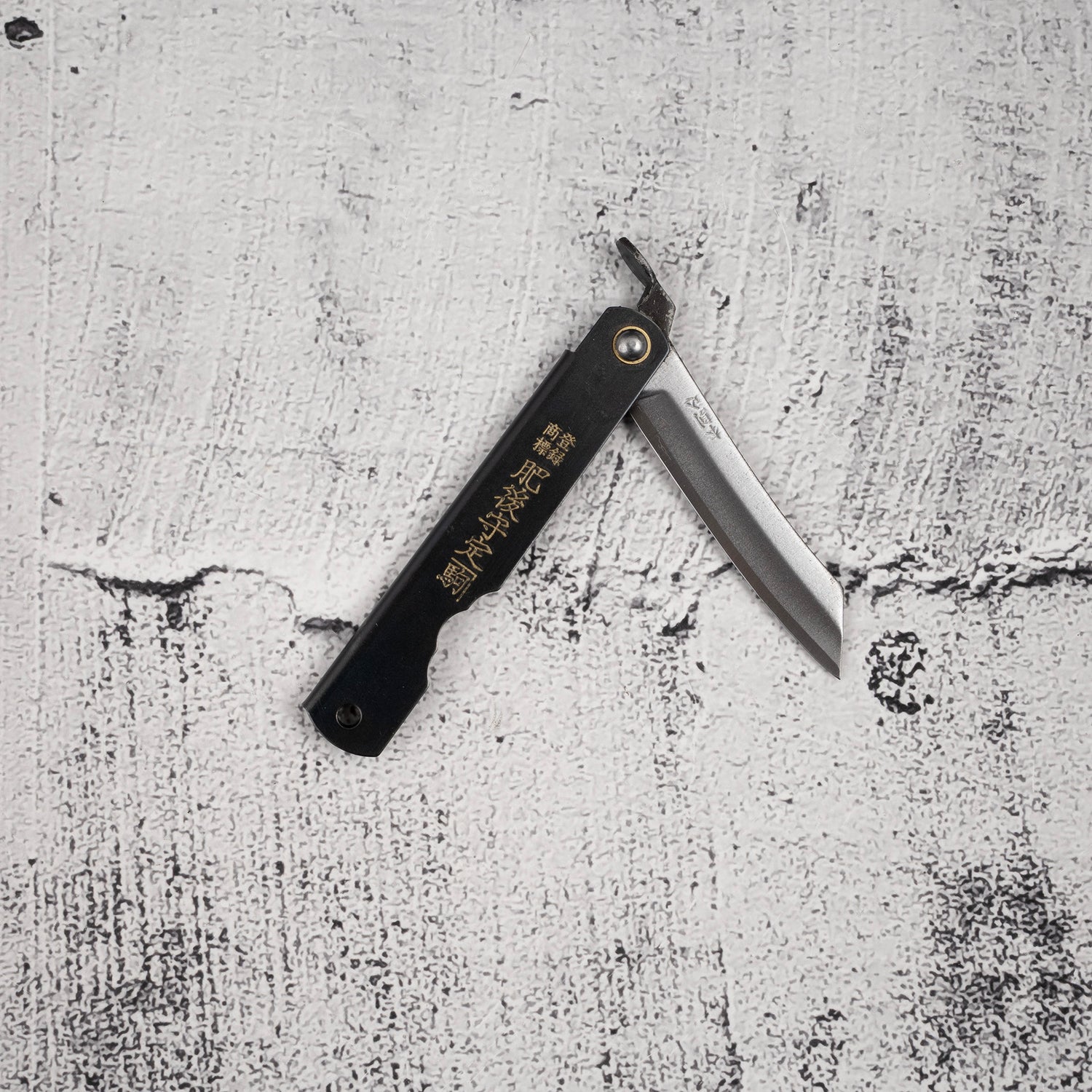
Higonokami SK Steel Folding Knife - Small

Regular price $35.95

IMPORTANT: Carbon steel knives can rust or patina quickly if not cared for properly. They require regular cleaning, drying, and oiling. If you are unfamiliar with carbon steel maintenance, we recommend choosing a stainless steel option instead.

Sold out right now

Leave your email and we’ll send one message the moment it’s back in stock.

One email, no marketing. Privacy policy.

Availability

  • St Peters, NSW —
    2 Bishop St, Unit 2, St Peters NSW 2044
  • Crows Nest, NSW —
    107 West St, Shop 1, Crows Nest NSW 2065
    Pickup only
  • Prahran, VIC —
    180 Commercial Road, Shop 1, Prahran VIC 3181
    Pickup only
Detailed Specifications
Line Higonokami SK Steel
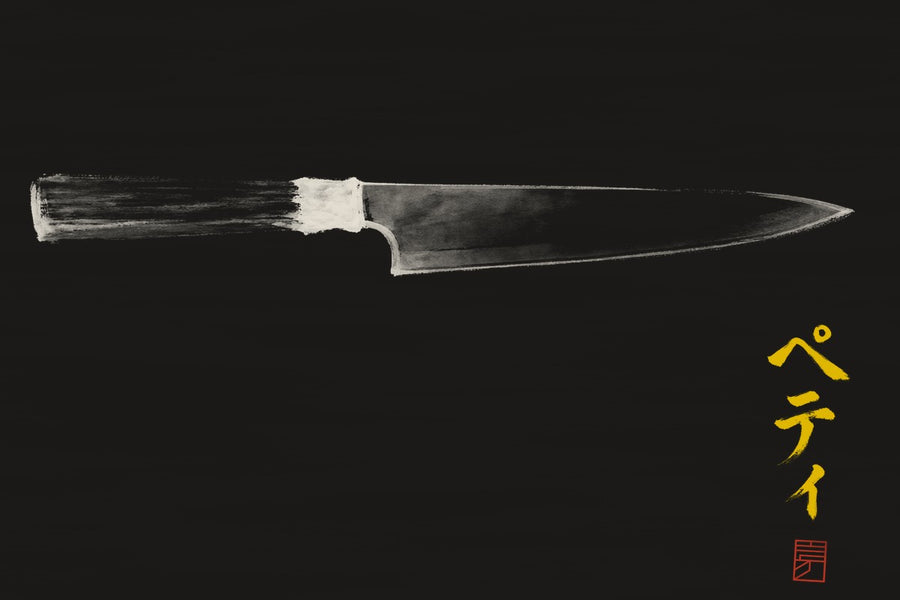
Profile Petty / Utility knife
Bevel Type Double Bevel
Weight 32 g | 1.1 oz
Edge Length 65 mm | 2 9/16″
Heel Height 13 mm | 33/64″
Width @ Heel 2.6 mm | 7/64″
Width @ Mid 2.3 mm | 3/32″
Width @ 1cm from Tip 2.3 mm | 3/32″
Steel SK Steel | Carbon
Blade Construction Warikomi - Soft Iron Clad
Hardness (HRC) 58 - 62
Surface Finish Migaki
Handle Special Handle
Region Miki
Best for
  • Gift buyers
  • Household
  • Free shipping for knives over AU$200 Australia wide.
  • World-wide shipping via DHL Express, 3 to 5 days.


The Higonokami is a type of traditional friction folder, usually carried by workers of all kinds to perform delicate tasks that require sharpness and precision over strength, for its intended purpose, it forms an excellent pair with other traditional farming or logging tools like Nata. By now, they are still widely adopted for works like sharpening a pencil and are popular as small gifts that are characterful and functional.

The most classic Higonokami is produced by Nagao Kanekoma Factory(永尾かね駒), with their name proudly engrave on the handle: 登録商標(Registered Trademark) 肥後守(Higonokami, name of the knife) 定駒(Defined/designed by Kanekoma). They insist the use of traditional technique Warikomi - a method of manually split soft iron to clad a hard steel in the middle - to produce these knives. This is the same method commonly used for Katana forging to produce a blade that have good overall strength and good edge retention that is also easy to sharpen.

The scales and the knife blade are pinned together by a rivet, which the blade pivots around, then friction created by the rivet between the scale and blade holds the blade from deploying when it is carried. This ancient form of knife was widely utilized way before the invention of ball bearings, and it is a very easy to own item due to the lack of a locking mechanism, which made it unregulated in many places. This SK carbon steel line is made with reactive iron cladding, which require you to look after it like any other carbon steel knives to keep it from rusting. If its done well, it would reward you with amazing sharpness that is easy to restore.

Pros Cons
  • Ideal entry point to Japanese knives
  • Ideal for the household
  • Budget friendly
  • Prone to rust
Care Instruction
  1. Don't cut hard things! Japanese knives are brittle so bone hacking is a NO NO!
  2. Wash with neutral detergent after use, and wipe dry;
  3. Please don't wash knife with dishwasher, it will damage the wood handle;
  4. Be careful not to leave the knife close to a heat source for a long time;
  5. It is a lot more dangerous to cut with a blunt knife than a sharp knife!
  6. It is best to sharpen a Japanese knife regularly on a waterstone.
  7. Oil the (carbon) knife if storing for an extended period of time to prevent rust.

Nagao Kanekoma Factory

Nagao Kanekoma Factory (永尾かね駒製作所), Miki, maker of the Higonokami

Nagao Kanekoma Factory (株式会社 永尾かね駒製作所) is a knife maker in Miki, Hyogo, and the maker of the Higonokami (肥後守) folding knife. Its own site says the first generation, Komataro Nagao, began making knives in 1894, and that its current head, Mitsuo Nagao (永尾光雄), is the fifth generation.

We stock its Higonokami folding knives in pocket, small, medium and large sizes.

Read more

The company's history page says knives were first made in Hirata, now part of Miki, in the Meiji 20s, and names Komataro Nagao among the first makers. Around 1894, it says, a hardware wholesaler, Shigematsu (重松太三郎), is said to have devised the chikiri, the lever that lets the blade fold into the handle, working from a knife brought back from Kagoshima.

The page says the knife was sold as the Higonokami because most customers were in southern Kyushu, mainly Kumamoto. According to the page, a Higonokami knife cooperative formed in 1899 and grew to 40 registered makers at its peak, and in 1910 the name was registered as a trademark that only members of the Miki cutlery makers' cooperative could use.

Box cutters, electric pencil sharpeners and a campaign against knives in the Showa 30s hit production and sales, the page says, and Nagao Kanekoma Factory is now the only company that can use the Higonokami trademark.

“A Miki maker of Higonokami folding knives. The company says its knife making spans five generations.”

Est. 1894 | 明治27年
Known for The Higonokami (肥後守) folding knife
Website higonokami.jp Instagram @higonokami.kanekoma Facebook 肥後守 Read more about Nagao Kanekoma Factory

Nagao Kanekoma Factory · Miki

Knife details

Frequently asked questions

What is a petty knife and when do I need one?

A petty knife is a small Japanese utility knife, typically with a blade between 120mm and 180mm, designed for precision tasks like peeling, trimming, and slicing fruits and vegetables. You need one when your main chef’s knife feels too large for detail work, think deveining shrimp, cutting garnishes, or any in-hand peeling where a bigger blade gets in the way. Its slightly longer and slimmer profile than a Western paring knife gives you more control for intricate cuts without sacrificing the nimble feel you want for small jobs. If you regularly find yourself reaching for a smaller blade for finishing work, a petty fills that gap cleanly.

A petty is not a replacement for a gyuto or santoku. It lacks the blade length and belly for efficient chopping, rocking, or breaking down larger proteins. If your work is mostly bulk prep, like dicing onions or slicing roasts, a petty will feel slow and underpowered. It also won’t handle heavy tasks like splitting bones or prying, so treat it as a precision tool, not an all-rounder.

The petty’s role in a Japanese kitchen is as the smaller counterpart to the gyuto, built for tasks where a full-size blade is clumsy. At Knives and Stones, the petty category covers a range of steels including VG10, White#2, Swedish Steel, VG5, SG2, and MV, from makers like Sakai Takayuki, Masamoto Sohonten, Ryusen, Nigara, Hatsukokoro, and Sentan. Most are double-beveled, and the blade length runs from 120mm to 180mm, which is what gives it that balance of reach and precision. For more on how this fits into your knife kit, see the Knives and Stones Education Centre.

How long is a petty knife?

Petty knife lengths vary by maker: KAI's guide defines a petty (ペティナイフ) as a small knife with a narrow blade measuring 150 mm or under. Its table gives 90 to 150 mm, and it describes the shape as a smaller gyuto with a pointed tip.

We list petty knives from 70 mm to 165 mm, including lengths above the limit used in KAI's guide.

Is Nagao Kanekoma the maker of the Higonokami?

Yes. The Higonokami (肥後守), a folding pocket knife, is made by Nagao Kanekoma in Miki City, Hyogo.

The company's own site dates its start to 1894 and counts five generations of makers down to Mitsuo Nagao, saying its line is the only one passed down among Higonokami makers.

You May Also Like