PRAHRAN STORE NOW OPEN · THU–MON · 10AM–6PM

Drag to spin · pinch or scroll to zoom

Tsunehisa  |  SKU: TNHS-G3MG-SA165

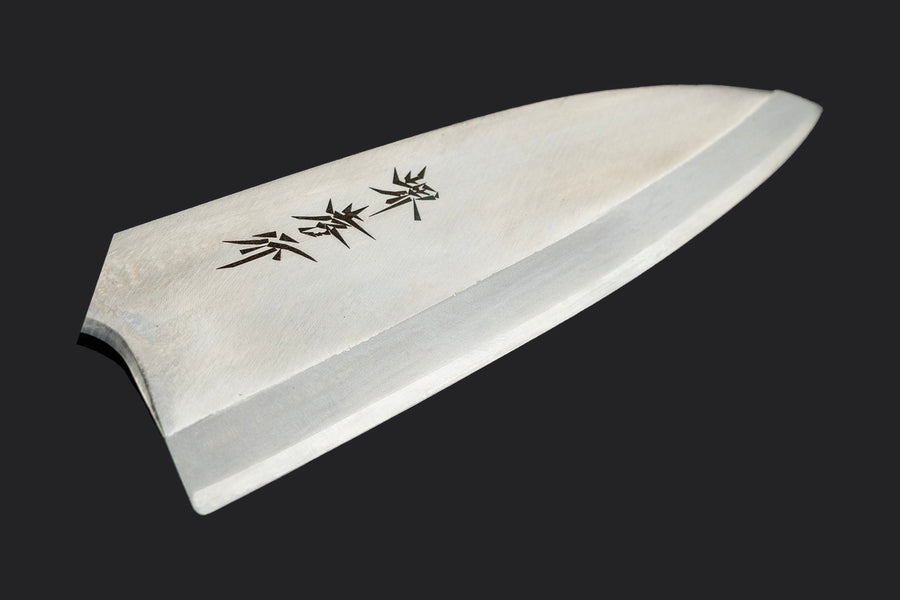
Tsunehisa Ginsan Migaki Santoku 165mm

Regular price $199.95

Sold out right now

Leave your email and we’ll send one message the moment it’s back in stock.

One email, no marketing. Privacy policy.

Availability

  • St Peters, NSW —
    2 Bishop St, Unit 2, St Peters NSW 2044
  • Crows Nest, NSW —
    107 West St, Shop 1, Crows Nest NSW 2065
    Pickup only
  • Prahran, VIC —
    180 Commercial Road, Shop 1, Prahran VIC 3181
    Pickup only
Detailed Specifications
Line Tsunehisa Ginsan Migaki
Profile Santoku / Santoku
Bevel Type Double Bevel
Weight 126 g | 4.4 oz
Edge Length 167 mm | 6 37/64″
Heel Height 47 mm | 1 27/32″
Width @ Heel 2.9 mm | 7/64″
Width @ Mid 1.7 mm | 1/16″
Width @ 1cm from Tip 1.1 mm | 3/64″
Steel Ginsan / Silver #3 | Stainless
Blade Construction Sanmai - Stainless Clad
Hardness (HRC) 60 - 62
Surface Finish Migaki
Handle Octagonal Teak Handle
Region Fukuyama
Best for
  • First-timers
  • Household
  • Free shipping for knives over AU$200 Australia wide.
  • World-wide shipping via DHL Express, 3 to 5 days.


Most of Tsunehisa's entry level lineup leans into thin, penetration-focused geometry — the Ginsan Nashiji being a good example of that approach. The Ginsan Migaki takes a different stance. The spine is kept a touch thicker, which gives the blade enough material to build a more pronounced convex grind, and that shifts the focus from cutting resistance to food release. It's a deliberate trade-off, and one that makes this line an interesting alternative within the same brand and steel.

The steel is Ginsan (Silver #3), a straightforward stainless steel that is one of the easiest to sharpen among its peers and develops a clean, stable edge without any of the maintenance concerns of carbon steel. It sits a notch below VG10 in edge retention — which is the more common steel at this price range — but for home cooks who sharpen regularly, that gap is rarely felt in practice. What Ginsan does particularly well is reward frequent touching up, which suits the household and first-timer audience this line is aimed at.

The geometry is where this line earns its place. The convex grind means slices peel away from the blade surface naturally as the cut follows through, which is a notably different experience from the thinner, flatter options commonly found at entry level. There is some additional thickness behind the edge compared to the Nashiji, so the very start of the cut into denser food like carrot or sweet potato has a little more resistance — but once the blade is through the skin, the convex takes over and the cut flows cleanly. The Migaki finish is clean and unpretentious, which suits the knife's character well — no hammered textures or wavy cladding lines, just a simple polished surface that's easy to maintain and looks tidy on a magnetic strip.

Priced at roughly 20% more than the Nashiji, the Migaki is worth considering if food release matters more to you than outright cutting speed, or if you prefer a cleaner, more minimal aesthetic over the Nashiji's more textured look. For first-time Japanese knife buyers and home cooks who want something reliable and genuinely pleasant to use, this is a solid choice.

Pros Cons
  • Budget friendly
  • Excellent performance
  • Ideal entry point to Japanese knives
  • On the thicker side
Care Instruction
  1. Don't cut hard things! Japanese knives are brittle so bone hacking is a NO NO!
  2. Wash with neutral detergent after use, and wipe dry;
  3. Please don't wash knife with dishwasher, it will damage the wood handle;
  4. Be careful not to leave the knife close to a heat source for a long time;
  5. It is a lot more dangerous to cut with a blunt knife than a sharp knife!
  6. It is best to sharpen a Japanese knife regularly on a waterstone.

Tsunehisa

Tsunehisa, the house brand of Shibata Knives

Tsunehisa (恒久) is the house brand of Shibata Knives, the knife company Takayuki Shibata owns and runs. It is a brand rather than a single workshop.

The name means permanence, and Shibata Knives says it chooses knives that will have a long life. Takayuki Shibata started Tsunehisa in 2015 as his third knife brand, to help manage growing orders.

Read more

Shibata Knives describes Tsunehisa as a brand that inherits traditional Japanese forging techniques while taking in the latest materials and technologies, aiming at function and design for long use. It says its experienced staff inspect each knife under strict quality control, and it offers after-sales maintenance and sharpening.

The lines we list are grouped by steel. Ginsan comes in migaki, nashiji and nawame finishes, as gyuto, santoku, nakiri and petty, with a deba in the same steel. White 1 comes stainless clad as migaki and tsuchime gyuto, Aogami Super as kurouchi tsuchime sujihiki and petty, and Blue 2 as the Samurai sakimaru sujihiki.

The Damascus lines are in VG10, AUS10 and ZA18, the AUS10 also with a tsuchime finish. The rest are AUS8 tsuchime, a VG1 gyuto and an SLD Washiji santoku. Handles come in wa and yo styles.

“The house brand of Shibata Knives; the name means permanence.”

Est. 2015 | 平成27年
Known for Knives chosen and inspected by Shibata Knives
Read more about Tsunehisa

Tsunehisa · Fukuyama

Knife details

Frequently asked questions

Gyuto or santoku: which should I choose?

Both are all-purpose Japanese knives, and for most home cooks either will handle the bulk of daily prep. The choice comes down to length, blade shape, and how you like to cut.

A gyuto is the Japanese chef's knife, with a gently curved edge that lets you rock and slide through cuts as well as chop. Tojiro's guide to Western knife shapes gives 150 to 210mm as the household size for a gyuto and up to 360mm for professional use. The extra length and pointed tip give you reach and versatility, from proteins to large produce.

Tojiro's guide to Japanese knife shapes gives 165 to 170mm as the household size for a santoku, which has a flatter profile and a rounded sheep's-foot tip. It rewards a straight up-and-down push cut, feels nimble in smaller hands or tight kitchens, and is the classic Japanese household knife.

Rule of thumb: choose a gyuto if you want one do-everything knife with more reach, or a santoku if you prefer a compact, easy-to-control blade. Plenty of our customers end up owning both.

Rock chop or up-and-down chop: which knife shape suits me?

Match the shape to your stroke. Rock chopping keeps the tip on the board and rolls the curved belly through the food, so a gyuto or a Western chef's knife suits it, and Japanese knives rock fine as long as you rock gently.

Up-and-down chopping, the Chinese style, wants a straight run of edge, so a nakiri, usuba, santoku or bunka suits it better; a curved edge chopped straight down easily leaves pieces joined. Neither shape is better; it depends on how you cut.

What does santoku mean?

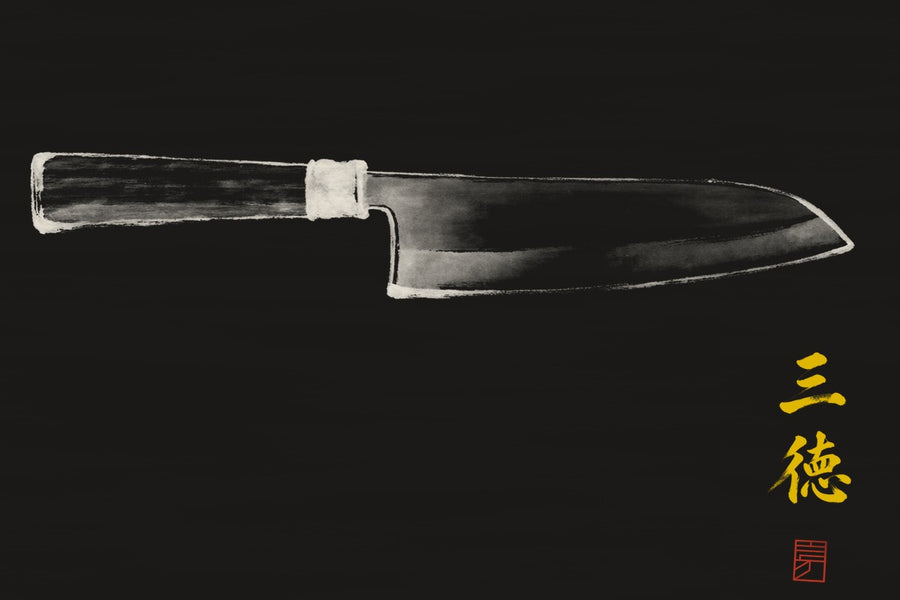
A Japanese dictionary explains the name of the santoku (三徳包丁) as coming from the three things it handles: meat, fish and vegetables. The same dictionary entry points from the santoku to the bunka (文化包丁), treating the two as one knife.

One Japanese knife maker guide distinguishes the two by the tip. It says that in the Showa era the bunka was made with its tip cut at an angle, and the santoku came after it by rounding that tip.

What is Ginsan steel, and why do some Japanese knives use it?

Ginsan steel, also known as Silver #3 or G3, is a stainless steel made by Proterial in Japan, containing 0.95 to 1.10% carbon and 13.00 to 14.50% chromium, and it is used in Japanese knives because it combines the sharpness and ease of sharpening of carbon steel with the rust resistance of stainless steel. It is a fine-grained steel that takes a very sharp edge, and rated by Proterial at over 59 HRC, it offers a practical balance of edge retention and sharpenability for everyday kitchen use.

The name "Ginsan" (銀三) literally means "silver three," referring to its Silver #3 designation. Its moderate chromium content makes it far less reactive than carbon steels, so it won't discolor or rust as quickly, while its carbon content keeps the edge keen and responsive on the stones. For home cooks and professionals who want a stainless knife that still feels like a traditional Japanese blade, Ginsan is a common middle ground.

Is Ginsan stainless?

Yes. Proterial lists the steel as GIN 3 (銀紙3号) with 13.00 to 14.50% chromium, above the Japan Stainless Steel Association's 10.5% minimum for stainless steel.

Proterial describes it as a stainless steel with hardness and sharpness comparable to carbon steel, used in various kitchen knives and scissors, and the association notes that stainless, strictly, means it rusts less. Wash the knife and dry it after use.

What is the Tsunehisa Ginsan Migaki knife line, and who is it for?

The Tsunehisa Ginsan Migaki knife line is a budget-friendly, entry-level Japanese knife series that uses Ginsan (Silver #3) stainless steel and features a slightly thicker spine with a convex grind to prioritize food release over pure cutting thinness.

This line is designed for first-timers and home cooks who want a Japanese knife that is easy to maintain and forgiving to use. The thicker spine and convex grind mean the blade is less likely to wedge in dense foods like carrots or potatoes, and it pushes cut food away from the blade more effectively than a very thin, flat-ground knife. The steel, Ginsan, is a straightforward stainless that is one of the easiest to sharpen, making it an ideal choice for someone still learning proper sharpening technique. The trade-off is that it won't feel as laser-like or slice through onions with the same effortless resistance as thinner knives, but for a household cook who values versatility and less sticking, this is a practical and well-considered design.

What does the name Tsunehisa mean?

Tsunehisa (恒久) means permanence. Shibata Knives describes Tsunehisa as its original brand, and says it selects knives that will have a long life, inspecting each one before delivery. Its own words are that it delivers knives worthy of a permanent position in your home.

The brand is built on traditional Japanese forging techniques with modern materials, and Shibata Knives offers after-sales maintenance and sharpening for the line.

Is Tsunehisa a brand or a blacksmith?

Tsunehisa is a brand, not a single smith or a workshop. Shibata Knives describes it as an original brand of the company, run by Takayuki Shibata, and Shibata Knives does not name the workshop that makes each line. The company inherits traditional Japanese forging techniques with modern materials, and experienced staff inspect each knife before it is delivered.

What stands behind each Tsunehisa knife is that selection and inspection, and the company offers after-sales maintenance and sharpening for the line.

You May Also Like