Prahran, VIC store now open from Friday to Tuesday, 10am till 6pm.

Hatsukokoro  |  SKU: HST-GR-G3-GY21EB

Hatsukokoro Ginrei Ginsan Gyuto 210mm Nashiji Ebony

Regular price $199.95

Availability

  • St Peters, NSW
    2 Bishop St, Unit 2, St Peters NSW 2044
  • Crows Nest, NSW
    107 West St, Shop 1, Crows Nest NSW 2065
    Pickup only
  • Prahran, VIC
    180 Commercial Road, Shop 1, Prahran VIC 3181
    Pickup only
Detailed Specifications
Line Hatsukokoro Ginrei Ginsan Nashiji
Profile Gyuto / Chefs Knife
Bevel Type Double Bevel
Weight 154 g | 5.4 oz
Edge Length 210 mm | 8 17/64″
Heel Height 49 mm | 1 59/64″
Width @ Heel 1.9 mm | 5/64″
Width @ Mid 1.9 mm | 5/64″
Width @ 1cm from Tip 0.6 mm | 1/32″
Steel Ginsan / Silver #3 | Stainless
Blade Construction Sanmai - Stainless Clad
Hardness (HRC) 60 - 62
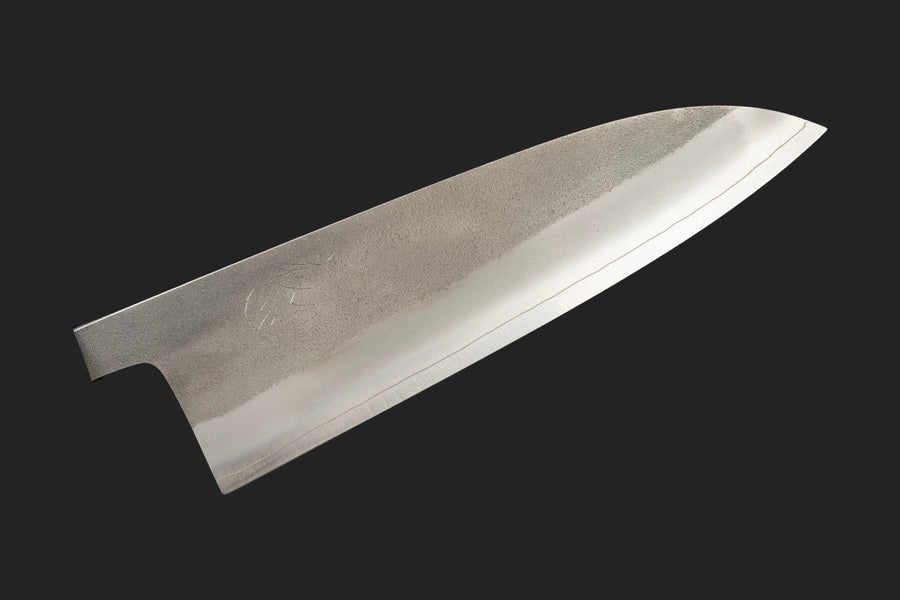
Surface Finish Nashiji
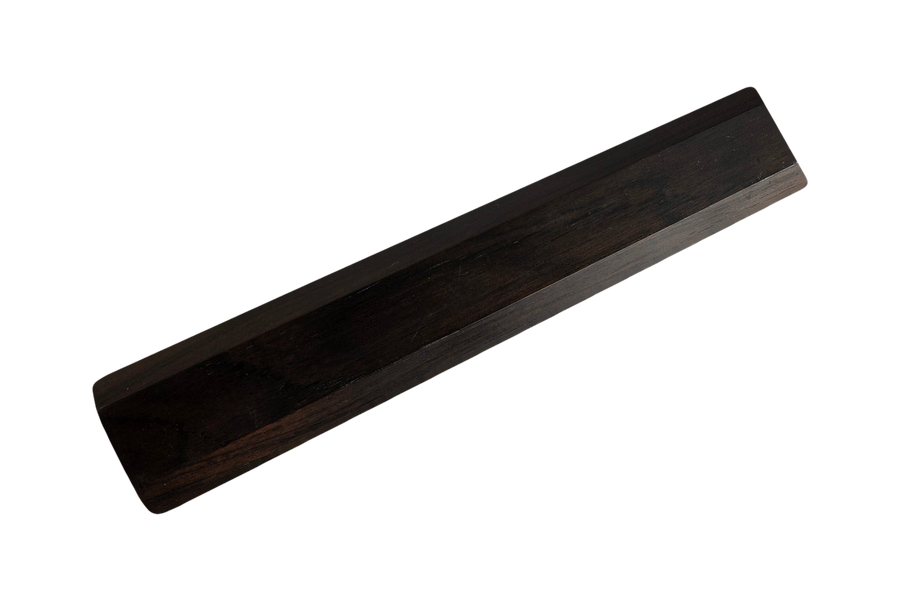
Handle Octagonal Ebony
Region Hyogo
Best for
  • First-timers
  • Pro chefs
  • Students
  • Free shipping for knives over AU$200 Australia wide.
  • World-wide shipping via DHL Express, 3 to 5 days.


The Hatsukokoro Ginrei(銀嶺, Silver peak) Series is one of those quiet standouts that genuinely surprises once it hits the cutting board. Finished in a rustic Nashiji texture, the Ginrei line carries a timeless, understated look that feels purposeful and fitting to its name without trying to draw unnecessary attention.

At its core is Hitachi Ginsan (Silver #3) steel heat treated to around 61 HRC, this classic recipe delivers an excellent balance of stainless convenience, edge stability, and ease of sharpening. What truly sets the Ginrei series apart is what Hatsukokoro did to it: putting on a really thin bevel and aggressive edge, leading to an excellent cutting smoothness in this price range. It excels especially in going into dense roots and corms, as the thickness of the bevel is kept very low. Although there is some sticking when slicing juicy food into thin pieces, it is still a pretty high performance geometry.

The Ginrei line offers a variety of profiles, including some you wouldn’t find easily. The K-tip petty would offer great function and precision when carving small items, and the 205mm K-tip “Gyuto” is a great slicer with a length uncommon for typical Sujihiki. The 210mm Gyuto takes the shape of the Hikari line, with a raised tip that leads to an edge profile that matches a typical western chef knife, meaning it is great at rocking chopping. For those who seek a specific type of blade for a specific type of work, you might be able to pick up one from the Ginrei line with a very reasonable price.

Adding further value is the classic octagonal ebony handle, a premium touch rarely seen at this price point, offering excellent balance, durability, and a refined feel in hand. Overall, the performance-to-price ratio is outstanding, making the Ginrei series a budget-friendly yet highly capable choice for professionals and serious home cooks alike.

Pros Cons
  • Great for professionals
  • Budget friendly
  • Great OOTB
  • Ideal for the household
  • Fit and finish can be improved
Care Instruction
  1. Don't cut hard things! Japanese knives are brittle so bone hacking is a NO NO!
  2. Wash with neutral detergent after use, and wipe dry;
  3. Please don't wash knife with dishwasher, it will damage the wood handle;
  4. Be careful not to leave the knife close to a heat source for a long time;
  5. It is a lot more dangerous to cut with a blunt knife than a sharp knife!
  6. It is best to sharpen a Japanese knife regularly on a waterstone.

Hatsukokoro

Rising star of the industry

Hatsukokoro as a brand works extensively with the Japanese kitchen knife industry. Through collaboration with makers and manufacturers across the Japan, they’ve designed and created a huge collection of different knives, covering every possible price range while having a great value in many of their product lines. Their capabilities to incorporate resources have built a strong relation with knife makers, and more and more are happy to send their knives down to Amagasaki and have them delivered across the world.

“The rapidly expanding new brand in the industry based in Amagasaki, offering great varieties by working close with different makers across entire Japan to the entire globe while innovating in product design and metal fabrication.”

Est. 2019 | 令和元年
Known for Unrivalled product availability, exceptional performance at a highly competitive price.
Website handk.co Instagram @handk_official Read more about Hatsukokoro
Hatsukokoro — Hyogo
Profile: Gyuto
Profile

Gyuto

Chefs Knife

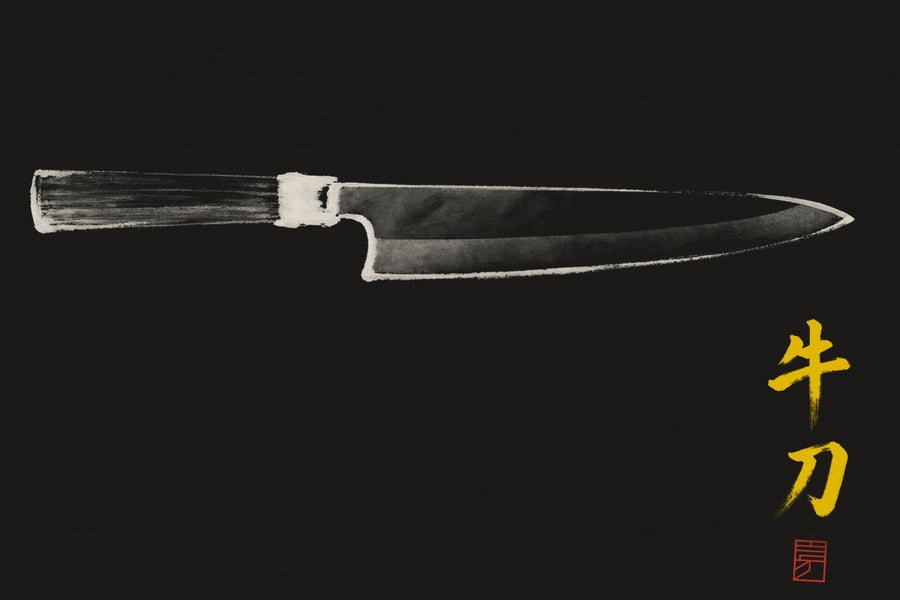
A Japanese chef's knife is known as a gyuto (牛刀 ぎゅうとう) gyūtō), literally meaning 'beef knife'. Its blade resembles a flatter version of a French chef's knife. Japanese cutlery is known for sharpness due to its acute blade geometry, and the hardness of the steel used, sometimes exceeding 60 HRC on the Rockwell Scale A typical western chef's knife may be sharpened to an edge angle of 20-22°, while a Japanese gyuto generally has a sharper edge angle of 15-18° (or even lower), which requires a harder, more brittle grade of steel. In recent years Japanese gyuto have gained in popularity with western chefs.

A modern chef's knife is a multi-purpose knife designed to perform well at many differing kitchen tasks, rather than excelling at any one in particular. It can be used for mincing, slicing, and chopping vegetables, slicing meat, and disjointing large cuts.
Composition

Ginsan / Silver #3 Element Composition

Compare with
    Ginsan / Silver #3
    13.75% 10.3% 6.9% 3.4% 0
    C Carbon 1.02%
    Primary hardening element. Raises hardness and wear resistance — but too much increases brittleness and corrosion susceptibility. As a reference: German 1.4112 (~0.5%) sits at the low end; VG-10 (~1.0%) is a common mid-range; SG2 (1.25–1.45%) and ZDP-189 (~3.0%) represent high and extreme ends respectively.
    C
    1.02%
    Cr Chromium 13.75%
    Raises corrosion resistance; 13%+ qualifies steel as stainless. Also improves hardenability and wear resistance. In kitchen use, higher chromium levels contribute to a slight drag or sticking sensation when cutting — a trade-off for the rust resistance it provides.
    Cr
    13.75%
    Mn Manganese 0.8%
    Aids hardenability and strength. Acts as a deoxidiser during smelting. Excess can reduce toughness.
    Mn
    0.8%
    Si Silicon 0.35%
    Strengthens the steel matrix and acts as a deoxidiser. Improves hardness and resistance to oxidation.
    Si
    0.35%
    P Phosphorus 0.03%
    Impurity from the smelting process. Even small amounts cause brittleness — steelmakers keep this as low as possible.
    P
    0.03%
    S Sulfur 0.02%
    Impurity that reduces toughness and promotes brittleness. Intentionally added only in free-machining steels.
    S
    0.02%
    C — Carbon Cr — Chromium Mn — Manganese Si — Silicon P — Phosphorus S — Sulfur
    Hardness 60–62 HRC
    555759616365+
    Steel
    Ginsan / Silver #3
    Category
    Stainless
    Manufacturer
    Hitachi Special Steel, Japan 🇯🇵
    Hardness
    60–62 HRC
    Steel

    Ginsan / Silver #3

    • Manufacturer
      • Hitachi Special Steel, Japan
    • Nature Stainless
    • Hardness60–62 HRC
    Ginsan steel, also known as Silver 3 or G3 steel, is a type of stainless steel used in high-quality kitchen knives. It is appreciated for its ability to offer the traditional feel and sharpness of carbon steel while providing the corrosion resistance of stainless steel. Ginsan steel contains a moderate amount of carbon, chromium, and other alloying elements that ensure a good balance between edge retention and ease of sharpening. This steel is particularly favored for its fine grain structure, which allows for a very sharp edge, and its resistance to rust makes it a popular choice among professional chefs and home cooks who seek the performance of carbon steel without the maintenance challenges. Ginsan steel knives are known for their durability, ease of care, and excellent cutting performance, making them a preferred option for those looking for high-quality stainless steel cutlery.
    Construction: Sanmai - Stainless Clad
    Construction

    Sanmai - Stainless Clad

    Sanmai(Three-Piece) is a common construction for double bevel knives where two pieces of softer cladding steel are forgewelded to each side of a harder core steel. The harder but more brittle core steel will form the hard cutting edge after heat treating, and the softer cladding will support the core to increase the overall strength of the blade.

    The soft cladding enables the thinning process to be a lot easier than a honyaki or monosteel construction. And in the case where the cladding steel are stainless in nature, it can offer protection for the carbon or semi-stainless cores against rusting and discoluoring.

    Finish: Nashiji
    Finish

    Nashiji

    The "nashiji finish" on Japanese kitchen knives refers to a unique, textured surface finish that resembles the skin of an Asian pear, which is known as "nashi" in Japanese. This finish is achieved through a specific hammering and polishing technique, giving the knife blade a distinct, matte appearance with a slightly uneven, tactile surface. Beyond its aesthetic appeal, the nashiji finish also provides practical benefits. It helps to reduce food sticking to the blade by creating tiny air pockets between the food and the steel. This finish is commonly found on traditional Japanese knives, such as santokus and nakiris, and is highly valued for both its functional and visual characteristics, enhancing the overall culinary experience.

    Handle
    Handle

    Octagonal Ebony

    • Profile Octagonal WA
    • Material
      • Ebony

    This handle, crafted from a single piece of ebony, exemplifies minimalist elegance and functional design. Its unique octagonal shape, featuring a subtle taper, offers a comfortable grip and a visually appealing geometric profile. The ebony wood, known for its deep, rich color and durability, has been meticulously milled from a single block, ensuring a seamless construction that highlights the wood's natural beauty and grain. The handle's surface has been highly polished, achieving a glossy finish that not only enhances the ebony's luxurious dark hue but also provides a smooth, tactile experience for the user. This design choice reflects a minimalist approach, focusing on simplicity, quality, and usability. The combination of the octagonal shape with the taper adds a modern twist to the classic material, making it a standout piece that blends traditional craftsmanship with contemporary aesthetics.

    1 / 5

    Frequently asked questions

    Gyuto or santoku - which should I choose?

    Both are all-purpose Japanese knives, and for most home cooks either will handle the bulk of daily prep. The choice comes down to length, blade shape, and how you like to cut.

    A gyuto is the Japanese chef's knife - typically 210 to 240mm with a gently curved edge that lets you rock and slide through cuts as well as chop. The extra length and pointed tip give you reach and versatility, from proteins to large produce.

    A santoku is shorter, usually 165 to 180mm, with a flatter profile and a rounded sheep's-foot tip. It rewards a straight up-and-down push cut, feels nimble in smaller hands or tight kitchens, and is the classic Japanese household knife.

    Rule of thumb: choose a gyuto if you want one do-everything knife with more reach, or a santoku if you prefer a compact, easy-to-control blade. Plenty of our customers end up owning both.

    What is a Gyuto, and what is it used for?

    A gyuto is the Japanese chef's knife — a double-bevel general-purpose kitchen knife. The name literally means "beef sword," and it's still a fair job description: you use it to slice meat, chop vegetables, dice aromatics, and break down fish. If you own one good knife, this is the shape it should be.

    Versus a typical Western chef's knife, a gyuto is thinner behind the edge, sharpened to a keener angle (roughly 15–18° rather than 20–22°), and usually made from harder steel — often above 60 HRC. That's what makes it slice so cleanly: less crushing, less tearing. The trade-off is a more brittle edge, so it asks to be honed and sharpened more attentively than a soft Western blade.

    Blades run from compact 150mm to long 240mm, but for a home kitchen I'd start at 210mm — my sizing FAQ explains why.

    What size gyuto should I buy?

    In a home kitchen I'd pick a 210mm gyuto. It's the sweet spot: long enough for a full slicing stroke, short enough to stay nimble on a normal cutting board and easy to control while you're still building your technique.

    Step up to a 240mm only if you regularly break down large cuts — roasts, whole fish, big vegetable prep. The extra length means longer strokes and fewer passes, but it also means more weight and a bigger board; if the tip is hanging off your bench you're fighting the knife, not cooking with it. If you're mainly doing vegetables and portions, the 240 gives you nothing you'll use.

    For a first gyuto, buy a well-made stainless one around 210mm in the low hundreds. Traditional carbon steels (white and blue paper steel) cut and sharpen beautifully, but they rust if you leave them wet — learn one variable at a time. Better steel is step two.

    240mm vs 210mm gyuto — which size should I choose?

    My call: get the 210mm. I only steer people to a 240mm when they regularly break down roasts, poultry, or whole fish — that's the one job where the extra 30mm genuinely changes how you work.

    The trade-off is stroke length versus handling. A 240 slices through a big piece of meat in one or two long draws; a 210 does the same job with more passes but much lighter handling, and fine work — herbs, small dice — stays quick instead of feeling like more knife than you need. The 240 also wants a bigger board, or its tip hangs off the edge and you compensate without noticing.

    Longer is not more professional, it's just for bigger food. If you cook like most home cooks, the 210 is the knife you'll reach for every day, and choosing it is a decision, not a compromise.

    What is the Hatsukokoro Ginrei Ginsan Nashiji knife line, and who is it for?

    The Hatsukokoro Ginrei Ginsan Nashiji is a budget-friendly line of Japanese kitchen knives featuring Hitachi Ginsan steel heat treated to 61 HRC, designed for first-timers, students, and professional chefs who need reliable tools without a high price tag.

    In stock at Knives and Stones, this series includes budget-friendly models like the 120mm K Tip Petty, the 175mm Santoku, and both the 210mm Gyuto and 205mm K-tip Gyuto, all finished with a rustic Nashiji texture and Ebony handles. While the catalog notes that fit and finish can be improved, the line is recognized for being great out of the box and offering a balance of stainless convenience, edge stability, and ease of sharpening.

    You May Also Like