PRAHRAN STORE NOW OPEN · THU–MON · 10AM–6PM

Nigara  |  SKU: NG-ANVG10DM-KGY21BR

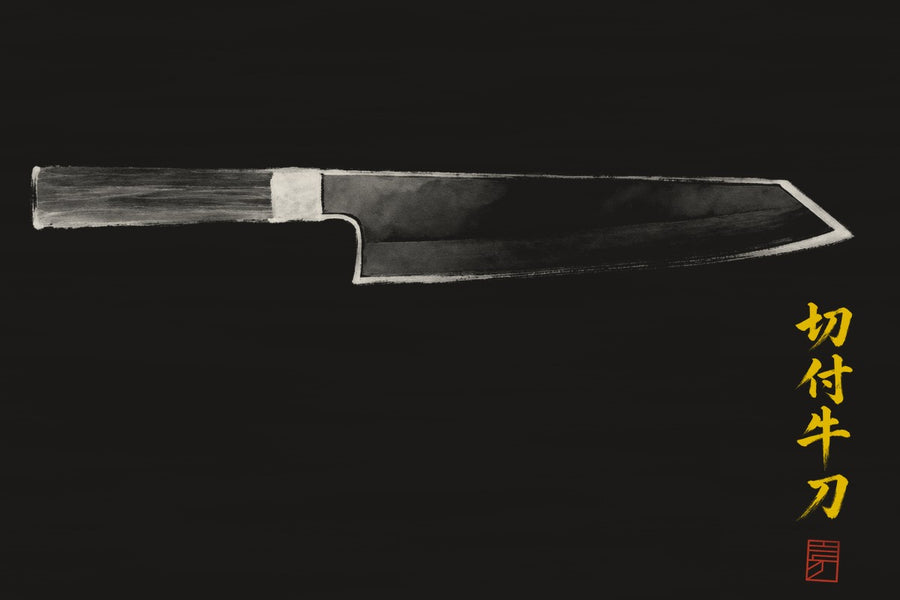
Nigara Ginsan Kurozome Damascus K-tip Gyuto 210mm Birch Handle

Regular price $679.95

Sold out right now

Leave your email and we’ll send one message the moment it’s back in stock.

One email, no marketing. Privacy policy.

Availability

  • St Peters, NSW —
    2 Bishop St, Unit 2, St Peters NSW 2044
  • Crows Nest, NSW —
    107 West St, Shop 1, Crows Nest NSW 2065
    Pickup only
  • Prahran, VIC —
    180 Commercial Road, Shop 1, Prahran VIC 3181
    Pickup only
Detailed Specifications
Line Nigara Ginsan Kurozome Damascus
Profile K-tip Gyuto / K-tip chef's knife
Bevel Type Double Bevel
Weight 223 g | 7.9 oz
Edge Length 197 mm | 7 3/4″
Heel Height 49 mm | 1 59/64″
Width @ Heel 4.9 mm | 3/16″
Width @ Mid 3.3 mm | 1/8″
Width @ 1cm from Tip 0.7 mm | 1/32″
Steel Ginsan / Silver #3 | Stainless
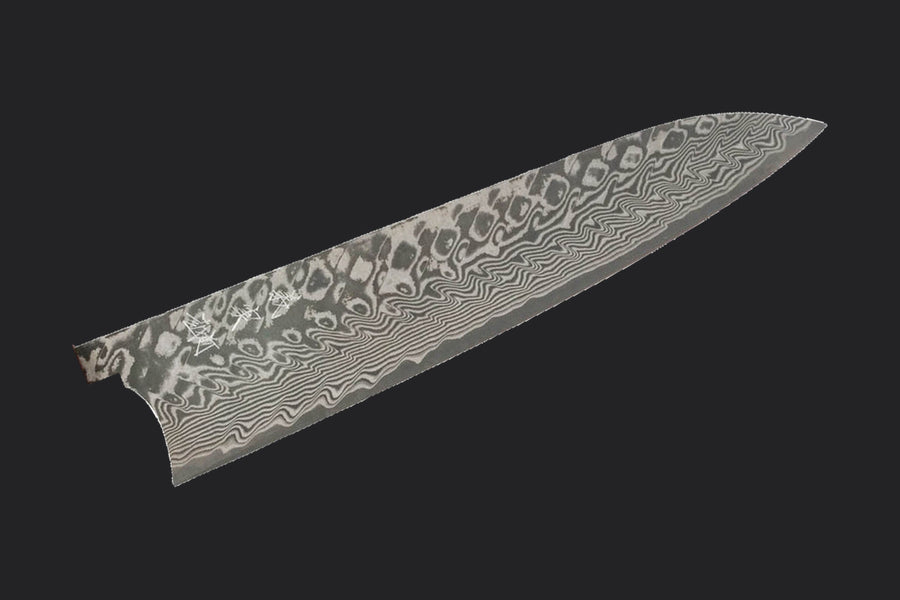
Blade Construction Sanmai - Stainless Damascus Clad
Hardness (HRC) 60 - 62
Surface Finish Etched
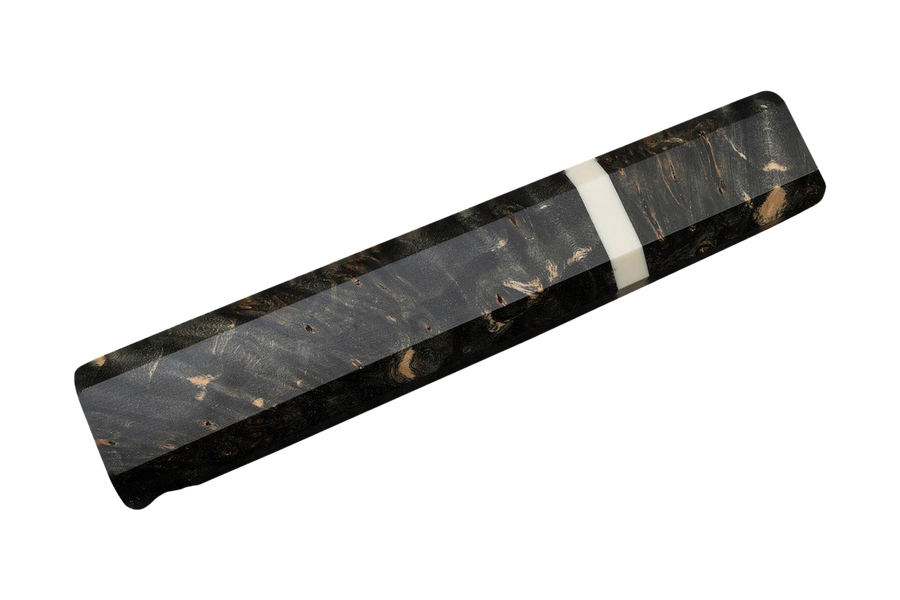
Handle Octagonal Birch Burl with Spacer
Region Aomori
Best for
  • Enthusiasts
  • Collectors
  • Free shipping for knives over AU$200 Australia wide.
  • World-wide shipping via DHL Express, 3 to 5 days.


This line that Nigara started producing recently is another step forward toward a intricate yet astonishing knife with decorative elements. The combination of various forging and finishing techniques have given blades from this line extensive amount of detail, but they are arranged so beautifully on one single knife that there are no compromise on visual integrity.

I believe there is a need to unfold these blades layer by layer, that is how complicated they are. The innermost core is the Hitachi Ginsan steel, which often considered as the stainless alternative of the famous White 2 carbon steel. What characterise Ginsan is the low alloy content other than chromium, which allows it to be sharpened easier than most of the other stainless steels, while maintaining good edge retention and hardness. This more premium steel forms a good foundation for this product line to have a good cutting edge and being easy to sharpen.

Cladded over the core steel is a beautiful damascus cladding. Unlike the Anmon series, this line doesn't have a dazzling raindrop damascus pattern. Instead, the alternating steel reveal themselves dense bands, with observable marks that indicate how they are struck and forms the final wavy pattern. Athough it is a dense pattern, the Kurozome etching have created a high contrast between two steels so each layer can be clearly identified. On the Gyuto and Petty with a Kiritsuke tip, since they have an additional grind put above the tip to thin them down further, the exposed pattern will have two density converging at the tip, making the beautiful pattern even more stunning.

The last layer of steel on top of the damascus takes up most of the flat area of the knife, it receives a Nashiji-like treatment, however, the finish is not uniform and there are still rough marks left from forging, indicating the strikes from tools and oxidation from heat treating that the blade have gone through. These spots of darker marks spreads organically across the blade, working in conjunction with the Nashiji finish to give the knife a weathered mineral look, almost like Nigara have forged its extensive history into the blade.

The final touch is the Kurozome finish, which uses acidic solution to darken the steel, as different composition react differently, some higher carbon steel will become darker than steel with chromium in it. This finish in my opinion is the finishing touch that brings the whole knife together, not only it gives contrast to the damascus, it coats the whole blade with a layer of dull, unifying yellow tint, along with the thickened Sanjo-style tang, the entire line emits a sense of density, which is what I believe the intent of the designer/maker from Nigara.

For the cutting performance, this blade won't excel against the thinner blades like Shiro Kamo Kurokumo or geometrically optimised blade from Yoshikane Hamono, its thicker bevel have already determined that it is a workhorse grind. Although it is not the best for food penetration, the edge sharpness is still quite up to our standard.

This Ginsan line produced by Nigara is one of the most complicated product line I've seen in terms of finishing techniques, yet it is well-curated so the end result is stunning to say at least. It will finally comes down to if you think the hefty price tag is worth it, but I believe it is not too much to ask for a quite practical stainless knife that is packed fully with wow factor.

Pros Cons
  • Great artistic
  • Highly collectable
  • Workhorse grind
  • Heavy
  • High budget
Care Instruction
  1. Don't cut hard things! Japanese knives are brittle so bone hacking is a NO NO!
  2. Wash with neutral detergent after use, and wipe dry;
  3. Please don't wash knife with dishwasher, it will damage the wood handle;
  4. Be careful not to leave the knife close to a heat source for a long time;
  5. It is a lot more dangerous to cut with a blunt knife than a sharp knife!
  6. It is best to sharpen a Japanese knife regularly on a waterstone.

Nigara

Hirosaki sword and knife artisan

Nigara (二唐刃物鍛造所) is a forge in Hirosaki, Aomori. Go Yoshizawa (吉澤剛) is its president and signs as the eighth generation; his father, Toshiju Yoshizawa (吉澤俊寿), the seventh generation, is chairman.

Nigara dates its line to 1803, when the family began as gunsmiths in the service of the Tsugaru domain, and it made Japanese swords for generations. In the Edo period the domain took it on as its weapons works, and it made even cannon and warships. After the Second World War the forge turned from military swords to farm tools and kitchen knives; in those years it made knives in winter and sold them in summer.

In the early Showa era a Nigara smith whose sword name was Kunitoshi (国俊) studied under Dr Kotaro Honda, director of Tohoku University's metals research institute. Nigara's company history says he excelled at sword making. He was recognised as a holder of an intangible cultural property of Aomori Prefecture and passed his skill on to the seventh generation. The sixth generation had no son, so Toshiju, a grandson through a daughter's line, joined as heir. The present company dates from 1949, and besides knives it does welding and steel construction work, with a welding department since 1963. Nigara showed at Maison et Objet in Paris in 2011 and at Ambiente in Frankfurt in 2013.

We have visited Nigara several times, once for a few days of hands-on training at the forge.

The Anmon Damascus knives we list come in SG2 as gyuto, kiritsuke gyuto, bunka, santoku, nakiri, petty and sujihiki, and as single-bevel yanagiba and takobiki in Blue 2 and Ginsan. SG2 tsuchime knives, kurouchi or matt migaki, cover gyuto, petty, santoku, nakiri, bunka and sujihiki, plus a double-bevel honesuki and a butcher. We also list VG10 Damascus tsuchime, Ginsan Kurozome Damascus and Aogami Super tsuchime knives, and an SPG STRIX tsuchime Damascus nakiri. The honyaki are Blue 2 with shaped hamon, as yanagiba, kiritsuke yanagiba and sakimaru, and a White 1 kiritsuke yanagiba.

“An Aomori knife company whose family made Japanese swords for generations, with an Anmon line of Damascus knives.”

Est. 1949 | 昭和24年
Known for Glamorous and innovative knife design, inherited forging skills.
Website nigaraknives.com Read more about Nigara

Nigara · Aomori

Knife details

Frequently asked questions

Is a K-tip Gyuto the same as a traditional Kiritsuke?

Not quite - and it is the single most common point of confusion when people shop for a kiritsuke. The two knives share the same striking angled, reverse-tanto tip, but underneath that tip they are very different tools.

A K-tip gyuto is normally a double-bevel knife: it is ground on both sides like any Western-style chef's knife, so it is forgiving to use, and sharpened exactly the way you would sharpen a normal gyuto. You get the dramatic kiritsuke look with the everyday usability of an all-purpose chef's knife.

A traditional kiritsuke, including the kiritsuke-yanagiba (slicer), is a single-bevel knife, ground on one side only. It is historically a master chef's knife: it takes real practice to use well, is set up for right-handed users by default, and needs single-bevel sharpening technique to maintain.

So if you want the kiritsuke silhouette with no learning curve, choose a K-tip gyuto. If you specifically want the traditional single-bevel discipline - and the precision it allows on fish and vegetables - choose a true kiritsuke. At Knives and Stones we stock both, and each product page tells you which construction you are looking at.

What is Ginsan steel, and why do some Japanese knives use it?

Ginsan steel, also known as Silver #3 or G3, is a stainless steel made by Proterial in Japan, containing 0.95 to 1.10% carbon and 13.00 to 14.50% chromium, and it is used in Japanese knives because it combines the sharpness and ease of sharpening of carbon steel with the rust resistance of stainless steel. It is a fine-grained steel that takes a very sharp edge, and rated by Proterial at over 59 HRC, it offers a practical balance of edge retention and sharpenability for everyday kitchen use.

The name "Ginsan" (銀三) literally means "silver three," referring to its Silver #3 designation. Its moderate chromium content makes it far less reactive than carbon steels, so it won't discolor or rust as quickly, while its carbon content keeps the edge keen and responsive on the stones. For home cooks and professionals who want a stainless knife that still feels like a traditional Japanese blade, Ginsan is a common middle ground.

Is Ginsan stainless?

Yes. Proterial lists the steel as GIN 3 (銀紙3号) with 13.00 to 14.50% chromium, above the Japan Stainless Steel Association's 10.5% minimum for stainless steel.

Proterial describes it as a stainless steel with hardness and sharpness comparable to carbon steel, used in various kitchen knives and scissors, and the association notes that stainless, strictly, means it rusts less. Wash the knife and dry it after use.

What is the Nigara Ginsan Kurozome Damascus knife line, and who is it for?

The Nigara Ginsan Kurozome Damascus is a line of knives with a Ginsan steel core, clad in decorative Damascus and finished with a Kurozome (blackened) Nashiji texture.

We see its thicker bevel as a workhorse grind. We list it as gyuto (including K-tip gyuto), bunka and sujihiki.

How old is Nigara, and did it make swords?

The Nigara family line began in 1803, when the family served the Tsugaru domain as gunsmiths. For generations afterwards it made Japanese swords.

After the Second World War, the forge turned to blades for everyday life, including farm tools and kitchen knives.

Who leads Nigara today?

Go Yoshizawa, president of Nigara Hamono Forge, leads it today and signs as the eighth generation of the Nigara family line.

The company is Nigara Hamono Forge (二唐刃物鍛造所), in Kanazoku-machi, Hirosaki, Aomori.

Is Nigara a good knife maker?

We think so. Nigara's own company page says its family line began in 1803 as gunsmiths retained by the Tsugaru domain and made Japanese swords for generations, before turning to farm tools and kitchen knives after the Second World War.

We have visited Nigara several times, once for a few days of hands-on training with them, and we list its knives in steels such as SG2, Blue 2, Ginsan and VG10.

You May Also Like