PRAHRAN STORE NOW OPEN · THU–MON · 10AM–6PM

Takamura  |  SKU: TKMR_SGMI_SA170

Takamura SG2 Migaki Santoku 170mm

Regular price $269.95

Sold out right now

Leave your email and we’ll send one message the moment it’s back in stock.

One email, no marketing. Privacy policy.

Availability

  • St Peters, NSW —
    2 Bishop St, Unit 2, St Peters NSW 2044
  • Crows Nest, NSW —
    107 West St, Shop 1, Crows Nest NSW 2065
    Pickup only
  • Prahran, VIC —
    180 Commercial Road, Shop 1, Prahran VIC 3181
    Pickup only
Detailed Specifications
Line Takamura SG2 Migaki
Profile Santoku / Santoku
Bevel Type Double Bevel
Weight 143 g | 5.0 oz
Edge Length 173 mm | 6 13/16″
Heel Height 46 mm | 1 13/16″
Width @ Heel 1.5 mm | 1/16″
Width @ Mid 1.5 mm | 1/16″
Width @ 1cm from Tip 0.8 mm | 1/32″
Steel SG2 / R2 | Powdered | Stainless
Blade Construction Sanmai - Stainless Clad
Hardness (HRC) 62 - 64
Surface Finish Migaki
Handle Western Pakka Wood with Bolster
Region Echizen
Best for
  • Pro chefs
  • Enthusiasts
  • Free shipping for knives over AU$200 Australia wide.
  • World-wide shipping via DHL Express, 3 to 5 days.


Takamura SG2 is the brand’s signature product line that has excellent performance, low maintenance and great value, its simplistic Migaki finish and red handle can be spotted from a mile away, and this look has become the hallmark of great professional tools. 

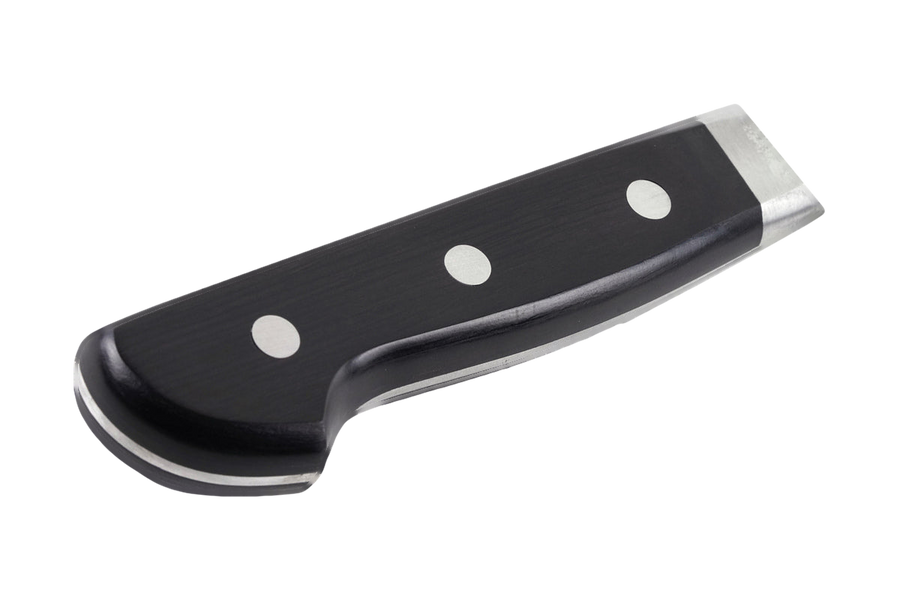
These knives’ role as professional tools is really shown through their construction: synthetic western full tang handle with bolster and handle pins. Often we associate these features with budget Japanese knives, but these handles do have better durability and rarely get loose or crack after years of use. The joineries between the tang, bolster and the pakka wood handle material are nearly seamless, which just shows Takamura’s decades of experience in producing this type of knives. Despite being “full tang”, the tang of the knife doesn’t have the shape of the entire handle, this reduces the weight of the handle and makes the knife more balanced, the less exposed gap means there is less chance of water ingress into the handle.

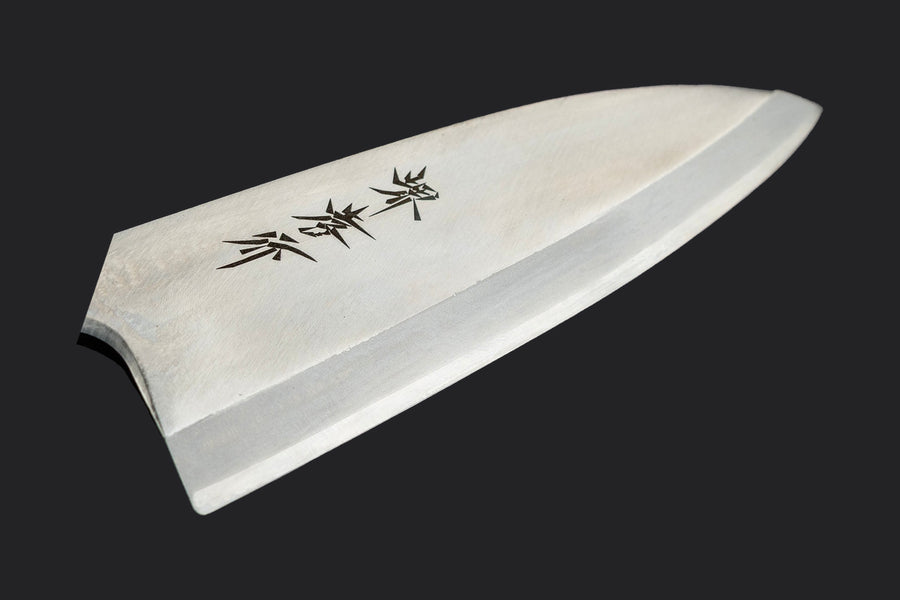
The blade itself is also extremely pragmatic, made with a simple Sanmai construction SG2 billet that is highly polished, this finish is very refined that the surface of the knife looks more like a satin finish instead of brushed finish. This smooth finish that is oriented towards the edge can minimise the friction when cutting into food but can encourage sticking. Takamura avoided this issue with a well done convex grind that helps thin slices fall away from the surface beautifully, and the amazing part is, they managed to do that while keeping the overall blade thickness pretty low and allowing the knife to handle some of the densest food without much wedging.

We can clearly see why this is a much welcomed knife in professional kitchens, it is low in maintenance, high in performance, very durable in construction and has a sharpness that lasts thanks to the powder stainless steel. Despite being high in demand all the time, Takamura still keeps the price of the knife very reasonable, for that price, I can understand why people would snatch it immediately when they become available. Although it is an excellent tool for chefs, it would be a very good knife to use for home cooks who appreciate simplistic and pragmatic designs.

Pros Cons
  • Excellent performance
  • Great for professionals
  • Thin behind the edge
  • A little bit brittle
Care Instruction
  1. Don't cut hard things! Japanese knives are brittle so bone hacking is a NO NO!
  2. Wash with neutral detergent after use, and wipe dry;
  3. Please don't wash knife with dishwasher, it will damage the wood handle;
  4. Be careful not to leave the knife close to a heat source for a long time;
  5. It is a lot more dangerous to cut with a blunt knife than a sharp knife!
  6. It is best to sharpen a Japanese knife regularly on a waterstone.

Takamura Hamono Seisakujo

Takamura Hamono, an Echizen workshop since 1945

Takamura Hamono is the Echizen workshop known by its mark Takamura saku (高村作), founded in December 1945 by its first generation after the Second World War. Its stated creed is good material, good forging and heat treatment, and good sharpening, and it says it makes its knives start to finish in house.

Read more

Takamura's own history page writes the founder's name only in kanji (高村勇); we know him as Isamu Takamura. The page says he was born in 1910, began smith training at 13 in 1923, and in December 1945 set up the forge that is now Takamura Hamono. Its early products were nakiri and farm blades, and as the times changed, home and professional kitchen knives became its main work. In 1954 the second generation, Toshiyuki, set out to make a stainless knife that cuts well, and the workshop forged stainless knives in integrated production from 1958, with tsuchime stainless knives following in 1964.

Its history lists the powder steel milestones: powder high-speed steel clad knives from 1982, powder stainless high-speed steel clad knives from 1985, and forged powder stainless Damascus knives from 1987. Takamura says it began making knives in such new materials earlier than anyone else. The history also records small ceremonial knives the workshop made for Ise Jingu, including for the Shikinen Sengu. Toshiyuki received the Fukui governor's award for excellent skill in 1987, was named a Contemporary Master Craftsman in 2015 and received the Medal with Yellow Ribbon in 2016. Takamura says its professional knives sell in more than 20 countries, including Germany, Sweden and Australia.

Its history also lists the Brazen TAKAMURA professional line (2002) and the Uchigumo forged powder stainless Damascus (2003), and the company says its iiza yobocho series won the iF Design Award 2017 gold, a first for Japan's knife industry. We list its SG2 Migaki in gyuto and santoku, and the Chromax Tsuchime santoku.

“An Echizen workshop making kitchen knives since 1945, known by its mark Takamura saku.”

Est. 1945 | 昭和20年
Known for Powder steel knives, which its history lists from 1982
Website takamurahamono.jp Instagram @terukazutakamura Read more about Takamura Hamono Seisakujo

Takamura Hamono Seisakujo · Echizen

Knife details

Frequently asked questions

Gyuto or santoku: which should I choose?

The gyuto came to Japan with the beef-eating culture of the Meiji era, and that is where its name comes from. Tojiro says it is used for all kinds of cooking, which is why it is also called the chef's knife.

The santoku is a household knife that combines the good points of the nakiri and the gyuto. Tojiro describes it as all-purpose, from vegetables to meat and fish, double-bevel and built on the same construction as a Western knife.

Choose a gyuto if you want more length and reach. Choose a santoku if you want a shorter all-purpose knife. Tojiro's own size figures: gyuto 150 to 210mm for household use and up to 360mm for professional use, santoku 165 to 170mm for household use.

Rock chop or up-and-down chop: which knife shape suits me?

Match the shape to your stroke. Rock chopping keeps the tip on the board and rolls the curved belly through the food, so a gyuto or a Western chef's knife suits it, and Japanese knives rock fine as long as you rock gently.

Up-and-down chopping, the Chinese style, wants a straight run of edge, so a nakiri, usuba, santoku or bunka suits it better; a curved edge chopped straight down easily leaves pieces joined. Neither shape is better; it depends on how you cut.

What does santoku mean?

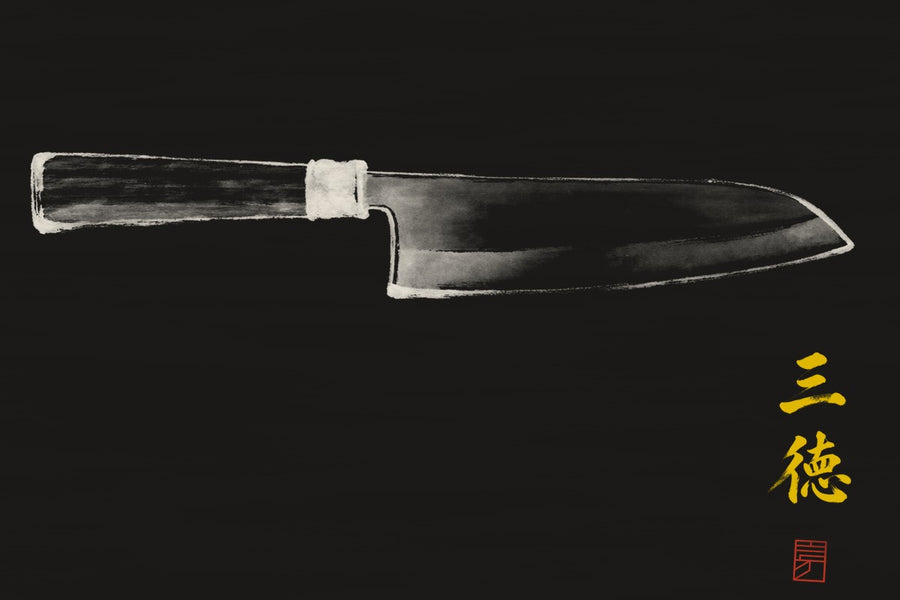
A Japanese dictionary explains the name of the santoku (三徳包丁) as coming from the three things it handles: meat, fish and vegetables. The same dictionary entry points from the santoku to the bunka (文化包丁), treating the two as one knife.

One Japanese knife maker guide distinguishes the two by the tip. It says that in the Showa era the bunka was made with its tip cut at an angle, and the santoku came after it by rounding that tip.

SG2 steel knives at Knives and Stones

SG2 (Super Gold 2, which Takefu writes as SPG2) is Takefu Special Steel's own blade steel, made by powder metallurgy. Takefu says it meets all four of what it calls the major requirements for a blade: high hardness, high toughness, good wear resistance and excellent corrosion resistance.

Takefu gives its hardness as HRC 62 or more and does not publish its composition. As of 18 October 2026, 291 of the knives we list have SG2 in their title.

SG2 vs AS steel for kitchen knives — which is better?

Neither is objectively better, it just depends on whether you value stainless convenience or a laser-sharp carbon edge. Go with SG2 if you want a knife that holds a screaming edge without any babysitting. Choose AS if you are chasing the thinnest possible edge and don't mind wiping the blade down after every use.

SG2 is a powdered stainless steel from Takefu, rated at 62 HRC or more. It is tough and resists corrosion, which is why I reach for it when working with acidic foods. Aogami Super is high carbon, and Proterial gives it a hardening hardness of over 60 HRC. It sharpens to a hair-whittling edge that lasts slightly longer than SG2, but it will rust if you neglect it.

R2 steel vs SG2: are they the same?

We can't confirm that from a steelmaker. SG2 (Super Gold 2, which Takefu writes as SPG2) is Takefu Special Steel's own blade steel, made by powder metallurgy. Takefu does not publish its composition and gives its hardness as HRC 62 or more.

As of 18 October 2026, we found no steelmaker page for a steel called R2. Some knives on our shelf are listed as SG2/R2: six as of 18 October 2026, from Kurosaki, Shiro Kamo and Yoshimi Kato.

What is the difference between VG10 and SG2?

Both are Takefu blade steels, and they differ in class and in what Takefu publishes about each. Takefu lists VG10 as a stainless steel with 1.00% carbon, 15.00% chromium, 1.00% molybdenum, 0.25% vanadium and 1.55% cobalt, at HRC 60 or more.

Takefu describes SG2, its Super Gold 2, as a blade steel created by powder metallurgy, lists its composition as not disclosed, and gives HRC 62 or more. Takefu also calls SG2 a powdered stainless high-speed steel.

You May Also Like