PRAHRAN STORE NOW OPEN · THU–MON · 10AM–6PM

Nakagawa Hamono  |  SKU: NAKG_G3-HNE150-DBEVL-EB

Nakagawa Double Bevel Ginsan Honesuki 150 mm Kasumi Ebony

Regular price $399.00

Sold out right now

Leave your email and we’ll send one message the moment it’s back in stock.

One email, no marketing. Privacy policy.

Availability

  • St Peters, NSW —
    2 Bishop St, Unit 2, St Peters NSW 2044
  • Crows Nest, NSW —
    107 West St, Shop 1, Crows Nest NSW 2065
    Pickup only
  • Prahran, VIC —
    180 Commercial Road, Shop 1, Prahran VIC 3181
    Pickup only
Detailed Specifications
Line Hatsukokoro by Nakagawa Ginsan Wide Bevel Kasumi
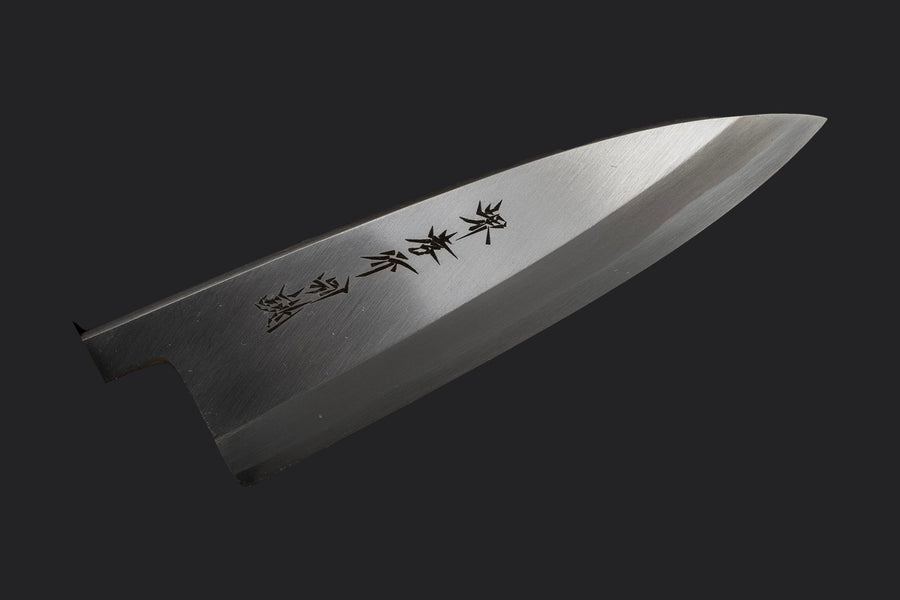
Profile Honesuki / Poultry boning knife
Bevel Type Double Bevel
Weight 130 g | 4.6 oz
Edge Length 142 mm | 5 19/32″
Heel Height 41 mm | 1 39/64″
Width @ Heel 2.8 mm | 7/64″
Width @ Mid 1.9 mm | 5/64″
Width @ 1cm from Tip 1.6 mm | 1/16″
Steel Ginsan / Silver #3 | Stainless
Blade Construction Sanmai - Stainless Clad
Hardness (HRC) 60 - 62
Surface Finish Kasumi
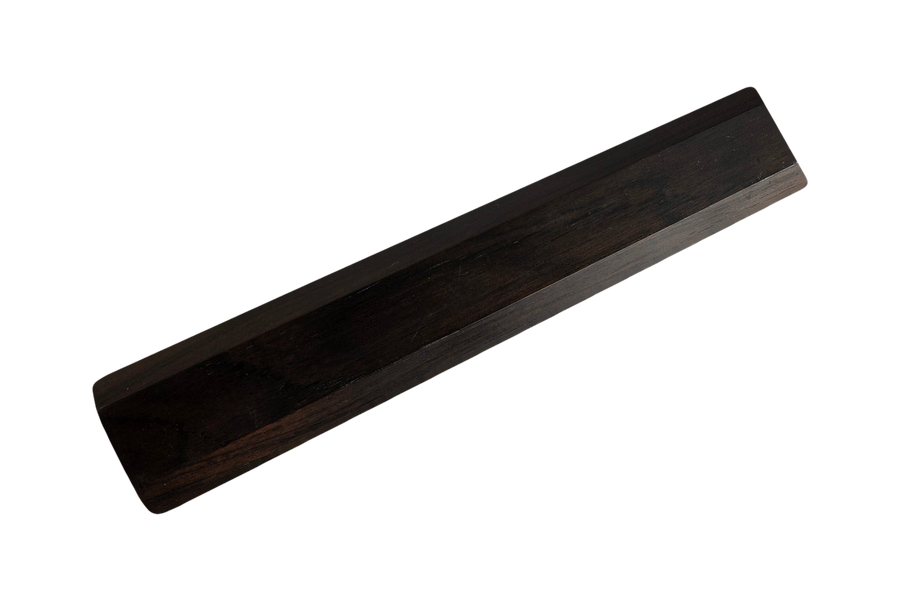
Handle Octagonal Ebony
Region Sakai
Best for
  • Pro chefs
  • Students
  • First-timers
  • Free shipping for knives over AU$200 Australia wide.
  • World-wide shipping via DHL Express, 3 to 5 days.


The Nakagawa Ginsan Wide Bevel is a line commissioned by Hatsukokoro that offers a series of very solid blades that are good for both professional works and home use. This line combines moderate thickness, decent profile and good detail finish in a completely stainless package, making these knives good all-rounders in most situations, wether at home or in a more professional setting.

The wide bevel in the name refers to the grind that these blades takes on. Usually Japanese double bevel knives will have a flat grind, where the secondary bevel starts all the way at the spine, in cases where the secondary bevels start halfway, they tend to blends into the flat zone slightly. This line however, have a very distinct boundary at the beginning of its secondary bevel,creating a very sharp and geometrycall look, especially on the Kiritsuke Gyuto, which distinct the entire line from other plain Migaki finish knives.

Performance of the knife on the chopping board is great, as the bevel takes a concave grind, it is of a good sharpness even the thickness of the spine is not as thin as some "laser" knives, though there is a slight tendency for the food to stick due to this grind. This combination allows the edge to be thin, while having more material behind the bevel to provide toughness in a professional setting.

The Ginsan steel used in this line is what makes these knives truly all-rounders in my opinion. Comparing with VG10, two steels have similar hardness and edge retention, but the higher alloy content in VG10(Mo,V and Co) makes the sharpening harder than a more "pure" composition like Ginsan's. Thus, in a commercial kitchen where the wearing and sharpening of knives happens more often, the Ginsan will often save time and efforts.

A drawback comes with Ginsan is that knives made with it tend to have a higher price, which is true on this line. Also, even the rounding and polishing on the spine and choil are all pretty good, the Migaki finish is not the aesthetically pleasing one in this price range. If these minor concerns don't bother you, this Ginsan wide bevel line will offer s me very good user's knives.

Pros Cons
  • Easy to look after
  • Ideal for the household
  • Great for professionals
  • High budget
Care Instruction
  1. Don't cut hard things! Japanese knives are brittle so bone hacking is a NO NO!
  2. Wash with neutral detergent after use, and wipe dry;
  3. Please don't wash knife with dishwasher, it will damage the wood handle;
  4. Be careful not to leave the knife close to a heat source for a long time;
  5. It is a lot more dangerous to cut with a blunt knife than a sharp knife!
  6. It is best to sharpen a Japanese knife regularly on a waterstone.

Satoshi Nakagawa

Satoshi Nakagawa's workshop in Sakai, since 2021

Nakagawa Hamono is Satoshi Nakagawa's (中川悟志) workshop in Sakai, registered as Nakagawa Uchihamono Co., Ltd. (株式会社中川打刃物), with its office and forge in Sakai Nishi-ku. The company says he carries on Sakai's forged knife industry.

He worked 16 years under Kenichi Shiraki (白木健一) as his only disciple and successor. In 2021 he took over his master's workshop and equipment and put up the Nakagawa Uchihamono sign.

Read more

The workshop's own profile says it works with White 3 to White 1, Blue 2 to Blue 1, stainless Ginsan and VG10, as well as honyaki. Sakai City's register lists Satoshi Nakagawa as a certified traditional craftsman in the forging division.

He has forged for Sakai Takayuki, and he forges the Hatsukokoro lines that carry his name, titled Hatsukokoro by Nakagawa and Hatsukokoro x Nakagawa.

The lines we list under his own name are Nakagawa Honyaki, the Nakagawa Blue 1 Damascus (double bevel, etched black, wide bevel) and the Nakagawa VG10 single bevel. The Hatsukokoro lines run across Ginsan, Blue 1 and Blue 2, in kasumi, wide bevel, single bevel, mirror polish and Damascus versions.

“A new-generation blacksmith in Sakai. ”

Est. 2021 | 令和3年
Known for Single bevel knives in Ginsan, Blue and VG10 steels.
Website nakagawa-knives.com Instagram @nakagawa_kajiya Read more about Satoshi Nakagawa

Satoshi Nakagawa · Sakai

Knife details

Frequently asked questions

What is a honesuki for?

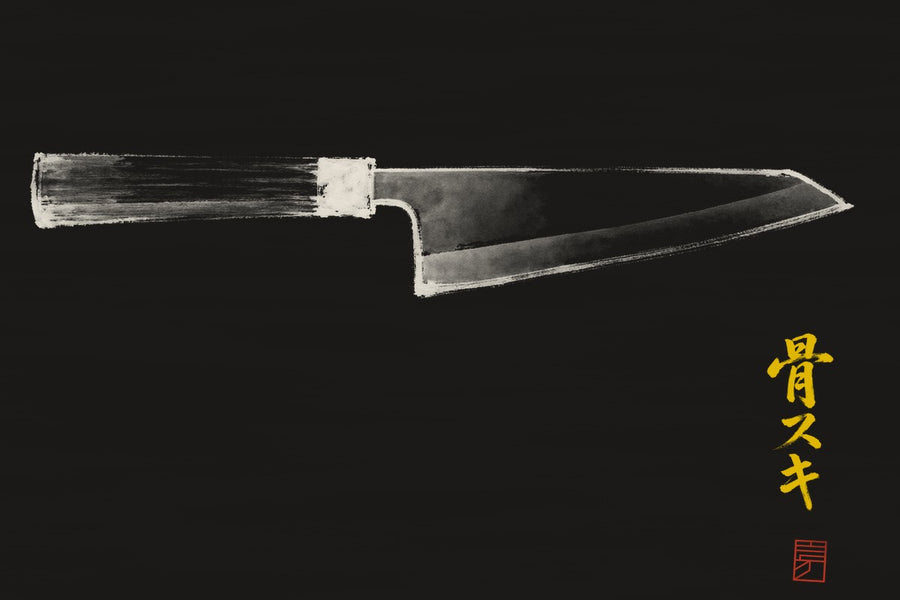
A honesuki (骨スキ) strips meat from the bone, the job a boning knife does elsewhere.

One Japanese knife maker describes the traditional honesuki as a shape unique to Japan, made with Japanese knife techniques and ground single-bevel (片刃), so it can also be used to prepare fish.

What is Ginsan steel, and why do some Japanese knives use it?

Ginsan steel, also known as Silver #3 or G3, is a stainless steel made by Proterial in Japan, containing 0.95 to 1.10% carbon and 13.00 to 14.50% chromium, and it is used in Japanese knives because it combines the sharpness and ease of sharpening of carbon steel with the rust resistance of stainless steel. It is a fine-grained steel that takes a very sharp edge, and rated by Proterial at over 59 HRC, it offers a practical balance of edge retention and sharpenability for everyday kitchen use.

The name "Ginsan" (銀三) literally means "silver three," referring to its Silver #3 designation. Its moderate chromium content makes it far less reactive than carbon steels, so it won't discolor or rust as quickly, while its carbon content keeps the edge keen and responsive on the stones. For home cooks and professionals who want a stainless knife that still feels like a traditional Japanese blade, Ginsan is a common middle ground.

Is Ginsan stainless?

Yes. Proterial lists the steel as GIN 3 (銀紙3号) with 13.00 to 14.50% chromium, above the Japan Stainless Steel Association's 10.5% minimum for stainless steel.

Proterial describes it as a stainless steel with hardness and sharpness comparable to carbon steel, used in various kitchen knives and scissors, and the association notes that stainless, strictly, means it rusts less. Wash the knife and dry it after use.

What is the Hatsukokoro by Nakagawa Ginsan Wide Bevel Kasumi knife line, and who is it for?

The Hatsukokoro by Nakagawa Ginsan Wide Bevel Kasumi is a commissioned line of stainless steel knives featuring a specific wide-bevel grind, designed as all-rounders for both professional chefs and home cooks.

This collection is built for users who need a durable, low-maintenance tool without the fuss of carbon steel, making it suitable for first-timers, students, and working pros alike. While the performance is solid for daily tasks, the trade-off is the cost, with current in-stock options like the 210mm Gyuto with an Ebony handle and the 170mm Santoku, both at a higher price point.

Are Hatsukokoro x Nakagawa knives forged by Satoshi Nakagawa?

Yes, Satoshi Nakagawa forges those lines for the Hatsukokoro brand, and our product titles name them Hatsukokoro by Nakagawa and Hatsukokoro x Nakagawa. He works from his own company in Sakai, Nakagawa Uchihamono.

He trained for sixteen years under Kenichi Shiraki as his only disciple and successor. He forges White 3 to White 1, Blue 2 to Blue 1, stainless Ginsan, VG10 and honyaki, so the steel in each line title is part of your choice.

Ginsan, Blue 1 or Blue 2: which Nakagawa steel should I pick?

Pick by how much care you want to give. Ginsan is stainless, while Blue 1 and Blue 2 are carbon steels that need to be dried and oiled after use.

If you will dry and oil the blade after each use, a Blue 1 or Blue 2 line can suit you, and if you want the least fuss in a busy kitchen, Ginsan is the easier choice.

You May Also Like