PRAHRAN STORE NOW OPEN · THU–MON · 10AM–6PM

Drag to spin · pinch or scroll to zoom

Knives and Stones  |  SKU: KNS-SLDYP-GY210

K&S Yuepo SLD Nashiji Gyuto 210mm, Ebony Handle

Regular price $198.00

Sold out right now

Leave your email and we’ll send one message the moment it’s back in stock.

One email, no marketing. Privacy policy.

Availability

  • St Peters, NSW —
    2 Bishop St, Unit 2, St Peters NSW 2044
  • Crows Nest, NSW —
    107 West St, Shop 1, Crows Nest NSW 2065
    Pickup only
  • Prahran, VIC —
    180 Commercial Road, Shop 1, Prahran VIC 3181
    Pickup only
Detailed Specifications
Line K&S Yuepo SLD Nashiji
Profile Gyuto / Chef's knife
Weight 182 g | 6.4 oz
Edge Length 212 mm | 8 11/32″
Heel Height 51 mm | 2 1/64″
Width @ Heel 2.0 mm | 5/64″
Width @ Mid 2.0 mm | 5/64″
Width @ 1cm from Tip 1.0 mm | 3/64″
Steel SLD | Semi-stainless
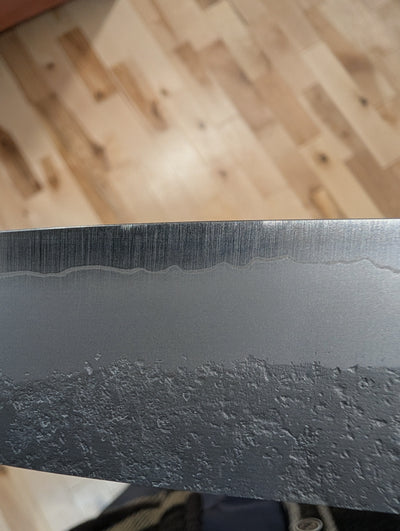
Blade Construction Sanmai - Stainless Clad
Hardness (HRC) 62 - 64
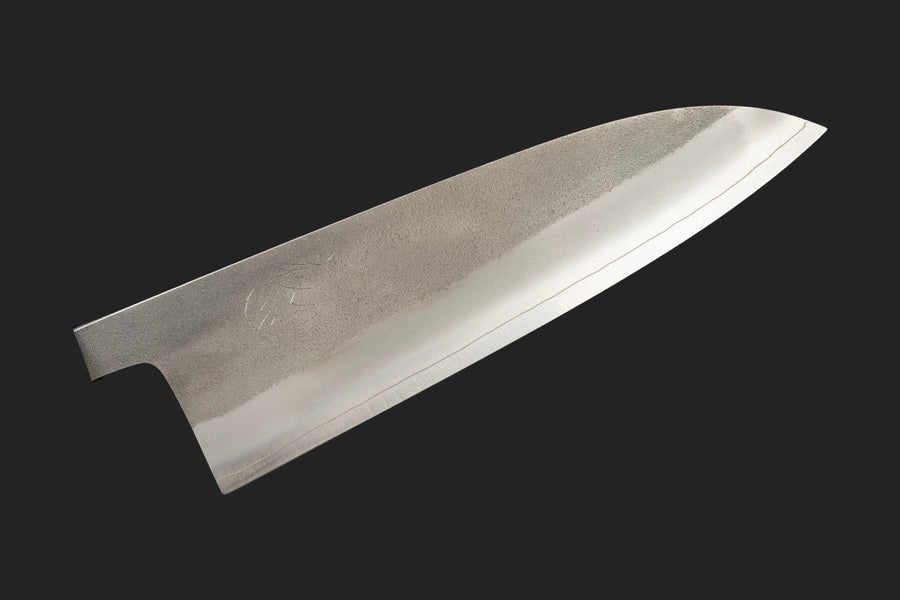
Surface Finish Nashiji
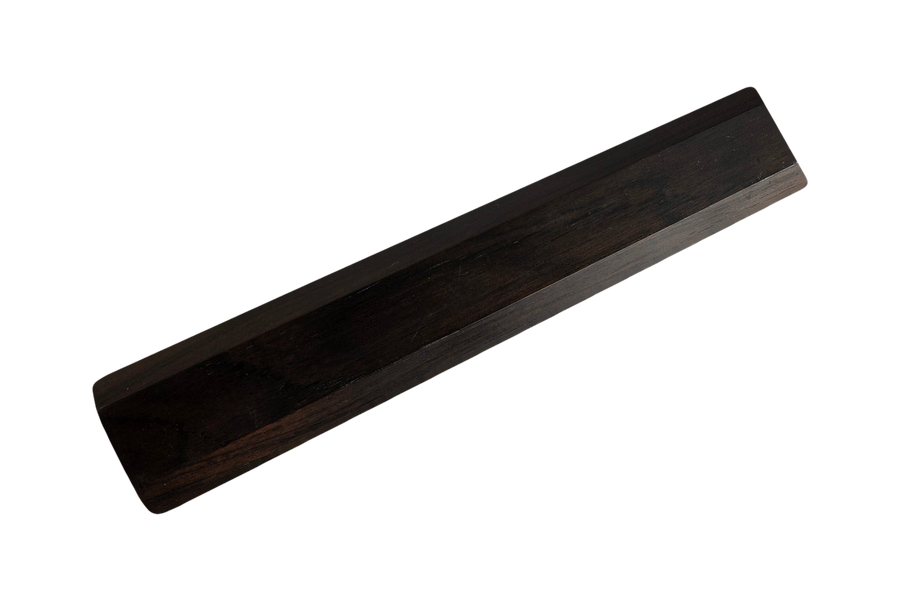
Handle Octagonal Ebony
Region Other
Best for
  • First-timers
  • Pro chefs
  • Household
  • Students
  • Gift buyers
  • Free shipping for knives over AU$200 Australia wide.
  • World-wide shipping via DHL Express, 3 to 5 days.


K&S Yuepo — Built Around What Makes a Knife Cut Well

For more than a decade, we’ve worked closely with Japanese kitchen knives at K&S, handling and studying thousands of blades from hundreds of different makers. Across different steels, regions, forging styles and price points, one thing has always stood out to us: great cutting performance starts with great geometry.

Japanese knives have long set a very high benchmark, combining exceptional cutting performance with distinctive aesthetics and generations of knife-making tradition. But traditional production naturally comes with limitations in both output and cost, and that can put some of the best-performing knives beyond what many cooks want or need to spend.

Yuepo started from a simple idea: take what we’ve learned from all those knives over the years and build something of our own. After more than 18 months of development, testing and refinement, we arrived at K&S Yuepo — a range built around the characteristics we value most in a working kitchen knife.

Performance Starts Behind the Edge

At the heart of Yuepo is the geometry.

The blade is ground thin behind the cutting edge, reducing resistance as it moves through food and creating the smooth, effortless cutting feel we associate with some of our favourite high-performance knives.

Rather than designing the knife around specifications on paper, we focused on something much more practical: how the knife actually feels once it meets the board.

SLD — Performance Without the Fuss

For the steel, we chose SLD for its balance of edge performance, toughness and practicality.

It offers substantially better stain resistance than traditional carbon steel while retaining much of the crisp cutting feedback and easy sharpening that make carbon steels so enjoyable to use. The result is a forgiving steel that works equally well in a professional kitchen or in the hands of an enthusiastic home cook.

Designed by K&S

Yuepo is designed and developed by K&S and manufactured in China to our specifications.

Having direct control over the design and manufacturing process allows us to concentrate on the details that matter most to us — geometry, heat treatment, fit and finish — while keeping the range at a highly accessible price point.

The objective was never simply to make a lower-priced knife. We wanted to make a knife we genuinely enjoy cutting with.

Yuepo (月魄)

The name Yuepo is inspired by the moon-like texture across the blade surface, giving the range its distinctive character while still keeping the overall appearance clean and understated.

From petty and utility knives through to chef’s knives and slicers, Yuepo is offered as a complete family of profiles, allowing you to build a collection with a consistent look, feel and cutting philosophy.

Developed from a decade of experience. Designed around geometry. Made to be used.

Pros Cons
  • Budget friendly
  • Thin behind the edge
  • Ideal entry point to Japanese knives
  • Non-premium steel
Care Instruction
  1. Don't cut hard things! Japanese knives are brittle so bone hacking is a NO NO!
  2. Wash with neutral detergent after use, and wipe dry;
  3. Please don't wash knife with dishwasher, it will damage the wood handle;
  4. Be careful not to leave the knife close to a heat source for a long time;
  5. It is a lot more dangerous to cut with a blunt knife than a sharp knife!
  6. It is best to sharpen a Japanese knife regularly on a waterstone.
  7. Semi-stainless steel won't rust easily but may still patina

Customer reviews

4.0
Based on 1 verified review
★★★★☆Performance 5/5 Fit and finish 3/5

The knife performance is really in par with most high end knives but It came with some scratches from the grinding close the edge.

Knives and Stones (K&S)

Established in 2014 and based in Sydney, Australia, Knives and Stones (K&S) is an Australian kitchen knife retailer with international customers. Through close relationships with Japanese blacksmiths, K&S directly imports Japanese kitchen knives.

Founder James Zhang’s Chinese heritage also brings a unique dimension to the business: collaborating with Chinese craftsmen to forge high-performance cleavers using Japanese steels—what James proudly calls “the real deal.”

Read more

Founded in 2014 and headquartered in Sydney, Australia, Knives and Stones (K&S) has grown from a small project into a kitchen knife retailer with customers in Australia, the USA, and China. What started as a small business dedicated to sourcing Japanese blades now serves chefs, collectors, and home enthusiasts across three countries.

At the heart of K&S is a personal connection with Japanese blacksmiths. Over the years, we have built relationships with established and new blacksmiths, allowing us to import their knives directly. This not only keeps each knife's origin clear and its craftsmanship intact, but also delivers outstanding value to our customers by removing unnecessary layers between the maker and the end user. K&S stocks both well-known and smaller Japanese knife brands.

Our international outlook is also shaped by founder James Zhang’s Chinese heritage. With a vision to bridge traditions, James has introduced Japanese steel to skilled Chinese makers to create a series of Japanese-steel cleavers. These blades, which James calls “the real deal”, combine Japanese steel with Chinese cooking use.

With physical presence and distribution networks in Australia, the USA, and China, Knives and Stones brings Japanese kitchen knives to customers in those three countries. Whether you’re a professional chef seeking a reliable workhorse, a collector chasing rare masterpieces, or a home cook ready to elevate your craft, K&S is committed to delivering tools that inspire confidence and creativity in the kitchen.

Est. 2014
Website knivesandstones.com.au Instagram @knivesandstones Read more about Knives and Stones (K&S)

Knife details

Frequently asked questions

Gyuto or santoku: which should I choose?

Both are all-purpose Japanese knives, and for most home cooks either will handle the bulk of daily prep. The choice comes down to length, blade shape, and how you like to cut.

A gyuto is the Japanese chef's knife, with a gently curved edge that lets you rock and slide through cuts as well as chop. Tojiro's guide to Western knife shapes gives 150 to 210mm as the household size for a gyuto and up to 360mm for professional use. The extra length and pointed tip give you reach and versatility, from proteins to large produce.

Tojiro's guide to Japanese knife shapes gives 165 to 170mm as the household size for a santoku, which has a flatter profile and a rounded sheep's-foot tip. It rewards a straight up-and-down push cut, feels nimble in smaller hands or tight kitchens, and is the classic Japanese household knife.

Rule of thumb: choose a gyuto if you want one do-everything knife with more reach, or a santoku if you prefer a compact, easy-to-control blade. Plenty of our customers end up owning both.

What is a gyuto knife used for?

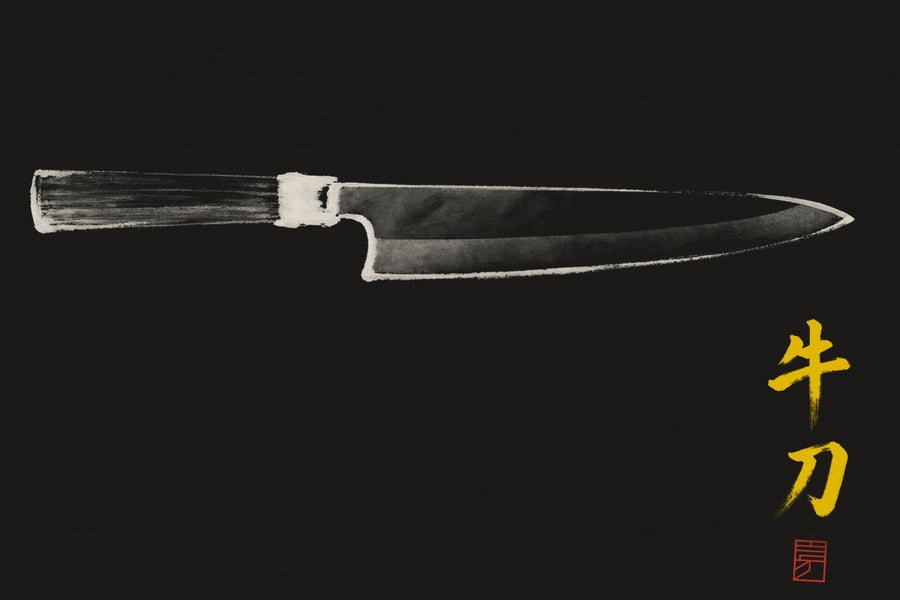
The gyuto (牛刀) is a chef's knife for all kinds of cooking, and it is basically double-bevel. A knife maker's guide says it came to Japan in the Meiji era with the culture of eating beef, which gave it its name, but it does not cut only meat.

A Japanese dictionary describes the gyuto as slimmer than a santoku, with a pointed tip, used widely for meat, fish and vegetables.

What gyuto length should I choose?

A knife maker's guide lists 150 to 210 mm, double-bevel, for home use, and 180 to 360 mm, single- or double-bevel, for professional kitchens.

We suggest starting with a 210 mm gyuto for a home kitchen, and stepping up to 240 mm if you regularly cut large pieces and have the board for it.

240mm vs 210mm gyuto: which size should I choose?

Get the 210mm. We only point people to a 240mm when they have about 45cm of usable board, cook in volume, and regularly break down big roasts or whole fish.

On the gyutos we've measured for our product pages, the extra length is real. As of October 2026, the 210mm gyutos we list have a median edge of 213mm from heel to tip, across the 111 we have measured; the 240mm ones have a median of 240mm, across 100. The 240s are also heavier, 212g against 175g at the median, and a touch taller at the heel, 50mm against 48mm.

That length buys you a longer stroke. A 240 goes through a big piece of meat in one or two pulls and moves a board of chopped vegetables with less shuffling. It costs you board space and control. On a small board the tip hangs off the edge, and fine work like herbs and shallots feels like more knife than the job needs.

Japanese or German kitchen knives: which should I buy?

Our advice: choose a Japanese knife if you want the keenest edge and do not mind caring for a harder blade, and a German knife if you want a tougher, more forgiving knife you can hone casually and use for heavy prep. On two Japanese knife steels, the steel makers' own figures start at 60 HRC: Takefu Special Steel rates VG10 at 60 HRC or more, and Proterial lists the hardening hardness of Aogami 2 (Blue 2) as over 60 HRC.

Our care advice for a Japanese knife: keep it off bone, frozen food and very hard squash, and use a wooden or plastic board.

What is the flat spot on a knife, and is it the same as the "sweet spot"?

The flat spot is the straight run of edge from the heel towards the middle, the part that meets the board along its length. At our counter we call it the sweet spot; elsewhere "sweet spot" often means the balance point, so ask which one someone means.

Past the flat, the edge curves up towards the tip (the belly), which suits a swinging or pulling stroke. Sharpeners also say "flat spot" for a worn patch of edge, so when you mean the shape, "the flat part of the edge" is clearer.

Is SLD the same steel as SKD11 and D2?

Close. Proterial, which makes SLD, lists AISI D2, DIN X153CrMoV12 and JIS SKD11 as its equivalent standards, while its own typical figures include 12% chromium and 1.5% carbon.

Proterial makes SLD as a cold work die steel with high abrasion resistance, for uses such as cold press dies, shear blades and gauges.

You May Also Like