PRAHRAN STORE NOW OPEN · THU–MON · 10AM–6PM

Yamawaki Hamono  |  SKU: YW-G3SKMR-360

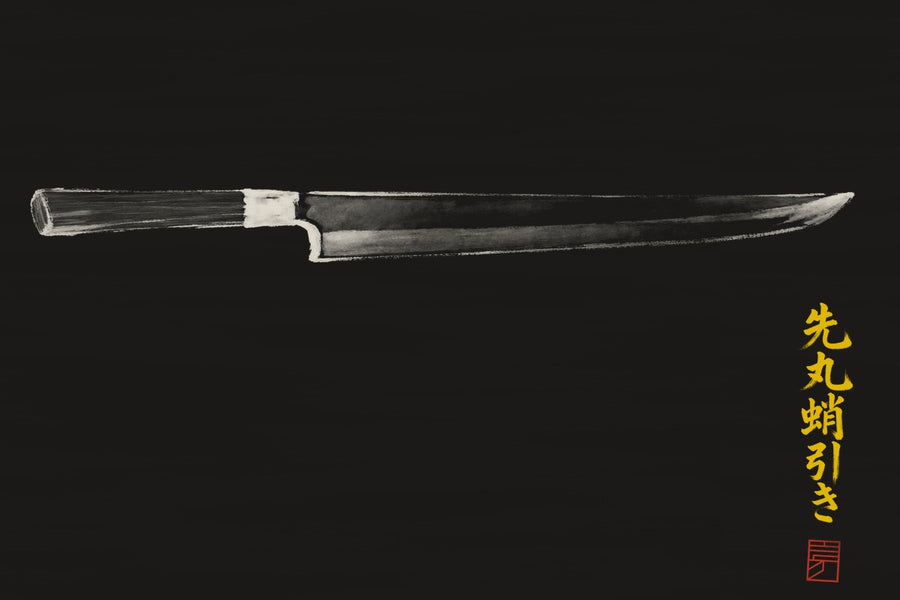
Yamawaki Ginsan Sakimaru Yanagiba 360mm Mirror Polished

Regular price $1,649.95

Sold out right now

Leave your email and we’ll send one message the moment it’s back in stock.

One email, no marketing. Privacy policy.

Availability

  • St Peters, NSW —
    2 Bishop St, Unit 2, St Peters NSW 2044
  • Crows Nest, NSW —
    107 West St, Shop 1, Crows Nest NSW 2065
    Pickup only
  • Prahran, VIC —
    180 Commercial Road, Shop 1, Prahran VIC 3181
    Pickup only
Detailed Specifications
Line Yamawaki Ginsan Full Mirror Polished Ōzori Yanagiba
Profile Sakimaru Takohiki / Round-tip sashimi knife
Bevel Type Single Bevel
Weight 380 g | 13.4 oz
Edge Length 355 mm | 13 31/32″
Heel Height 39 mm | 1 17/32″
Width @ Heel 3.8 mm | 5/32″
Width @ Mid 2.9 mm | 7/64″
Width @ 1cm from Tip 1.6 mm | 1/16″
Steel Ginsan / Silver #3 | Stainless
Blade Construction Nimai - Stainless Clad
Hardness (HRC) 60 - 62
Surface Finish Mirror Polish
Handle Special Handle
Region Sakai
Best for
  • Pro chefs
  • Enthusiasts
  • Collectors
  • Free shipping for knives over AU$200 Australia wide.
  • World-wide shipping via DHL Express, 3 to 5 days.


There are Yanagiba, and then there are Ōzori Yanagiba — and the difference is immediately apparent the moment you pick one up. The Ōzori profile features a pronounced Sori (反り, recurve in the spine) that gives the blade a dramatically curved silhouette, and this shape is more than aesthetic. Much like a saber or shamshir outperforms a straight sword in a slashing motion, the curved edge of an Ōzori generates a far more effective slicing action when breaking down large cuts of protein like tuna — the arc keeps the blade in continuous contact through the draw, rather than the more vertical push-down motion a straight Yanagiba produces. It's a profile you tend to see in high end Omakase kitchens where whole fish butchery happens at the pass, and beyond pure function it carries a visual presence at the cutting board that a standard Yanagiba simply can't match. In certain settings this knife isn't just a tool — it's part of the performance.

The forging behind this line comes from the Yamatsuka family in Sakai — a name that serious knife enthusiasts will recognise immediately. A multi-generational blacksmithing lineage with family members still active across different generations today, the Yamatsuka name carries real weight in a city that takes its knifemaking traditions seriously. The sharpening is handled in-house by Yamawaki's own team, and the result is a full mirror polish covering the entire blade — Hira, bevel and Urasuki — to a standard that is genuinely impressive. The Ginsan (Silver #3) steel core is fully stainless, which is a practical consideration for a knife that may be drawn out for presentation cutting at the pass. The mirror finish does show fingerprints and surface marks readily, so a light wipe-down habit goes a long way in keeping it presentation-ready.

Priced noticeably above comparable Ginsan single bevel lines like the Gintan series from Sakai Takayuki or Nakagawa's offerings, this line earns its premium through a combination of the Ōzori profile's rarity, the calibre of the mirror finish, the Yamatsuka forging pedigree, and a role that extends beyond pure utility into something closer to a ceremonial tool. For chefs who need a knife that performs and commands attention in equal measure, and for collectors drawn to something with genuine character and lineage, this is a compelling and hard to replicate option.

Pros Cons
  • Great for professionals
  • Great artistic
  • Excellent fit and finish
  • High budget
  • Mirror polish can be hard to maintain
Care Instruction
  1. Don't cut hard things! Japanese knives are brittle so bone hacking is a NO NO!
  2. Wash with neutral detergent after use, and wipe dry;
  3. Please don't wash knife with dishwasher, it will damage the wood handle;
  4. Be careful not to leave the knife close to a heat source for a long time;
  5. It is a lot more dangerous to cut with a blunt knife than a sharp knife!
  6. It is best to sharpen a Japanese knife regularly on a waterstone.

Yamawaki Hamono

Yamawaki Hamono (山脇刃物製作所), Sakai

Yamawaki Hamono is a very typical Sakai maker, operating alongside other brands like Kawamura and Takayuki, they built deep connections with a great number of blacksmiths and sharpeners across Sakai and offers all manners of designs that utilise the talent of these craftsmen. And they are well known for their house brand named after a Kamakura period blacksmith - Goh Umanosuke Yoshihiro.

From the basic iron-clad Sanmai knives to carefully forged and polished Honyaki. Yamawaki can find the right individual for achieving a specific task. On the other hand, the blacksmith families and sharpeners alike, fully trust Yamawaki and their relations cultivated over literally generations of collaborations.

The key offering by Yamawaki is the assortment of Honyaki knives. The company spends a good amount of effort delegating the work schedule and certification for each unique piece, making their origin trackable. They also look after sought-after billet forged by makers like Yoshikazu Ikeda or Genkai Masakuni, so they get proper treatment they deserve after these blacksmiths retire. 

Aside from the Honyaki, unique techniques like Kito-polished Kasumi, mirror polishing on single bevel knives and fuller machining are cherished at Yamawaki, in a sense, it is Yamawaki that helps these blacksmiths with unique skill set so they can focus on their craft to pass it down without worrying about the business end of things. That is why organisations like Yamawaki are so important in the industry.

“A Sakai knife maker behind the Goh Umanosuke Yoshihiro brand.”

Est. 1927 | 昭和2年
Known for The Goh Umanosuke Yoshihiro brand
Website yamawaki-hamono.co.jp Instagram @yamawakisharpeningfactory Read more about Yamawaki Hamono

Yamawaki Hamono · Sakai

Knife details

Frequently asked questions

Takohiki or yanagiba: what is the difference?

An encyclopedia describes sashimi knives as thin and narrow, calling the pointed ones yanagiba and the unpointed ones takohiki. A sakimaru takohiki is the rounded-tip variant, so it has a rounded point despite its takohiki name.

A trade body, the Sakai cutlery association, calls the takohiki (たこ引き包丁) the Kanto-type sashimi knife, and the yanagiba the sashimi knife used mainly in Kansai, with an acute edge that is not for bone.

What is Ginsan steel, and why do some Japanese knives use it?

Ginsan steel, also known as Silver #3 or G3, is a stainless steel made by Proterial in Japan, containing 0.95 to 1.10% carbon and 13.00 to 14.50% chromium, and it is used in Japanese knives because it combines the sharpness and ease of sharpening of carbon steel with the rust resistance of stainless steel. It is a fine-grained steel that takes a very sharp edge, and rated by Proterial at over 59 HRC, it offers a practical balance of edge retention and sharpenability for everyday kitchen use.

The name "Ginsan" (銀三) literally means "silver three," referring to its Silver #3 designation. Its moderate chromium content makes it far less reactive than carbon steels, so it won't discolor or rust as quickly, while its carbon content keeps the edge keen and responsive on the stones. For home cooks and professionals who want a stainless knife that still feels like a traditional Japanese blade, Ginsan is a common middle ground.

Is Ginsan stainless?

Yes. Proterial lists the steel as GIN 3 (銀紙3号) with 13.00 to 14.50% chromium, above the Japan Stainless Steel Association's 10.5% minimum for stainless steel.

Proterial describes it as a stainless steel with hardness and sharpness comparable to carbon steel, used in various kitchen knives and scissors, and the association notes that stainless, strictly, means it rusts less. Wash the knife and dry it after use.

Where does the Yoshihiro name on Yamawaki knives come from?

Yamawaki Hamono named its original products after the Kamakura-period swordsmith 郷右馬允義弘 (Goh Umanosuke Yoshihiro), aiming for quality worthy of the name.

The name, a registered trademark, is the main brand of Yamawaki Hamono (株式会社山脇刃物製作所), a Sakai knife maker founded in 1927. The company has also long worked to make water-quenched honyaki (水焼き本焼き) professional knives more widely available, and took up mirror polishing.

You May Also Like