PRAHRAN STORE NOW OPEN · THU–MON · 10AM–6PM

Drag to spin · pinch or scroll to zoom

Sukenari  |  SKU: SU-HAP40NIMAI-YA330

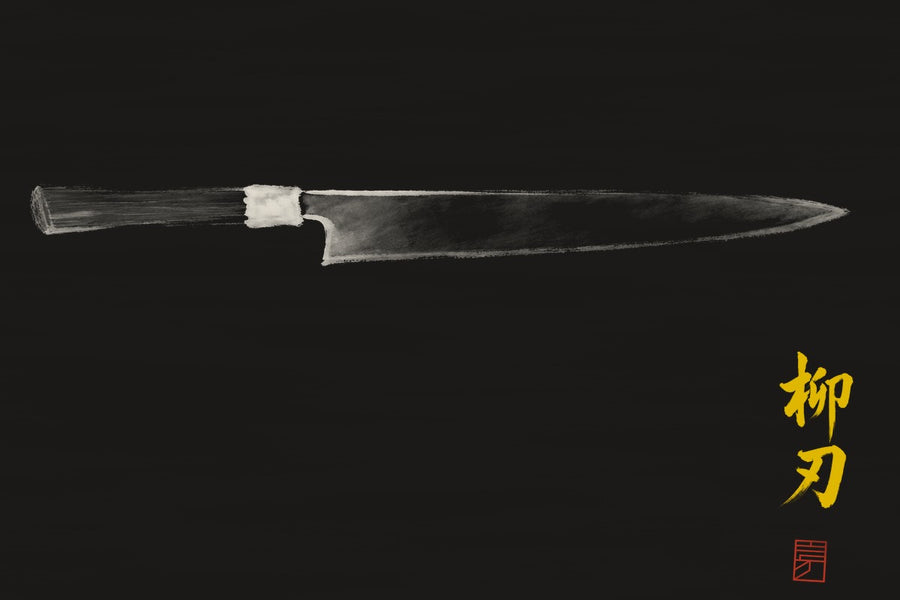
Sukenari HAP40 Mirror Polished Yanagiba 330 mm, Ebony Brass Handle

Regular price $1,088.00

Sold out right now

Leave your email and we’ll send one message the moment it’s back in stock.

One email, no marketing. Privacy policy.

Availability

  • St Peters, NSW —
    2 Bishop St, Unit 2, St Peters NSW 2044
  • Crows Nest, NSW —
    107 West St, Shop 1, Crows Nest NSW 2065
    Pickup only
  • Prahran, VIC —
    180 Commercial Road, Shop 1, Prahran VIC 3181
    Pickup only
Detailed Specifications
Line Sukenari HAP40 Single Bevel Mirror Polish
Profile Yanagiba / Sashimi knife
Weight 243 g | 8.6 oz
Edge Length 320 mm | 12 19/32″
Heel Height 35 mm | 1 3/8″
Width @ Heel 3.5 mm | 9/64″
Width @ Mid 2.5 mm | 3/32″
Width @ 1cm from Tip 1.1 mm | 3/64″
Steel HAP-40 | Powdered | Semi-stainless
Blade Construction Nimai - Stainless Clad
Hardness (HRC) 64 - 68
Surface Finish Mirror Polish
Handle
Region Toyama
Best for
  • Enthusiasts
  • Pro chefs
  • Free shipping for knives over AU$200 Australia wide.
  • World-wide shipping via DHL Express, 3 to 5 days.


These HAP40 Yanagiba belong to a group of specialized knives that takes the innovative metallurgy technology, and mixing it with some Japanese traditional flavour. However, this line still employs a Nimai construction instead of a Honyaki, which makes them more affordable and easier to sharpen.

To elaborate on the aforementioned "specialized knives", they are blades that are made in the traditional for using traditional techniques, like a Honyaki Yanagiba, but uses newer stainless or even powder steels instead of Hitachi carbon steels. Pairing these high performance steels with a top notch finishing, these are the knives that push the boundary of Japanese knifemaking as "Practical Arts“. One famous example is Sakai Akazawa, which has multiple products including Honyaki VG-10 or ZDP-189 forged by the legendary bladesmith Yoshikazu Ikeda. We too keep some SG2 Honyaki Yanagiba from Sukenari in store.

As great and beautiful these knives are, the price and scarcity of them have made them nearly inaccessible to most of us, this is where I think this Sukenari HAP40 line comes in place. As it is still uses the powder tool steel which got that very good edge retention, your are not gonna miss any performance compair with those Honyaki knives, but the Nimai structure have made this line much easier to produce and sharpen, thus the price of this line have come to a much affordable range for what it is.

The finish of this line is done very well, the uniformity of the finish across this blade is very good, with hardly any inconsistency that I can spot. If you are planning to venture into the world of these high end Yanagiba, this line can be something to consider about as it fit in the spot between a high-end Honyaki and a carbon steel Kasumi Nimai.

Pros Cons
  • Easy to look after
  • Excellent performance
  • Excellent fit and finish
  • Mirror polish can be hard to maintain
  • Relatively hard to sharpen
Care Instruction
  1. Don't cut hard things! Japanese knives are brittle so bone hacking is a NO NO!
  2. Wash with neutral detergent after use, and wipe dry;
  3. Please don't wash knife with dishwasher, it will damage the wood handle;
  4. Be careful not to leave the knife close to a heat source for a long time;
  5. It is a lot more dangerous to cut with a blunt knife than a sharp knife!
  6. It is best to sharpen a Japanese knife regularly on a waterstone.
  7. Semi-stainless steel won't rust easily but may still patina

Sukenari

Sukenari, professional kitchen knives from Toyama

Sukenari Co. makes, sells and repairs professional kitchen knives in Fuchu-machi, Toyama City, under the registered mark 佑成. The company was founded in 1933.

The company's own greeting page explains the mark: its first character is written with the person radical and 右, meaning right, and carries the wish that these knives can become the cook's indispensable right arm.

Read more

A 2016 profile by TONIO, Toyama's industry support body, says the founder trained at an old-established Tokyo knife maker and opened the shop in his home region in November 1945, after a wartime evacuation there. Knife regions split forging, sharpening and handle fitting between specialists; that profile says Sukenari makes its knives start to finish under one roof, as that Tokyo house did. Its own site says craftsmen still make every stage by hand, one knife at a time.

The same profile credits Sukenari with honyaki in White 1, a very hard steel that is hard to work and that, it says, only a handful of makers in Japan can handle. It also describes know-how built for ZDP189, harder than White 1, and TONIO-backed forging trials, with metallurgy and measured heat treatment, that led to its ZDP189 wa-gyuto. The profile also tells of OEM work for other professional knife makers and wholesalers since the 2008 downturn. We first visited in April 2016, when Nobuo Hanaki, then president, showed us the forging.

We list ZDP-189 hairline gyuto, K-tip gyuto and santoku; ZDP-247 hairline or Damascus gyuto, K-tip gyuto, santoku and sujihiki; SG2 hairline or Damascus gyuto, K-tip gyuto, gyu-hiki and santoku; HAP40 slim K-tip gyuto and mirror polished yanagiba; VG XEOS Damascus gyuto; VG10 Damascus yanagiba; YXR7 petty; Aogami Super hairline gyu-hiki; Blue 2 deba, K-tip yanagiba and Kanto usuba; White 2 K-tip kiritsuke and K-tip yanagiba. We also list an SG2 honyaki yanagiba, including a K-tip, an SG2 nimai (two-layer) sakimaru takobiki, and VG XEOS nimai yanagiba and kiritsuke yanagiba.

“A Toyama maker of professional kitchen knives since 1933.”

Est. 1933 | 昭和8年
Known for Knives made start to finish under one roof
Website sukenari.jp Instagram @sukenari_official Read more about Sukenari

Sukenari · Toyama

Knife details

Frequently asked questions

What is a yanagiba knife used for in sushi preparation?

A yanagiba (柳刃包丁) is a sashimi knife for slicing raw fish. A knife maker's guide says a sashimi knife cuts without breaking the fibres of the flesh, and that it is longer and narrower than other knives because slicing sashimi with crisp edges needs the length.

The whole length goes through one pulling cut. The Sakai cutlery association calls the yanagiba the sashimi knife used mainly in the Kansai region.

What size yanagiba should I buy?

Size a yanagiba to the fish you prepare: a knife maker's guide gives 270 to 360 mm for professional use and 240 to 270 mm for home use, with 270 mm at home if you slice larger fish.

The guide says the whole length goes through one pulling cut, so do not choose too short a knife, and at home it points to the size of your board and your work space. We list the yanagiba (柳刃) from 210 to 360 mm, some made for left-handed use.

Can a yanagiba cut through fish bones?

No. The Sakai cutlery association describes the yanagiba (柳刃包丁) edge as so acute that it cannot be used on hard things such as bones.

For bones the association describes the deba (出刃包丁), whose heel is used to hit them.

Is HAP-40 stainless?

No. Semi-stainless is the trade label used on our HAP-40 steel page, not a statement that HAP-40 meets the stainless steel definition.

Proterial's typical composition for HAP-40 puts chromium at 3.7 to 4.7%, under the 10.5% or more that defines stainless steel, so it can rust. HAP-40 corresponds to JIS SKH40, a powder high-speed tool steel. Dry it after use.

Is it Sukenari or 佑成?

Sukenari's own site carries both names together, titled the official site of 株式会社スケナリ with 佑成 named as a registered trademark. 佑成 is the house mark that appears on the blades.

So one house answers to both names: Sukenari is the company, 株式会社スケナリ, working from Fuchu machi in Toyama City, and 佑成 is its mark on the steel.

Are Sukenari knives handmade?

Yes. Sukenari says its knives are made by craftsmen by hand, one at a time, at its workshop in Fuchu machi, Toyama City.

The Sukenari lines we stock carry the workshop name in their titles.

What does the Sukenari mark 佑成 mean?

The workshop says the 佑 of its registered mark 佑成 (read Sukenari) is written with the person radical and 右, right, and that the character carries the wish for its tools to become the cook's indispensable right arm.

The company's own site title reads 登録商標 佑成 (registered trademark), and 佑成 is the house mark on its blades.

You May Also Like