PRAHRAN STORE NOW OPEN · THU–MON · 10AM–6PM

Hatsukokoro  |  SKU: HT-HIRARIDM-MNST170-BC

Hatsukokoro Hikari SLD Damascus Petty 150mm

Regular price $189.95

Sold out right now

Leave your email and we’ll send one message the moment it’s back in stock.

One email, no marketing. Privacy policy.

Availability

  • St Peters, NSW —
    2 Bishop St, Unit 2, St Peters NSW 2044
  • Crows Nest, NSW —
    107 West St, Shop 1, Crows Nest NSW 2065
    Pickup only
  • Prahran, VIC —
    180 Commercial Road, Shop 1, Prahran VIC 3181
    Pickup only
Detailed Specifications
Line Hatsukokoro Hikari SLD Damascus
Profile Petty / Utility knife
Bevel Type Double Bevel
Weight 77 g | 2.7 oz
Edge Length 150 mm | 5 29/32″
Heel Height 39 mm | 1 17/32″
Width @ Heel 1.5 mm | 1/16″
Width @ Mid 1.4 mm | 1/16″
Width @ 1cm from Tip 0.9 mm | 1/32″
Steel SLD | Semi-stainless
Blade Construction Sanmai - Stainless Damascus Clad
Hardness (HRC) 62 - 64
Surface Finish Etched
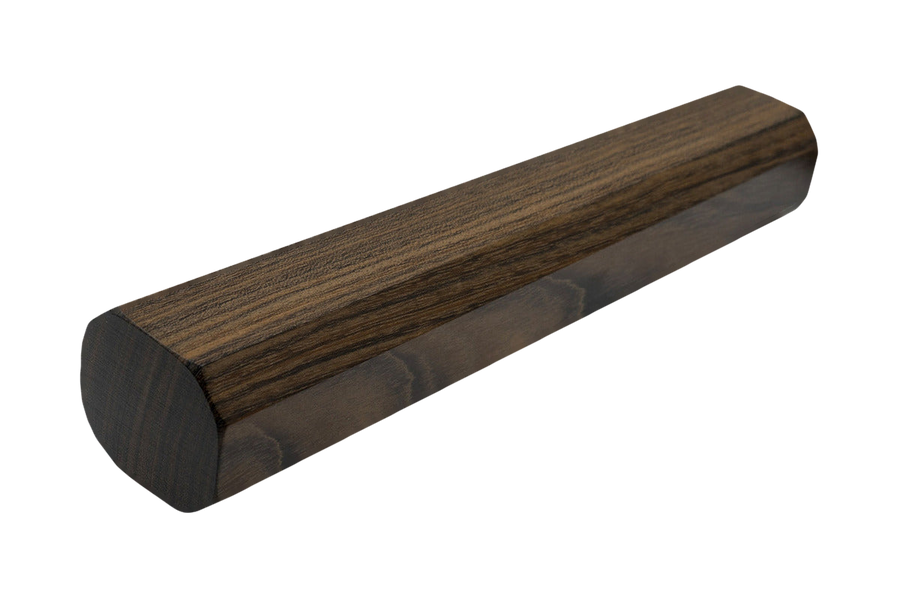
Handle Octagonal Black Chacate
Region Hyogo
Best for
  • First-timers
  • Pro chefs
  • Students
  • Free shipping for knives over AU$200 Australia wide.
  • World-wide shipping via DHL Express, 3 to 5 days.


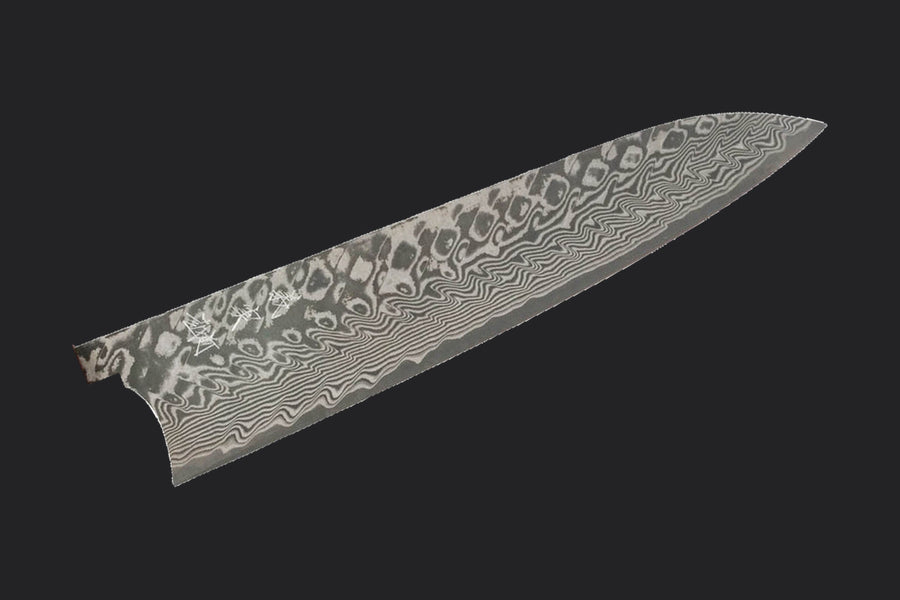
Hikari SLD Damascus is the alternative version of the original Hikari line introduced by Hatsukokoro, although it doesn’t feature its original dazzling surface finish, the increasingly proficient etching done by Hatsukokoro have led to a tasteful contrast on this Damascus clad knife. The knife profile from the original Hikari is carried over, making it a unique choice for chefs and cooks with certain cutting preferences.

The SLD is not a common steel seen on the market, being an tool/injection mold steel, it has incredible wear resistance, the high chromium content have ensured a good enough rust resistance but due to the high carbon content and consequential chromium carbide formation, it can be a little reactive in certain climatic conditions. Thanks to this material choice, Hikari’s edge have a touch of the aggressiveness that you would feel from a carbon steel, it’s that smooth feeling you would get when the edge can bite right into soft but tough food without much rubbing or sliding,

Hikari line has a thin blade thickness, which gets carried over to the Damascus version, the very low spine thickness of 1.9mm above the heels ensures a low resistance cutting through some of the denser produce. There is some thickness left behind the edge, so it may not be the smoothest knife to cut with, but the convex grind that follows this edge can effectively push thin slices of food off the surface of the knife, allowing a pretty good food release for a knife this thin.

The aforementioned profile is the unique feature offered by Hikari. Usually Gyuto would feature a much flatter edge that is ideal for push cutting and slicing, whereas the European chef knife is better for rock cutting using its curved belly. But when we picked up the Hikari, we noticed the strong curve across the entire range. When I put the 210mm Gyuto side by side with a Zwilling 8 inch, I’m plenty surprised by the almost identical edge profile. Not just the Gyuto, both petty and Ko-Santoku are very curved, the Santoku is the only design that is relatively flat in the current lineup. This means most of these knives would be pretty good at rocking chopping, and for customers that ask us if there is a sharp Japanese knife that can support their habit, we finally have an answer to them.

The very friendly price might pave the last step for this knife to be an entry level bestseller, the etched damascus is the icing on the top to boost the aesthetic of the blade, making it a cool piece to pull out when cooking at home. It is not the best performing knife you can get at this price, but a slightly thicker and stronger edge is going to be less prone to damage. It's a pretty balanced design with a special perk, and that’s what makes it stand out as a unique option in the entry level range.

Pros Cons
  • Budget friendly
  • Ideal for the household
  • Exceptional profile
  • Etched damascus can be hard to maintain
  • On the thicker side
Care Instruction
  1. Don't cut hard things! Japanese knives are brittle so bone hacking is a NO NO!
  2. Wash with neutral detergent after use, and wipe dry;
  3. Please don't wash knife with dishwasher, it will damage the wood handle;
  4. Be careful not to leave the knife close to a heat source for a long time;
  5. It is a lot more dangerous to cut with a blunt knife than a sharp knife!
  6. It is best to sharpen a Japanese knife regularly on a waterstone.
  7. Semi-stainless steel won't rust easily but may still patina

Hatsukokoro

Hatsukokoro, a knife brand from Amagasaki

Hatsukokoro (初心) is a knife brand from Amagasaki, Hyogo, launched in 2019. It is a brand rather than a forge: it works with knife makers instead of forging itself.

The name comes from the proverb 初心忘るべからず, roughly never forget your beginner's mind. For the same characters the brand chose the gentler reading hatsukokoro over shoshin.

The brand's own catalogue names the place behind some of its lines, and the maker behind a few: Shinkiro comes from Fukushima, and Hayabusa HAP40, Saihyo and Sunaarashi from Seki City, while for others the maker or the place stays private. Some of our listing titles also carry the maker alongside the brand, such as Hatsukokoro x Yoshikane and the Hatsukokoro x Yoshihiro Yauji collaboration.

The Hatsukokoro lines we list include both carbon and stainless steels. Our listings include Hayabusa in SG2 and Aogami Super, Saihyo in SG2 and Ginrei in Ginsan. Carbon steel kurouchi lines include Aosagi, Aokitae, Kurokaze and Kurogane.

“A knife brand from Amagasaki that works with knife makers rather than forging.”

Est. 2019 | 令和元年
Known for Lines made with partner makers, from Seki City to Fukushima
Website handk.co Instagram @handk_official Read more about Hatsukokoro

Hatsukokoro · Hyogo

Knife details

Frequently asked questions

What is a petty knife and when do I need one?

A petty knife is a small Japanese utility knife, typically with a blade between 120mm and 180mm, designed for precision tasks like peeling, trimming, and slicing fruits and vegetables. You need one when your main chef’s knife feels too large for detail work, think deveining shrimp, cutting garnishes, or any in-hand peeling where a bigger blade gets in the way. Its slightly longer and slimmer profile than a Western paring knife gives you more control for intricate cuts without sacrificing the nimble feel you want for small jobs. If you regularly find yourself reaching for a smaller blade for finishing work, a petty fills that gap cleanly.

A petty is not a replacement for a gyuto or santoku. It lacks the blade length and belly for efficient chopping, rocking, or breaking down larger proteins. If your work is mostly bulk prep, like dicing onions or slicing roasts, a petty will feel slow and underpowered. It also won’t handle heavy tasks like splitting bones or prying, so treat it as a precision tool, not an all-rounder.

The petty’s role in a Japanese kitchen is as the smaller counterpart to the gyuto, built for tasks where a full-size blade is clumsy. At Knives and Stones, the petty category covers a range of steels including VG10, White#2, Swedish Steel, VG5, SG2, and MV, from makers like Sakai Takayuki, Masamoto Sohonten, Ryusen, Nigara, Hatsukokoro, and Sentan. Most are double-beveled, and the blade length runs from 120mm to 180mm, which is what gives it that balance of reach and precision. For more on how this fits into your knife kit, see the Knives and Stones Education Centre.

How long is a petty knife?

Petty knife lengths vary by maker: KAI's guide defines a petty (ペティナイフ) as a small knife with a narrow blade measuring 150 mm or under. Its table gives 90 to 150 mm, and it describes the shape as a smaller gyuto with a pointed tip.

We list petty knives from 70 mm to 165 mm, including lengths above the limit used in KAI's guide.

Is SLD the same steel as SKD11 and D2?

Close. Proterial, which makes SLD, lists AISI D2, DIN X153CrMoV12 and JIS SKD11 as its equivalent standards, while its own typical figures include 12% chromium and 1.5% carbon.

Proterial makes SLD as a cold work die steel with high abrasion resistance, for uses such as cold press dies, shear blades and gauges.

Is Hatsukokoro a maker or a brand, and who makes the knives?

Hatsukokoro (初心) is a brand, not a forge. H&K, a company founded in 2013 and based in Amagasaki, Hyogo, created it in 2019.

H&K names the producer for some lines, for example Shinkiro by Takahiro Nihei in Fukushima, Ginyou by Yoshihiro Yauji in Echizen and Kurosagi by Motokyuichi Hamono in Nagasaki, and keeps others confidential. Some knives we stock carry the maker in the title, such as Hatsukokoro x Yoshikane SKD Nashiji.

What does the name Hatsukokoro mean?

The name comes from the Japanese proverb 初心忘るべからず, which means don't forget your original intention. The company read it gently as hatsukokoro rather than shoshin.

H&K created the brand in 2019, six years after the company was founded, and chose the name for its knife line.

Which Hatsukokoro line should I pick, carbon or stainless?

Pick by how much care you want to give. The carbon lines, Blue 1, Blue 2 and AS kurouchi, need drying and a little oil after use. The SG2, HAP40, Ginsan and VG10 lines are low maintenance, so they suit a busy kitchen or someone who just wants to cook.

Neither is better; it depends on your routine. If you will dry and oil the blade after each use, a carbon line can suit you, and if you want the least fuss, a stainless line is the easier choice.

You May Also Like