
★★★★★
Excellent fit and finish · Elegant look · Premium handle It’s a really great-looking knife, and it has a nice, solid weight to it that feels great to use.
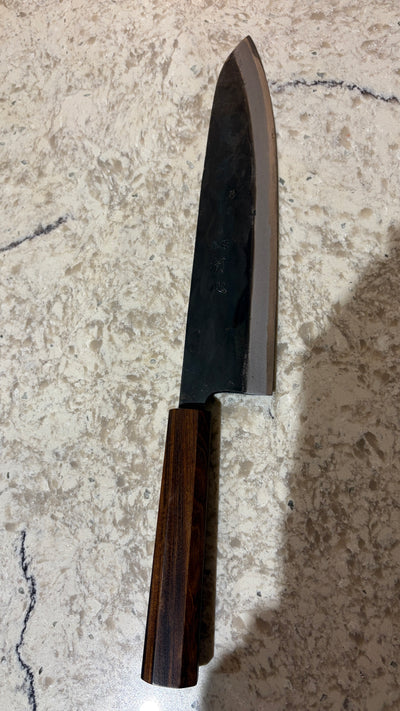



Hatsukokoro Kokugei Blue 1 Kurouchi Gyuto 240mm is backordered and will ship as soon as it is back in stock.
Sold out right now
Leave your email and we’ll send one message the moment it’s back in stock.
One email, no marketing. Privacy policy.
We match the item price, not shipping, of in-stock products from reputable specialist knife retailers. Clearance and pre-owned items excluded. Each request is checked by our team.
Delivery unavailable for this item. Available for in-store pickup only.
| Line | Hatsukokoro Kokugei Blue 1 Kurouchi |
| Profile | Gyuto / Chef's knife |
| Bevel Type | Double Bevel |
| Weight | 260 g | 9.2 oz |
| Edge Length | 245 mm | 9 41/64″ |
| Heel Height | 52 mm | 2 3/64″ |
| Width @ Heel | 3.8 mm | 5/32″ |
| Width @ Mid | 2.7 mm | 7/64″ |
| Width @ 1cm from Tip | 2.1 mm | 5/64″ |
| Steel | Blue 1 / Aogami #1 | Carbon |
| Blade Construction | Sanmai - Soft Iron Clad |
| Typical hardness | 61 to 64 HRC |
| Surface Finish | Kurouchi |
| Handle | Octagonal Black Chacate |
| Region | Hyogo |
| Best for |
|

| Pros | Cons |
|
|
Excellent fit and finish · Elegant look · Premium handle It’s a really great-looking knife, and it has a nice, solid weight to it that feels great to use.
牛刀
Chef's knife · Double bevel
Double-bevel all-purpose chef's knife with a pointed tip; thinner than a Western one.
Read moreHow hard the steel is after heat treatment, measured in HRC. Harder steel can take a thinner, sharper edge but is more likely to chip. Typical hardness: 61 to 64 HRC
How long the edge stays sharp in kitchen use before it needs sharpening. Not lab-tested; estimated from V-Toku2 (314 mm of test card cut at 63.6 HRC, Knife Steel Nerds CATRA test, 2020). Hardness used: 63 HRC, the usual hardness makers sell it at. Carbon steels score lower on this abrasive test, which is why our grade also counts hardness.
How well the steel resists chipping and cracking from bones, hard boards or twisting.
How slowly the steel rusts or stains when left wet.
How quickly the steel comes back to sharp on a whetstone.
How fine an edge the steel can take and hold. Judged from the hard carbides inside it: smaller and fewer carbides allow a keener edge.
Our edge-retention grade is a kitchen rating. It weighs the hardness each steel is sold at, which keeps a thin edge from rolling, twice as heavily as lab wear tests, and the final grade is our judgment from selling and sharpening these knives for over a decade. Lab card-cutting tests measure abrasive wear only, so they can rank carbon steels lower. Tap ? for the lab figure.
青一鋼
Carbon · Hitachi Metals (now Proterial)
Proterial carbon steel, 1.25 to 1.35% carbon with chromium and tungsten; not stainless.
Read more三枚・軟鉄
3 layers · soft iron clad
Hard core between two soft iron layers, bare at the edge. The iron patinas and rusts.
Read more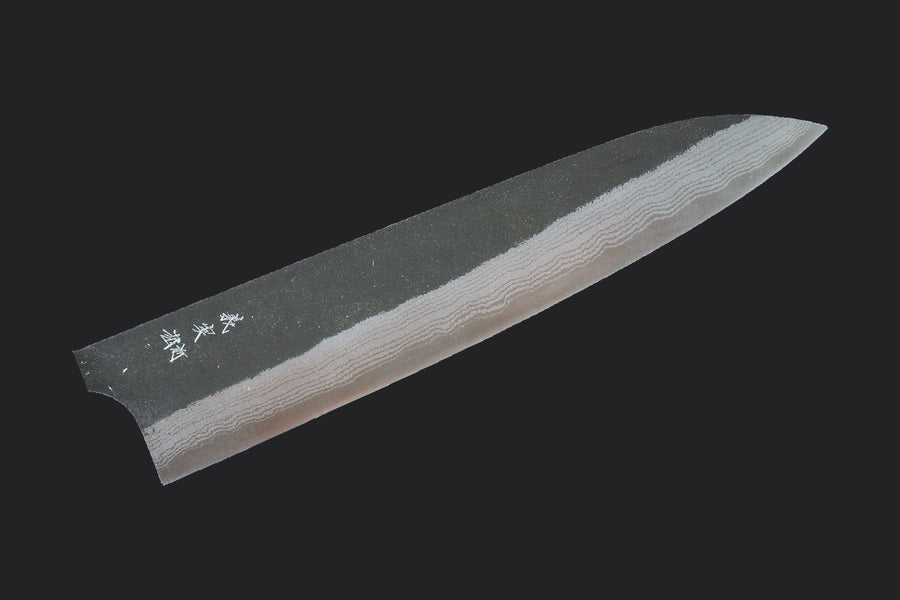
Black forge scale
Dark forge scale left on the upper blade. The bevel and edge still need care.
Read more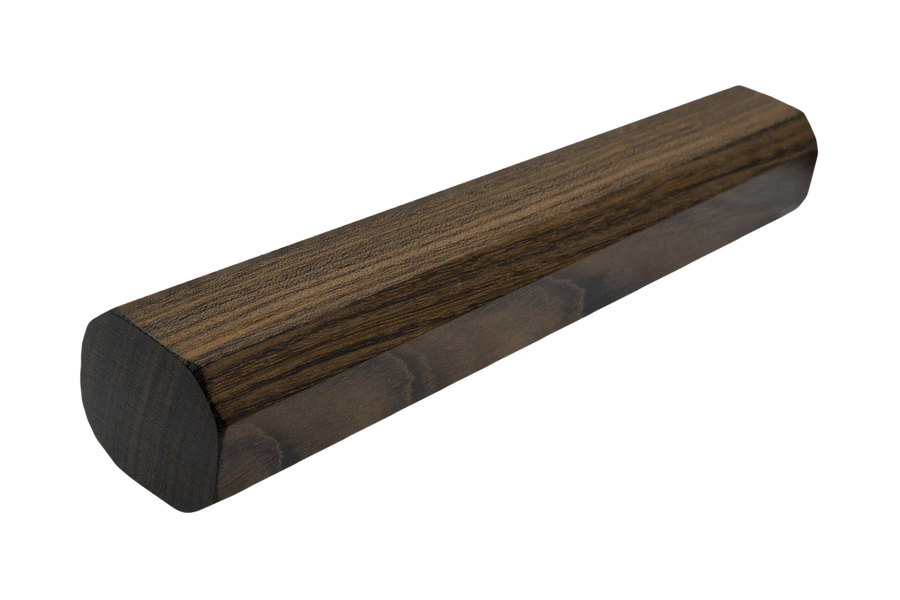
Octagonal WA
Black chacate, a dense dark African wood near ebony, eight-sided; may show pale sapwood.

The Hatsukokoro Kokugei Blue 1 Kurouchi Gyuto 240mm is a double-bevel chef's knife best fit for enthusiasts and students seeking Aogami #1 carbon steel performance in a budget-friendly package. This 240mm gyuto features a sanmai construction with soft iron cladding and a kurouchi surface finish, measuring 3.8mm at the heel spine and weighing 260g. The blade geometry suits general-purpose kitchen tasks including mincing, slicing vegetables, and cutting meat.
Blue 1 steel achieves 61-64 HRC and requires regular wiping and drying after use as the reactive carbon core develops a patina over time. This high-carbon steel sharpens readily to a fine edge and maintains sharpness during extended use. The octagonal wa handle is crafted from Black Chacate timber, providing a durable grip with fine texture and dark coloration. As a non-stainless clad knife, this gyuto demands consistent maintenance to prevent corrosion and suits users comfortable managing reactive carbon steel care requirements.