PRAHRAN STORE NOW OPEN · THU–MON · 10AM–6PM

Hatsukokoro  |  SKU: HSK-RS-B2DMNA-KGY210-BR

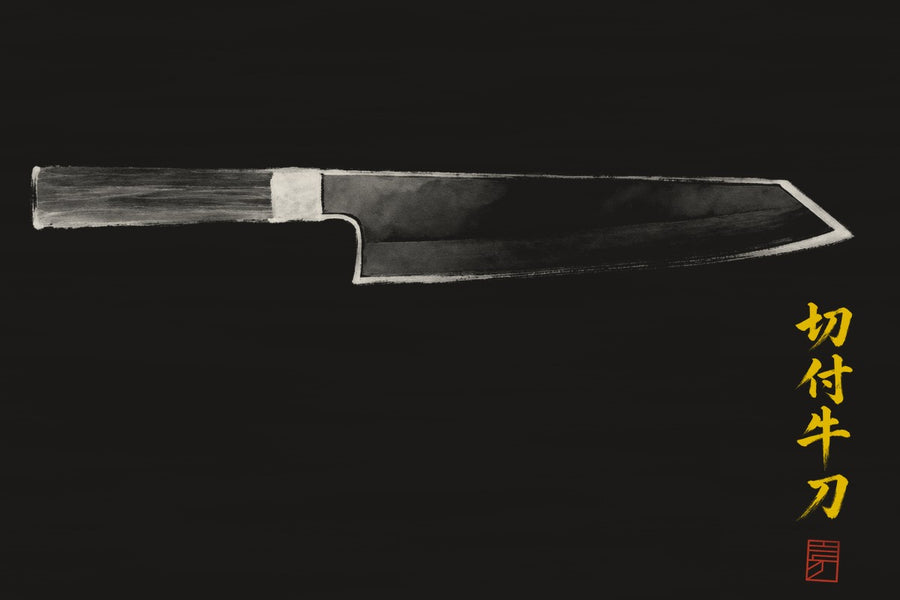
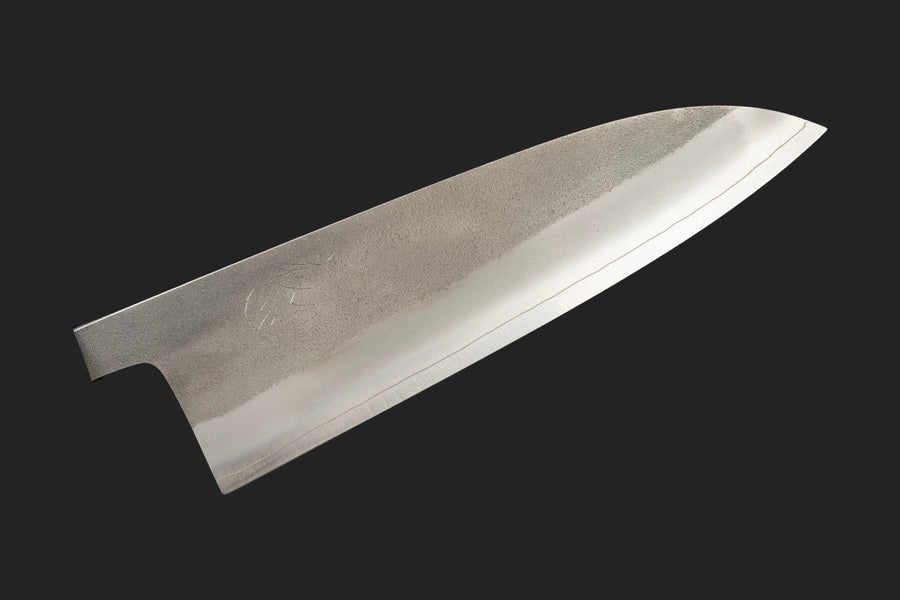
Nigara x Hatsukokoro Ryusui Blue 2 Damascus Nashiji K-tip Gyuto 210mm

Regular price $529.95

IMPORTANT: Carbon steel knives can rust or patina quickly if not cared for properly. They require regular cleaning, drying, and oiling. If you are unfamiliar with carbon steel maintenance, we recommend choosing a stainless steel option instead.

Sold out right now

Leave your email and we’ll send one message the moment it’s back in stock.

One email, no marketing. Privacy policy.

Availability

  • St Peters, NSW —
    2 Bishop St, Unit 2, St Peters NSW 2044
  • Crows Nest, NSW —
    107 West St, Shop 1, Crows Nest NSW 2065
    Pickup only
  • Prahran, VIC —
    180 Commercial Road, Shop 1, Prahran VIC 3181
    Pickup only
Detailed Specifications
Line Hatsukokoro Ryusui Blue 2
Profile K-tip Gyuto / K-tip chef's knife
Bevel Type Double Bevel
Weight 191 g | 6.7 oz
Edge Length 191 mm | 7 33/64″
Heel Height 49 mm | 1 59/64″
Width @ Heel 2.7 mm | 7/64″
Width @ Mid 2.4 mm | 3/32″
Width @ 1cm from Tip 0.8 mm | 1/32″
Steel Blue 2 / Aogami #2 | Carbon
Blade Construction Sanmai - Soft Iron Damascus Clad
Hardness (HRC) 61 - 63
Surface Finish Nashiji
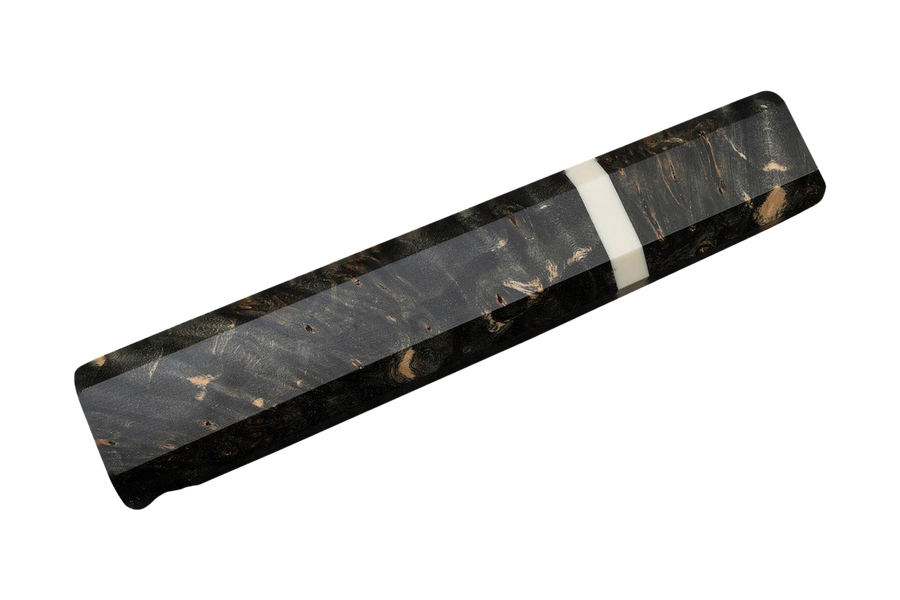
Handle Octagonal Birch Burl with Spacer
Region Aomori
Best for
  • Enthusiasts
  • Pro chefs
  • Free shipping for knives over AU$200 Australia wide.
  • World-wide shipping via DHL Express, 3 to 5 days.


The Hatsukokoro Ryusui(流水, flowing water) kitchen knife, crafted by renowned maker Nigara in Aomori, Japan, is a masterful blend of artistry and functionality. Featuring a unique nashiji damascus finish that resembles flowing water, this knife is visually stunning and stands out in any kitchen.

Its core is made from Blue 2 steel, known for its exceptional sharpness, edge retention, and ease of sharpening. The knife boasts a super thick spine at the heel with a drastic taper, reminiscent of Sanjo knives, enhancing its strength and precision. Thanks to the weigh given by the thick spine, the keen edge formed out of Blue 2 steel has very little hesitation drop though the food. However a concave grind of the bevel on this thicker knife means a some food sticking tent to occur when cutting thin slices of vegetables.

The cladding of the Ryusui line is very unique, it has a mineral-like texture with varying darker and lighter spots across the flat zone of the blade, followed by a dense damascus pattern falls down towards the edge. This create a look of small stream flow alongside an ancient rock, which I found fits the name of the line perfectly. Although we classify the finish of this line as a Nashiji finish, complexity of the colour and texture on the cladding of these blades have far surpass the typical Nashiji we often see.

Handcrafted with meticulous attention to detail, the Ryusui offers exceptional cutting performance, making it a prized possession for both professional chefs and home cooks who appreciate fine craftsmanship

Pros Cons
  • Great artistic
  • Excellent fit and finish
  • Excellent performance
  • Relatively hard to sharpen
  • Need extra care
Care Instruction
  1. Don't cut hard things! Japanese knives are brittle so bone hacking is a NO NO!
  2. Wash with neutral detergent after use, and wipe dry;
  3. Please don't wash knife with dishwasher, it will damage the wood handle;
  4. Be careful not to leave the knife close to a heat source for a long time;
  5. It is a lot more dangerous to cut with a blunt knife than a sharp knife!
  6. It is best to sharpen a Japanese knife regularly on a waterstone.
  7. Oil the (carbon) knife if storing for an extended period of time to prevent rust.

Nigara

Hirosaki sword and knife artisan

Nigara (二唐刃物鍛造所) is a forge in Hirosaki, Aomori. Go Yoshizawa (吉澤剛) is its president and signs as the eighth generation; his father, Toshiju Yoshizawa (吉澤俊寿), the seventh generation, is chairman.

Nigara dates its line to 1803, when the family began as gunsmiths in the service of the Tsugaru domain, and it made Japanese swords for generations. In the Edo period the domain took it on as its weapons works, and it made even cannon and warships. After the Second World War the forge turned from military swords to farm tools and kitchen knives; in those years it made knives in winter and sold them in summer.

In the early Showa era a Nigara smith whose sword name was Kunitoshi (国俊) studied under Dr Kotaro Honda, director of Tohoku University's metals research institute. Nigara's company history says he excelled at sword making. He was recognised as a holder of an intangible cultural property of Aomori Prefecture and passed his skill on to the seventh generation. The sixth generation had no son, so Toshiju, a grandson through a daughter's line, joined as heir. The present company dates from 1949, and besides knives it does welding and steel construction work, with a welding department since 1963. Nigara showed at Maison et Objet in Paris in 2011 and at Ambiente in Frankfurt in 2013.

We have visited Nigara several times, once for a few days of hands-on training at the forge.

The Anmon Damascus knives we list come in SG2 as gyuto, kiritsuke gyuto, bunka, santoku, nakiri, petty and sujihiki, and as single-bevel yanagiba and takobiki in Blue 2 and Ginsan. SG2 tsuchime knives, kurouchi or matt migaki, cover gyuto, petty, santoku, nakiri, bunka and sujihiki, plus a double-bevel honesuki and a butcher. We also list VG10 Damascus tsuchime, Ginsan Kurozome Damascus and Aogami Super tsuchime knives, and an SPG STRIX tsuchime Damascus nakiri. The honyaki are Blue 2 with shaped hamon, as yanagiba, kiritsuke yanagiba and sakimaru, and a White 1 kiritsuke yanagiba.

“An Aomori knife company whose family made Japanese swords for generations, with an Anmon line of Damascus knives.”

Est. 1949 | 昭和24年
Known for Glamorous and innovative knife design, inherited forging skills.
Website nigaraknives.com Read more about Nigara

Nigara · Aomori

Knife details

Frequently asked questions

Is a K-tip Gyuto the same as a traditional Kiritsuke?

Not quite - and it is the single most common point of confusion when people shop for a kiritsuke. The two knives share the same striking angled, reverse-tanto tip, but underneath that tip they are very different tools.

A K-tip gyuto is normally a double-bevel knife: it is ground on both sides like any Western-style chef's knife, so it is forgiving to use, and sharpened exactly the way you would sharpen a normal gyuto. You get the dramatic kiritsuke look with the everyday usability of an all-purpose chef's knife.

A traditional kiritsuke, including the kiritsuke-yanagiba (slicer), is a single-bevel knife, ground on one side only. It is historically a master chef's knife: it takes real practice to use well, is set up for right-handed users by default, and needs single-bevel sharpening technique to maintain.

So if you want the kiritsuke silhouette with no learning curve, choose a K-tip gyuto. If you specifically want the traditional single-bevel discipline - and the precision it allows on fish and vegetables - choose a true kiritsuke. At Knives and Stones we stock both, and each product page tells you which construction you are looking at.

Will a carbon steel knife rust, and how do I look after it?

Yes, carbon steels such as Aogami (Blue) and Shirogami (White) react with food, moisture, and acids, so left wet they can spot or rust. With normal use they develop a grey, blue and brown patina, and that patina is expected on a carbon knife rather than damage.

Aogami has only a little chromium, far below what a stainless steel needs, so water left sitting on the blade will spot it. A patina is a stable oxide layer that slows rust down; orange or red specks are rust.

Care is simple once it becomes habit:

  • Wipe the blade as you go, especially after onion, citrus or tomato.
  • When you finish, wash it in warm water with a little soap and dry it straight away with a towel. Don't let it air dry or leave it in the sink or the dish rack, and never put it in the dishwasher.
  • Store it dry: on a magnetic strip, in a saya or in a block in a dry spot.
  • If it's going to sit unused for a while, wipe on a thin film of food-safe mineral oil before storing it.

If you do find rust, lift light orange spots with a rust eraser and a little water, then dry and oil the blade. We stock the CKK and Naniwa rust erasers, and the Koyo Sunlite Polishing Paste (Blue for Steel) lifts light surface rust or refreshes a finish. Rust on the edge itself comes off the next time you sharpen. Deep pitting needs a professional sharpener. Avoid steel wool and harsh scouring on a polished or kurouchi finish, because they scratch it.

On a stainless-clad knife only the thin line of carbon steel along the edge can rust; the cladding stays clean. A carbon-clad or honyaki blade can rust over its whole face and needs the same care all over.

Carbon steel rewards this small amount of attention with a keener edge and easier sharpening than most stainless.

What is the difference between Blue 2 and White 2 steel?

Proterial lists 1.05 to 1.15% carbon for both steels; its Blue 2 table lists 0.20 to 0.50% chromium and 1.00 to 1.50% tungsten, while its White 2 table lists neither.

Proterial describes White 2 as a carbon steel with minimum impurities and high hardness, and Blue 2 as an alloy steel with tungsten and chromium to improve heat-treatment properties and wear resistance, with a hardening hardness of over 60 HRC for both. Neither steel is close to the JSSA's 10.5% minimum for stainless.

How old is Nigara, and did it make swords?

The Nigara family line began in 1803, when the family served the Tsugaru domain as gunsmiths. For generations afterwards it made Japanese swords.

After the Second World War, the forge turned to blades for everyday life, including farm tools and kitchen knives.

Who leads Nigara today?

Go Yoshizawa, president of Nigara Hamono Forge, leads it today and signs as the eighth generation of the Nigara family line.

The company is Nigara Hamono Forge (二唐刃物鍛造所), in Kanazoku-machi, Hirosaki, Aomori.

You May Also Like