PRAHRAN STORE NOW OPEN · THU–MON · 10AM–6PM

Kei Kobayashi

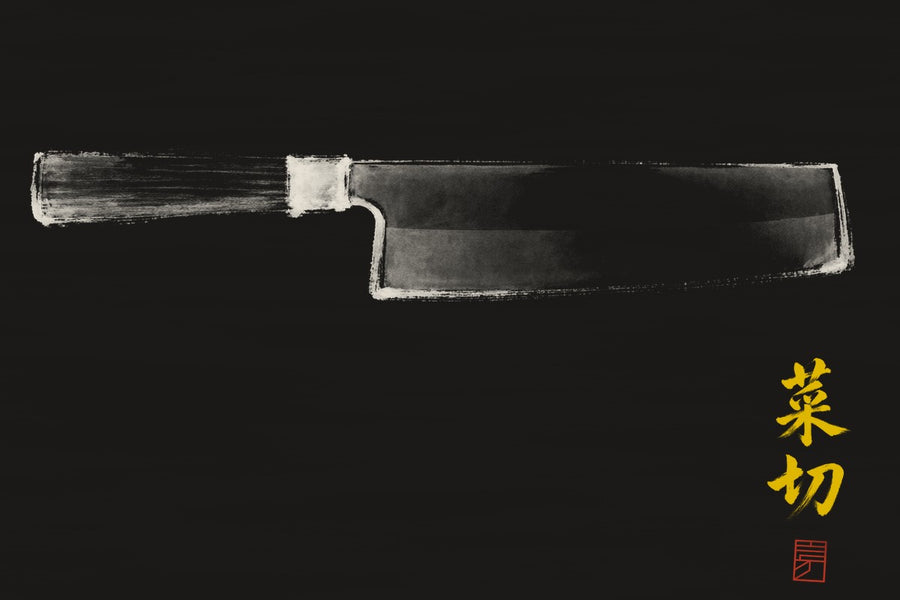
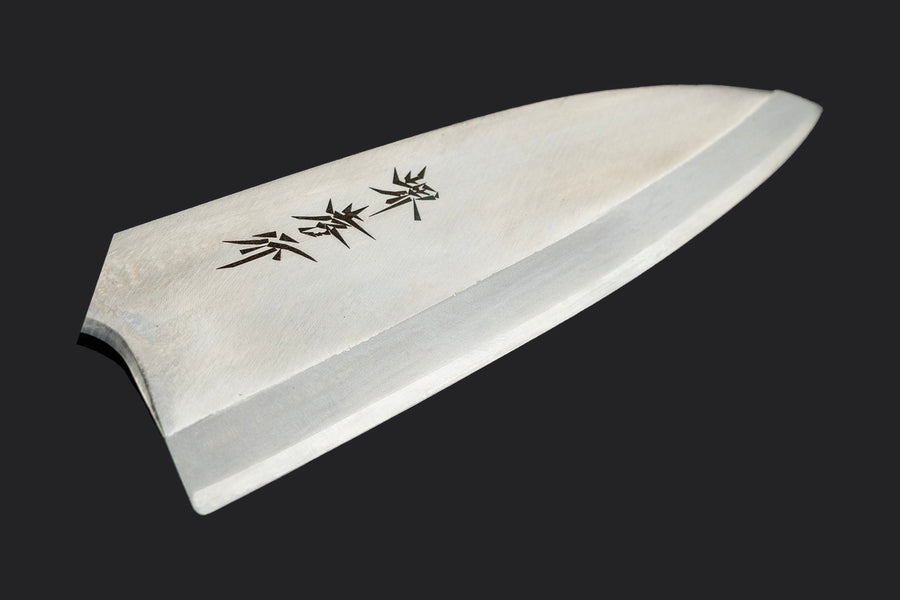
Kei Kobayashi SG2 Nakiri 165mm

Regular price $359.95

Sold out right now

Leave your email and we’ll send one message the moment it’s back in stock.

One email, no marketing. Privacy policy.

Availability

  • St Peters, NSW —
    2 Bishop St, Unit 2, St Peters NSW 2044
  • Crows Nest, NSW —
    107 West St, Shop 1, Crows Nest NSW 2065
    Pickup only
  • Prahran, VIC —
    180 Commercial Road, Shop 1, Prahran VIC 3181
    Pickup only
Detailed Specifications
Line Kei Kobayashi SG2 Migaki
Profile Nakiri / Japanese vegetable knife
Bevel Type Double Bevel
Weight 150 g | 5.3 oz
Edge Length 160 mm | 6 19/64″
Heel Height 50 mm | 1 31/32″
Width @ Heel 1.8 mm | 5/64″
Width @ Mid 1.7 mm | 1/16″
Width @ 1cm from Tip 1.6 mm | 1/16″
Steel SG2 / R2 | Powdered | Stainless
Blade Construction Sanmai - Stainless Clad
Hardness (HRC) 62 - 64
Surface Finish Migaki
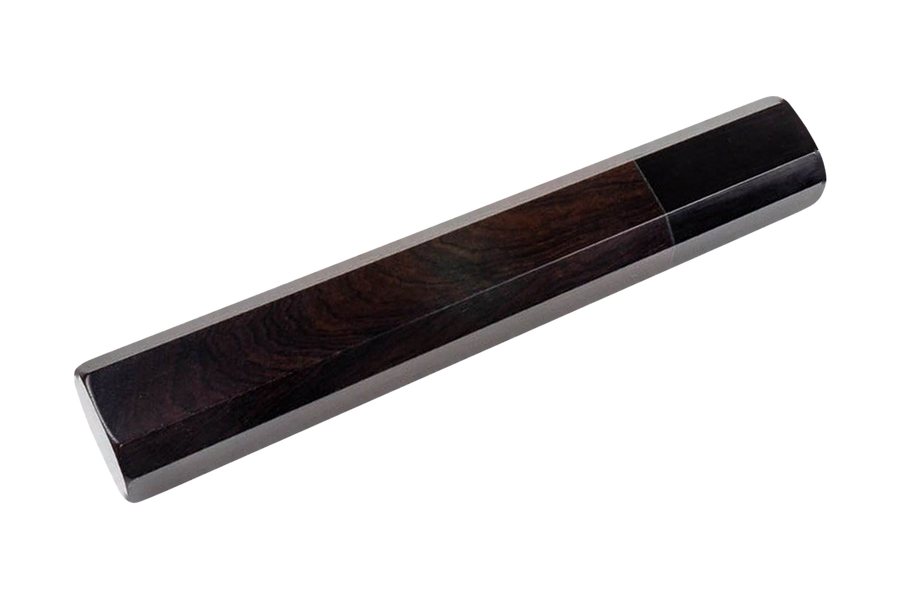
Handle Octagonal Ebony with Black Horn Ferrule
Region Seki
Best for
  • Pro chefs
  • Enthusiasts
  • Students
  • Free shipping for knives over AU$200 Australia wide.
  • World-wide shipping via DHL Express, 3 to 5 days.


Kobayashi's SG2 Migaki is a lineup that designed purely to pursue cutting performance and usability in the context of a professional kitchen. The combination of low maintenance, highly wear resistant SG2 steel, simple, low friction Migaki finish and a blade geometry that is tuned to glide through all kinds of food, made these knives a ideal choice for professionals and those who expect highest performance from their blades.

The highlight of these knives must be the thin blade that Kobayashi san put onto with his masterful sharpening skill, the sub-2mm spine thickness and razor-like thickness behind the edge make these knives the definition of "laser". At the same time, it is one of the smooth cutting laser I've ever tried. The slightly rough Migaki finish and swell-tuned convex geometry produced by Kobayashi san's rich experience have lead to a cuts that are free of sticking, which is uncommon on a thin knife.

Also unlike the commonly seen thin blades, Kobayashi's knives have great rigidity.It could be the thicker body created by the convex grind which give more support to the blade against bending, and potentially higher hardness from heat treatment. This thin and solid blade offer very commanding cuts and would give you confidence in the most challenging tasks that require great precision.

Despite the simple design, all the details are finished to a very high level. The shiny spine and choil stands out under the contrast with the Migaki blade surface and speak proudly about the attention to details. As for the steel, SG2 still is one of the best option for knife making in the industry, it is balanced in other aspect and still offer excellent edge retention that can comfortably last through weeks of intense preps.

This SG2 line are incredible, especially as professional tools. It respond to the demand of professional kitchen with top notch cutting performance, great edge retention and excellent handling, and didn't add any fancy feature that oriented for aesthetic. Minimalistic and focused, Kobayashi's SG2 Migaki line is build for professional and those who approach their cooking seriously.

Pros Cons
  • Great for professionals
  • Thin behind the edge
  • Excellent performance
  • A little bit brittle
Care Instruction
  1. Don't cut hard things! Japanese knives are brittle so bone hacking is a NO NO!
  2. Wash with neutral detergent after use, and wipe dry;
  3. Please don't wash knife with dishwasher, it will damage the wood handle;
  4. Be careful not to leave the knife close to a heat source for a long time;
  5. It is a lot more dangerous to cut with a blunt knife than a sharp knife!
  6. It is best to sharpen a Japanese knife regularly on a waterstone.

Kei Kobayashi

Kei Kobayashi (小林 圭), Seki

Kei Kobayashi (小林 圭) is a knife maker in Seki.

We stock his SG2 nakiri in 165 mm.

Instagram @kei_kobayashi Read more about Kei Kobayashi

Kei Kobayashi · Seki

Knife details

Frequently asked questions

Why won't my knife cut all the way through? The slices stay joined at the bottom.

Part of the edge never reaches the board, so the cut never finishes. At our counter we put it simply: there is not enough flat at the heel. A knife with a long curve is built for rock chopping, not for the Chinese or Eastern up-and-down chop.

A straight edge, like a nakiri's, meets the board along its whole length and finishes the cut. On any knife, a dip worn near the heel or a dull section can cause the same thing.

Nakiri or usuba: what is the difference?

The bevel. A Japanese dictionary describes the nakiri (菜切包丁) as shaped like an usuba but double-bevel and relatively easy to handle; the Sakai cutlery association describes the usuba (薄刃包丁) as an acute, wide knife for vegetables, in a square Kanto type and a kamagata Kansai type.

The names overlap, since another dictionary records the usuba as also called nakiri, so check the bevel rather than the name.

SG2 steel knives at Knives and Stones

SG2 is my go-to recommendation for anyone who wants a stainless knife that performs like carbon steel without the fuss. At 62 HRC or more (Takefu's figure), it takes a screaming edge and holds it far longer than VG-10 or AEB-L, all while being rust-resistant. You get the best of both worlds: no patina worry, but real cutting performance.

SG2 vs AS steel for kitchen knives — which is better?

Neither is objectively better, it just depends on whether you value stainless convenience or a laser-sharp carbon edge. Go with SG2 if you want a knife that holds a screaming edge without any babysitting. Choose AS if you are chasing the thinnest possible edge and don't mind wiping the blade down after every use.

SG2 is a powdered stainless steel from Takefu, rated at 62 HRC or more. It is tough and resists corrosion, which is why I reach for it when working with acidic foods. Aogami Super is high carbon, and Proterial gives it a hardening hardness of over 60 HRC. It sharpens to a hair-whittling edge that lasts slightly longer than SG2, but it will rust if you neglect it.

R2 steel vs SG2 — are they the same?

Yes, R2 and SG2 are the same steel — R2 is the name used by Kobelco Steel, and SG2 (Super Gold 2) is the name used by Takefu Special Steel for the identical powdered metallurgy formula. SG2 / R2 is a powder (PM) steel from Takefu Special Steel, Japan, with a composition of 1.25% carbon, 14.0% chromium, 1.8% vanadium, 2.3% molybdenum, and a hardness range of 62–64 HRC. So if you see a knife labeled R2 or SG2, you are getting the exact same material.

You May Also Like