PRAHRAN STORE NOW OPEN · THU–MON · 10AM–6PM

Masamoto Sohonten  |  SKU: MASA_KS4216

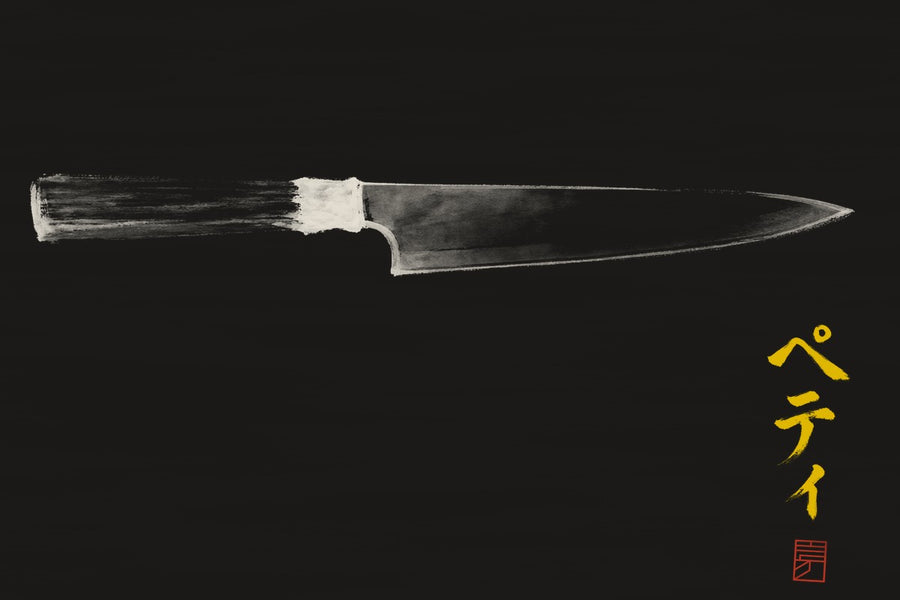
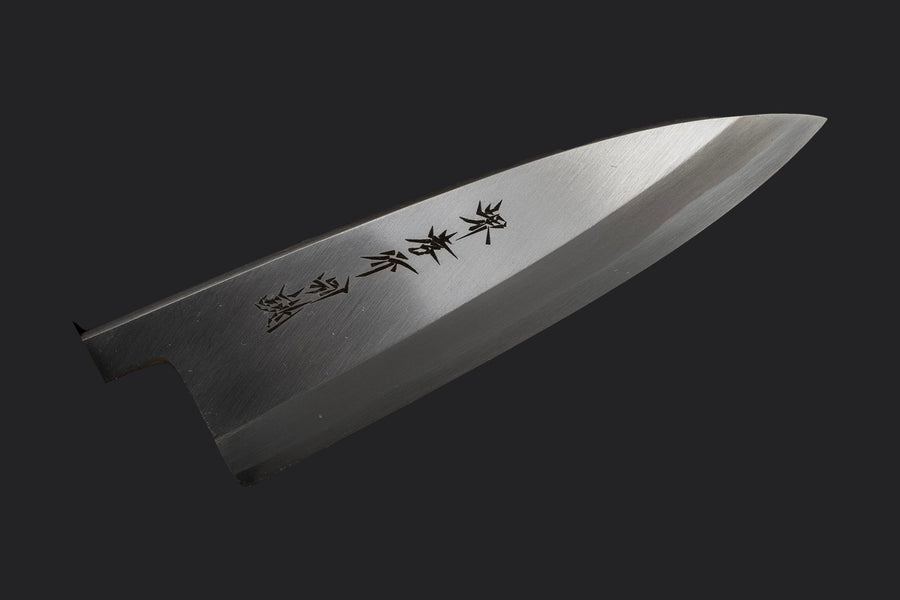
Masamoto Sohonten Hongasumi White 2 Petty 165mm KS4216

Regular price $419.95

IMPORTANT: Carbon steel knives can rust or patina quickly if not cared for properly. They require regular cleaning, drying, and oiling. If you are unfamiliar with carbon steel maintenance, we recommend choosing a stainless steel option instead.

Sold out right now

Leave your email and we’ll send one message the moment it’s back in stock.

One email, no marketing. Privacy policy.

Availability

  • St Peters, NSW —
    2 Bishop St, Unit 2, St Peters NSW 2044
  • Crows Nest, NSW —
    107 West St, Shop 1, Crows Nest NSW 2065
    Pickup only
  • Prahran, VIC —
    180 Commercial Road, Shop 1, Prahran VIC 3181
    Pickup only
Detailed Specifications
Line Masamoto KS Series
Profile Petty / Utility knife
Steel White 2 / Shirogami #2 | Carbon
Blade Construction Nimai - Soft Iron Clad
Hardness (HRC) 60 - 64
Surface Finish Kasumi
Handle
Region Tokyo
Best for
  • Pro chefs
  • Collectors
  • Free shipping for knives over AU$200 Australia wide.
  • World-wide shipping via DHL Express, 3 to 5 days.


The KS line is Masamoto Sohonten's Hongasumi White 2 family, and most of what we list under it is single bevel: yanagiba and kiritsuke yanagiba, deba and mioroshi deba, usuba and kamagata usuba, takobiki, hamokiri and mukimono. Each is forged from Hitachi Shirogami #2 (White 2) with iron cladding and a kasumi finish, and the maker's numbering system puts all of these under the KS code.

The KS covers double bevel knives too, and there the construction changes: our product data describes the double bevel line of the KS series as a monosteel construction, so the wa-gyuto, the petty and the sujihiki are solid White 2 without cladding. The wa-gyuto are super light and nimble and loved by professional chefs and enthusiasts, while the Hongasumi single bevels share the same steel and are noted for their ease of sharpening.

All of it is reactive carbon steel, so the family needs wiping and drying during service. The handles are ho wood with buffalo horn ferrules, apart from the K&S special 240 gyuto with its ebony heart-shaped handle.

Pros Cons
  • Excellent performance
  • Thin behind the edge
  • Excellent fit and finish
  • High budget
  • Prone to rust
Care Instruction
  1. Don't cut hard things! Japanese knives are brittle so bone hacking is a NO NO!
  2. Wash with neutral detergent after use, and wipe dry;
  3. Please don't wash knife with dishwasher, it will damage the wood handle;
  4. Be careful not to leave the knife close to a heat source for a long time;
  5. It is a lot more dangerous to cut with a blunt knife than a sharp knife!
  6. It is best to sharpen a Japanese knife regularly on a waterstone.
  7. Oil the (carbon) knife if storing for an extended period of time to prevent rust.

Masamoto Sohonten

The Crowned King of Kanto Region

Masamoto Sohonten has arrived at Knives and Stones. Started by Minosuke Matsuzawa in 1866, succeed by Kichizo Hirano in 1891 and registered its trademark in 1903, Masamoto Sohonten is now under the management of the 6th generation Masamoto: Masahiro Hirano. With more than 150 years of history, Masamoto Sohonten is used in Japanese professional kitchens.

“The hallmark of professionalism in single bevel knives, excellent in quality and consistency and once the dominating knife brand in the entire Kanto region.”

Est. 1866 | 慶応2年
Known for Excellently built traditional single bevel knives and KS series Gyuto
Website masamoto-sohonten.co.jp Read more about Masamoto Sohonten

Masamoto Sohonten · Tokyo

Knife details

Frequently asked questions

What is a petty knife and when do I need one?

A petty knife is a small Japanese utility knife, typically with a blade between 120mm and 180mm, designed for precision tasks like peeling, trimming, and slicing fruits and vegetables. You need one when your main chef’s knife feels too large for detail work, think deveining shrimp, cutting garnishes, or any in-hand peeling where a bigger blade gets in the way. Its slightly longer and slimmer profile than a Western paring knife gives you more control for intricate cuts without sacrificing the nimble feel you want for small jobs. If you regularly find yourself reaching for a smaller blade for finishing work, a petty fills that gap cleanly.

A petty is not a replacement for a gyuto or santoku. It lacks the blade length and belly for efficient chopping, rocking, or breaking down larger proteins. If your work is mostly bulk prep, like dicing onions or slicing roasts, a petty will feel slow and underpowered. It also won’t handle heavy tasks like splitting bones or prying, so treat it as a precision tool, not an all-rounder.

The petty’s role in a Japanese kitchen is as the smaller counterpart to the gyuto, built for tasks where a full-size blade is clumsy. At Knives and Stones, the petty category covers a range of steels including VG10, White#2, Swedish Steel, VG5, SG2, and MV, from makers like Sakai Takayuki, Masamoto Sohonten, Ryusen, Nigara, Hatsukokoro, and Sentan. Most are double-beveled, and the blade length runs from 120mm to 180mm, which is what gives it that balance of reach and precision. For more on how this fits into your knife kit, see the Knives and Stones Education Centre.

Shirogami 1 vs shirogami 2 — what is the difference?

Shirogami 1 (White 1) has a higher carbon content than Shirogami 2 (White 2), roughly 1.3% vs 1.1%, making it the purer carbon steel and the one some craftsmen still regard as the best, though in practice the two have become harder to distinguish as modern metallurgy has made both quite pure.

White 2 (Shirogami #2) has about 1.1% carbon and a hardness range of 60-64 HRC; White 1 sits around 1.3% carbon. That 0.2% difference is the core spec gap. More carbon generally means you can push hardness higher and hold a keener edge, but it also makes the steel more brittle and less forgiving. White 2 trades a bit of that potential peak sharpness for slightly better toughness and ease of sharpening.

Shirogami 1 carries a certain prestige. Sukenari's Nobuo Hanaki once told me directly that they only use White 1 for their mizu-honyaki because it is the pure form of carbon steel, it carries that halo. Among traditional smiths, White 1 is still spoken of as the benchmark. That said, in recent years the improvement in metallurgical manufacturing has narrowed the real-world gap. The rumor is that both grades are now so pure that separating them in practice is no longer straightforward. I've also heard that Hitachi has stopped producing White 1, though I can't confirm that.

You May Also Like