PRAHRAN STORE NOW OPEN · THU–MON · 10AM–6PM

Matsubara  |  SKU: MABA-B2NASH-KSJ240BK

Matsubara Blue 2 K-tip Sujihiki 240mm Nashiji Burnt Kashi

Sale price $339.98 Regular price $399.95

IMPORTANT: Carbon steel knives can rust or patina quickly if not cared for properly. They require regular cleaning, drying, and oiling. If you are unfamiliar with carbon steel maintenance, we recommend choosing a stainless steel option instead.

In Stock Now

Availability

  • St Peters, NSW —
    2 Bishop St, Unit 2, St Peters NSW 2044
  • Crows Nest, NSW —
    107 West St, Shop 1, Crows Nest NSW 2065
    Pickup only
  • Prahran, VIC —
    180 Commercial Road, Shop 1, Prahran VIC 3181
    Pickup only

Goes well with

Detailed Specifications
Line Matsubara Blue 2 Nashiji Stainless Clad
Profile Sujihiki / Slicing knife
Bevel Type Double Bevel
Weight 175 g | 6.2 oz
Edge Length 240 mm | 9 29/64″
Heel Height 39 mm | 1 17/32″
Width @ Heel 3.2 mm | 1/8″
Width @ Mid 2.0 mm | 5/64″
Width @ 1cm from Tip 0.6 mm | 1/32″
Steel Blue 2 / Aogami #2 | Carbon
Blade Construction Sanmai - Stainless Clad
Maker's hardening hardness 60 HRC or more
Surface Finish Nashiji
Handle Burnt Kashi Octagonal
Region Nagasaki
Best for
  • Enthusiasts
  • Pro chefs

Free shipping for knives over AU$200 Australia wide.

World-wide shipping via DHL Express, 3 to 6 days (not available in the UK).


Shu Matsubara’s Blue 2 Nashiji is a rustic looking and highly practical knife that carries some decent performance and great value. The stainless cladding over the Blue 2 steel is a great plus in usability, and the hand-forged taper and profile offers great handling in use.

The organic trace left from handcraft can be easily spotted on these blades at first glance, the floating cladding line, texture-rich Nashiji and tapered spine speaks of the heat and sweat they went through. Nashiji/pear skin finish is one of my favourite finishes, not only because of the lovely look, but also its ability to keep it. 

After forging and heat treating, the black oxidation layer is left on the surface of the knife, by using a wire brush instead of more aggressive abrasive, this softer layer of oxide can be removed without erasing away the texture of the steel. As the wire brush is essentially scratching the steel until the surface is evenly scratched, it is really hard to create more scratch on Nashiji surface in regular use. Compared with other clean and even finishes, this high entropy finish can stay this way very easily.

Just like the surface finish of them, these knives’ construction is also very masculine. They weigh on the higher side in their respective category and tend to have a slightly taller profile. The heavy weight is pretty great for those who like a reassuring handling for their tools, and Matsubara surely delivers that. The geometry of the blade is too not the most aggressive and laser-like. Some thickness is left in the bevel for a more robust edge, but a gentle convex can still ensure a relatively smooth cut.

The Blue 2 is a common steel used extensively in hand forged blades, having more edge retention and being less reactive than White and easier to deal with than Blue Super, many blacksmiths are happy to forge with this steel and many chefs are happy to use knives made with it. Despite the need for maintenance still, the wicked edge you can get on this steel still attracts many users, not to mention the stainless cladding it is warped in on these knives have made the caring much less tedious.

These blades remind me of Shigeki Tanaka’s works(it’s definitely a coincidence that both makers share the family name), rustic, organic and characterful. The pricing is also pretty attractive, and I even think for the amount of work put into these knives, this price is pretty low for what you get. I’d highly recommend this knife for anyone who is looking for a carbon steel knife and prefers a heavy, workhorse style blade.

Pros Cons
  • Budget friendly
  • Great for professionals
  • Great artistic
  • Need some work on the blade
  • Prone to rust
Care Instruction
  1. Don't cut hard things! Japanese knives are brittle so bone hacking is a NO NO!
  2. Wash with neutral detergent after use, and wipe dry;
  3. Please don't wash knife with dishwasher, it will damage the wood handle;
  4. Be careful not to leave the knife close to a heat source for a long time;
  5. It is a lot more dangerous to cut with a blunt knife than a sharp knife!
  6. It is best to sharpen a Japanese knife regularly on a waterstone.
  7. Oil the (carbon) knife if storing for an extended period of time to prevent rust.

Matsubara Hamono

Matsubara Hamono (田中鎌工業), Omura, Nagasaki

Matsubara Hamono is the knife work of Tanaka Kama Kogyo (田中鎌工業) in Matsubara, Omura, Nagasaki, a workshop that says it does everything by hand and in-house, from start to finish. Its blades carry the mark SHU, which grew out of the older mark 松原周作 that, in the company's words, records the skill and spirit of its founder.

We stock its Blue 2 knives with a nashiji finish and burnt kashi handles.

Read more

The company's history page traces Matsubara sickle-making to 1474, when, it says, the descendants of a swordsmith, 並衡行泰, who had fled after the Heike were defeated in 1185, moved to Matsubara and began smithing, and it bases the account on a 1967 study by a teacher at Omura Technical High School. Matsubara once had 19 smithies, each marking its work with its own mark.

The same page reports peak output of 140,000 blades a year in the Showa era. It says the town's workshops declined from nine to three, and kitchen knives became the main product in place of sickles.

“Tanaka Kama Kogyo, a family forge in Matsubara, Omura, Nagasaki, that says it makes its knives by hand.”

Known for Kitchen knives the workshop says it makes by hand, in-house
Instagram @matsubara_hamono Read more about Matsubara Hamono

Matsubara Hamono · Nagasaki

Knife details

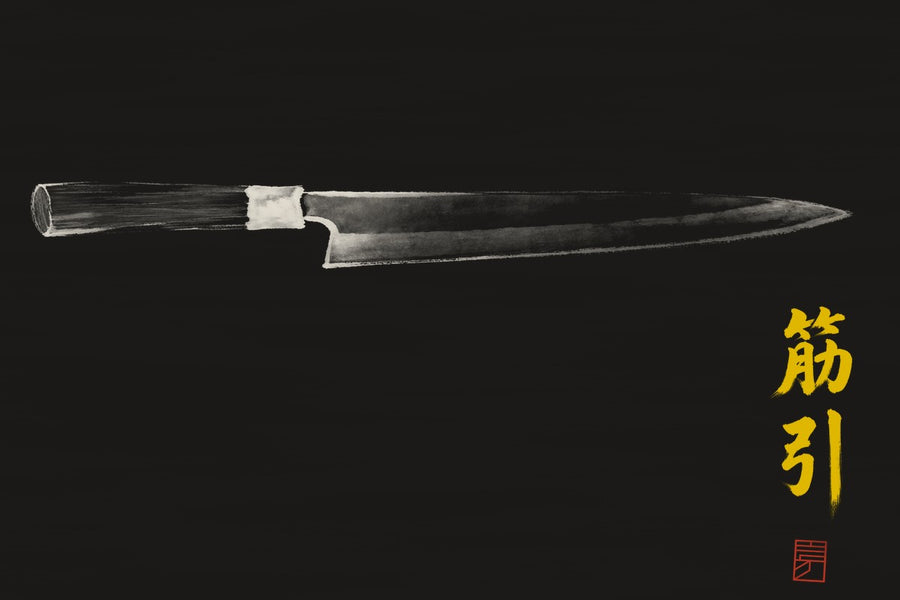
Sujihiki — knife profile
Profile

Sujihiki

筋引

Slicing knife · Double bevel

A long, narrow slicer for dividing large meat; Tojiro says it cuts sashimi too.

Read more
Steel properties
  1. Hardness Very good
  2. Edge retention Very good
  3. Toughness Very good
  4. Rust resistance Low
  5. Ease of sharpening High
  6. Sharpness Very high
Our ratings, inferred from published lab tests and composition.

Our edge-retention grade is a kitchen rating. It weighs the hardness each steel is sold at, which keeps a thin edge from rolling, twice as heavily as lab wear tests, and the final grade is our judgment from selling and sharpening these knives for over a decade. Lab card-cutting tests measure abrasive wear only, so they can rank carbon steels lower. Tap ? for the lab figure.

Steel

Blue 2 / Aogami #2

青二鋼

Carbon · Hitachi Metals (now Proterial)

Proterial carbon steel, 1.05 to 1.15% carbon with chromium and tungsten; not stainless.

Read more
CladdingCoreClad line
Construction

Sanmai - Stainless Clad

三枚

3 layers · stainless clad

Hard core between two stainless layers, bare only at the edge; the cladding resists rust.

Read more
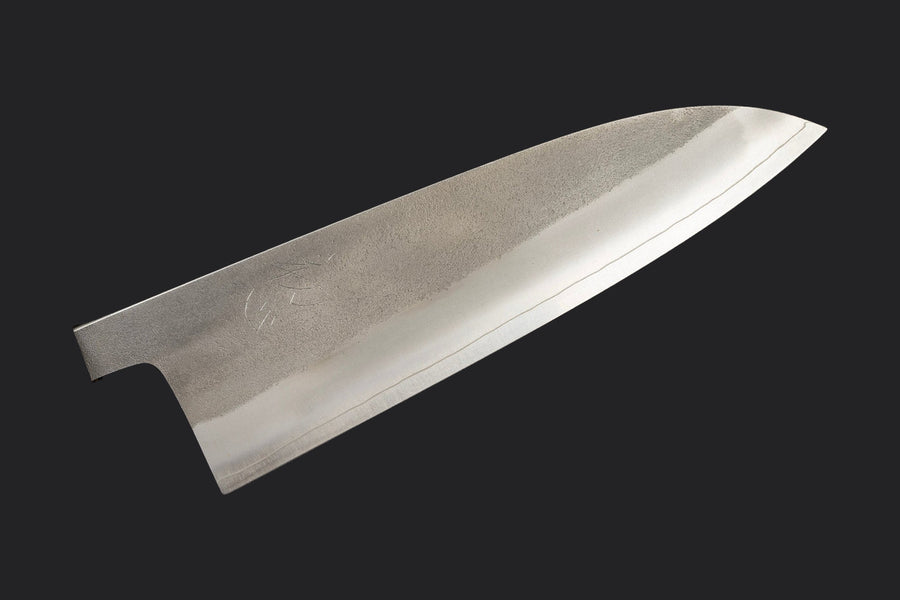
Nashiji — blade surface finish
Finish

Nashiji

梨地

Pear-skin texture

A fine matte texture like the skin of a nashi pear. It may help food release.

Read more
Burnt Kashi Octagonal handle
Handle

Burnt Kashi Octagonal

Octagonal WA

Japanese white oak, eight-sided, half charred for a dark, textured contrast. No ferrule.

Frequently asked questions

What size sujihiki should I buy?

Between 210 and 270 mm, depending on where it will work. One Japanese maker lists 210 to 240 mm, double-bevel, for home use and 240 to 270 mm, single- or double-bevel, for professional kitchens.

Another, in Sakai, recommends 240 mm at home, with the size of your board in mind, and 270 mm for professional use.

Sujihiki or yanagiba: which do I need?

Most home cooks need the sujihiki. Choose the yanagiba when slicing raw fish for sashimi and sushi is the main job and you are prepared to learn single bevel sharpening.

A sujihiki is a long, narrow, double bevel slicer. Tojiro describes it as the knife for dividing large pieces of meat, known abroad as a slicer or carving knife, and says its length lets it cut sashimi as well. It carves roasts, trims sinew and portions fish, works in either hand and sharpens like any double bevel knife. Sujihiki run from about 210 to 300 mm, and 240 mm suits most home boards.

A yanagiba is the single bevel sashimi knife. It is ground on one side with a hollow back, and each slice is one long pull from heel to tip, so raw fish is cut cleanly rather than sawn. The edge is too fine for bones or anything hard. It is made for one hand and most are right handed, so check the listing if you are left handed. Sharpening means working the whole bevel and keeping the back flat. Yanagiba run from about 240 to 330 mm, with 270 and 300 mm the common sizes.

So for roasts, portioning meat and the occasional side of fish, buy a sujihiki. For regular sashimi and sushi work, buy a yanagiba and keep it for fish.

Which knife do I need for sushi and sashimi at home?

For occasional sushi at home, a sharp sujihiki (筋引) does the job. Tojiro describes it as a long, double-bevel slicer that can also be used for sashimi, and a double bevel works in either hand.

If sashimi is the point of the meal, choose a yanagiba (柳刃). Tojiro calls it the Kansai-style sashimi knife, now used across Japan, and it slices in one long pull from heel to tip. It is single bevel, so buy the one made for your hand.

If you start from whole fish, add a deba (出刃). Tojiro describes it as very thick and heavy, made for breaking fish down. The deba takes the fish apart and the slicer then cuts the fillets.

Will a carbon steel knife rust, and how do I look after it?

Yes, carbon steels such as Aogami (Blue) and Shirogami (White) are not stainless steels, so left wet they can spot or rust.

Care is simple once it becomes habit. Wipe the blade as you go, especially after acidic food like citrus, tomato or onion. When you finish, wash it in warm water with a little soap and dry it straight away with a towel. Do not let it air dry, leave it in the sink or the dish rack, or put it in the dishwasher. Store it dry: on a magnetic strip or in a ventilated block in a dry spot.

If the knife will sit unused for a while, wipe on a thin layer of oil before storing. In our video James shows that mineral oil can stand in for camellia (tsubaki) oil, and he picks one labelled medical grade; we list the Kitchen Knife / Cutting Board Mineral Oil Medical Grade for this. If you find light rust, lift it with a rust eraser and a little water, then dry and oil the blade; we list the CKK and Naniwa rust erasers.

What is the difference between Blue 2 and White 2 steel?

Blue 2 is White 2 with tungsten and a little chromium added. Blue 2 holds its edge longer. White 2 sharpens faster and takes a very keen edge. Both are carbon steels that will rust if left wet.

The figures come from Proterial, which makes both. Each has 1.05 to 1.15% carbon. Blue 2 (Aogami 2) adds 1.00 to 1.50% tungsten and 0.20 to 0.50% chromium. White 2 (Shirogami 2) lists neither, and Proterial describes it as a carbon steel with minimum impurities. Proterial says the tungsten and chromium improve heat treatment and wear resistance, and gives a hardening hardness over 60 HRC for both.

In use, the tungsten forms hard carbides that resist wear, so a Blue 2 edge lasts longer between sharpenings. White 2 has none, so it comes back on a whetstone very quickly. The chromium in Blue 2 is far below the 10.5% a steel needs to be stainless, so it gives no real rust protection. Wipe either steel dry after use and expect a patina.

Choose Blue 2 if you want to sharpen less often. Choose White 2 if you enjoy sharpening and want the keenest edge. We list both widely: Blue 2 from Nigara, Myojin Riki and Anryu, and White 2 from Masamoto Sohonten, Sakai Takayuki and Yoshikane.

Does the Matsubara Blue 2 Nashiji rust?

Yes, the Blue 2 core can rust, even though the cladding is stainless. Proterial lists the chromium in Aogami 2 (Blue 2) at 0.20 to 0.50%, under the 10.5% minimum the Japan Stainless Steel Association sets for stainless.

Our own line entry lists this line as stainless clad sanmai with a nashiji finish. Wipe and dry the blade after use.

How long have blades been made in Matsubara?

About 550 years, on the company's own telling: its history page presents that span of Matsubara sickle making from a school document written in 1967, which records that in 1474 descendants of a swordsmith moved to Matsubara in Omura and began smithing there.

The same page says the work turned from swords to everyday tools after the wars, and that the main product has since moved from sickles to kitchen knives.

Does Matsubara make its knives in-house?

Yes. The company behind Matsubara knives says everything is done by hand in-house, from start to finish.

Its workshop is in Matsubara, Omura City, Nagasaki.