PRAHRAN STORE NOW OPEN · THU–MON · 10AM–6PM

Nakagawa  |  SKU: NK-BLUE1DM-US210

Nakagawa Blue 1 Damascus Kamagata Usuba 210mm

Regular price $679.95

IMPORTANT: Carbon steel knives can rust or patina quickly if not cared for properly. They require regular cleaning, drying, and oiling. If you are unfamiliar with carbon steel maintenance, we recommend choosing a stainless steel option instead.

Sold out right now

Leave your email and we’ll send one message the moment it’s back in stock.

One email, no marketing. Privacy policy.

Availability

  • St Peters, NSW —
    2 Bishop St, Unit 2, St Peters NSW 2044
  • Crows Nest, NSW —
    107 West St, Shop 1, Crows Nest NSW 2065
    Pickup only
  • Prahran, VIC —
    180 Commercial Road, Shop 1, Prahran VIC 3181
    Pickup only
Detailed Specifications
Line Hatsukokoro x Nakagawa Blue 1 Damascus Single Bevel
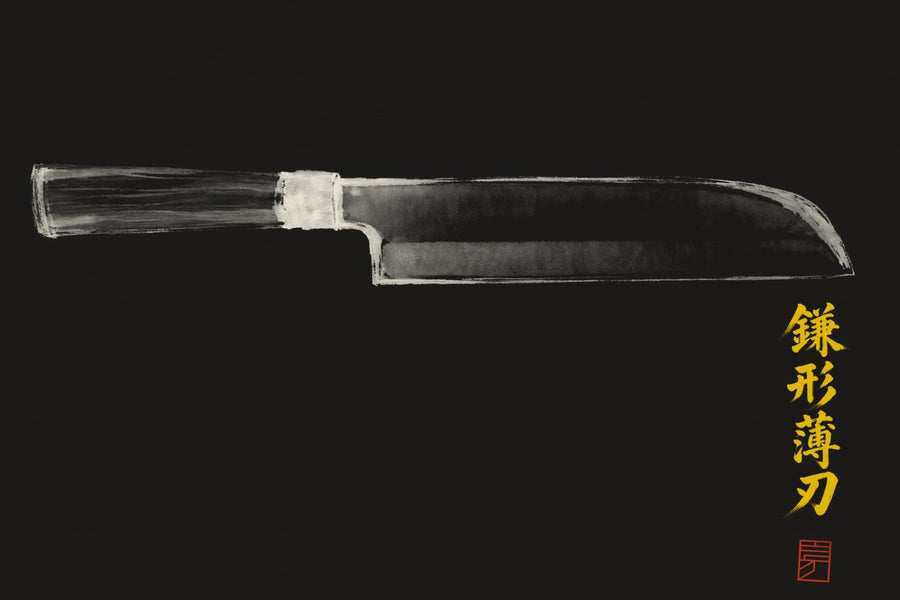
Profile Kamagata Usuba / Kansai vegetable knife
Steel Blue 1 / Aogami #1 | Carbon
Blade Construction Nimai - Soft Iron Damascus Clad
Hardness (HRC) 61 - 64
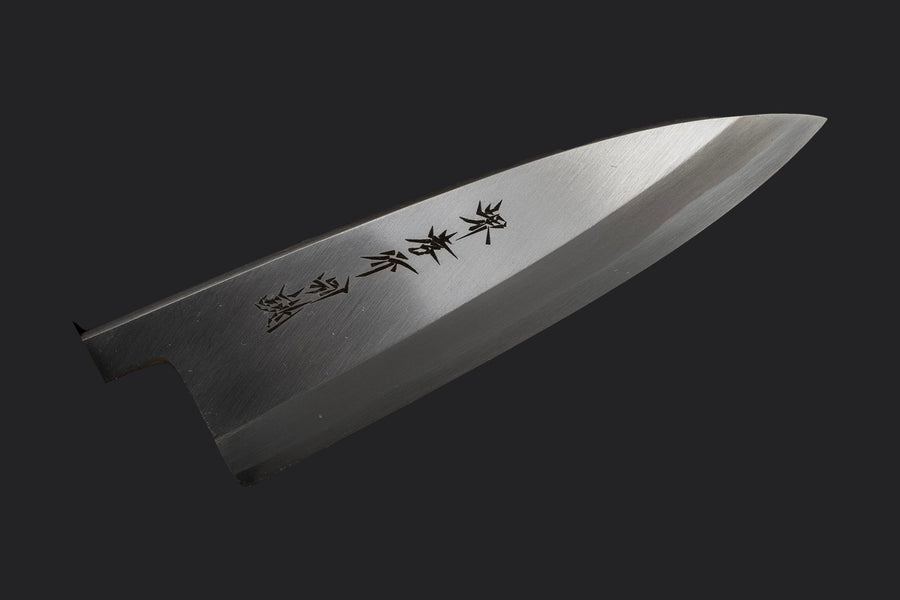
Surface Finish Kasumi
Handle
Region Sakai
Best for
  • Collectors
  • Enthusiasts
  • Free shipping for knives over AU$200 Australia wide.
  • World-wide shipping via DHL Express, 3 to 5 days.


This Blue 1 commissioned by Hatsukokoro and forged by Satoshi Nakagawa is a line that focus on the artistic value and fine craftsmanship of the art of forging. Each of the blade would start with a piece of damascus cladding placed on top of a Blue 1 high carbon steel, heated and forgewelded together then drawn out into a long billet under hammer in Master Nakagawa's hand. When you pick them up, the beauty of these blades will speak for themselves through details.

Satoshi Nakagawa, trained as apprentice of the legendary bladesmith Kenichi Shiraki for over 20 years, have excelled his skill in forging of traditional Japanese profile blades as well as all other kinds of edged items. The finish on this Blue 1 line is undoubtedly superb: from the organic cladding line that flows under the silky smooth Kasumi finish to the sharply defined Shinogi line and evenly polished Hira above it, there really aren't much to say about the refinement level of this line other than "WOW, this is beautiful".

On top of this exceedingly high level of craftsmanship, there is a uncompromised performance to match it. The high carbon level of the Blue 1 steel(up to 1.35%) ensure a high possible hardness. With all the Mizu-Honyaki by Nakagawa in our store the training he get from Master Shiraki, we believe he can bring the full potential out of this steel in heat treating.

Combining the excellent artistic look and performance through remarkable skill, this line produced by Satoshi Nakagawa is a fitting choice for a higher end Yanagiba buyer who is not considering Honyaki. At a sub-1k range, there aren't much knives can compete with this line.

Pros Cons
  • Great artistic
  • Excellent fit and finish
  • Highly collectable
  • Prone to rust
  • High budget
Care Instruction
  1. Don't cut hard things! Japanese knives are brittle so bone hacking is a NO NO!
  2. Wash with neutral detergent after use, and wipe dry;
  3. Please don't wash knife with dishwasher, it will damage the wood handle;
  4. Be careful not to leave the knife close to a heat source for a long time;
  5. It is a lot more dangerous to cut with a blunt knife than a sharp knife!
  6. It is best to sharpen a Japanese knife regularly on a waterstone.
  7. Oil the (carbon) knife if storing for an extended period of time to prevent rust.

Satoshi Nakagawa

Satoshi Nakagawa's workshop in Sakai, since 2021

Nakagawa Hamono is Satoshi Nakagawa's (中川悟志) workshop in Sakai, registered as Nakagawa Uchihamono Co., Ltd. (株式会社中川打刃物), with its office and forge in Sakai Nishi-ku. The company says he carries on Sakai's forged knife industry.

He worked 16 years under Kenichi Shiraki (白木健一) as his only disciple and successor. In 2021 he took over his master's workshop and equipment and put up the Nakagawa Uchihamono sign.

Read more

The workshop's own profile says it works with White 3 to White 1, Blue 2 to Blue 1, stainless Ginsan and VG10, as well as honyaki. Sakai City's register lists Satoshi Nakagawa as a certified traditional craftsman in the forging division.

He has forged for Sakai Takayuki, and he forges the Hatsukokoro lines that carry his name, titled Hatsukokoro by Nakagawa and Hatsukokoro x Nakagawa.

The lines we list under his own name are Nakagawa Honyaki, the Nakagawa Blue 1 Damascus (double bevel, etched black, wide bevel) and the Nakagawa VG10 single bevel. The Hatsukokoro lines run across Ginsan, Blue 1 and Blue 2, in kasumi, wide bevel, single bevel, mirror polish and Damascus versions.

“A new-generation blacksmith in Sakai. ”

Est. 2021 | 令和3年
Known for Single bevel knives in Ginsan, Blue and VG10 steels.
Website nakagawa-knives.com Instagram @nakagawa_kajiya Read more about Satoshi Nakagawa

Satoshi Nakagawa · Sakai

Knife details

Frequently asked questions

Kamagata or square usuba: what is the difference?

The kamagata usuba (鎌型薄刃) is the Kansai type, with a pointed tip; the ordinary square usuba is the Kanto type, and both are single-bevel.

A knife maker's guide says the pointed tip can also do decorative cuts (飾り切り), angled slicing (そぎ切り) and fine work (細工), while in the Kanto style that work goes to a separate mukimono knife (むきもの細工包丁). Check the current range for square and kamagata usuba, including left-handed kamagata options when available.

Will a carbon steel knife rust, and how do I look after it?

Yes, carbon steels such as Aogami (Blue) and Shirogami (White) react with food, moisture, and acids, so left wet they can spot or rust. With normal use they develop a grey, blue and brown patina, and that patina is expected on a carbon knife rather than damage.

Aogami has only a little chromium, far below what a stainless steel needs, so water left sitting on the blade will spot it. A patina is a stable oxide layer that slows rust down; orange or red specks are rust.

Care is simple once it becomes habit:

  • Wipe the blade as you go, especially after onion, citrus or tomato.
  • When you finish, wash it in warm water with a little soap and dry it straight away with a towel. Don't let it air dry or leave it in the sink or the dish rack, and never put it in the dishwasher.
  • Store it dry: on a magnetic strip, in a saya or in a block in a dry spot.
  • If it's going to sit unused for a while, wipe on a thin film of food-safe mineral oil before storing it.

If you do find rust, lift light orange spots with a rust eraser and a little water, then dry and oil the blade. We stock the CKK and Naniwa rust erasers, and the Koyo Sunlite Polishing Paste (Blue for Steel) lifts light surface rust or refreshes a finish. Rust on the edge itself comes off the next time you sharpen. Deep pitting needs a professional sharpener. Avoid steel wool and harsh scouring on a polished or kurouchi finish, because they scratch it.

On a stainless-clad knife only the thin line of carbon steel along the edge can rust; the cladding stays clean. A carbon-clad or honyaki blade can rust over its whole face and needs the same care all over.

Carbon steel rewards this small amount of attention with a keener edge and easier sharpening than most stainless.

What is the difference between Blue 1 and Blue 2?

Proterial, which makes both, describes each the same way: an alloy steel with tungsten and chromium added to improve heat-treatment properties and wear resistance, hardening to over 60 HRC.

Its figures give Blue 1 (青紙1号) more carbon and tungsten, 1.25 to 1.35% carbon and 1.50 to 2.00% tungsten against Blue 2's 1.05 to 1.15% and 1.00 to 1.50%, with chromium of 0.30 to 0.50% against 0.20 to 0.50%.

Are Hatsukokoro x Nakagawa knives forged by Satoshi Nakagawa?

Yes, Satoshi Nakagawa forges those lines for the Hatsukokoro brand, and our product titles name them Hatsukokoro by Nakagawa and Hatsukokoro x Nakagawa. He works from his own company in Sakai, Nakagawa Uchihamono.

He trained for sixteen years under Kenichi Shiraki as his only disciple and successor. He forges White 3 to White 1, Blue 2 to Blue 1, stainless Ginsan, VG10 and honyaki, so the steel in each line title is part of your choice.

Ginsan, Blue 1 or Blue 2: which Nakagawa steel should I pick?

Pick by how much care you want to give. Ginsan is stainless, while Blue 1 and Blue 2 are carbon steels that need to be dried and oiled after use.

If you will dry and oil the blade after each use, a Blue 1 or Blue 2 line can suit you, and if you want the least fuss in a busy kitchen, Ginsan is the easier choice.

You May Also Like