


Hatsukokoro Hayabusa VG5 Migaki Petty 120mm
Hatsukokoro Hayabusa VG5 Migaki Petty 120mm is backordered and will ship as soon as it is back in stock.
Sold out right now
Leave your email and we’ll send one message the moment it’s back in stock.
One email, no marketing. Privacy policy.
We match the item price, not shipping, of in-stock products from reputable specialist knife retailers. Clearance and pre-owned items excluded. Each request is checked by our team.
Availability
Delivery unavailable for this item. Available for in-store pickup only.
-
St Peters, NSW —2 Bishop St, Unit 2, St Peters NSW 2044
-
Crows Nest, NSW —107 West St, Shop 1, Crows Nest NSW 2065Pickup only
-
Prahran, VIC —180 Commercial Road, Shop 1, Prahran VIC 3181Pickup only
Goes well with
Detailed Specifications
| Line | Hatsukokoro Hayabusa VG-5 |
| Profile | Petty / Utility knife |
| Bevel Type | Double Bevel |
| Weight | 59 g | 2.1 oz |
| Edge Length | 115 mm | 4 17/32″ |
| Heel Height | 28 mm | 1 7/64″ |
| Width @ Heel | 1.8 mm | 5/64″ |
| Width @ Mid | 1.3 mm | 3/64″ |
| Width @ 1cm from Tip | 0.6 mm | 1/32″ |
| Steel | VG5 | Stainless |
| Blade Construction | Sanmai - Stainless Clad |
| Maker's hardening hardness | 59 HRC or more |
| Surface Finish | Migaki |
| Handle | Octagonal Black Chacate |
| Region | Hyogo |
| Best for |
|

| Pros | Cons |
|
|
- Don't cut hard things! Japanese knives are brittle so bone hacking is a NO NO!
- Wash with neutral detergent after use, and wipe dry;
- Please don't wash knife with dishwasher, it will damage the wood handle;
- Be careful not to leave the knife close to a heat source for a long time;
- It is a lot more dangerous to cut with a blunt knife than a sharp knife!
- It is best to sharpen a Japanese knife regularly on a waterstone.
Knife details
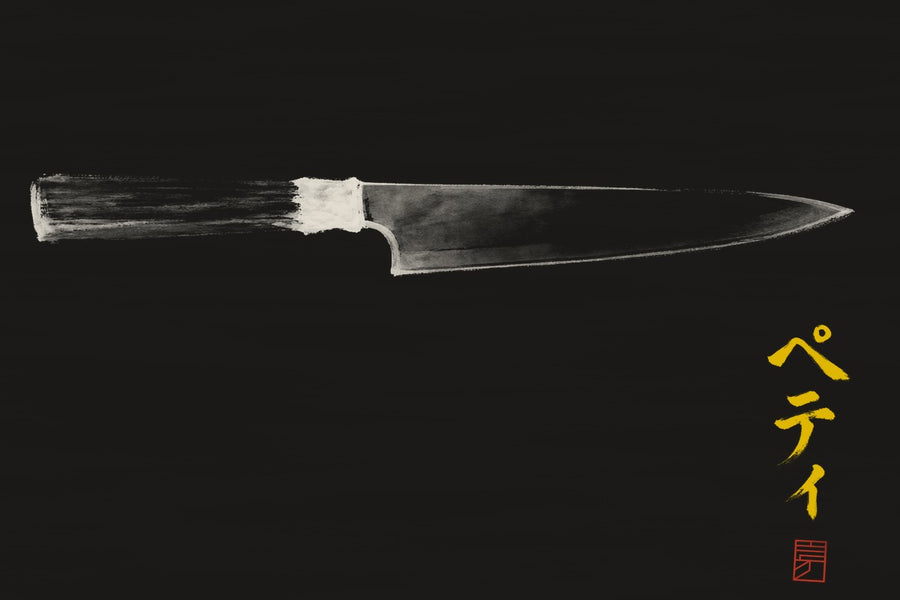
Petty
ペティ
Utility knife · Double bevel
Small, slim double-bevel utility knife for peeling, trimming and small board jobs.
Read more-
Hardness
Low
How hard the steel is after heat treatment, measured in HRC. Harder steel can take a thinner, sharper edge but is more likely to chip. Maker's hardening hardness: 59 HRC or more
-
Edge retention
Fair
How long the edge stays sharp before it needs sharpening. Our number comes from a lab test that counts how much card a blade cuts before it dulls. Based on a lab wear test of this steel or the closest tested one. It measures how long an edge lasts, not how sharp it gets.
-
Toughness
Fair
How well the steel resists chipping and cracking from bones, hard boards or twisting.
-
Rust resistance
High
How slowly the steel rusts or stains when left wet.
-
Ease of sharpening
High
How quickly the steel comes back to sharp on a whetstone.
-
Sharpness
Good
How fine an edge the steel can take and hold. Judged from the hard carbides inside it: smaller and fewer carbides allow a keener edge.
Our ratings, inferred from published lab tests and composition.
VG5
V金5
Stainless · Takefu Special Steel
Takefu stainless, 0.75% carbon, 14% chromium, hardening hardness 59 HRC or more. Vanadium gives finer carbides.
Read moreSanmai - Stainless Clad
三枚
3 layers · stainless clad
Hard core between two stainless layers, bare only at the edge; the cladding resists rust.
Read more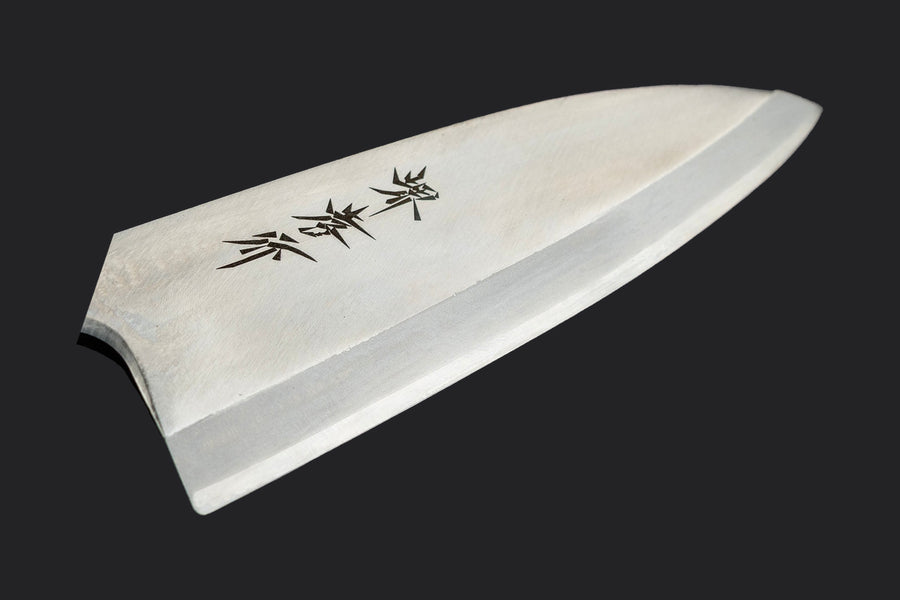
Migaki
Polished satin
Smooth polished surface, satin to soft sheen rather than mirror. Scratches show.
Read more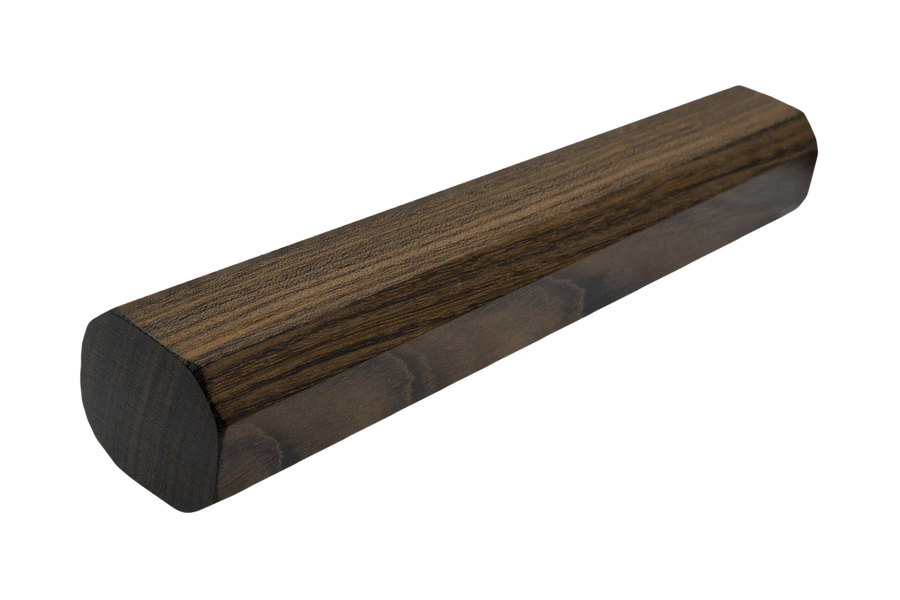
Octagonal Black Chacate
Octagonal WA
Black chacate, a dense dark African wood near ebony, eight-sided; may show pale sapwood.
Frequently asked questions
What is a petty knife and when do I need one?
How long is a petty knife?
What is the difference between VG5 and VG10?
Is Hatsukokoro a maker or a brand, and who makes the knives?
What does the name Hatsukokoro mean?
Which Hatsukokoro line should I pick, carbon or stainless?
You May Also Like
-
Hatsukokoro Hayabusa ATS34 Sanmai Petty 150mmSale price $203.98 Regular price $239.95Unit price
-
Hatsukokoro Blue 2 Damascus Migaki Santoku 180mm Ebony HandleSale price $254.98 Regular price $299.95Unit price
-
Hatsukokoro Sumi Blue 2 Kurouchi Santoku 165mm Black Chacate HandleSale price $135.98 Regular price $159.95Unit price
-
Hatsukokoro Shikkoku Blue 2 Kurouchi Santoku 165mm Ebony HandleSale price $151.98 Regular price $178.00Unit price
-
Hatsukokoro VG-5 Hayabusa Santoku 180mm Western HandleSale price $149.98 Regular price $175.95Unit price
-
Nigara SG STRIX Tsuchime Damascus 150mm Petty, Ebony HandleSale price $322.98 Regular price $379.95Unit price
-
Tsunehisa Ginsan Nashiji Petty 150mm Ebony HandleSale price $143.98 Regular price $168.95Unit price
-
K&S Arare SG2 Petty 135mm by Iron Clad, with Black Charcate HandleSale price $220.98 Regular price $259.95Unit price
