PRAHRAN STORE NOW OPEN · THU–MON · 10AM–6PM

Drag to spin · pinch or scroll to zoom

Kouki  |  SKU: KK_B2KU_PT135

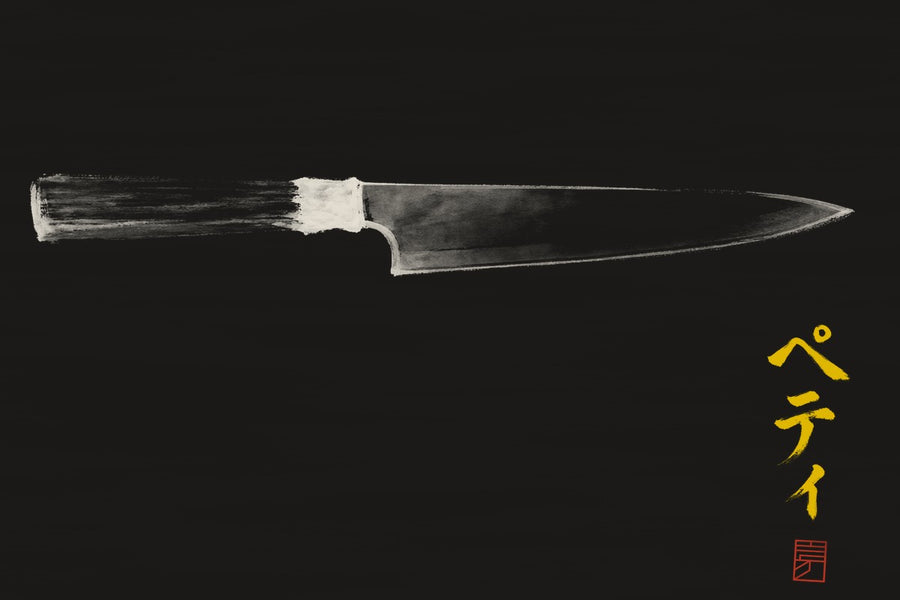
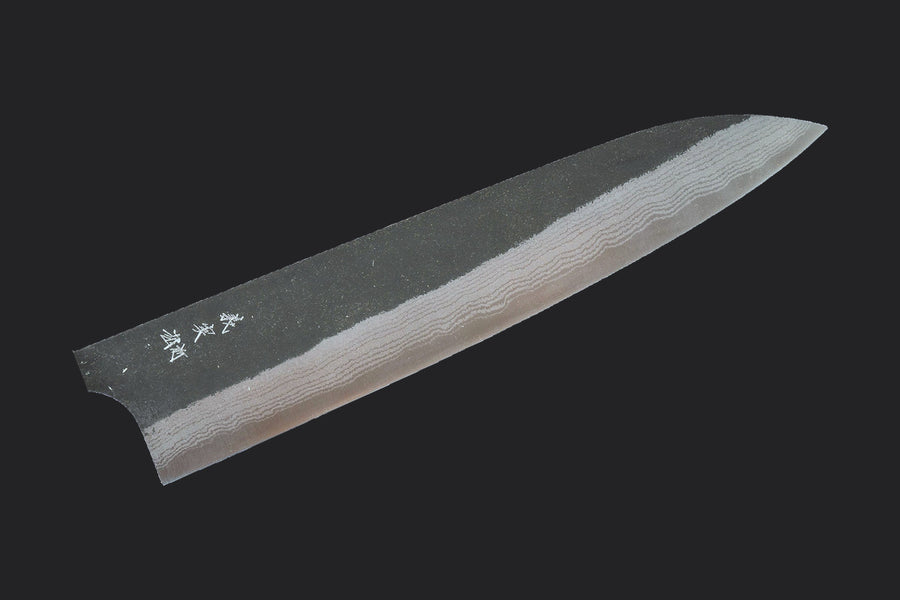
Kouki Blue2 Kurouchi Petty 135mm

Regular price $139.95

IMPORTANT: Carbon steel knives can rust or patina quickly if not cared for properly. They require regular cleaning, drying, and oiling. If you are unfamiliar with carbon steel maintenance, we recommend choosing a stainless steel option instead.

Sold out right now

Leave your email and we’ll send one message the moment it’s back in stock.

One email, no marketing. Privacy policy.

Availability

  • St Peters, NSW —
    2 Bishop St, Unit 2, St Peters NSW 2044
  • Crows Nest, NSW —
    107 West St, Shop 1, Crows Nest NSW 2065
    Pickup only
  • Prahran, VIC —
    180 Commercial Road, Shop 1, Prahran VIC 3181
    Pickup only
Detailed Specifications
Line Kouki Blue 2 Kurouchi
Profile Petty / Utility knife
Bevel Type Double Bevel
Weight 86 g | 3.0 oz
Edge Length 139 mm | 5 15/32″
Heel Height 35 mm | 1 3/8″
Width @ Heel 3.5 mm | 9/64″
Width @ Mid 1.7 mm | 1/16″
Width @ 1cm from Tip 1.0 mm | 3/64″
Steel Blue 2 / Aogami #2 | Carbon
Blade Construction Sanmai - Soft Iron Clad
Hardness (HRC) 61 - 63
Surface Finish Kurouchi
Handle
Region Tosa
Best for
  • Enthusiasts
  • Gift buyers
  • Free shipping for knives over AU$200 Australia wide.
  • World-wide shipping via DHL Express, 3 to 5 days.


Kouki Hashimoto is a name to keep an eye on. Having worked as an instructor at Kajiya Soseijuku — the Tosa Forged Blade School — before establishing his own brand in 2025, Hashimoto comes to independent knifemaking with a deeper grounding in the craft than most newcomers. Teaching forging demands a thorough understanding of what makes a knife work, and that foundation shows clearly in this Blue 2 Kurouchi line. For a first independent release, it punches well above what you'd typically expect.

The construction is a classic Sanmai with soft iron cladding over a Blue 2 (Aogami 2) core — honest about its maintenance requirements. Both the iron cladding and the reactive core steel need regular attention to stay rust-free, which is the trade-off you accept for that characterful Kurouchi finish and the aggressive edge that Blue 2 delivers. The forged taper in the spine is well executed, and the short length gives the blade a nimble, responsive feel that makes it easy to direct with precision.

The geometry is genuinely impressive for this price. Minimal thickness behind the edge makes for clean food penetration, and the low Shinogi line means food release kicks in reliably even on shorter cuts — the slice doesn't need to travel far up the bevel before it starts to peel away. Where this design is more honest about its limits is against dense, tough produce like sweet potato or carrot — the narrow bevel creates a steeper angle from the Hira, which causes more wedging as the blade pushes through denser material. On softer everyday prep though, it cuts noticeably better than most Tosa-made Kurouchi knives at a similar or higher price point.

For enthusiasts looking for an entry point into forged carbon steel knives, or for anyone after a gift with genuine craft behind it and a story worth telling, the Kouki line is a very easy recommendation.

Pros Cons
  • Excellent performance
  • Budget friendly
  • Thin behind the edge
  • Prone to rust
Care Instruction
  1. Don't cut hard things! Japanese knives are brittle so bone hacking is a NO NO!
  2. Wash with neutral detergent after use, and wipe dry;
  3. Please don't wash knife with dishwasher, it will damage the wood handle;
  4. Be careful not to leave the knife close to a heat source for a long time;
  5. It is a lot more dangerous to cut with a blunt knife than a sharp knife!
  6. It is best to sharpen a Japanese knife regularly on a waterstone.
  7. Oil the (carbon) knife if storing for an extended period of time to prevent rust.

Kouki Hashimoto

Kouki Hashimoto is a relatively young blacksmith and one that has shown promising skills in his craft. As a second year student of Tosa Forged Blade School Kajiya Soseijuku, he undertakes systematic training and decided to be a instructor after his graduation. It's only until 2025 that he decided to establish his own brand named after himself, and the first batch of knives we received have already shown signs of thoughtful knife designs and excellent executions that brings good performance.

“One of many future stars rising from Tosa Forged Blade School with promising skill and understanding to rustic traditional knives”

Est. 2025 | 令和7年
Instagram @kouki Read more about Kouki Hashimoto

Kouki Hashimoto · Tosa

Knife details

Frequently asked questions

What is a petty knife and when do I need one?

A petty knife is a small Japanese utility knife, typically with a blade between 120mm and 180mm, designed for precision tasks like peeling, trimming, and slicing fruits and vegetables. You need one when your main chef’s knife feels too large for detail work, think deveining shrimp, cutting garnishes, or any in-hand peeling where a bigger blade gets in the way. Its slightly longer and slimmer profile than a Western paring knife gives you more control for intricate cuts without sacrificing the nimble feel you want for small jobs. If you regularly find yourself reaching for a smaller blade for finishing work, a petty fills that gap cleanly.

A petty is not a replacement for a gyuto or santoku. It lacks the blade length and belly for efficient chopping, rocking, or breaking down larger proteins. If your work is mostly bulk prep, like dicing onions or slicing roasts, a petty will feel slow and underpowered. It also won’t handle heavy tasks like splitting bones or prying, so treat it as a precision tool, not an all-rounder.

The petty’s role in a Japanese kitchen is as the smaller counterpart to the gyuto, built for tasks where a full-size blade is clumsy. At Knives and Stones, the petty category covers a range of steels including VG10, White#2, Swedish Steel, VG5, SG2, and MV, from makers like Sakai Takayuki, Masamoto Sohonten, Ryusen, Nigara, Hatsukokoro, and Sentan. Most are double-beveled, and the blade length runs from 120mm to 180mm, which is what gives it that balance of reach and precision. For more on how this fits into your knife kit, see the Knives and Stones Education Centre.

How long is a petty knife?

Petty knife lengths vary by maker: KAI's guide defines a petty (ペティナイフ) as a small knife with a narrow blade measuring 150 mm or under. Its table gives 90 to 150 mm, and it describes the shape as a smaller gyuto with a pointed tip.

We list petty knives from 70 mm to 165 mm, including lengths above the limit used in KAI's guide.

Will a carbon steel knife rust, and how do I look after it?

Yes, carbon steels such as Aogami (Blue) and Shirogami (White) react with food, moisture, and acids, so left wet they can spot or rust. With normal use they develop a grey, blue and brown patina, and that patina is expected on a carbon knife rather than damage.

Aogami has only a little chromium, far below what a stainless steel needs, so water left sitting on the blade will spot it. A patina is a stable oxide layer that slows rust down; orange or red specks are rust.

Care is simple once it becomes habit:

  • Wipe the blade as you go, especially after onion, citrus or tomato.
  • When you finish, wash it in warm water with a little soap and dry it straight away with a towel. Don't let it air dry or leave it in the sink or the dish rack, and never put it in the dishwasher.
  • Store it dry: on a magnetic strip, in a saya or in a block in a dry spot.
  • If it's going to sit unused for a while, wipe on a thin film of food-safe mineral oil before storing it.

If you do find rust, lift light orange spots with a rust eraser and a little water, then dry and oil the blade. We stock the CKK and Naniwa rust erasers, and the Koyo Sunlite Polishing Paste (Blue for Steel) lifts light surface rust or refreshes a finish. Rust on the edge itself comes off the next time you sharpen. Deep pitting needs a professional sharpener. Avoid steel wool and harsh scouring on a polished or kurouchi finish, because they scratch it.

On a stainless-clad knife only the thin line of carbon steel along the edge can rust; the cladding stays clean. A carbon-clad or honyaki blade can rust over its whole face and needs the same care all over.

Carbon steel rewards this small amount of attention with a keener edge and easier sharpening than most stainless.

What is the difference between Blue 2 and White 2 steel?

Proterial lists 1.05 to 1.15% carbon for both steels; its Blue 2 table lists 0.20 to 0.50% chromium and 1.00 to 1.50% tungsten, while its White 2 table lists neither.

Proterial describes White 2 as a carbon steel with minimum impurities and high hardness, and Blue 2 as an alloy steel with tungsten and chromium to improve heat-treatment properties and wear resistance, with a hardening hardness of over 60 HRC for both. Neither steel is close to the JSSA's 10.5% minimum for stainless.

You May Also Like