PRAHRAN STORE NOW OPEN · THU–MON · 10AM–6PM

Nigara  |  SKU: NG-ANSG2DM-ST300

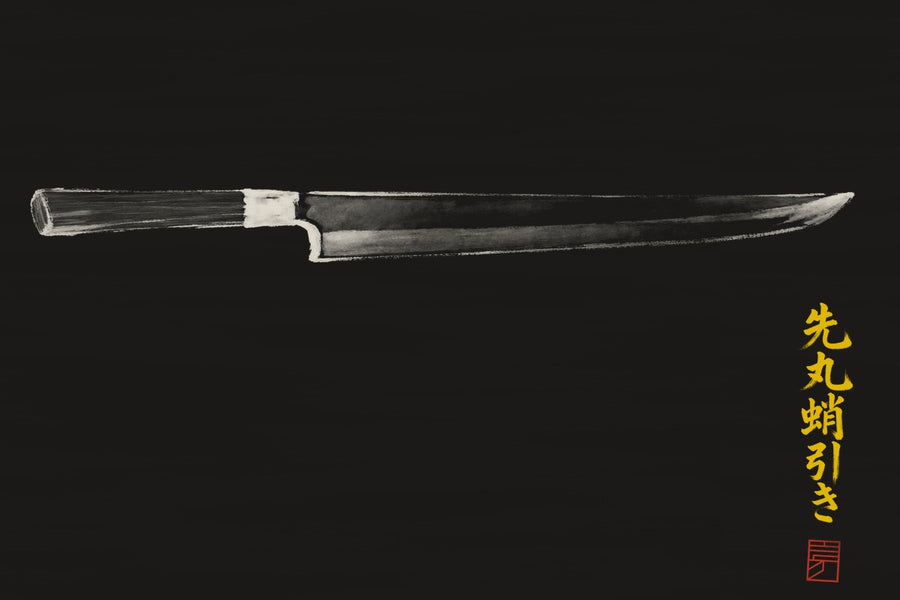
Nigara Anmon Ginsan Damascus Sakimaru Takobiki 300 mm with Heart Shape Handle

Regular price $1,499.95

Sold out right now

Leave your email and we’ll send one message the moment it’s back in stock.

One email, no marketing. Privacy policy.

Availability

  • St Peters, NSW —
    2 Bishop St, Unit 2, St Peters NSW 2044
  • Crows Nest, NSW —
    107 West St, Shop 1, Crows Nest NSW 2065
    Pickup only
  • Prahran, VIC —
    180 Commercial Road, Shop 1, Prahran VIC 3181
    Pickup only
Detailed Specifications
Line Nigara Anmon Ginsan
Profile Sakimaru Takohiki / Round-tip sashimi knife
Bevel Type Single Bevel
Weight 291 g | 10.3 oz
Edge Length 293 mm | 11 17/32″
Heel Height 40 mm | 1 37/64″
Width @ Heel 4.5 mm | 11/64″
Width @ Mid 3.9 mm | 5/32″
Width @ 1cm from Tip 1.3 mm | 3/64″
Steel Ginsan / Silver #3 | Stainless
Blade Construction Nimai - Stainless Damascus Clad
Hardness (HRC) 60 - 62
Surface Finish Etched
Handle Heart-shaped Ironwood Handle with Blonde Ferrule
Region Aomori
Best for
  • Enthusiasts
  • Collectors
  • Free shipping for knives over AU$200 Australia wide.
  • World-wide shipping via DHL Express, 3 to 5 days.


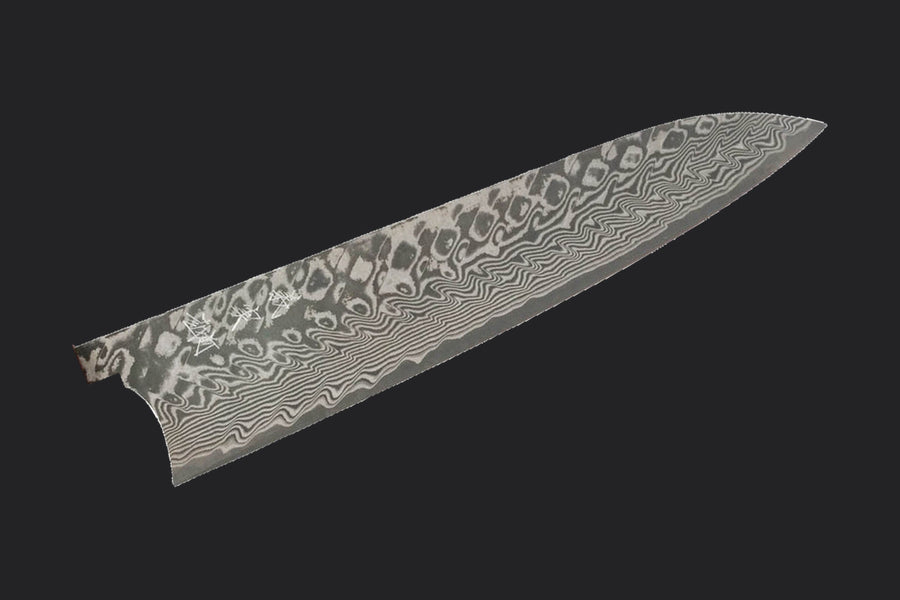
The Nigara Kurozome Ginsan line as a member of the very popular and highly artistic Anmon family, has the same beautiful high contrast raindrop damascus pattern. This line only has traditional single bevel offerings, so I see it as the stainless alternative to the equally beautiful Anmon Blue 2 line.

The “Anmon” design was inspired by the rippling water of the Anmon Waterfalls, cascading from the foot of the World Heritage Shirakami Mountains adjacent to the city of Hirosaki. Old growth beech and pine encompass the Anmon falls where the cool mountain stream cascades down from the precipitous rocks above. The sight of the rippling waterfall has enchanted its visitors with its mystical power.

However, a interview with the Toshiju Yoshizawa reveals the personal inspiration for him, he said it was Andy Warhol's painting of John Lennon, specifically the fascinating distortion in his glasses that lead him to this design.

The pattern we see on this line is similar to the pattern on the SG2 line: dense yet highly identifiable. The matte surface combines with the Kurozome finish really enhances the contrast between the darker and brighter steels. As this line consists only single bevel knives, the blades all have a secondary bevel, so these blades can ba sharpened without damaging the beautiful finish that Nigara have put on.

The artistic look is backed up with solid performance, as the core steel of this line, the Ginsan steel has a complete stainlessness, while being quite easy to sharpen, thanks to the composition of low alloy except chromium. I see this line as a good line for enthusiasts and collectors, who want that one nice looking Yanagiba at home that can also be used occasionally.

Pros Cons
  • Great artistic
  • Highly collectable
  • Excellent fit and finish
  • High budget
  • Etched damascus can be hard to maintain
Care Instruction
  1. Don't cut hard things! Japanese knives are brittle so bone hacking is a NO NO!
  2. Wash with neutral detergent after use, and wipe dry;
  3. Please don't wash knife with dishwasher, it will damage the wood handle;
  4. Be careful not to leave the knife close to a heat source for a long time;
  5. It is a lot more dangerous to cut with a blunt knife than a sharp knife!
  6. It is best to sharpen a Japanese knife regularly on a waterstone.

Nigara

Hirosaki sword and knife artisan

Nigara (二唐刃物鍛造所) is a forge in Hirosaki, Aomori. Go Yoshizawa (吉澤剛) is its president and signs as the eighth generation; his father, Toshiju Yoshizawa (吉澤俊寿), the seventh generation, is chairman.

Nigara dates its line to 1803, when the family began as gunsmiths in the service of the Tsugaru domain, and it made Japanese swords for generations. In the Edo period the domain took it on as its weapons works, and it made even cannon and warships. After the Second World War the forge turned from military swords to farm tools and kitchen knives; in those years it made knives in winter and sold them in summer.

In the early Showa era a Nigara smith whose sword name was Kunitoshi (国俊) studied under Dr Kotaro Honda, director of Tohoku University's metals research institute. Nigara's company history says he excelled at sword making. He was recognised as a holder of an intangible cultural property of Aomori Prefecture and passed his skill on to the seventh generation. The sixth generation had no son, so Toshiju, a grandson through a daughter's line, joined as heir. The present company dates from 1949, and besides knives it does welding and steel construction work, with a welding department since 1963. Nigara showed at Maison et Objet in Paris in 2011 and at Ambiente in Frankfurt in 2013.

We have visited Nigara several times, once for a few days of hands-on training at the forge.

The Anmon Damascus knives we list come in SG2 as gyuto, kiritsuke gyuto, bunka, santoku, nakiri, petty and sujihiki, and as single-bevel yanagiba and takobiki in Blue 2 and Ginsan. SG2 tsuchime knives, kurouchi or matt migaki, cover gyuto, petty, santoku, nakiri, bunka and sujihiki, plus a double-bevel honesuki and a butcher. We also list VG10 Damascus tsuchime, Ginsan Kurozome Damascus and Aogami Super tsuchime knives, and an SPG STRIX tsuchime Damascus nakiri. The honyaki are Blue 2 with shaped hamon, as yanagiba, kiritsuke yanagiba and sakimaru, and a White 1 kiritsuke yanagiba.

“An Aomori knife company whose family made Japanese swords for generations, with an Anmon line of Damascus knives.”

Est. 1949 | 昭和24年
Known for Glamorous and innovative knife design, inherited forging skills.
Website nigaraknives.com Read more about Nigara

Nigara · Aomori

Knife details

Frequently asked questions

Takohiki or yanagiba: what is the difference?

An encyclopedia describes sashimi knives as thin and narrow, calling the pointed ones yanagiba and the unpointed ones takohiki. A sakimaru takohiki is the rounded-tip variant, so it has a rounded point despite its takohiki name.

A trade body, the Sakai cutlery association, calls the takohiki (たこ引き包丁) the Kanto-type sashimi knife, and the yanagiba the sashimi knife used mainly in Kansai, with an acute edge that is not for bone.

What is Ginsan steel, and why do some Japanese knives use it?

Ginsan steel, also known as Silver #3 or G3, is a stainless steel made by Proterial in Japan, containing 0.95 to 1.10% carbon and 13.00 to 14.50% chromium, and it is used in Japanese knives because it combines the sharpness and ease of sharpening of carbon steel with the rust resistance of stainless steel. It is a fine-grained steel that takes a very sharp edge, and rated by Proterial at over 59 HRC, it offers a practical balance of edge retention and sharpenability for everyday kitchen use.

The name "Ginsan" (銀三) literally means "silver three," referring to its Silver #3 designation. Its moderate chromium content makes it far less reactive than carbon steels, so it won't discolor or rust as quickly, while its carbon content keeps the edge keen and responsive on the stones. For home cooks and professionals who want a stainless knife that still feels like a traditional Japanese blade, Ginsan is a common middle ground.

Is Ginsan stainless?

Yes. Proterial lists the steel as GIN 3 (銀紙3号) with 13.00 to 14.50% chromium, above the Japan Stainless Steel Association's 10.5% minimum for stainless steel.

Proterial describes it as a stainless steel with hardness and sharpness comparable to carbon steel, used in various kitchen knives and scissors, and the association notes that stainless, strictly, means it rusts less. Wash the knife and dry it after use.

What is the Nigara Anmon Ginsan knife line, and who is it for?

The Nigara Anmon Ginsan is a line of traditional single-bevel knives featuring a high-contrast raindrop Damascus pattern, built on stainless Ginsan steel.

Each blade has a secondary bevel, so it can be sharpened without damaging the finish. We see it as a line for enthusiasts and collectors who want a yanagiba at home for occasional use. We list it as a K-tip yanagiba (270 mm) and a sakimaru takobiki (300 mm).

How old is Nigara, and did it make swords?

The Nigara family line began in 1803, when the family served the Tsugaru domain as gunsmiths. For generations afterwards it made Japanese swords.

After the Second World War, the forge turned to blades for everyday life, including farm tools and kitchen knives.

Who leads Nigara today?

Go Yoshizawa, president of Nigara Hamono Forge, leads it today and signs as the eighth generation of the Nigara family line.

The company is Nigara Hamono Forge (二唐刃物鍛造所), in Kanazoku-machi, Hirosaki, Aomori.

Is Nigara a good knife maker?

We think so. Nigara's own company page says its family line began in 1803 as gunsmiths retained by the Tsugaru domain and made Japanese swords for generations, before turning to farm tools and kitchen knives after the Second World War.

We have visited Nigara several times, once for a few days of hands-on training with them, and we list its knives in steels such as SG2, Blue 2, Ginsan and VG10.

You May Also Like