PRAHRAN STORE NOW OPEN · THU–MON · 10AM–6PM

Drag to spin · pinch or scroll to zoom

Hatsukokoro  |  SKU: HS-ST-W2SLC-CK175

Hatsukokoro Sentan White 2 Stainless Clad Chinese Cleaver 175mm

Regular price $169.95

IMPORTANT: Carbon steel knives can rust or patina quickly if not cared for properly. They require regular cleaning, drying, and oiling. If you are unfamiliar with carbon steel maintenance, we recommend choosing a stainless steel option instead.

Sold out right now

Leave your email and we’ll send one message the moment it’s back in stock.

One email, no marketing. Privacy policy.

Availability

  • St Peters, NSW —
    2 Bishop St, Unit 2, St Peters NSW 2044
  • Crows Nest, NSW —
    107 West St, Shop 1, Crows Nest NSW 2065
    Pickup only
  • Prahran, VIC —
    180 Commercial Road, Shop 1, Prahran VIC 3181
    Pickup only
Detailed Specifications
Line Sentan White 2 Stainless Clad
Profile Chuka (Cleaver) / Chinese cleaver
Bevel Type Double Bevel
Weight 240 g | 8.5 oz
Edge Length 175 mm | 6 57/64″
Heel Height 80 mm | 3 5/32″
Width @ Heel 3.2 mm | 1/8″
Width @ Mid 2.9 mm | 7/64″
Width @ 1cm from Tip 2.3 mm | 3/32″
Steel White 2 / Shirogami #2 | Carbon
Blade Construction Sanmai - Stainless Clad
Hardness (HRC) 60 - 64
Surface Finish Kurouchi
Handle
Region Other
Best for
  • Pro chefs
  • Students
  • Free shipping for knives over AU$200 Australia wide.
  • World-wide shipping via DHL Express, 3 to 5 days.


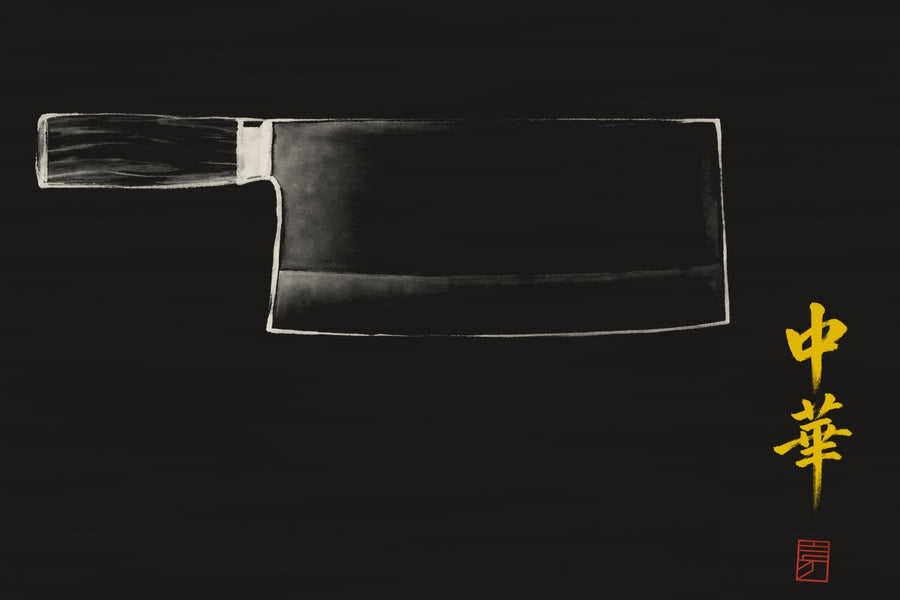
Sentan White 2 Stainless Clad series is the sister line of the Blue 2 cleavers under the same brand, it has the low maintenance stainless Sanmai structure, with the reactive core steel wrapped in a rough, organic-looking protective clad. Featuring two different sizes, this is a line that can easily fulfil your need for Chinese cleavers whether you want something big and choppy or small and nimble.

There is an existing blank in the market of Chinese cleavers. From what we can see, Japanese makers rarely forge this type of knife and they tend to create a blade that has a different sectional profile compared to Chinese ones. This leads to different cutting behaviour and often heavier weight. On the other hand a reputable maker like CCK would forge their knife down to the thickness of a leaf with excellent cutting performance and balance, but the lower edge retention and high maintenance can often put off many potential users.

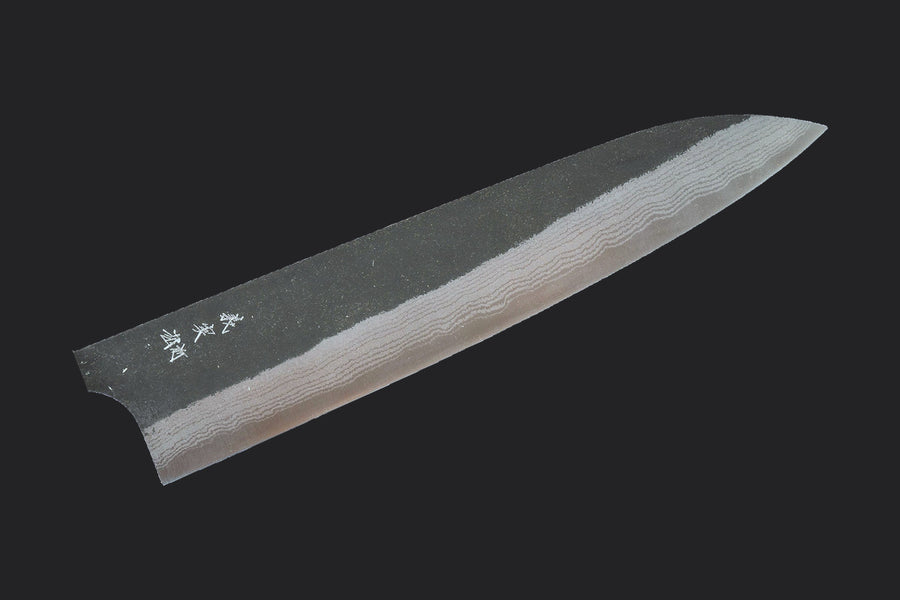
This is a line that is designed in house by Knives and Stones to fulfil this blank, our aim was to create a series of authentic Chinese cleavers, while incorporating the characteristics and performances you would find on a fine Japanese knife. We chose the classic Hitachi White 2 carbon steel for its high carbon content, then a layer of stainless cladding was forged on each side to create a low maintenance blade. As a result, we get an aggressive cutting  edge made with a pretty hard carbon steel that is only exposed on the very edge of the blade, most of the blade would be free from rusting or patina and even if the exposed carbon steel rusts, they can be removed easily by sharpening.

The blade is forged into shape before the final bevel is put on, and by looking at the front of the knife, you can see there is a “S” shape contour on each side of the blade. The spine starts thick, giving the knife the stiffness it needs when doing precise cut, it then tapers down to reduce the weight of the blade so it is not tiring to cut for an extensive amount of time. The blade then thickens up again at the beginning of the bevel, this allows it to have some volume so it can build the geometry that we desire.

We chose a rather strong convex grind as the primary bevel geometry, it emphasises on food release rather than low thickness behind the edge. When slicing with these knives, there will be a very positive release, the slice of food will curl sideways and fall off the blade easily without much chance of sticking to the side of the knife. The wedging issue can be mitigated by the cutting method, as the common way of cutting with Chinese cleaver is a strong push cut, the momentum of the blade can usually push through the food without getting stuck halfway.

This line offers two different sizes in the standard rectangular cleaver form, sized at 175mm and 195mm respectively. The 195mm is very much the standard size for Chinese chefs, it has that reassuring weight you would expect from a knife of this size, the broad blade is very fun when chopping dense produce, smashing ingredients and transferring food that’s already been cut. However, weighting at 354g means this is not a knife that most people can easily get used to, so we offer a smaller 175mm size that is less than ⅔ of the weight of the lager version, designed specifically for people who want to get their hands on this type of knife.

This White 2 line is our answer to the demand of a great workhorse chinese cleaver, it combines many features we believe are useful and it also offers many different profiles to fit the needs of different users. I have to mention they are not the most beautiful knives you can find because at the end of the day, they are still hand forged products. We opt for performance and value instead of beauty, so you can get these very organic looking, great performing knives at a very reasonable price.

Pros Cons
  • Workhorse grind
  • Budget friendly
  • Great for professionals
  • Fit and finish can be improved
  • Prone to rust
Care Instruction
  1. Don't cut hard things! Japanese knives are brittle so bone hacking is a NO NO!
  2. Wash with neutral detergent after use, and wipe dry;
  3. Please don't wash knife with dishwasher, it will damage the wood handle;
  4. Be careful not to leave the knife close to a heat source for a long time;
  5. It is a lot more dangerous to cut with a blunt knife than a sharp knife!
  6. It is best to sharpen a Japanese knife regularly on a waterstone.
  7. Oil the (carbon) knife if storing for an extended period of time to prevent rust.

Knives and Stones (K&S)

Established in 2014 and based in Sydney, Australia, Knives and Stones (K&S) is an Australian kitchen knife retailer with international customers. Through close relationships with Japanese blacksmiths, K&S directly imports Japanese kitchen knives.

Founder James Zhang’s Chinese heritage also brings a unique dimension to the business: collaborating with Chinese craftsmen to forge high-performance cleavers using Japanese steels—what James proudly calls “the real deal.”

Read more

Founded in 2014 and headquartered in Sydney, Australia, Knives and Stones (K&S) has grown from a small project into a kitchen knife retailer with customers in Australia, the USA, and China. What started as a small business dedicated to sourcing Japanese blades now serves chefs, collectors, and home enthusiasts across three countries.

At the heart of K&S is a personal connection with Japanese blacksmiths. Over the years, we have built relationships with established and new blacksmiths, allowing us to import their knives directly. This not only keeps each knife's origin clear and its craftsmanship intact, but also delivers outstanding value to our customers by removing unnecessary layers between the maker and the end user. K&S stocks both well-known and smaller Japanese knife brands.

Our international outlook is also shaped by founder James Zhang’s Chinese heritage. With a vision to bridge traditions, James has introduced Japanese steel to skilled Chinese makers to create a series of Japanese-steel cleavers. These blades, which James calls “the real deal”, combine Japanese steel with Chinese cooking use.

With physical presence and distribution networks in Australia, the USA, and China, Knives and Stones brings Japanese kitchen knives to customers in those three countries. Whether you’re a professional chef seeking a reliable workhorse, a collector chasing rare masterpieces, or a home cook ready to elevate your craft, K&S is committed to delivering tools that inspire confidence and creativity in the kitchen.

Est. 2014
Website knivesandstones.com.au Instagram @knivesandstones Read more about Knives and Stones (K&S)

Knife details

Frequently asked questions

Shirogami 1 vs shirogami 2 — what is the difference?

Shirogami 1 (White 1) has a higher carbon content than Shirogami 2 (White 2), roughly 1.3% vs 1.1%, making it the purer carbon steel and the one some craftsmen still regard as the best, though in practice the two have become harder to distinguish as modern metallurgy has made both quite pure.

White 2 (Shirogami #2) has about 1.1% carbon and a hardness range of 60-64 HRC; White 1 sits around 1.3% carbon. That 0.2% difference is the core spec gap. More carbon generally means you can push hardness higher and hold a keener edge, but it also makes the steel more brittle and less forgiving. White 2 trades a bit of that potential peak sharpness for slightly better toughness and ease of sharpening.

Shirogami 1 carries a certain prestige. Sukenari's Nobuo Hanaki once told me directly that they only use White 1 for their mizu-honyaki because it is the pure form of carbon steel, it carries that halo. Among traditional smiths, White 1 is still spoken of as the benchmark. That said, in recent years the improvement in metallurgical manufacturing has narrowed the real-world gap. The rumor is that both grades are now so pure that separating them in practice is no longer straightforward. I've also heard that Hitachi has stopped producing White 1, though I can't confirm that.

You May Also Like