PRAHRAN STORE NOW OPEN · THU–MON · 10AM–6PM

Genkai Masakuni

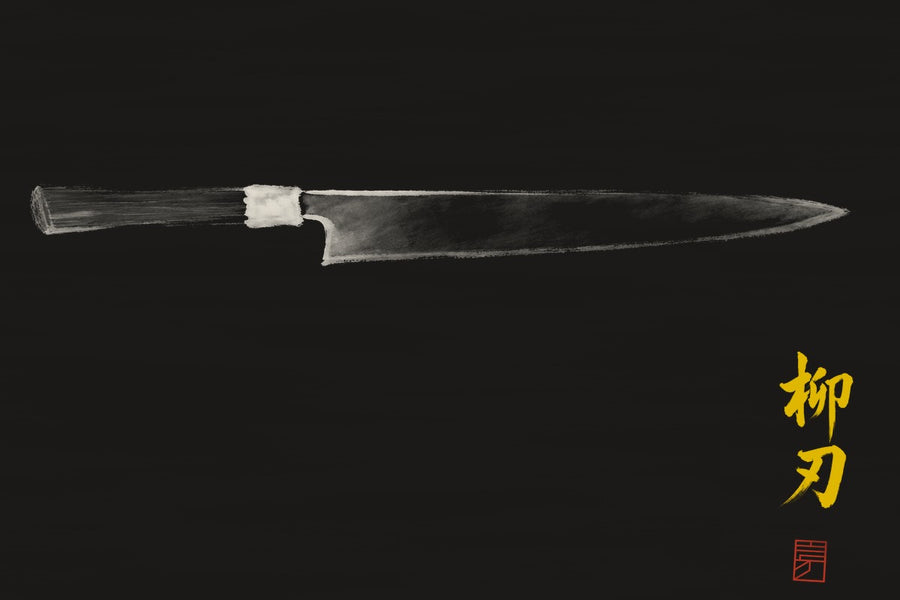
Exotic: Genkai Masakuni (玄海正國) Mizu-Honyaki Maguro Kiri 450mm Mt. Fuji Hamon

Regular price $8,800.00

IMPORTANT: Carbon steel knives can rust or patina quickly if not cared for properly. They require regular cleaning, drying, and oiling. If you are unfamiliar with carbon steel maintenance, we recommend choosing a stainless steel option instead.

Sold out right now

Leave your email and we’ll send one message the moment it’s back in stock.

One email, no marketing. Privacy policy.

Availability

  • St Peters, NSW —
    2 Bishop St, Unit 2, St Peters NSW 2044
  • Crows Nest, NSW —
    107 West St, Shop 1, Crows Nest NSW 2065
    Pickup only
  • Prahran, VIC —
    180 Commercial Road, Shop 1, Prahran VIC 3181
    Pickup only
Detailed Specifications
Line Genkai Honayki
Profile Yanagiba / Sashimi knife
Bevel Type Single Bevel
Weight 445 g | 15.7 oz
Edge Length 434 mm | 17 3/32″
Heel Height 42 mm | 1 21/32″
Width @ Heel 4.6 mm | 3/16″
Width @ Mid 3.6 mm | 9/64″
Width @ 1cm from Tip 2.2 mm | 3/32″
Steel White 2 / Shirogami #2 | Carbon
Blade Construction Honyaki
Hardness (HRC) 60 - 64
Surface Finish Mirror Polish
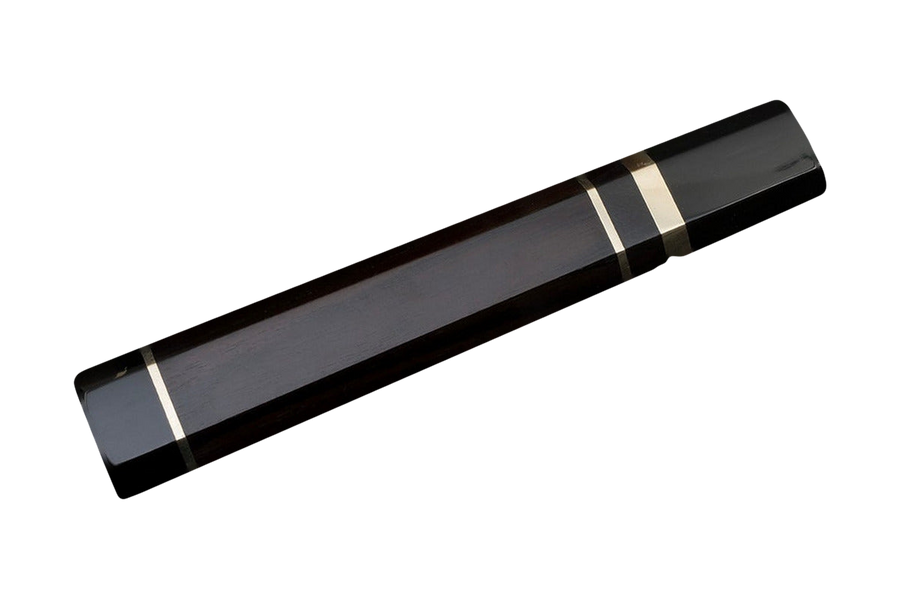
Handle triple spacer ebony
Region Kyushu
Best for
  • Collectors
  • Free shipping for knives over AU$200 Australia wide.
  • World-wide shipping via DHL Express, 3 to 5 days.


TBA

Pros Cons
  • Great artistic
  • High budget
Care Instruction
  1. Don't cut hard things! Japanese knives are brittle so bone hacking is a NO NO!
  2. Wash with neutral detergent after use, and wipe dry;
  3. Please don't wash knife with dishwasher, it will damage the wood handle;
  4. Be careful not to leave the knife close to a heat source for a long time;
  5. It is a lot more dangerous to cut with a blunt knife than a sharp knife!
  6. It is best to sharpen a Japanese knife regularly on a waterstone.
  7. Oil the (carbon) knife if storing for an extended period of time to prevent rust.

Genkai Masakuni

Genkai Masakuni (玄海正国), the blade name of Yoneo Mukō

Genkai Masakuni(玄海正国), a well-known name in the Japanese kitchen knife industry. Being one of the few makers that could produce the Mt. Fuji Hamon Honyaki, a Yanagiba utilising such a technique can be sold for a few thousand dollars easily. Behind the name Genkai Masakuni was the late Mukou Yoneo (向 米雄), who honed his skill in Sakai until he moved back to Kabe island, Karatsu city in Saga Prefecture at age of 40.

The origin of the name might be related to the location, as Genkai-Cho is located right next to Karatsu city. Although Genkai Masakuni is the name/engraving Mukou san used most often, he used a few other names on the blades he forged. One of them is Sakai Minamoto Hakuhou(堺源伯鳳)which is a brand name used by the sharpener Hakui Minoru(伯井 實). Following the traditional division of labour employed in Sakai, these two craftsmen worked closely as blacksmith and sharpener for each other even after Mukou san moved back to Saga, this collaboration continued for a long time until the retirement of Hakui san.

For those who are aware of the creation process of the Honyaki knife, the level of skill behind the name Genkai Masakuni should need no further explanation. But for people who are curious about the nature of these very pricy knives, it helps to explain again. The Honyaki process is a heat treatment process of mono steel blades, where the blade is cladded by clay in the spine to form an insulating layer and quenched to have a hardened edge and softer spine, just like how swords were done in the past. The “Hon” can be generally translated as “the real deal”, and “Yaki” is used for heat treatment related terminologies. Together Honyaki can be seen as the real deal heat treatment, which shows how much the method is valued.

For the intended use of a kitchen knife, it does not require a soft springy spine to prevent breakage in the fight, thus this method is mostly used to achieve a tempering line called Hamon. To create Hamon, a shallow quenching steel must be used with a fast quenching method to form a clear boundary. Often a combination of Hitachi White carbon steel and water quenching(Mizu-Honyaki) is used to achieve a Hamon, but the risk that comes with water quenching is the intense stress build-up in the blade due to different shrinking rate between the area that are covered by the clay and area left exposed. A failed Mizu-honyaki will have a dramatic, explosive failure that breaks the blade in pieces, and this is not uncommon to happen as the quenching temperature is very strict for this to not happen.

Blacksmiths that are trained in this trade for years rely on their eyes to tell the temperature of the blade by the color of the blade, and the heating is done usually in charcoal forge. If that doesn’t sound difficult enough, there is another technique to add to it: Fujiyama Hamon. As the name suggests, the Hamon is shaped like Mt. Fuji on the blade, and having this shape creates a significant point of failure due to the concentrated stress at the Mt. Fuji’s peak where the shape protrudes out the most. For this reason, there are only a few blacksmiths that are skillful enough to produce this Hamon with consistency, and you can count them by one hand.

Genkai Masakuni, being one of these smiths, could produce regular wavy hamon as well as the Mt, Fuji Hamon, paired with a mirror finish, the dynamic shape of the Hamon can look like flowing terrain or snow covered mountains, and needless to say, this level of control over a medium that is very difficult to work with has notable artistic value. With the retirement of Master Ikeda and Master Shiraki, Mukou san too had his retirement in 2020, his blades would continue to be sharpened and polished in the following years but eventually become depleted. He has since passed away, and the name Genkai Masakuni is remembered by collectors and knife enthusiasts.

“The blade name of the late smith Yoneo Mukō (向米雄), who worked on Kabeshima and specialised in water-quenched honyaki.”

Known for Water-quenched honyaki (mizu-honyaki)
Read more about Genkai Masakuni

Genkai Masakuni · Kyushu

Knife details

Frequently asked questions

What is a yanagiba knife used for in sushi preparation?

A yanagiba (柳刃包丁) is a sashimi knife for slicing raw fish. A knife maker's guide says a sashimi knife cuts without breaking the fibres of the flesh, and that it is longer and narrower than other knives because slicing sashimi with crisp edges needs the length.

The whole length goes through one pulling cut. The Sakai cutlery association calls the yanagiba the sashimi knife used mainly in the Kansai region.

What size yanagiba should I buy?

Size a yanagiba to the fish you prepare: a knife maker's guide gives 270 to 360 mm for professional use and 240 to 270 mm for home use, with 270 mm at home if you slice larger fish.

The guide says the whole length goes through one pulling cut, so do not choose too short a knife, and at home it points to the size of your board and your work space. We list the yanagiba (柳刃) from 210 to 360 mm, some made for left-handed use.

Can a yanagiba cut through fish bones?

No. The Sakai cutlery association describes the yanagiba (柳刃包丁) edge as so acute that it cannot be used on hard things such as bones.

For bones the association describes the deba (出刃包丁), whose heel is used to hit them.

Takohiki or yanagiba: what is the difference?

An encyclopedia describes sashimi knives as thin and narrow, calling the pointed ones yanagiba and the unpointed ones takohiki. A sakimaru takohiki is the rounded-tip variant, so it has a rounded point despite its takohiki name.

A trade body, the Sakai cutlery association, calls the takohiki (たこ引き包丁) the Kanto-type sashimi knife, and the yanagiba the sashimi knife used mainly in Kansai, with an acute edge that is not for bone.

Sujihiki or yanagiba: which do I need?

A sujihiki is a long, double-bevel knife for dividing larger pieces of meat into their parts, and its length lets it slice sashimi too; a yanagiba is the sashimi knife.

The Sakai cutlery association describes the yanagiba (柳刃包丁) edge as so acute that it cannot be used on bone or other hard things, so choose the sujihiki for meat and the yanagiba if sashimi is the main job.

Shirogami 1 vs Shirogami 2: what is the difference?

Shirogami 1 (White 1) has more carbon than Shirogami 2 (White 2): Proterial lists 1.25 to 1.35% carbon for Shirogami 1 and 1.05 to 1.15% for Shirogami 2, with the same silicon (0.10 to 0.20%) and manganese (0.20 to 0.30%) ranges for both.

Proterial describes both as carbon steel with minimum impurities, Shirogami 1 with the highest hardness and Shirogami 2 with high hardness, and gives a hardening hardness of over 60 HRC for both. It lists Shirogami 1 for the highest quality tipped tools, planes, chisels and razors, and Shirogami 2 for high quality tipped tools, chisels, razors, sickles, axes and gravers.

What is the difference between White 1, White 2 and White 3?

White 1, White 2 and White 3 are Proterial's Shirogami 1, Shirogami 2 and Shirogami 3. Proterial lists carbon at 1.25 to 1.35% for Shirogami 1, 1.05 to 1.15% for Shirogami 2 and 0.80 to 0.90% for Shirogami 3, with the same silicon and manganese ranges for all three and no chromium listed.

Proterial describes all three as carbon steel with minimum impurities, at highest, high and middle hardness in that order, and gives a hardening hardness of over 60 HRC for each.

What is the difference between Blue 2 and White 2 steel?

Proterial lists 1.05 to 1.15% carbon for both steels; its Blue 2 table lists 0.20 to 0.50% chromium and 1.00 to 1.50% tungsten, while its White 2 table lists neither.

Proterial describes White 2 as a carbon steel with minimum impurities and high hardness, and Blue 2 as an alloy steel with tungsten and chromium to improve heat-treatment properties and wear resistance, with a hardening hardness of over 60 HRC for both. In its Japanese materials, Proterial calls its Aogami (青紙) steels high-carbon steel (高炭素鋼). Neither steel is close to the JSSA's 10.5% minimum for stainless.

You May Also Like