


Yoshimi Kato Kintaro White 2 Damascus KU Nashiji Bunka 180mm
Yoshimi Kato Kintaro White 2 Damascus KU Nashiji Bunka 180mm is backordered and will ship as soon as it is back in stock.
Sold out right now
Leave your email and we’ll send one message the moment it’s back in stock.
One email, no marketing. Privacy policy.
We match the delivered price (including shipping) of in-stock items from reputable specialist knife retailers. Clearance and pre-owned items excluded. Each request is checked by our team.
Availability
Delivery unavailable for this item. Available for in-store pickup only.
-
St Peters, NSW —2 Bishop St, Unit 2, St Peters NSW 2044
-
Crows Nest, NSW —107 West St, Shop 1, Crows Nest NSW 2065Pickup only
-
Prahran, VIC —180 Commercial Road, Shop 1, Prahran VIC 3181Pickup only
Detailed Specifications
| Profile | Bunka / K-tip santoku |
| Bevel Type | Double Bevel |
| Weight | 138 g | 4.9 oz |
| Edge Length | 173 mm | 6 13/16″ |
| Heel Height | 46 mm | 1 13/16″ |
| Width @ Heel | 2.6 mm | 7/64″ |
| Width @ Mid | 2.0 mm | 5/64″ |
| Width @ 1cm from Tip | 0.9 mm | 1/32″ |
| Steel | White 2 / Shirogami #2 | Carbon |
| Hardness (HRC) | 60 - 64 |
| Handle | Octagonal Black Chacate |

- Don't cut hard things! Japanese knives are brittle so bone hacking is a NO NO!
- Wash with neutral detergent after use, and wipe dry;
- Please don't wash knife with dishwasher, it will damage the wood handle;
- Be careful not to leave the knife close to a heat source for a long time;
- It is a lot more dangerous to cut with a blunt knife than a sharp knife!
- It is best to sharpen a Japanese knife regularly on a waterstone.
- Oil the (carbon) knife if storing for an extended period of time to prevent rust.
Knife details
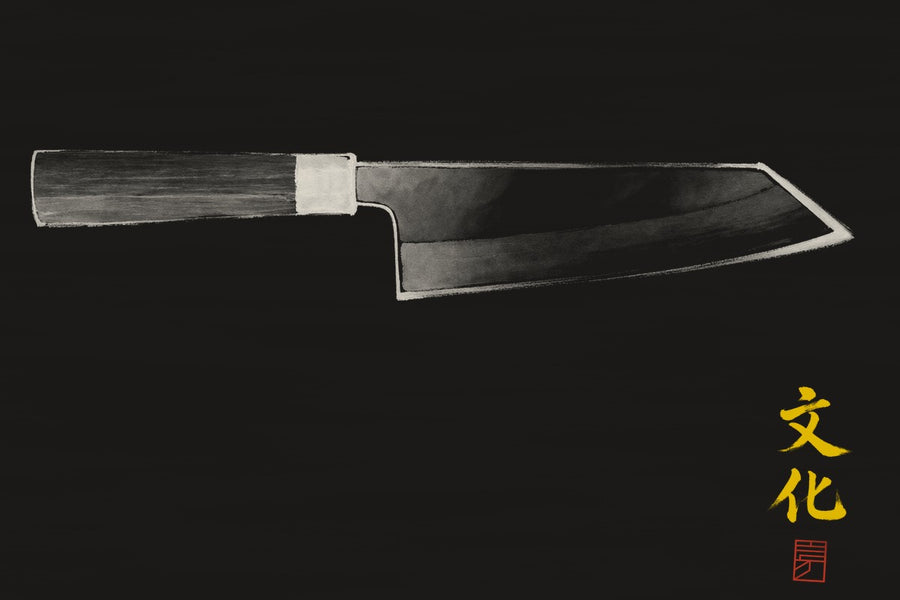
Bunka
文化
K-tip santoku · Double bevel
A compact all-rounder like a santoku; a Sakai maker says its angled K-tip suits fine work.
Read moreWhite 2 / Shirogami #2
白二鋼
Carbon · Hitachi Metals (now Proterial)
Proterial carbon steel, 1.05 to 1.15% carbon, no chromium or tungsten; not stainless.
Read more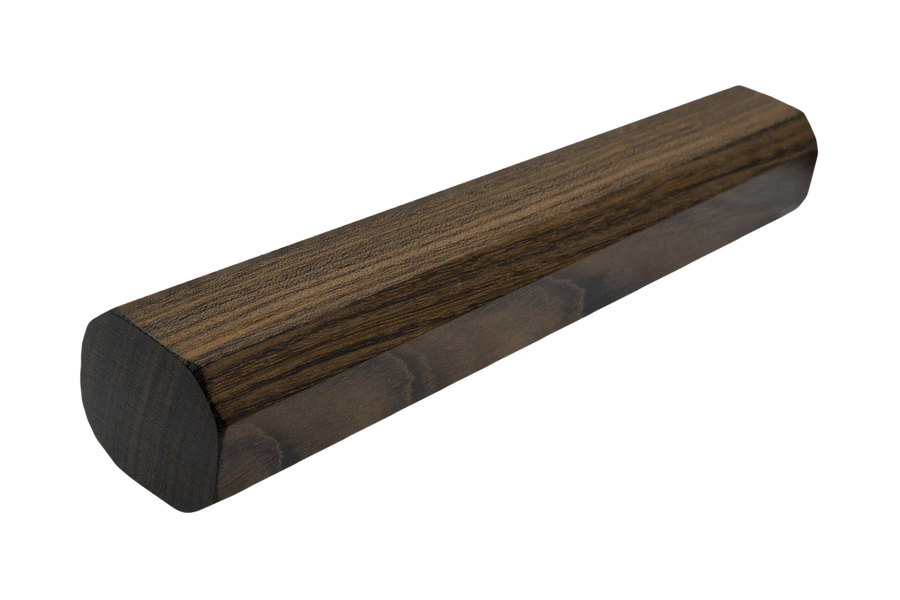
Octagonal Black Chacate
Octagonal WA
Black chacate, a dense dark African wood near ebony, eight-sided; may show pale sapwood.
Frequently asked questions
Why is it called a bunka knife?
What is the difference between a bunka and a santoku?
Shirogami 1 vs Shirogami 2: what is the difference?
What is the difference between White 1, White 2 and White 3?
What is the difference between Blue 2 and White 2 steel?
You May Also Like
-
Hatsukokoro x Myojin Shirasagi White 2 Kamagata Usuba 180mmRegular price $319.95Unit price
-
Sukenari White 2 K-tip Yanagiba 300mm, Ebony Brass HandleRegular price $559.95Unit price
-
Yoshikane White 2 KU Nashiji Sujihiki 240mm, Stainless Clad Ebony by HatsukokoroRegular price $539.95Unit price
-
Masakage Yuki White2 Gyuto 210mm Stainless CladRegular price $459.95Unit price
-
Hatsukokoro Kurokaze White 2 Gyuto 210mm Stainless Clad, Tall ProfileRegular price $299.95Unit price
-
Takahiro Nihei Hyomon White 2 Damascus Yanagiba 270mm w/ Saya, exclusive to K&SRegular price $1,899.95Unit price
-
Hatsukokoro x Myojin Shirasagi White 2 Left Handed Mioroshi Deba 270mmRegular price $599.95Unit price
-
Hatsukokoro x Myojin Shirasagi White 2 Left Handed Yanagiba 240mmRegular price $399.95Unit price

