PRAHRAN STORE NOW OPEN · THU–MON · 10AM–6PM

Hatsukokoro  |  SKU: HS-SAIHY-SG2KDM-PE150BR

Hatsukokoro Saihyo SG2 Kurozome Black Damascus Petty 150mm Birch Handle

Sale price $297.98 Regular price $349.95

Sold out right now

Leave your email and we’ll send one message the moment it’s back in stock.

One email, no marketing. Privacy policy.

Availability

  • St Peters, NSW —
    2 Bishop St, Unit 2, St Peters NSW 2044
  • Crows Nest, NSW —
    107 West St, Shop 1, Crows Nest NSW 2065
    Pickup only
  • Prahran, VIC —
    180 Commercial Road, Shop 1, Prahran VIC 3181
    Pickup only

Goes well with

Detailed Specifications
Line Hatsukokoro Saihyo SG2 Kurozome Damascus
Profile Petty / Utility knife
Bevel Type Double Bevel
Weight 69 g | 2.4 oz
Edge Length 150 mm | 5 29/32″
Heel Height 29 mm | 1 9/64″
Width @ Heel 1.8 mm | 5/64″
Width @ Mid 1.5 mm | 1/16″
Width @ 1cm from Tip 0.9 mm | 1/32″
Steel SG2 / R2 | Powdered | Stainless
Blade Construction Sanmai - Stainless Damascus Clad
Typical working hardness 61 to 65 HRC
Surface Finish Etched
Handle Octagonal Birch Burl with Spacer
Region Hyogo
Best for
  • Enthusiasts
  • Collectors

Free shipping for knives over AU$200 Australia wide.

World-wide shipping via DHL Express, 3 to 6 days (not available in the UK).


The Hatsukokoro Saihyo(細氷, fine ice) have just received an upgrade. Being a line that equipped with fine Damascus pattern and named after it, this brand new Kurozome etching finish greatly improves the look in my opinion.

The Original Saihyo was a equipped with the high wear resistant TAKEFU SG2 powder stainless steel, which makes it a competitive option that has both the performance and look. But speaking fairly, the high density Damascus pattern is not exactly unique on the market especially at this day and age where pre-laminated steel is common in the industry. Hatsukokoro's approach is to put a very dark etch on the existing blades, which greatly increases the contrast of the pattern. The darkened steel also received a very matt finish, which really allow the silver nickel steel to shine upon it. This kind of treatment is rather rare in the industry, and hardly seen on knives of this price point. As result, the new Kurozome Saihyo really stands out and now sits closer on the more "unique" side of the market, quite like the Nigara Anmon series.

Despite the matt finish and potential increase of stickiness, the cutting feel of the new Saihyo seems improved to me. The information we get from Hatsukokoro indicates a decrease in thickness which matches our measurement from the knives we got. That means, the upgrade to the knife not only improves the look, but the performance too.

A more complicated surface finishing process would surely increase the price, as the result, the Santoku of the new Saihyo matches the 210mm Gyuto of the old one. I would consider it's a worthy upgrade, as it does brings the Saihyo from a more generic line, to a product that has a rare look and solid performance.

Pros Cons
  • Great artistic
  • Excellent performance
  • Excellent fit and finish
  • Etched damascus can be hard to maintain
  • High budget
Care Instruction
  1. Don't cut hard things! Japanese knives are brittle so bone hacking is a NO NO!
  2. Wash with neutral detergent after use, and wipe dry;
  3. Please don't wash knife with dishwasher, it will damage the wood handle;
  4. Be careful not to leave the knife close to a heat source for a long time;
  5. It is a lot more dangerous to cut with a blunt knife than a sharp knife!
  6. It is best to sharpen a Japanese knife regularly on a waterstone.

Hatsukokoro

Hatsukokoro, a knife brand from Amagasaki

Hatsukokoro (初心) is a knife brand from Amagasaki, Hyogo, launched in 2019. It is a brand rather than a forge: it works with knife makers instead of forging itself.

The name comes from the proverb 初心忘るべからず, roughly never forget your beginner's mind. For the same characters the brand chose the gentler reading hatsukokoro over shoshin.

The brand's own catalogue names the place behind some of its lines, and the maker behind a few: Shinkiro comes from Fukushima, and Hayabusa HAP40, Saihyo and Sunaarashi from Seki City, while for others the maker or the place stays private. Some of our listing titles also carry the maker alongside the brand, such as Hatsukokoro x Yoshikane and the Hatsukokoro x Yoshihiro Yauji collaboration.

The Hatsukokoro lines we list include both carbon and stainless steels. Our listings include Hayabusa in SG2 and Aogami Super, Saihyo in SG2 and Ginrei in Ginsan. Carbon steel kurouchi lines include Aosagi, Aokitae, Kurokaze and Kurogane.

“A knife brand from Amagasaki that works with knife makers rather than forging.”

Est. 2019 | 令和元年
Known for Lines made with partner makers, from Seki City to Fukushima
Website handk.co Instagram @handk_official Read more about Hatsukokoro

Hatsukokoro · Hyogo

Knife details

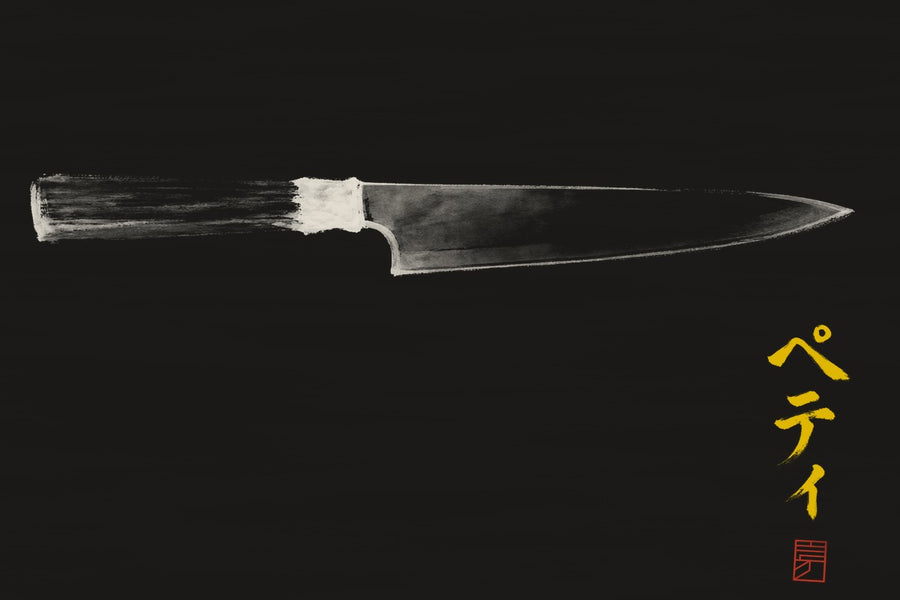
Petty — knife profile
Profile

Petty

ペティ

Utility knife · Double bevel

Small, slim double-bevel utility knife for peeling, trimming and small board jobs.

Read more
Steel properties
  1. Hardness Good
  2. Edge retention Good
  3. Toughness Fair
  4. Rust resistance High
  5. Ease of sharpening Fair
  6. Sharpness High

Our ratings, inferred from published lab tests and composition.

Steel

SG2 / R2

スーパーゴールド2

Stainless · Takefu Special Steel

Takefu powder stainless, 61 to 65 HRC. Long edge; resists rust.

Read more
CladdingCoreClad line
Construction

Sanmai - Stainless Damascus Clad

三枚ダマスカス

3 layers · damascus clad

Hard core between stainless damascus layers, bare at the edge. Thinning wears the pattern.

Read more
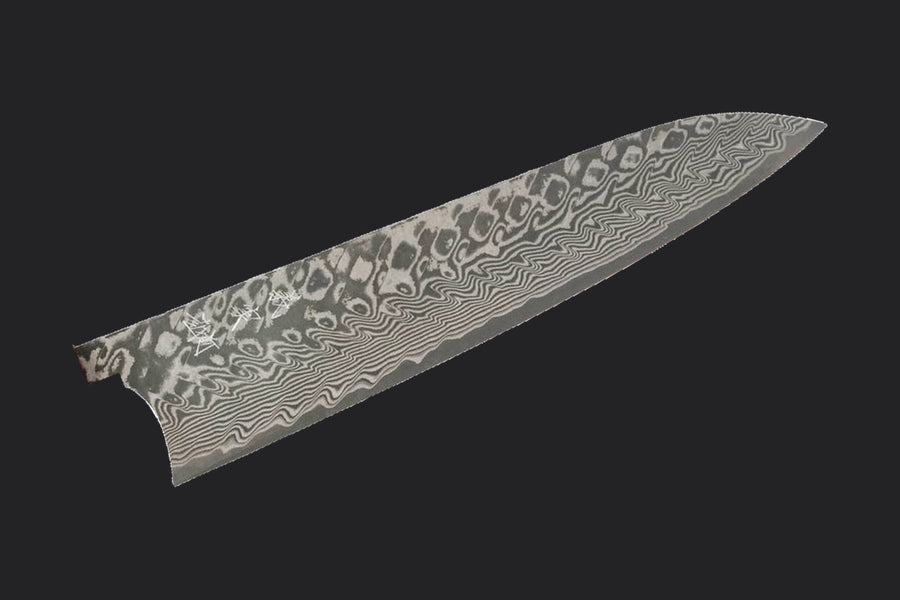
Etched — blade surface finish
Finish

Etched

Acid-etched pattern

Acid darkens the layers at different rates to show the damascus. Heavy thinning fades it.

Read more
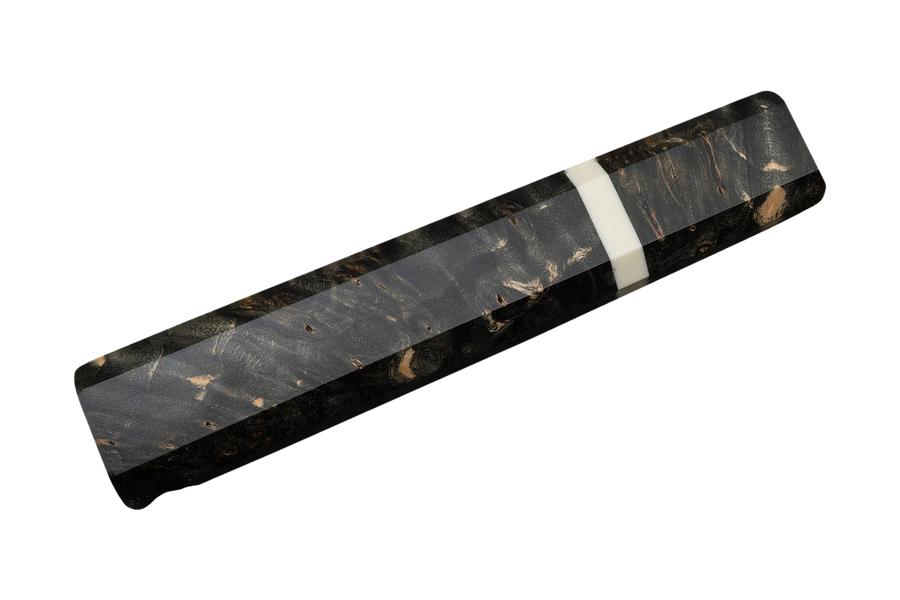
Octagonal Birch Burl with Spacer handle
Handle

Octagonal Birch Burl with Spacer

Octagonal WA

Stabilised birch burl, eight-sided, with a spacer. Resin-stabilised wood resists water.

Frequently asked questions

What is a petty knife and when do I need one?

A petty is a small utility knife, from the French petit. It is commonly shaped like a small gyuto and runs from 120 to 150 mm, up to 180 mm. Its clearest role is detailed work where a larger knife feels cumbersome: fruit peeling, garnish work, condiments, and small board work beside a gyuto or santoku.

A knife maker, Tojiro, frames the petty as a useful second knife, not an automatic necessity, and recommends santoku plus petty or gyuto plus petty combinations. It is not a replacement for a full size chef's knife; it lacks the blade length and belly for efficient chopping, rocking, or breaking down larger proteins. Treat it as a precision tool, not an all-rounder.

How long is a petty knife?

Petty knife lengths vary by maker: KAI's guide defines a petty (ペティナイフ) as a small knife with a narrow blade measuring 150 mm or under. Its table gives 90 to 150 mm, and it describes the shape as a smaller gyuto with a pointed tip.

We list petty knives from 70 mm to 165 mm, including lengths above the limit used in KAI's guide.

SG2 steel knives at Knives and Stones

SG2 (Super Gold 2, which Takefu writes as SPG2) is Takefu Special Steel's own blade steel, made by powder metallurgy. Takefu says it meets all four of what it calls the major requirements for a blade: high hardness, high toughness, good wear resistance and excellent corrosion resistance.

SG2 runs 61 to 65 HRC depending on the maker, and Takefu does not publish its composition. As of 18 October 2026, 291 of the knives we list have SG2 in their title.

SG2 vs AS steel for kitchen knives: which is better?

Neither is objectively better, it just depends on whether you value stainless convenience or a laser-sharp carbon edge. Go with SG2 if you want a knife that holds a screaming edge without any babysitting. Choose AS if you are chasing the thinnest possible edge and don't mind wiping the blade down after every use.

SG2 is a powdered stainless steel from Takefu, 61 to 65 HRC depending on the maker. It is tough and resists corrosion, which is why I reach for it when working with acidic foods. Aogami Super is high carbon, and Proterial gives it a hardening hardness of over 60 HRC. It takes a very keen edge, but it will rust if you neglect it.

R2 steel vs SG2: are they the same?

We can't confirm that from a steelmaker. SG2 (Super Gold 2, which Takefu writes as SPG2) is Takefu Special Steel's own blade steel, made by powder metallurgy. Takefu does not publish its composition; SG2 runs 61 to 65 HRC depending on the maker.

As of 18 October 2026, we found no steelmaker page for a steel called R2. Some knives on our shelf are listed as SG2/R2: six as of 18 October 2026, from Kurosaki, Shiro Kamo and Yoshimi Kato.

What is the difference between VG10 and SG2?

Both are Takefu blade steels, and they differ in class and in what Takefu publishes about each. Takefu lists VG10 as a stainless steel with 1.00% carbon, 15.00% chromium, 1.00% molybdenum, 0.25% vanadium and 1.55% cobalt, at a hardening hardness of HRC 60 or more.

Takefu describes SG2, its Super Gold 2, as a blade steel created by powder metallurgy, lists its composition as not disclosed, and SG2 runs 61 to 65 HRC depending on the maker. Takefu also calls SG2 a powdered stainless high-speed steel.

What is the difference between SG2 and ZDP-189?

They come from different steelmakers, and both are made by powder metallurgy. Takefu lists SG2 as a blade steel created by powder metallurgy, with its composition not disclosed; SG2 runs 61 to 65 HRC depending on the maker.

Proterial describes ZDP-189 as a stainless blade steel made by powder metallurgy, lists 3.00% carbon and 20.00% chromium with its other elements not published, and gives a hardening hardness of over 65 HRC.

You May Also Like