PRAHRAN STORE NOW OPEN · THU–MON · 10AM–6PM

Myojin Riki  |  SKU: HATS_SHW2_MDB210_LH

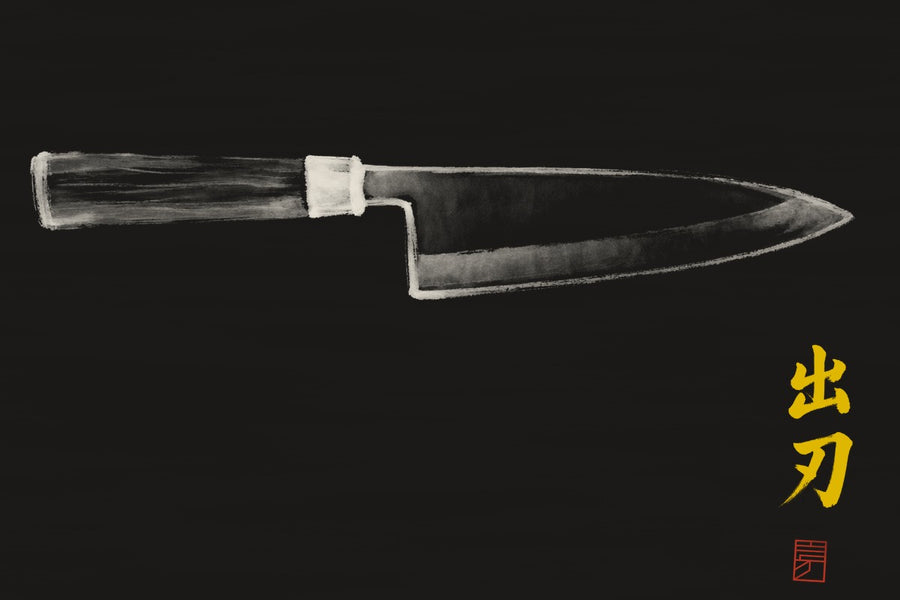
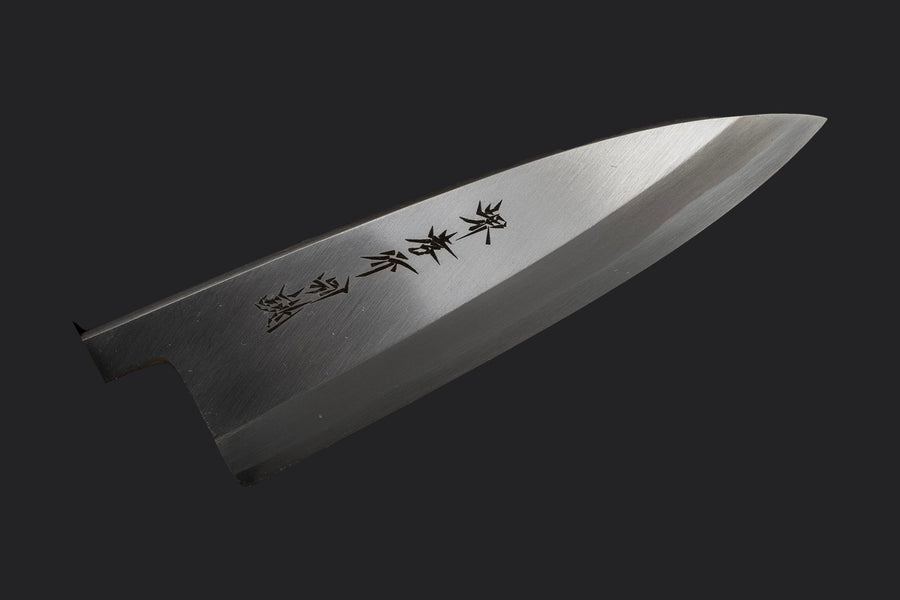
Hatsukokoro x Myojin Shirasagi White 2 Left Handed Mioroshi Deba 210mm

Regular price $469.95

IMPORTANT: Carbon steel knives can rust or patina quickly if not cared for properly. They require regular cleaning, drying, and oiling. If you are unfamiliar with carbon steel maintenance, we recommend choosing a stainless steel option instead.

Sold out right now

Leave your email and we’ll send one message the moment it’s back in stock.

One email, no marketing. Privacy policy.

Availability

  • St Peters, NSW —
    2 Bishop St, Unit 2, St Peters NSW 2044
  • Crows Nest, NSW —
    107 West St, Shop 1, Crows Nest NSW 2065
    Pickup only
  • Prahran, VIC —
    180 Commercial Road, Shop 1, Prahran VIC 3181
    Pickup only
Detailed Specifications
Line Hatsukokoro Shirasagi White 2 Single Bevel
Profile Deba / Japanese fish knife
Bevel Type Single Bevel
Weight 263 g | 9.3 oz
Edge Length 212 mm | 8 11/32″
Heel Height 46 mm | 1 13/16″
Width @ Heel 3.9 mm | 5/32″
Width @ Mid 3.1 mm | 1/8″
Width @ 1cm from Tip 1.8 mm | 5/64″
Steel White 2 / Shirogami #2 | Carbon
Blade Construction Nimai - Soft Iron Clad
Hardness (HRC) 60 - 64
Surface Finish Kasumi
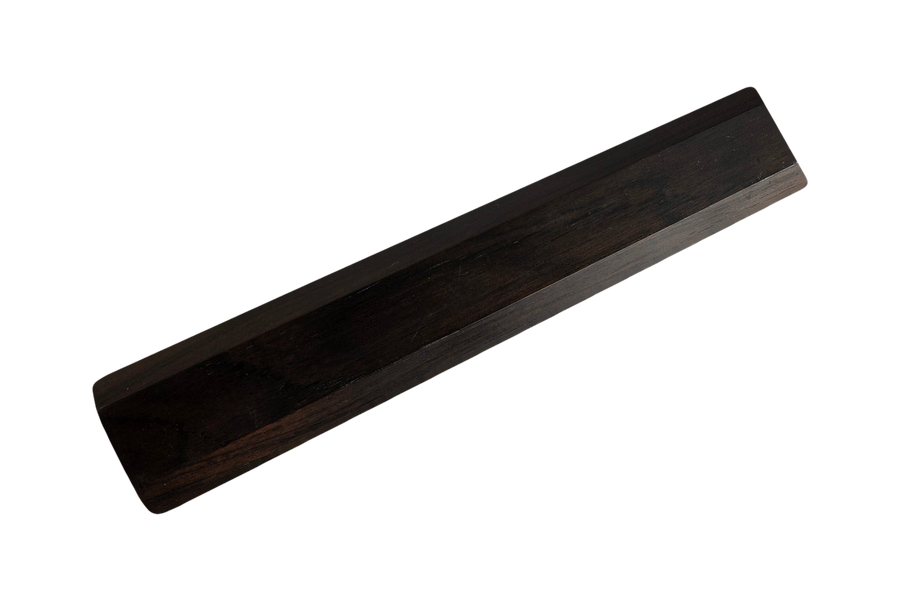
Handle Octagonal Ebony
Region Tosa
Best for
  • Pro chefs
  • Students
  • Free shipping for knives over AU$200 Australia wide.
  • World-wide shipping via DHL Express, 3 to 5 days.


The Hatsukokoro by Myojin Shirasagi(白鷺)White 2 Kasumi single bevel is a line of "practical single bevel" knives produced by Myojin Riki Seisakusho and comisioned by Hatsukokoro. It has a twin sister line Shirasagi Blue 2 Kurouchi that offers a different look made by same maker. If you are not familiar with Myojin is a father and son knife workshop based in Tosa prefecture, in the island of Shikoku. Father Tateo, is specialised in single bevel knife sharpening, whereas son Naohito Myojin specialises in double bevel knife sharpening, and Toru Tamura is their primary blacksmith.

This line as a single bevel line, is sharpened by Tateo Myojin(明神 健) and forged by Toru Tamura(田村 徹). Rarely, you can find not only the traditional profiles like yanagiba in this line, but also modern shapes like gyuto, all made in single bevel fashion. The fit and finish is superb as expected from Myojin Riki Seisakusho, a very uniform finish can be seen across the entire blade, even on the Kissaki of the Sakimaru Yanagiba, some other knives at higher price can have some trouble achieving that. Hatsukokoro have given this well-finished line a well deserved name Kirasagi(Little Egret), the smooth Migaki and Kasumi polish can be found found all across the blade, which build a beautiful imagery to the clean white feather of the egret.

The line has few single bevel Gyuto options, which are quite unusual. They could be a way to try out the single bevel knife without limiting yourself to the very specific task like Yanagiba or Deba does, but the significantly thicker spine does increases the weight and resistance when cutting into food. The offset cutting direction of single bevel knife as well as the carbon steel-soft iron cladding combo limit the usage scenario of these blades.

However, the traditional profiles like Yanagiba in this line are very good in terms of their value. The Yanagiba in this line have a matching if not a superior fit and finish compare to the Masamoto KS Kasumi line, but with the same steel and size, they comes at half of the price. If you have been keeping that Masamoto in cart for a long time but also been hesitating hitting that buy button due to the price tag, maybe look at this Shirasagi line as an alternative.

Pros Cons
  • Excellent fit and finish
  • Great for professionals
  • Budget friendly
  • Prone to rust
Care Instruction
  1. Don't cut hard things! Japanese knives are brittle so bone hacking is a NO NO!
  2. Wash with neutral detergent after use, and wipe dry;
  3. Please don't wash knife with dishwasher, it will damage the wood handle;
  4. Be careful not to leave the knife close to a heat source for a long time;
  5. It is a lot more dangerous to cut with a blunt knife than a sharp knife!
  6. It is best to sharpen a Japanese knife regularly on a waterstone.
  7. Oil the (carbon) knife if storing for an extended period of time to prevent rust.

Myojin Riki

Myojin Riki Seisakusho, a Tosa knife workshop

Myojin Riki Seisakusho (明神利器製作所) is a knife workshop in Uranouchi, Susaki, Kochi. It is headed by Naohito Myojin, son of Tateo Myojin.

Kochi City's page on Tosa crafts describes the workshop as carrying work from forging to finishing in one continuous process. The page says it sharpens a hamaguri-ba (蛤刃) edge, ground convex, a technique learned through several years of training in Fukui, and that it also takes sharpening-only orders from outside Kochi Prefecture.

Among the lines we list, the Hatsukokoro x Myojin Shirasagi single-bevel knives cover Blue 2 kurouchi yanagiba, K-tip yanagiba, sakimaru yanagiba and honesuki, White 2 deba, left-handed mioroshi deba, left-handed yanagiba and honesuki, and a Ginsan yanagiba. We also list Myojin Cobalt Special gyuto, santoku and bunka.

“A Tosa workshop in Susaki, Kochi, described by Kochi City's craft page as working from forging through finishing.”

Known for A convex hamaguri-ba edge, as Kochi City's craft page describes
Instagram @tetsujin_labo Read more about Myojin Riki

Myojin Riki · Tosa

Knife details

Frequently asked questions

Can a deba cut bone?

Yes, the bones of fish and fowl. Japanese dictionaries describe the deba (出刃包丁) as wide, thick-spined and heavy, used to fillet fish, to cut fish and fowl bone and all, and for rough chopping.

When you chop bone, use the heel of the blade (刃元), the Sakai cutlery association says. It is a fish and poultry knife, not a cleaver.

Shirogami 1 vs shirogami 2 — what is the difference?

Shirogami 1 (White 1) has a higher carbon content than Shirogami 2 (White 2), roughly 1.3% vs 1.1%.

White 2 (Shirogami #2) has about 1.1% carbon and, per Proterial, a hardening hardness of over 60 HRC; White 1 sits around 1.3% carbon. That 0.2% difference is the core spec gap. More carbon generally means you can push hardness higher and hold a keener edge, but it also makes the steel more brittle and less forgiving. White 2 trades a bit of that potential peak sharpness for slightly better toughness and ease of sharpening.

Shirogami 1 carries a certain prestige. Sukenari's Nobuo Hanaki once told me directly that they only use White 1 for their mizu-honyaki because it is the pure form of carbon steel, it carries that halo. Among traditional smiths, White 1 is still spoken of as the benchmark.

What does a Myojin Riki hamaguri-ba (clam) edge mean?

A hamaguri-ba edge, written 蛤刃, is a convex edge shape, and it is the shape the workshop 明神利器製作所 sharpens its knives to. Kochi City's craft page records that Myojin Riki learned it over several years of training in Fukui.

The same page says the workshop also takes sharpening-only orders from outside Kochi.

Does Myojin Riki forge its own knives?

Yes. Kochi City's craft page for his workshop 明神利器製作所 says the work runs from forging through finishing in one continuous process, 鍛造から仕上げまで一貫して行う.

That page lists the workshop in Susaki, Kochi.

You May Also Like