PRAHRAN STORE NOW OPEN · THU–MON · 10AM–6PM

Kurosaki  |  SKU: KS-FUJIN-BU175

Kurosaki Fujin SG2 Bunka 175mm

Regular price $369.95

Sold out right now

Leave your email and we’ll send one message the moment it’s back in stock.

One email, no marketing. Privacy policy.

Availability

  • St Peters, NSW —
    2 Bishop St, Unit 2, St Peters NSW 2044
  • Crows Nest, NSW —
    107 West St, Shop 1, Crows Nest NSW 2065
    Pickup only
  • Prahran, VIC —
    180 Commercial Road, Shop 1, Prahran VIC 3181
    Pickup only
Detailed Specifications
Line Kurosaki Fujin SG2
Profile Bunka / K-tip santoku
Steel SG2 / R2 | Powdered | Stainless
Blade Construction Sanmai - Stainless Clad
Hardness (HRC) 62 - 64
Surface Finish Nashiji
Handle
Region Takefu
Best for
  • Enthusiasts
  • Pro chefs
  • Collectors
  • Free shipping for knives over AU$200 Australia wide.
  • World-wide shipping via DHL Express, 3 to 5 days.


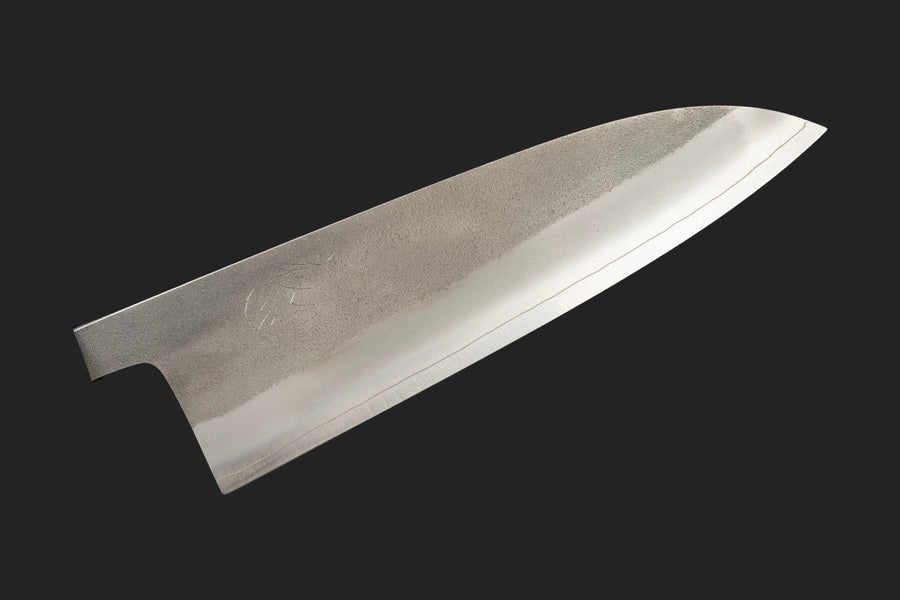
Kurosaki rose to fame with three signature hammered patterns: the Shizuku, the Fujin and the Raijin. The Fujin carries a diagonally forged tsuchime pattern, its name meaning Wind of the God, shown here with a Nashiji surface and built around Takefu's powdered SG2.

The core is Super Gold 2 powdered stainless with stainless cladding at 62 to 63 HRC, and the range covers the whole kitchen: Santoku, Bunka, Gyuto in 210 and 240 mm, Sujihiki in 240 and 270, Nakiri, and two Petty sizes. The 240 gyuto weighs 188 g, its spine running 3.0 mm above the heel and tapering to 0.7 mm near the tip.

In recent years, production of these lines has been very limited, and demand for Kurosaki's work runs high. SG2 is a rare powdered steel, and combined with Kurosaki's cutting performance this variant is highly sought after. It sits at the premium end of the range, and it asks for the routine any hard powder steel wants: sharpen on a waterstone, hand wash, and dry after use.

Pros Cons
  • Excellent performance
  • Great artistic
  • Highly collectable
  • High budget
Care Instruction
  1. Don't cut hard things! Japanese knives are brittle so bone hacking is a NO NO!
  2. Wash with neutral detergent after use, and wipe dry;
  3. Please don't wash knife with dishwasher, it will damage the wood handle;
  4. Be careful not to leave the knife close to a heat source for a long time;
  5. It is a lot more dangerous to cut with a blunt knife than a sharp knife!
  6. It is best to sharpen a Japanese knife regularly on a waterstone.

Yu Kurosaki

Yu Kurosaki, Echizen smith

Yu Kurosaki (黒崎優) is an Echizen smith who has run his own workshop, Kurosaki Uchihamono (黒﨑打刃物), since founding it in 2014, and who was certified as a traditional craftsman in 2019.

His site describes his knives as Echizen forged knives made one by one by a craftsman's hand, with time and care.

Read more

Before going out on his own, Yu Kurosaki spent twelve years at Kanehiro Uchihamono, from 2002 to 2014. He trained under Hiroshi Kato and Takeshi Saji. The Takefu Knife Village profile lists his work as double-bevel forged knives and custom knives.

In a 2022 interview with the magazine NIHONMONO he describes his knives in his own words as thin, sharp and tough. The same interview credits him with five original designs: Shizuku, Fujin, Raijin, Juhyo and Senko.

We carry a lot of his work, and we list two of those designs: the Raijin in VG10W and the Shizuku in SG2.

“An Echizen smith with his own workshop since 2014.”

Est. 2014 | 平成26年
Known for Raijin and Shizuku knives, forged by hand
Website kurosakiknives.jp Instagram @kurosakiknives Read more about Yu Kurosaki

Yu Kurosaki · Takefu

Knife details

Frequently asked questions

Why is it called a bunka knife?

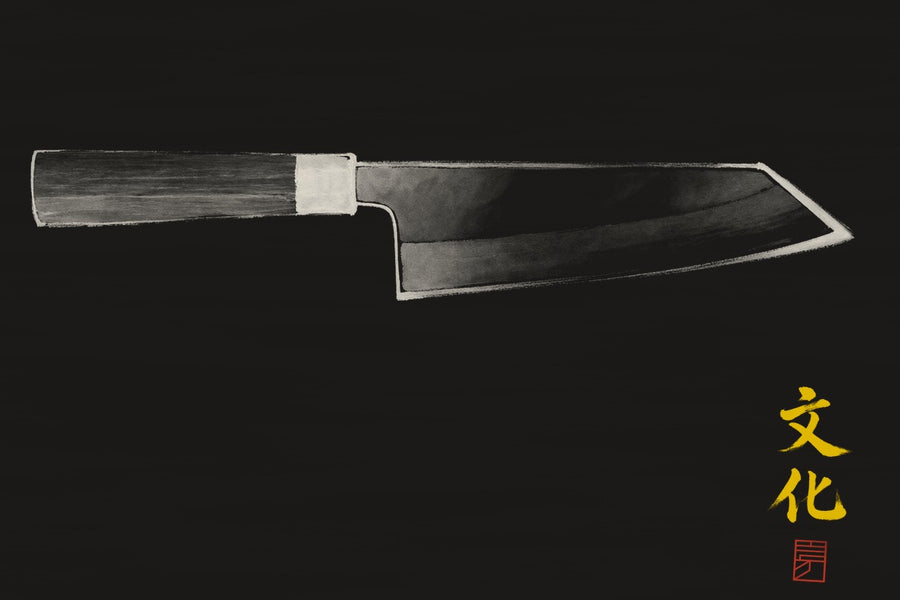
The bunka knife (文化包丁) takes its name from bunka, culture. A Sakai knife maker ties the name to Japan's modernisation, when Western culture and Japanese tradition merged, and says it stands for that new era and for the knife's wide range of uses.

The same maker says that as diets broadened to meat, fish and vegetables, an all-purpose knife was wanted, and the bunka took features from both Japanese and Western knives.

What is the difference between a bunka and a santoku?

The tip. One Japanese knife maker describes the bunka (文化包丁, kengata) as combining the good points of the gyuto and the nakiri with the tip cut at an angle, and the santoku as coming after it, by rounding that tip.

Both are all-purpose knives for the home; santoku (三徳) means three virtues, for the three foods it cuts: meat, fish and vegetables.

SG2 steel knives at Knives and Stones

SG2 is my go-to recommendation for anyone who wants a stainless knife that performs like carbon steel without the fuss. At 62 HRC or more (Takefu's figure), it takes a screaming edge and holds it far longer than VG-10 or AEB-L, all while being rust-resistant. You get the best of both worlds: no patina worry, but real cutting performance.

SG2 vs AS steel for kitchen knives — which is better?

Neither is objectively better, it just depends on whether you value stainless convenience or a laser-sharp carbon edge. Go with SG2 if you want a knife that holds a screaming edge without any babysitting. Choose AS if you are chasing the thinnest possible edge and don't mind wiping the blade down after every use.

SG2 is a powdered stainless steel from Takefu, rated at 62 HRC or more. It is tough and resists corrosion, which is why I reach for it when working with acidic foods. Aogami Super is high carbon, and Proterial gives it a hardening hardness of over 60 HRC. It sharpens to a hair-whittling edge that lasts slightly longer than SG2, but it will rust if you neglect it.

R2 steel vs SG2 — are they the same?

Yes, R2 and SG2 are the same steel — R2 is the name used by Kobelco Steel, and SG2 (Super Gold 2) is the name used by Takefu Special Steel for the identical powdered metallurgy formula. SG2 / R2 is a powder (PM) steel from Takefu Special Steel, Japan, with a composition of 1.25% carbon, 14.0% chromium, 1.8% vanadium, 2.3% molybdenum, and a hardness range of 62–64 HRC. So if you see a knife labeled R2 or SG2, you are getting the exact same material.

Is Yu Kurosaki a good Japanese knife maker?

Yes, Yu Kurosaki is widely regarded as one of the leading Japanese knife makers of his generation, known for combining exceptional cutting performance with artistic, hand-forged designs. Based in Takefu, he established his own workshop in 2014 after twelve years at Kanehiro Uchihamono (カネ弘打刃物), and he was certified as a traditional craftsman (伝統工芸士) in 2019. His knives are built around thin geometry and advanced steels like SG2 and Blue Super, which contribute to strong edge retention and precise cutting. He is also celebrated for innovative finishes such as Tsuchime and Suminagashi, which set his work apart visually while maintaining traditional craftsmanship.

Kurosaki's reputation is built on a clear philosophy: aiming for the ultimate knife. He is known for his use of SG2 and Blue Super steels, paired with distinctive hammered and layered finishes, which together deliver a balance of strength, edge retention, and aesthetic originality. For a closer look at his work and approach, you can explore the Yu Kurosaki maker page on the Knives and Stones site.

What is the difference between Kurosaki Senko, Fujin, Raijin and Shizuku?

All four are Yu Kurosaki's own designs. In a 2022 interview with the magazine Nihonmono he named his five original designs, Shizuku, Fujin, Raijin, Juhyo and Senko, and described his knives as thin, sharp and tough.

In our range the steel is in the product title: Senko and Fujin are made in SG2 and Raijin in VG10W. So pick the design you like first, then check the steel in its title.

You May Also Like