PRAHRAN STORE NOW OPEN · THU–MON · 10AM–6PM

Tojiro  |  SKU: TO-SG2PS-ST170

Tojiro SG2 Powdered Steel Santoku 170 mm F-517

Sale price $230.00 Regular price $289.95

Sold out right now

Leave your email and we’ll send one message the moment it’s back in stock.

One email, no marketing. Privacy policy.

Availability

  • St Peters, NSW —
    2 Bishop St, Unit 2, St Peters NSW 2044
  • Crows Nest, NSW —
    107 West St, Shop 1, Crows Nest NSW 2065
    Pickup only
  • Prahran, VIC —
    180 Commercial Road, Shop 1, Prahran VIC 3181
    Pickup only
Detailed Specifications
Line Tojiro Powdered Steel
Profile Santoku / Santoku
Steel SG2 / R2 | Powdered | Stainless
Blade Construction Sanmai - Stainless Clad
Hardness (HRC) 62 - 64
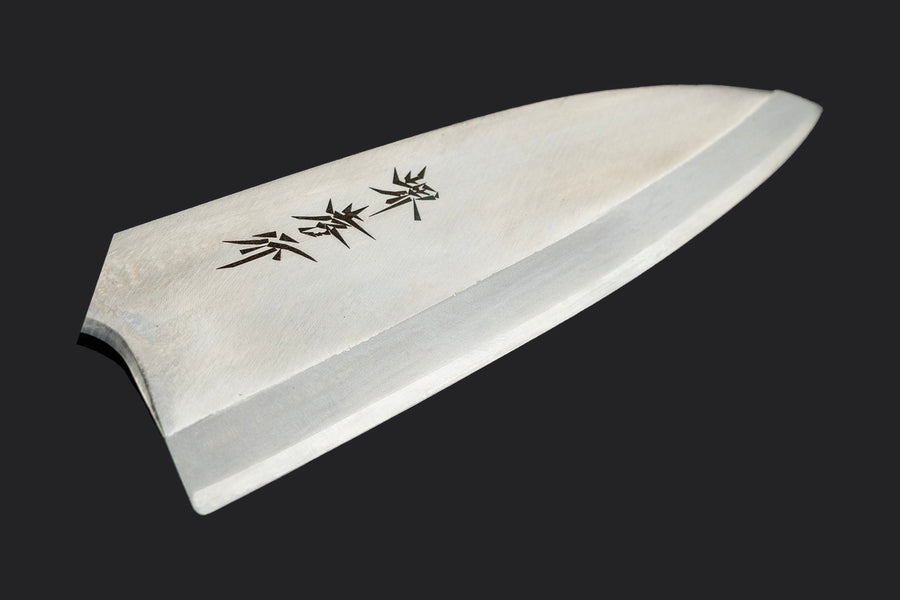
Surface Finish Migaki
Handle
Region Tsubame
Best for
  • Pro chefs
  • Free shipping for knives over AU$200 Australia wide.
  • World-wide shipping via DHL Express, 3 to 5 days.


The Tojiro Powdered Steel line gives its classic DP3 a run for its money. While the DP3 series (with VG10 steel) is a highly regarded as a good allround knife for many, the SG2 series provides some noteable upgrades. The powdered stainless line is made of high carbon, high alloy SG2 steel core, heat-treated to 63 HRC, and clad with 13-chrome stainless steel. The harder steel allows the blade to hold its sharpness for longer and the thinner behind-edge ensures a sleek cutting performance.

Overall, an excellent value for money choice for those who are looking for a step up from Tojiro’s popular DP series.

Pros Cons
  • Budget friendly
  • Excellent performance
  • Easy to look after
  • Relatively hard to sharpen
Care Instruction
  1. Don't cut hard things! Japanese knives are brittle so bone hacking is a NO NO!
  2. Wash with neutral detergent after use, and wipe dry;
  3. Please don't wash knife with dishwasher, it will damage the wood handle;
  4. Be careful not to leave the knife close to a heat source for a long time;
  5. It is a lot more dangerous to cut with a blunt knife than a sharp knife!
  6. It is best to sharpen a Japanese knife regularly on a waterstone.

Tojiro

Tojiro — Tsubame's Global Kitchen Knife Brand

Tojiro, a globally recognized Japanese kitchen knife brand, is celebrated for its remarkable quality and value. Rooted in the Niigata Prefecture, an area famous for steel production, Tojiro combines traditional craftsmanship with advanced technology to produce kitchen knives that excel in both form and function. Their blades, typically featuring high-carbon stainless steel, are known for their exceptional sharpness, edge retention, and corrosion resistance. Each knife undergoes meticulous finishing, ensuring ergonomic handles for comfortable grip and a well-balanced feel. Tojiro offers a diverse range of knives, from versatile gyuto and santoku styles to specialized nakiri blades, catering to both professional chefs and home cooks alike. This commitment to high quality and affordability has earned Tojiro a strong reputation worldwide, making their knives the go-to choice for reliable, efficient, and beautifully crafted kitchen tools.

Read more

“ICHIGO ICHIE” – ONCE IN A LIFETIME

Beyond a single knife, while thinking of its user, TOJIRO continues to manufacture knives. Person to person, person to knife, both are “once in a lifetime”. To enrich such encounters, we manufacture knives.

What TOJIRO can do for knives

The history of TOJIRO knives started with stainless steel fruit knife that was released in 1955. At that time, it was said that stainless steel blades were not sharp enough compare to carbon steel. Therefore, TOJIRO pursued in earnest “cuttable knives”, realizing continuous improvement and evolution. Today, our corporate message is “More than just sharpness”.

We wish to deliver not only sharpness, but the feeling that a knife fits comfortably in your hands as you use it, becoming your partner. We are continuing our efforts to carefully manufacture knives so that a single TOJIRO knife can provide the greatest satisfaction to our customers.

Tradition and innovation

Both tradition and innovation are being existed in our manufacturing process.

Clad steel is the material that we use most in our production. It is forged in the same way of forging a traditional Japanese sword “Katana” from Tamahagane.

On the other hand, our area, Tsubame in Niigata Prefecture, is well-known as a center of manufacturing metal products. Modern technology of metal processing has been therefore improved over the decades in here and we are good at it.

Here we merge the tradition and the modern technology – pressing out sheet of clad steel by stamping machine. In other words, we are taking advantage of quality of clad steel and high production efficiency of modern machines.

Although machines have allowed the process to become more efficient, the deciding factor lays, of course, in the skill and instinct of craftsmen. As knives are tools that people directly take into their hands to use, we value the skills of producers, which are the foundation of manufacturing, and keep a close eye on all processes until each craftsman at TOJIRO is completely satisfied. Our knives that are produced by traditional techniques and modern industrial technology are held in the highest regard not only in Japan, but around the world. We, TOJIRO, will continue to strive for a balance between inherited tradition and technical innovation as one of the few full-scale production kitchen knife manufactures in Japan.

Craftsman

The craftsman at TOJIRO would like you to feel the “joy” of using a tool with attachment. They hone their skills to manufacture worthy knives daily. As long as we are craftsmen, the road to improving our skills will never end. We are earnest about making knives daily for users. A product born such devotion is a message from maker to customer.

From Tsubame-Sanjo to the world

We continue to manufacture the highest quality knives in this region where the spirit and techniques of manufacturing have been handed down since ancient times. Tsubame, where TOJIRO is located, is a metal-processing industrial cluster area known as “Tsubame-Sanjo”.

Since manufacture of Wakugi (Japanese nail) started in the early 1600s, knives, flies, pipes, copperware, metal-carving, cutlery and other products have been manufactured here, and have increased in export.

TOJIRO has delivered products from the representative production area of Japan to the world, where professional vendors of each process have developed techniques and spirit together through friendly competition.

“Tsubame stainless steel pioneers — bringing factory precision and value to kitchens in 50 countries.”

Est. 1953 | 昭和28年
Known for Affordable stainless steel knives, full in-house manufacturing, global distribution
Website tojiro-japan.com Instagram @tojiro_jp Read more about Tojiro

Tojiro · Tsubame

Knife details

Frequently asked questions

Gyuto or santoku - which should I choose?

Both are all-purpose Japanese knives, and for most home cooks either will handle the bulk of daily prep. The choice comes down to length, blade shape, and how you like to cut.

A gyuto is the Japanese chef's knife - typically 210 to 240mm with a gently curved edge that lets you rock and slide through cuts as well as chop. The extra length and pointed tip give you reach and versatility, from proteins to large produce.

A santoku is shorter, usually 165 to 180mm, with a flatter profile and a rounded sheep's-foot tip. It rewards a straight up-and-down push cut, feels nimble in smaller hands or tight kitchens, and is the classic Japanese household knife.

Rule of thumb: choose a gyuto if you want one do-everything knife with more reach, or a santoku if you prefer a compact, easy-to-control blade. Plenty of our customers end up owning both.

SG2 steel knives at Knives and Stones

SG2 is my go-to recommendation for anyone who wants a stainless knife that performs like carbon steel without the fuss. At 1.25% carbon and HRC 62-64, it takes a screaming edge and holds it far longer than VG-10 or AEB-L, all while being fully rust-resistant. You get the best of both worlds: no patina worry, but real cutting performance.

SG2 vs AS steel for kitchen knives — which is better?

Neither is objectively better, it just depends on whether you value stainless convenience or a laser-sharp carbon edge. Go with SG2 if you want a knife that holds a screaming edge without any babysitting. Choose AS if you are chasing the thinnest possible edge and don't mind wiping the blade down after every use.

SG2 is a powdered stainless steel from Takefu, usually sitting around 62-64 HRC. It is tough and resists corrosion, which is why I reach for it when working with acidic foods. Aogami Super is high carbon and typically harder at 64-66 HRC. It sharpens to a hair-whittling edge that lasts slightly longer than SG2, but it will rust if you neglect it.

R2 steel vs SG2 — are they the same?

Yes, R2 and SG2 are the same steel — R2 is the name used by Kobelco Steel, and SG2 (Super Gold 2) is the name used by Takefu Special Steel for the identical powdered metallurgy formula. SG2 / R2 is a powder (PM) steel from Takefu Special Steel, Japan, with a composition of 1.25% carbon, 14.0% chromium, 1.8% vanadium, 2.3% molybdenum, and a hardness range of 62–64 HRC. So if you see a knife labeled R2 or SG2, you are getting the exact same material.

You May Also Like