PRAHRAN STORE NOW OPEN · THU–MON · 10AM–6PM

Masamoto Sohonten  |  SKU: MASA_KK0621

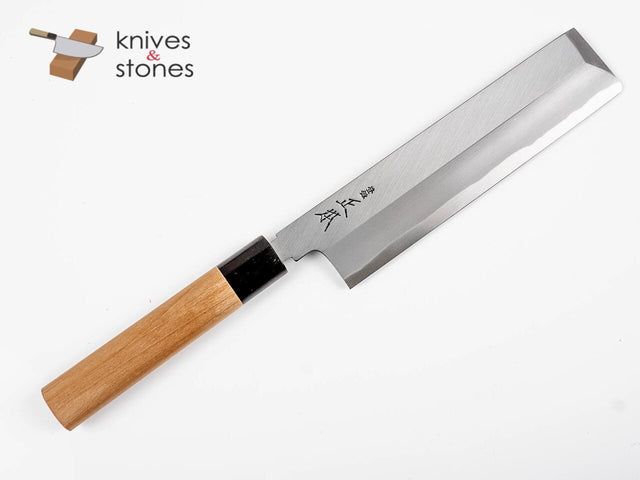
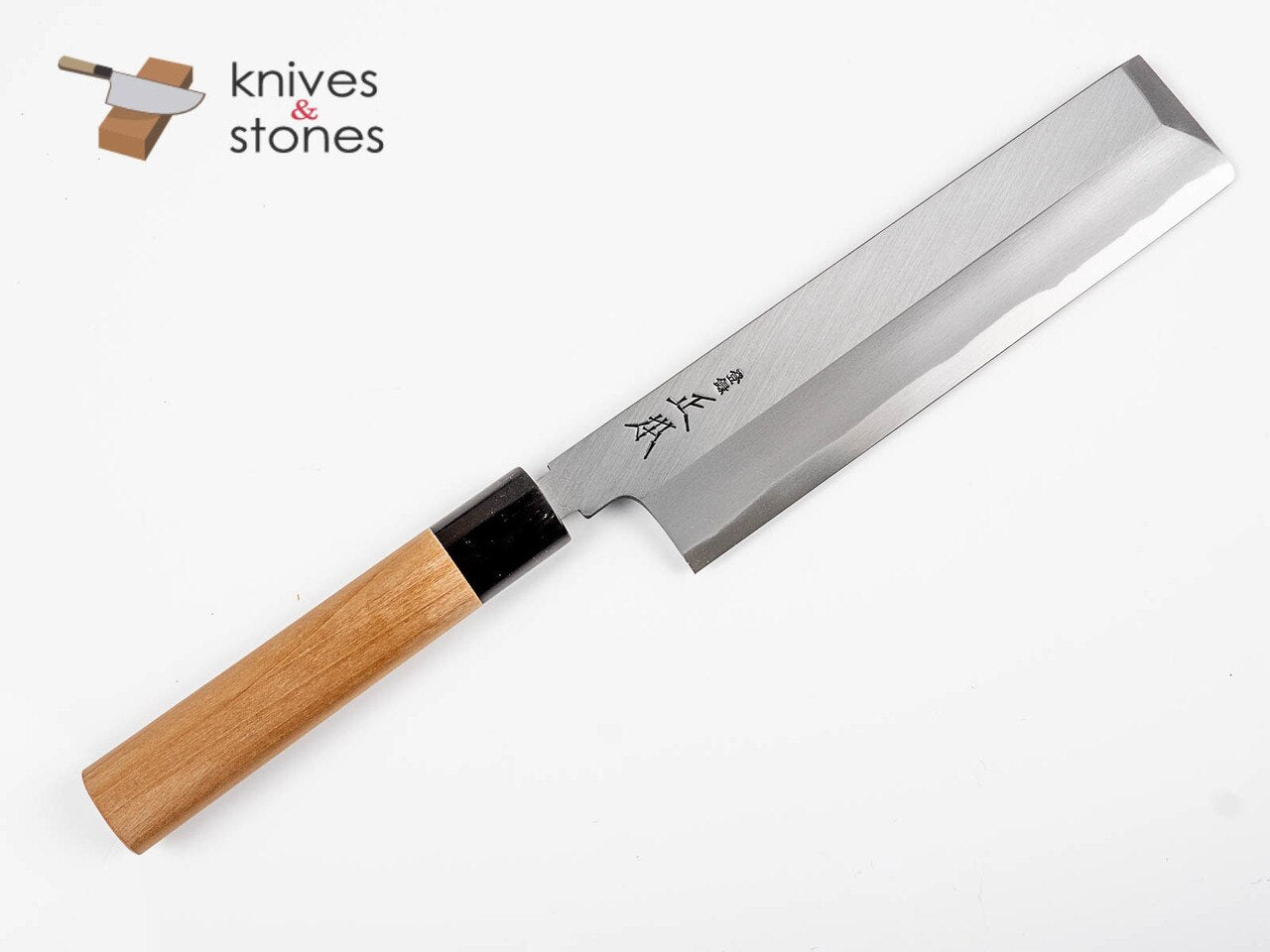
Masamoto Sohonten Kasumi White 2 Series Usuba 210 mm KK0621 with SAYA

Sale price $628.98 Regular price $739.95

IMPORTANT: Carbon steel knives can rust or patina quickly if not cared for properly. They require regular cleaning, drying, and oiling. If you are unfamiliar with carbon steel maintenance, we recommend choosing a stainless steel option instead.

Availability

  • St Peters, NSW —
    2 Bishop St, Unit 2, St Peters NSW 2044
  • Crows Nest, NSW —
    107 West St, Shop 1, Crows Nest NSW 2065
    Pickup only
  • Prahran, VIC —
    180 Commercial Road, Shop 1, Prahran VIC 3181
    Pickup only
Detailed Specifications
Line Masamoto KK
Profile Usuba / Single-bevel vegetable knife
Steel White 2 / Shirogami #2 | Carbon
Blade Construction Nimai - Soft Iron Clad
Maker's hardening hardness 60 HRC or more
Surface Finish Kasumi
Handle
Region Tokyo
Best for
  • First-timers
  • Pro chefs
  • Students

Free shipping for knives over AU$200 Australia wide.

World-wide shipping via DHL Express, 3 to 6 days (not available in the UK).


The KK is Masamoto Sohonten's entry into traditional single bevel knives, sitting at the accessible end of the family. Each blade pairs a Hitachi White 2 (Shirogami) core with soft iron cladding in nimai construction, finished in kasumi (霞), the misty two-tone look of the classic Japanese kitchen blade. White steel has only carbon added, which is what lets it take an extremely keen edge while staying very easy to sharpen, and that patience on the stones is worth a lot to anyone learning single bevel work.

Being carbon steel under an iron cladding, these knives patina quickly and need wiping dry after use, but that is the whole bill of ownership at this level. The lineup covers deba from 150 to 210 mm, yanagiba from 240 to 300 mm, a takobiki, and usuba in 180 and 210 mm, all on wa handles of ho wood with buffalo horn ferrules.

Pros Cons
  • Budget friendly
  • Excellent performance
  • Prone to rust
  • Need extra care
Care Instruction
  1. Don't cut hard things! Japanese knives are brittle so bone hacking is a NO NO!
  2. Wash with neutral detergent after use, and wipe dry;
  3. Please don't wash knife with dishwasher, it will damage the wood handle;
  4. Be careful not to leave the knife close to a heat source for a long time;
  5. It is a lot more dangerous to cut with a blunt knife than a sharp knife!
  6. It is best to sharpen a Japanese knife regularly on a waterstone.
  7. Oil the (carbon) knife if storing for an extended period of time to prevent rust.

Masamoto Sohonten

Masamoto Sohonten of Azumabashi, Tokyo

Masamoto Sohonten (正本總本店) is the knife house at Azumabashi in Sumida-ku, Tokyo, and is the holder of the MASAMOTO registered trademark. The company says a separate Masamoto business was established independently in 1951 and that the two businesses have entirely different products and organisations.

It began with Minosuke Matsuzawa, born to a blacksmith in Osawa, Bushu (Saitama Prefecture). He went to Osaka in 1862 to learn genuine knife forging, came home to Osawa in 1866 and began making cooking knives. The company's history says it was the first in the Kanto region to make and sell genuine tempered blade cooking knives, in 1874. In 1890 it opened in present-day Azumabashi, Sumida-ku.

The name came from Minosuke's mark: he engraved the masa character (正) on his knives as proof he had made them himself. When trademark registration began in 1884, the second generation, Kichizo Hirano, tried to register that character, but a knife shop in Osaka already used it. On business partners' advice, since the knives used genuine steel, he placed the moto character (本), part of the Japanese word for genuine, under it. Masamoto was registered in 1903 as trademark No. 20269.

The company lists six generations: Minosuke Matsuzawa, then Kichizo Hirano, who led the house from 1891, Sakichi Hirano, Masakichi Hirano, Morisuke Hirano, who was conferred the Order of the Rising Sun, Gold Rays with Rosette, and Masahiro Hirano, the sixth generation. The company says only Masamoto Sohonten has carried on Minosuke's methods of hardening, tempering and polishing, and that its range grew from chefs' feedback. It marked its 150th anniversary in 2016.

The lines we list include White 2 Hongasumi (KS) single-bevel knives in yanagiba, takobiki, kiritsuke yanagiba, deba, mioroshi deba, usuba, kamagata usuba, mukimono and hamokiri, alongside KS sujihiki, petty and gyuto, including a K-tip gyuto. The White 2 Kasumi (KK) line includes deba, usuba, yanagiba and takobiki. White 1 appears in the KI Hongasumi yanagiba, Blue 2 in the Aoko Hongasumi yanagiba, and the honyaki yanagiba comes in both White 2 (HS) and Blue 2 (HA). The stainless lines include VG series gyuto, santoku, petty, sujihiki and honesuki, VG Cobalt yanagiba, and MV katana and kiritsuke shapes. The Swedish steel SW line includes gyuto, K-tip gyuto, sujihiki and petty.

“Six generations of knife making since 1866, at Azumabashi in Tokyo since 1890.”

Est. 1866 | 慶応2年
Known for Excellently built traditional single bevel knives and KS series Gyuto
Website masamoto-sohonten.co.jp Read more about Masamoto Sohonten

Masamoto Sohonten · Tokyo

Knife details

Usuba — knife profile
Profile

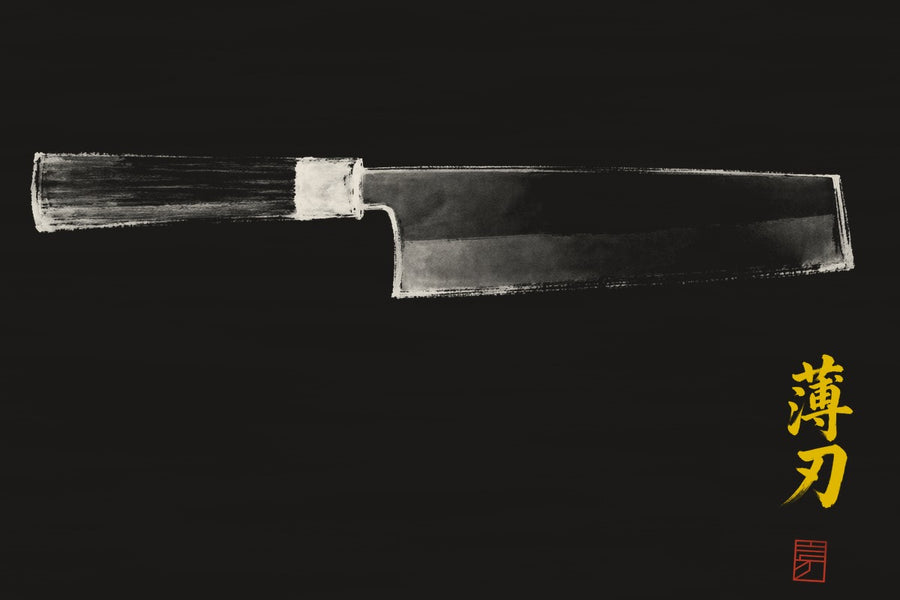
Usuba

薄刃

Single-bevel vegetable knife · Single bevel

Thin, rectangular single-bevel vegetable knife; a Sakai maker says it cuts without breaking fibres.

Read more
Steel properties
  1. Hardness Very good
  2. Edge retention Good
  3. Toughness Good
  4. Rust resistance Low
  5. Ease of sharpening High
  6. Sharpness Very high
Our ratings, inferred from published lab tests and composition.

Our edge-retention grade is a kitchen rating. It weighs the hardness each steel is sold at, which keeps a thin edge from rolling, twice as heavily as lab wear tests, and the final grade is our judgment from selling and sharpening these knives for over a decade. Lab card-cutting tests measure abrasive wear only, so they can rank carbon steels lower. Tap ? for the lab figure.

Steel

White 2 / Shirogami #2

白二鋼

Carbon · Hitachi Metals (now Proterial)

Proterial carbon steel, 1.05 to 1.15% carbon, no chromium or tungsten; not stainless.

Read more
ShinogiCladdingClad lineHard steelHollow back
Construction

Nimai - Soft Iron Clad

二枚・軟鉄

2 layers · single bevel

Two layers, single bevel: hard steel on the back, soft iron elsewhere; it patinas.

Read more
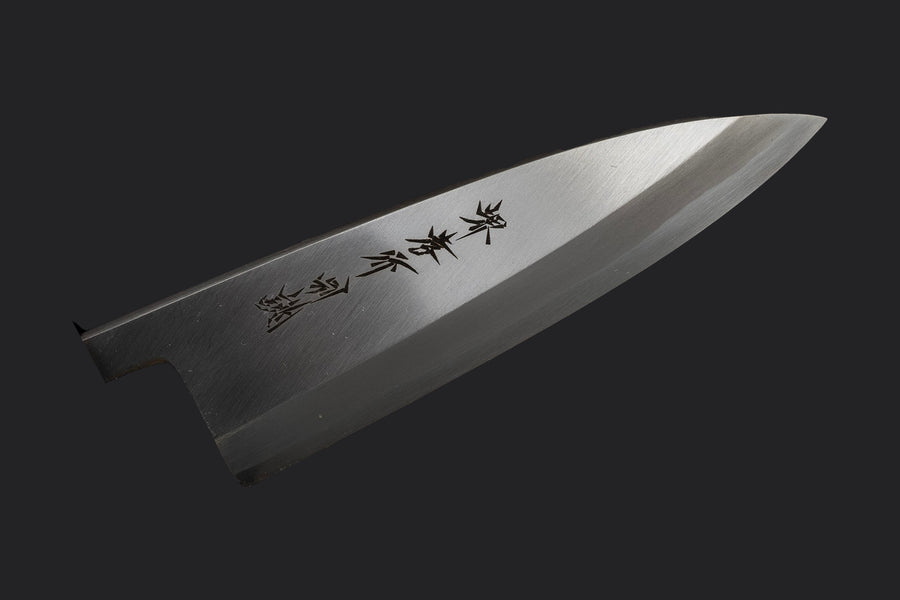
Kasumi — blade surface finish
Finish

Kasumi

霞

Misty polish

Hazy, matte bevel where soft iron meets hard core steel. The iron patinas and rusts.

Read more

Frequently asked questions

What is an usuba used for?

An usuba (薄刃包丁) is for vegetables, and a knife maker's guide to Japanese knife shapes puts almost all vegetable preparation on this one blade.

The heel (刃元) peels and hollows out, while the middle of the edge does katsuramuki, fine garnish work, chopping and rounding off the cut edges of vegetables (面取). A Japanese dictionary describes the blade as single-bevel and rectangular, with spine and edge parallel and the same width at the heel and the tip.

Why is the back of a single-bevel knife hollow, and how do I sharpen it?

The shallow hollow in the back is called urasuki (裏スキ). Tojiro explains that it means the whole back never has to be ground when you sharpen, makes it easier to keep the back flat, and stops sharpening the back from affecting the edge. Only the thin flat rim around the hollow touches the stone.

Sharpen the front bevel first, laying it flat on the stone. Then lay the back completely flat and take a few light strokes, just enough to remove the burr. Never lift the spine to put an angle on the back, and keep the stone itself flat.

Bunka, nakiri or usuba: which knife is best for vegetables?

For everyday vegetable prep, a nakiri (菜切) is the simple choice. Tojiro describes it as Japan's own vegetable knife: a square, double-bevel blade, so it cuts the same way in either hand.

A bunka (文化) is a home knife that Tojiro describes as combining the good points of the nakiri and the gyuto. Choose it if you want one knife for vegetables plus meat and fish, with an angled tip.

An usuba (薄刃) is a knife made for vegetable preparation in Japanese cooking. It is single bevel, so it is made for one hand, and Tojiro lists its jobs as peeling and hollowing at the heel, and katsuramuki, fine garnish cuts and rounding off cut edges along the middle of the edge. Choose it if you want to learn those techniques.

Shirogami 1 vs Shirogami 2: what is the difference?

Shirogami 1 (White 1) has more carbon than Shirogami 2 (White 2): Proterial lists 1.25 to 1.35% carbon for Shirogami 1 and 1.05 to 1.15% for Shirogami 2, with the same silicon (0.10 to 0.20%) and manganese (0.20 to 0.30%) ranges for both.

Proterial describes both as carbon steel with minimum impurities, Shirogami 1 with the highest hardness and Shirogami 2 with high hardness, and gives a hardening hardness of over 60 HRC for both. It lists Shirogami 1 for the highest quality tipped tools, planes, chisels and razors, and Shirogami 2 for high quality tipped tools, chisels, razors, sickles, axes and gravers.

What is the difference between White 1, White 2 and White 3?

White 1, White 2 and White 3 are Proterial's Shirogami 1, Shirogami 2 and Shirogami 3. Proterial lists carbon at 1.25 to 1.35% for Shirogami 1, 1.05 to 1.15% for Shirogami 2 and 0.80 to 0.90% for Shirogami 3, with the same silicon and manganese ranges for all three and no chromium listed.

Proterial describes all three as carbon steel with minimum impurities, at highest, high and middle hardness in that order, and gives a hardening hardness of over 60 HRC for each.

What is the difference between Blue 2 and White 2 steel?

Blue 2 is White 2 with tungsten and a little chromium added. Blue 2 holds its edge longer. White 2 sharpens faster and takes a very keen edge. Both are carbon steels that will rust if left wet.

The figures come from Proterial, which makes both. Each has 1.05 to 1.15% carbon. Blue 2 (Aogami 2) adds 1.00 to 1.50% tungsten and 0.20 to 0.50% chromium. White 2 (Shirogami 2) lists neither, and Proterial describes it as a carbon steel with minimum impurities. Proterial says the tungsten and chromium improve heat treatment and wear resistance, and gives a hardening hardness over 60 HRC for both.

In use, the tungsten forms hard carbides that resist wear, so a Blue 2 edge lasts longer between sharpenings. White 2 has none, so it comes back on a whetstone very quickly. The chromium in Blue 2 is far below the 10.5% a steel needs to be stainless, so it gives no real rust protection. Wipe either steel dry after use and expect a patina.

Choose Blue 2 if you want to sharpen less often. Choose White 2 if you enjoy sharpening and want the keenest edge. We list both widely: Blue 2 from Nigara, Myojin Riki and Anryu, and White 2 from Masamoto Sohonten, Sakai Takayuki and Yoshikane.

Is Masamoto Sohonten the same company as Tsukiji Masamoto?

No. Masamoto Sohonten's own history page says Tsukiji Masamoto set up business independently in 1951. Its products and company organisation differ completely from the Sohonten house, and the MASAMOTO trademark is a registered trademark of Masamoto Sohonten, based in Azumabashi.

Both names carry Masamoto, so check which house made the knife: Masamoto Sohonten is the Azumabashi house in Tokyo, and Tsukiji Masamoto is a separate company.

How old is Masamoto Sohonten?

The Masamoto Sohonten history page dates the start of the house to 1866, when the founder returned home and began making cooking knives in Osawa. It says the house was first in the Kanto region to manufacture and sell genuine tempered blade cooking knives in 1874, and it opened in present-day Azumabashi, Sumida-ku, Tokyo in 1890.

The MASAMOTO trademark, No. 20269, was registered in 1903. The history page lists six generations, from the founder Minosuke Matsuzawa to Masahiro Hirano.

You May Also Like