PRAHRAN STORE NOW OPEN · THU–MON · 10AM–6PM

Drag to spin · pinch or scroll to zoom

Knives and Stones  |  SKU: KNS_W2KU_CH200

Introductory Offer: K&S White 2 Stainless Clad Chinese Cleaver 200mm

Sale price $220.00 Regular price $249.95

IMPORTANT: Carbon steel knives can rust or patina quickly if not cared for properly. They require regular cleaning, drying, and oiling. If you are unfamiliar with carbon steel maintenance, we recommend choosing a stainless steel option instead.

Sold out right now

Leave your email and we’ll send one message the moment it’s back in stock.

One email, no marketing. Privacy policy.

Availability

  • St Peters, NSW —
    2 Bishop St, Unit 2, St Peters NSW 2044
  • Crows Nest, NSW —
    107 West St, Shop 1, Crows Nest NSW 2065
    Pickup only
  • Prahran, VIC —
    180 Commercial Road, Shop 1, Prahran VIC 3181
    Pickup only
Detailed Specifications
Line Knives and Stones White 2 Tsuchime Stainless Clad
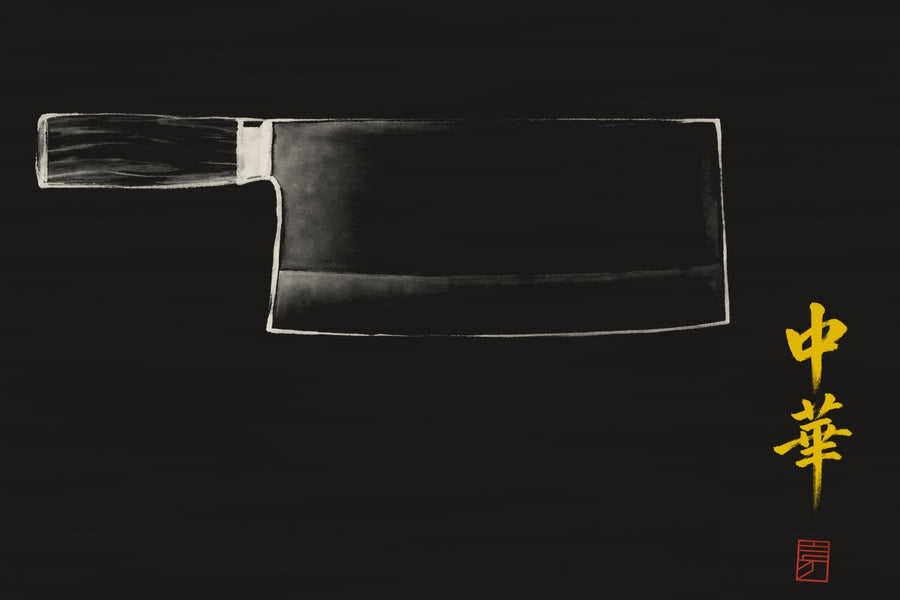
Profile Chuka (Cleaver) / Chinese cleaver
Bevel Type Double Bevel
Weight 379 g | 13.4 oz
Edge Length 195 mm | 7 43/64″
Heel Height 95 mm | 3 47/64″
Width @ Heel 2.3 mm | 3/32″
Width @ Mid 2.1 mm | 5/64″
Width @ 1cm from Tip 2.0 mm | 5/64″
Steel White 2 / Shirogami #2 | Carbon
Blade Construction Sanmai - Stainless Clad
Hardness (HRC) 60 - 64
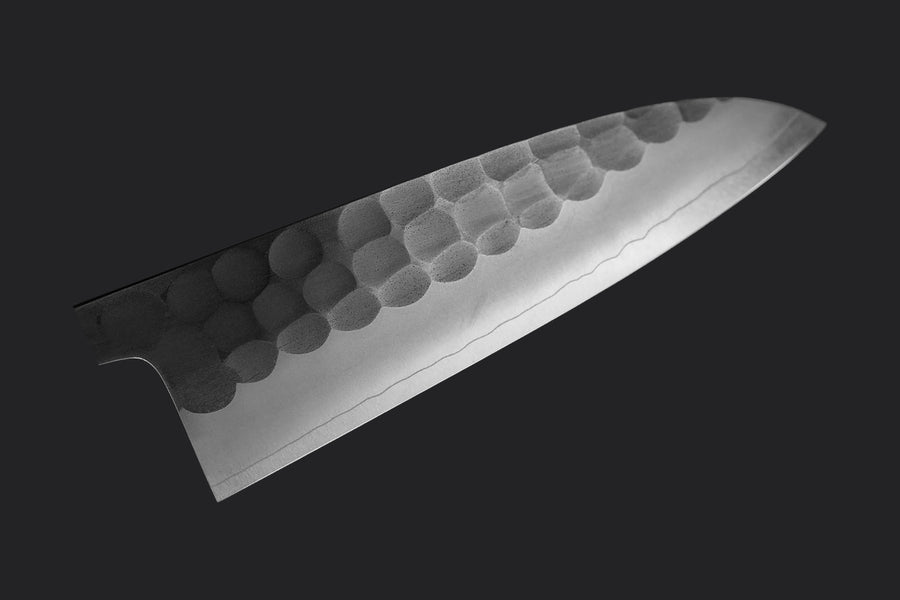
Surface Finish Tsuchime
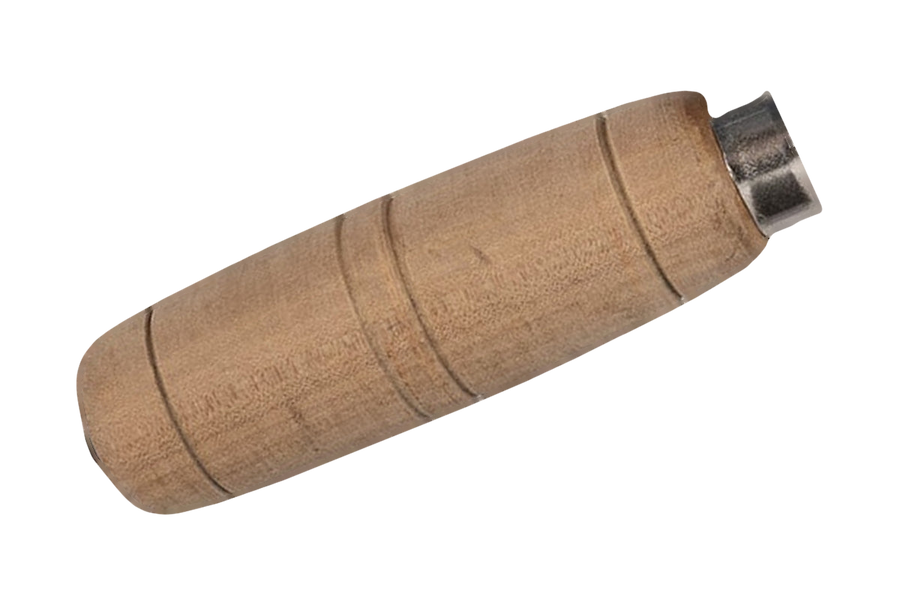
Handle Cleaver Handle
Region Other
Best for
  • Pro chefs
  • First-timers
  • Enthusiasts
  • Free shipping for knives over AU$200 Australia wide.
  • World-wide shipping via DHL Express, 3 to 5 days.


Knives and Stones’ brewed in-house knives is now joined with a new member, compared to its predecessors, this new White #2 cleaver would offer better usability, fit and finish and construction quality, only at a small cost on the price.

This chinese cleaver we newly developed employs laminated billet produced by Sanyo Riki - a factory specialised in laminating steel to produce Sanmai(Three-piece) billets. The stainless cladding warps around the rust-prone White #2 core steel, minimising the biggest issue of the high carbon steel - maintenance. As long as the strip of exposed steel near the edge is looked after, the knife can deliver excellent cutting feel and ease of sharpening at the same time. 

Build quality would be the highlight of this new item. When I first received it, the solid feel in my hand was truly impressive. This isn’t about simply being heavy, it’s more about having every single part properly assembled together tightly, offering you a confidence as you know you can command the blade to go exactly where you want it to be. The secret is the integral handle construction, where the handle is cut out of the same piece of steel as the blade. The bolster and handle scale are then tightly attached to the blade using glue and pins, which is then polished to finish off the handle.

The difference between integral handle and Through-tang handle is essentially the same difference between the “western” and “Japanese” handle. In the world of Japanese kitchen knives, the western or integral handle is often less favoured as it is heavier and leads to a backward balanced knife. But as Chinese cleavers have larger blades, a heavier integral handle can make the knife feel less tip heavy. It is harder to service and replace than the Japanese through-tang handle, but it is usually stronger, lasts much longer and feels more solid as all parts are connected through solid pins instead of glues.

The finish of this knife is rather fascinating. Taking a closer look at the grey surface and you would find a fabric-like texture, and it’s hard to define it as Nashiji or tsuchime. This surface offers some friction for a tighter grip, while not being too deep that it would hold dirt and grease, at the same time, this roughness also makes it more resistant to scratches. This fit and finish is at a pretty high level: highly polished core steel contrasting with the cloudy cladding, rounded choil and polished spine allows a gentle feel when warping your fingers onto this knife, then, when looking closely at where the handle meets the blade, that flawlessly satin finished bolster complement the organic texture on the blade, completes the knife with a premium look. Just by visual, I can still give this knife a pretty high score.

The sharpening is held up to Knives and Stones’ standard. The thin, slightly convexing bevel can create very thin slices effortlessly, when the slice gets thicker, the food would also fall off naturally instead of building up on the side. Although there is an  impression that chinese cleaver is designed for heavy chopping and splitting, I think it is a wrong perception misguided by the cleaver in the name. This knife, as well as most of other cleavers developed by us are designed for and excels at fine slicing, they are not to be used on dealing with hard items. If you treat them properly, you can enjoy the fun dicing, chopping, and food transfer experience offered by the chinese cleaver.

For many people, the weight of the chinese cleaver is the major barrier of entry. If you are a carbon steel lover and can overcome that weight, I would say this cleaver would deliver an excellent user experience.

Pros Cons
  • Excellent fit and finish
  • Excellent performance
  • Thin behind the edge
  • Prone to rust
Care Instruction
  1. Don't cut hard things! Japanese knives are brittle so bone hacking is a NO NO!
  2. Wash with neutral detergent after use, and wipe dry;
  3. Please don't wash knife with dishwasher, it will damage the wood handle;
  4. Be careful not to leave the knife close to a heat source for a long time;
  5. It is a lot more dangerous to cut with a blunt knife than a sharp knife!
  6. It is best to sharpen a Japanese knife regularly on a waterstone.
  7. Oil the (carbon) knife if storing for an extended period of time to prevent rust.

Knives and Stones (K&S)

Established in 2014 and based in Sydney, Australia, Knives and Stones (K&S) is an Australian kitchen knife retailer with international customers. Through close relationships with Japanese blacksmiths, K&S directly imports Japanese kitchen knives.

Founder James Zhang’s Chinese heritage also brings a unique dimension to the business: collaborating with Chinese craftsmen to forge high-performance cleavers using Japanese steels—what James proudly calls “the real deal.”

Read more

Founded in 2014 and headquartered in Sydney, Australia, Knives and Stones (K&S) has grown from a small project into a kitchen knife retailer with customers in Australia, the USA, and China. What started as a small business dedicated to sourcing Japanese blades now serves chefs, collectors, and home enthusiasts across three countries.

At the heart of K&S is a personal connection with Japanese blacksmiths. Over the years, we have built relationships with established and new blacksmiths, allowing us to import their knives directly. This not only keeps each knife's origin clear and its craftsmanship intact, but also delivers outstanding value to our customers by removing unnecessary layers between the maker and the end user. K&S stocks both well-known and smaller Japanese knife brands.

Our international outlook is also shaped by founder James Zhang’s Chinese heritage. With a vision to bridge traditions, James has introduced Japanese steel to skilled Chinese makers to create a series of Japanese-steel cleavers. These blades, which James calls “the real deal”, combine Japanese steel with Chinese cooking use.

With physical presence and distribution networks in Australia, the USA, and China, Knives and Stones brings Japanese kitchen knives to customers in those three countries. Whether you’re a professional chef seeking a reliable workhorse, a collector chasing rare masterpieces, or a home cook ready to elevate your craft, K&S is committed to delivering tools that inspire confidence and creativity in the kitchen.

Est. 2014
Website knivesandstones.com.au Instagram @knivesandstones Read more about Knives and Stones (K&S)

Knife details

Frequently asked questions

Can a chuka cleaver cut bone?

It depends on the blade thickness. A knife maker's guide sorts the chuka cleaver (中華包丁) into three thicknesses, each suited to different foods.

The thin kind (薄刃), the lightest, is for the everyday foods a supermarket sells; the medium-thick kind (中厚刃) can also cut hard foods such as bone-in chicken and fish bones; and the thick kind (厚刃), the heaviest and meant for experienced users, suits bone-in block meat and frozen food. Check the thickness of your blade before you cut any bone.

Shirogami 1 vs shirogami 2 — what is the difference?

Shirogami 1 (White 1) has a higher carbon content than Shirogami 2 (White 2), roughly 1.3% vs 1.1%.

White 2 (Shirogami #2) has about 1.1% carbon and, per Proterial, a hardening hardness of over 60 HRC; White 1 sits around 1.3% carbon. That 0.2% difference is the core spec gap. More carbon generally means you can push hardness higher and hold a keener edge, but it also makes the steel more brittle and less forgiving. White 2 trades a bit of that potential peak sharpness for slightly better toughness and ease of sharpening.

Shirogami 1 carries a certain prestige. Sukenari's Nobuo Hanaki once told me directly that they only use White 1 for their mizu-honyaki because it is the pure form of carbon steel, it carries that halo. Among traditional smiths, White 1 is still spoken of as the benchmark.

You May Also Like