PRAHRAN STORE NOW OPEN · THU–MON · 10AM–6PM

Drag to spin · pinch or scroll to zoom

Nigara  |  SKU: NIGA_VGDATS_SA175

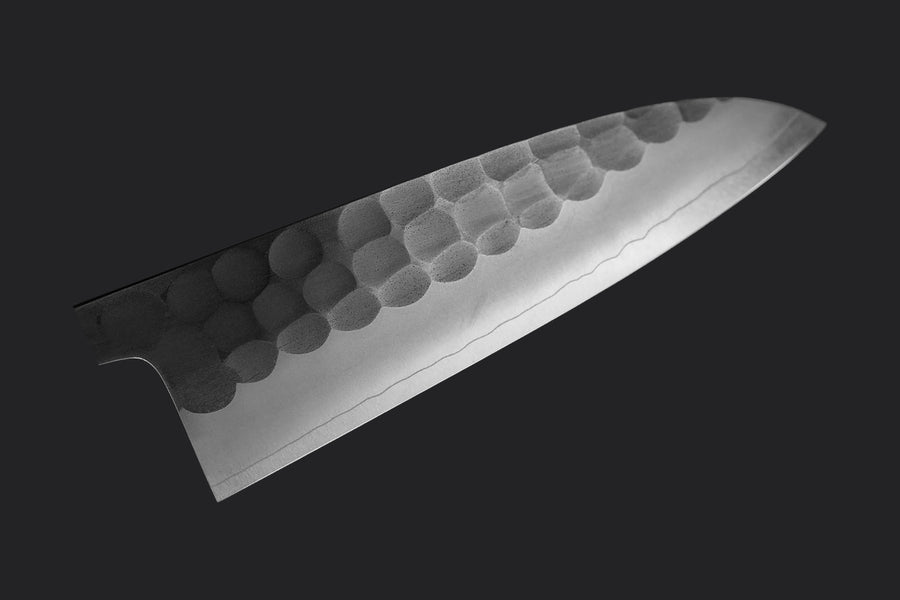
Nigara VG10 Damascus Tsuchime Santoku 175mm

Regular price $239.95

Sold out right now

Leave your email and we’ll send one message the moment it’s back in stock.

One email, no marketing. Privacy policy.

Availability

  • St Peters, NSW —
    2 Bishop St, Unit 2, St Peters NSW 2044
  • Crows Nest, NSW —
    107 West St, Shop 1, Crows Nest NSW 2065
    Pickup only
  • Prahran, VIC —
    180 Commercial Road, Shop 1, Prahran VIC 3181
    Pickup only
Detailed Specifications
Line Nigara VG10 Tsuchime Damascus
Profile Santoku / Santoku
Bevel Type Double Bevel
Weight 157 g | 5.5 oz
Edge Length 172 mm | 6 49/64″
Heel Height 50 mm | 1 31/32″
Width @ Heel 2.1 mm | 5/64″
Width @ Mid 2.1 mm | 5/64″
Width @ 1cm from Tip 1.1 mm | 3/64″
Steel VG10 | Stainless
Blade Construction Sanmai - Stainless Damascus Clad
Hardness (HRC) 59 - 61
Surface Finish Tsuchime
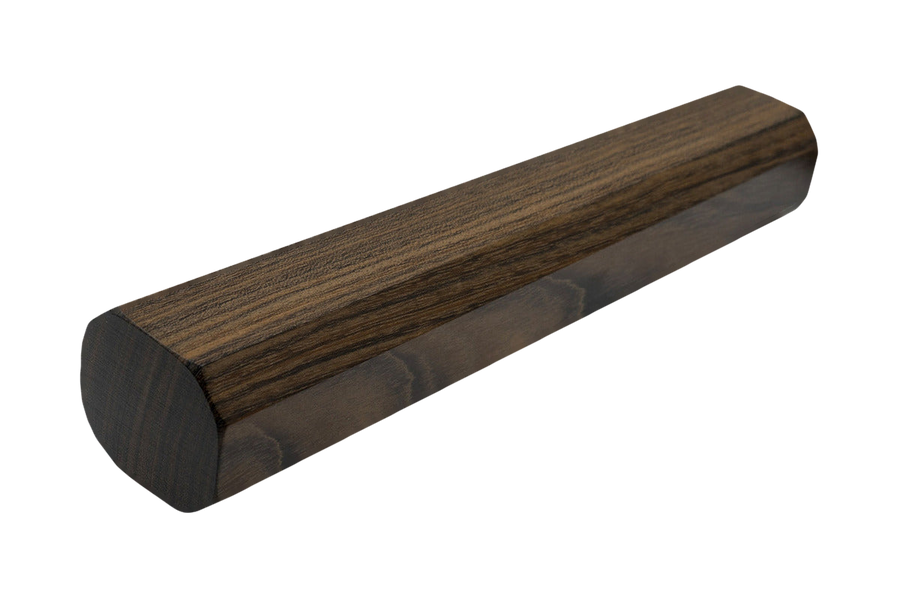
Handle Octagonal Black Chacate
Region Aomori
Best for
  • First-timers
  • Pro chefs
  • Enthusiasts
  • Free shipping for knives over AU$200 Australia wide.
  • World-wide shipping via DHL Express, 3 to 5 days.


The VG10 Tsuchime Damascus line offers an appealing blend of affordability and aesthetics.

The series introduces a unique hammered pattern (Tsuchime), adding an extra layer of visual allure. Renowned for their exceptional fit and finish, the VG10 series competes strongly as the top choice for an ultimate stainless steel knife in its price bracket. Featuring a forged VG-10 core steel hardened to 60-61hrc, VG10 offers a balanced stainless steel option ideal for a wide range of kitchen tasks.

Pros Cons
  • Budget friendly
  • Excellent performance
  • Workhorse grind
  • Easy to look after
  • On the thicker side
Care Instruction
  1. Don't cut hard things! Japanese knives are brittle so bone hacking is a NO NO!
  2. Wash with neutral detergent after use, and wipe dry;
  3. Please don't wash knife with dishwasher, it will damage the wood handle;
  4. Be careful not to leave the knife close to a heat source for a long time;
  5. It is a lot more dangerous to cut with a blunt knife than a sharp knife!
  6. It is best to sharpen a Japanese knife regularly on a waterstone.

Nigara

Hirosaki sword and knife artisan

Nigara (二唐刃物鍛造所) is a forge in Hirosaki, Aomori. Go Yoshizawa (吉澤剛) is its president and signs as the eighth generation; his father, Toshiju Yoshizawa (吉澤俊寿), the seventh generation, is chairman.

Nigara dates its line to 1803, when the family began as gunsmiths in the service of the Tsugaru domain, and it made Japanese swords for generations. In the Edo period the domain took it on as its weapons works, and it made even cannon and warships. After the Second World War the forge turned from military swords to farm tools and kitchen knives; in those years it made knives in winter and sold them in summer.

In the early Showa era a Nigara smith whose sword name was Kunitoshi (国俊) studied under Dr Kotaro Honda, director of Tohoku University's metals research institute. Nigara's company history says he excelled at sword making. He was recognised as a holder of an intangible cultural property of Aomori Prefecture and passed his skill on to the seventh generation. The sixth generation had no son, so Toshiju, a grandson through a daughter's line, joined as heir. The present company dates from 1949, and besides knives it does welding and steel construction work, with a welding department since 1963. Nigara showed at Maison et Objet in Paris in 2011 and at Ambiente in Frankfurt in 2013.

We have visited Nigara several times, once for a few days of hands-on training at the forge.

The Anmon Damascus knives we list come in SG2 as gyuto, kiritsuke gyuto, bunka, santoku, nakiri, petty and sujihiki, and as single-bevel yanagiba and takobiki in Blue 2 and Ginsan. SG2 tsuchime knives, kurouchi or matt migaki, cover gyuto, petty, santoku, nakiri, bunka and sujihiki, plus a double-bevel honesuki and a butcher. We also list VG10 Damascus tsuchime, Ginsan Kurozome Damascus and Aogami Super tsuchime knives, and an SPG STRIX tsuchime Damascus nakiri. The honyaki are Blue 2 with shaped hamon, as yanagiba, kiritsuke yanagiba and sakimaru, and a White 1 kiritsuke yanagiba.

“An Aomori knife company whose family made Japanese swords for generations, with an Anmon line of Damascus knives.”

Est. 1949 | 昭和24年
Known for Glamorous and innovative knife design, inherited forging skills.
Website nigaraknives.com Read more about Nigara

Nigara · Aomori

Knife details

Frequently asked questions

Gyuto or santoku: which should I choose?

Both are all-purpose Japanese knives, and for most home cooks either will handle the bulk of daily prep. The choice comes down to length, blade shape, and how you like to cut.

A gyuto is the Japanese chef's knife, with a gently curved edge that lets you rock and slide through cuts as well as chop. Tojiro's guide to Western knife shapes gives 150 to 210mm as the household size for a gyuto and up to 360mm for professional use. The extra length and pointed tip give you reach and versatility, from proteins to large produce.

Tojiro's guide to Japanese knife shapes gives 165 to 170mm as the household size for a santoku, which has a flatter profile and a rounded sheep's-foot tip. It rewards a straight up-and-down push cut, feels nimble in smaller hands or tight kitchens, and is the classic Japanese household knife.

Rule of thumb: choose a gyuto if you want one do-everything knife with more reach, or a santoku if you prefer a compact, easy-to-control blade. Plenty of our customers end up owning both.

Rock chop or up-and-down chop: which knife shape suits me?

Match the shape to your stroke. Rock chopping keeps the tip on the board and rolls the curved belly through the food, so a gyuto or a Western chef's knife suits it, and Japanese knives rock fine as long as you rock gently.

Up-and-down chopping, the Chinese style, wants a straight run of edge, so a nakiri, usuba, santoku or bunka suits it better; a curved edge chopped straight down easily leaves pieces joined. Neither shape is better; it depends on how you cut.

What does santoku mean?

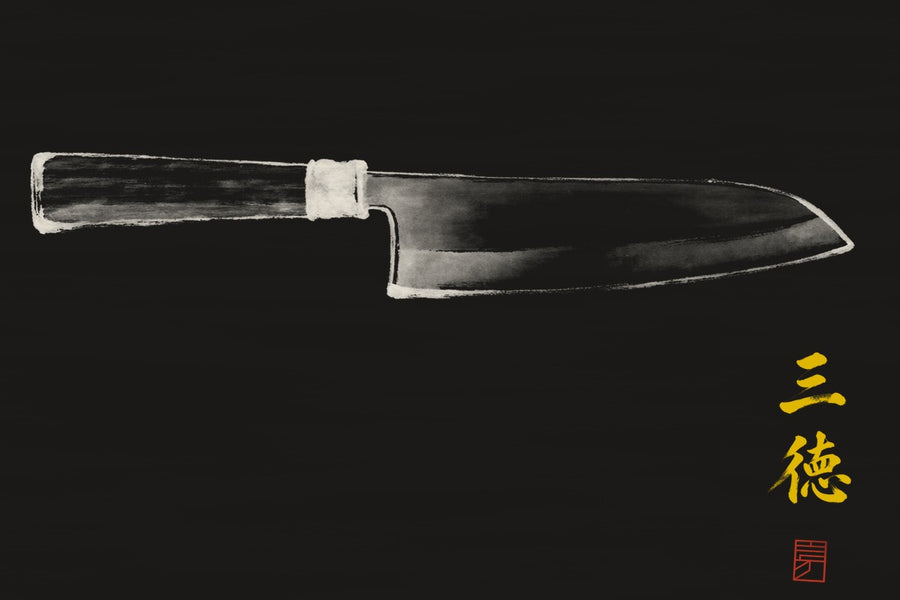
A Japanese dictionary explains the name of the santoku (三徳包丁) as coming from the three things it handles: meat, fish and vegetables. The same dictionary entry points from the santoku to the bunka (文化包丁), treating the two as one knife.

One Japanese knife maker guide distinguishes the two by the tip. It says that in the Showa era the bunka was made with its tip cut at an angle, and the santoku came after it by rounding that tip.

Does VG10 rust?

Yes, it can, though it rusts less readily. VG10 (V金10号) is a stainless steel, and stainless strictly means a steel that rusts less, not one that never rusts.

Takefu, which makes VG10, lists 15% chromium, above the 10.5% that defines stainless steel, and describes its corrosion resistance as excellent. Dry the knife after washing.

How hard is VG10?

Takefu, the steelmaker behind VG10, gives HRC 60 or more as a standard value. The hardness of a finished knife depends on its maker.

Takefu says the steel's 15% chromium, 1% molybdenum and 1.55% cobalt give it high hardness and a long-lasting edge, and that it is easy to sharpen.

How old is Nigara, and did it make swords?

The Nigara family line began in 1803, when the family served the Tsugaru domain as gunsmiths. For generations afterwards it made Japanese swords.

After the Second World War, the forge turned to blades for everyday life, including farm tools and kitchen knives.

Who leads Nigara today?

Go Yoshizawa, president of Nigara Hamono Forge, leads it today and signs as the eighth generation of the Nigara family line.

The company is Nigara Hamono Forge (二唐刃物鍛造所), in Kanazoku-machi, Hirosaki, Aomori.

Is Nigara a good knife maker?

We think so. Nigara's own company page says its family line began in 1803 as gunsmiths retained by the Tsugaru domain and made Japanese swords for generations, before turning to farm tools and kitchen knives after the Second World War.

We have visited Nigara several times, once for a few days of hands-on training with them, and we list its knives in steels such as SG2, Blue 2, Ginsan and VG10.

You May Also Like