PRAHRAN STORE NOW OPEN · THU–MON · 10AM–6PM

Kintaro  |  SKU: KATO_VGBDA_KGY210EB

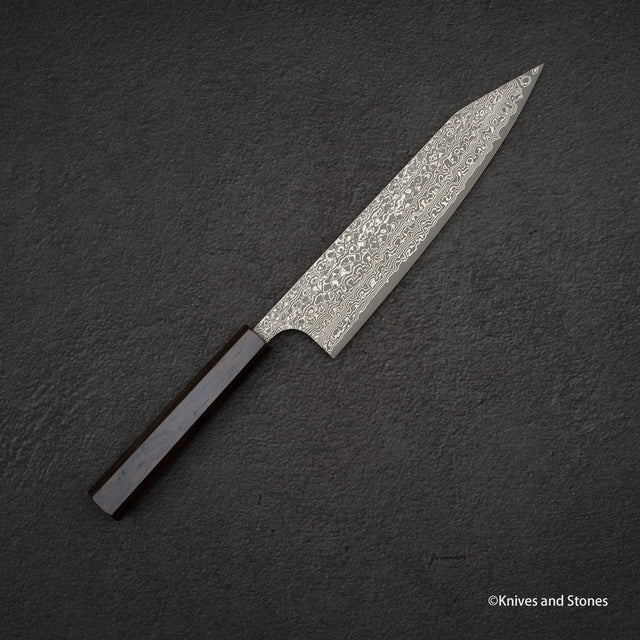
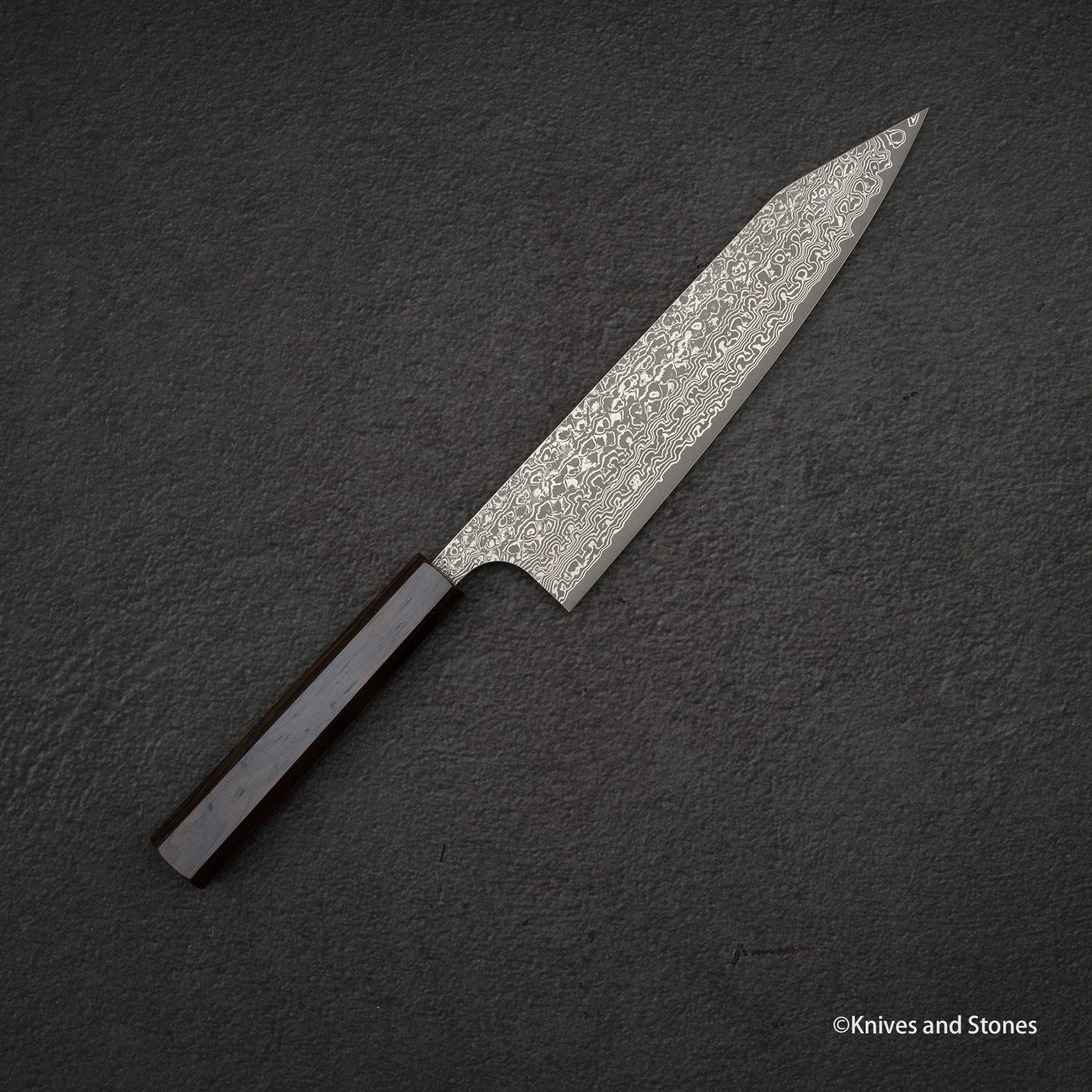
Yoshimi Kato VG10 Etched Damascus K-tip Gyuto 210mm Ebony Handle

Regular price $449.95

Sold out right now

Leave your email and we’ll send one message the moment it’s back in stock.

One email, no marketing. Privacy policy.

Availability

  • St Peters, NSW —
    2 Bishop St, Unit 2, St Peters NSW 2044
  • Crows Nest, NSW —
    107 West St, Shop 1, Crows Nest NSW 2065
    Pickup only
  • Prahran, VIC —
    180 Commercial Road, Shop 1, Prahran VIC 3181
    Pickup only
Detailed Specifications
Line Yoshimi Kato VG10 Kurozome Damascus
Profile K-tip Gyuto / K-tip chef's knife
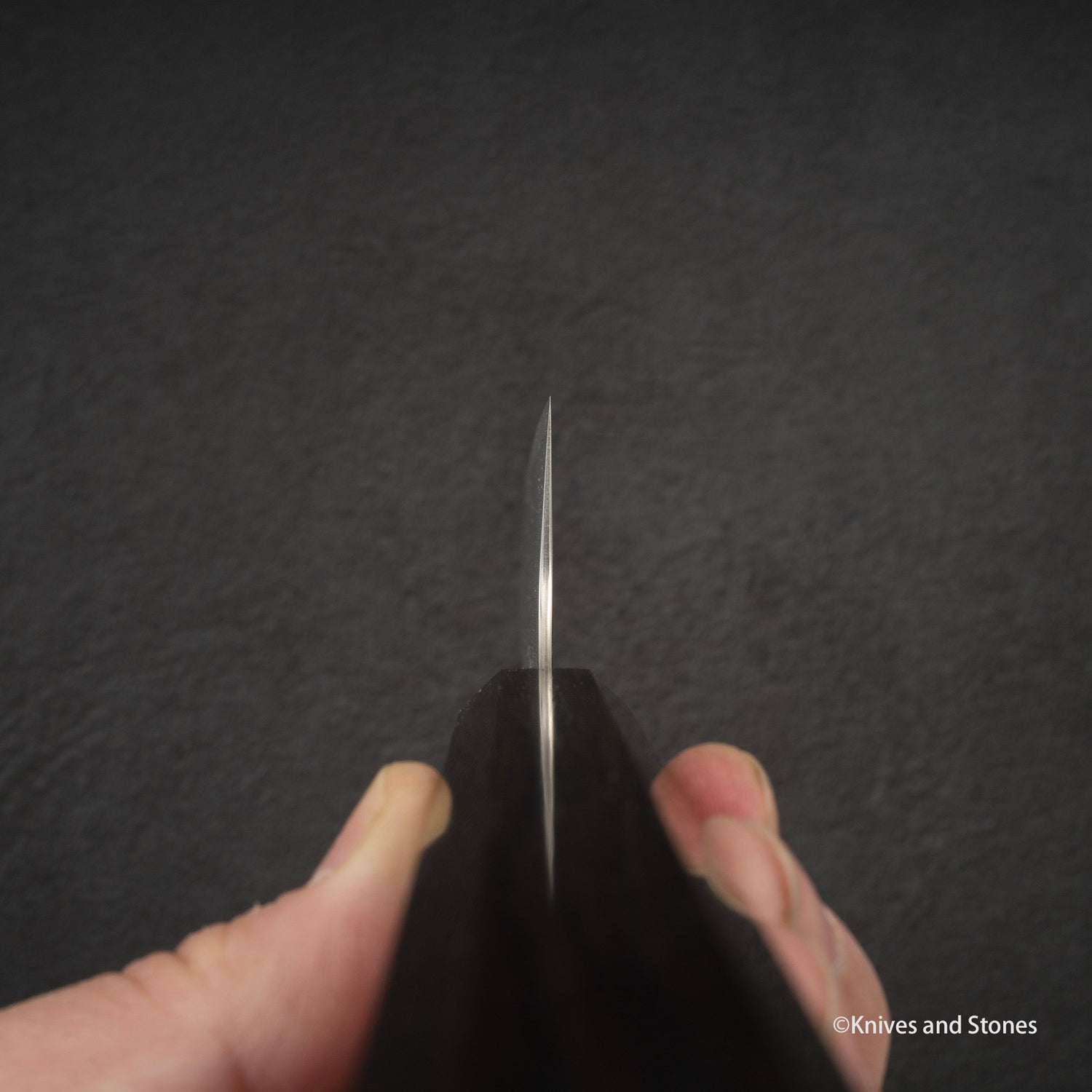
Bevel Type Double Bevel
Weight 164 g | 5.8 oz
Edge Length 215 mm | 8 15/32″
Heel Height 47 mm | 1 27/32″
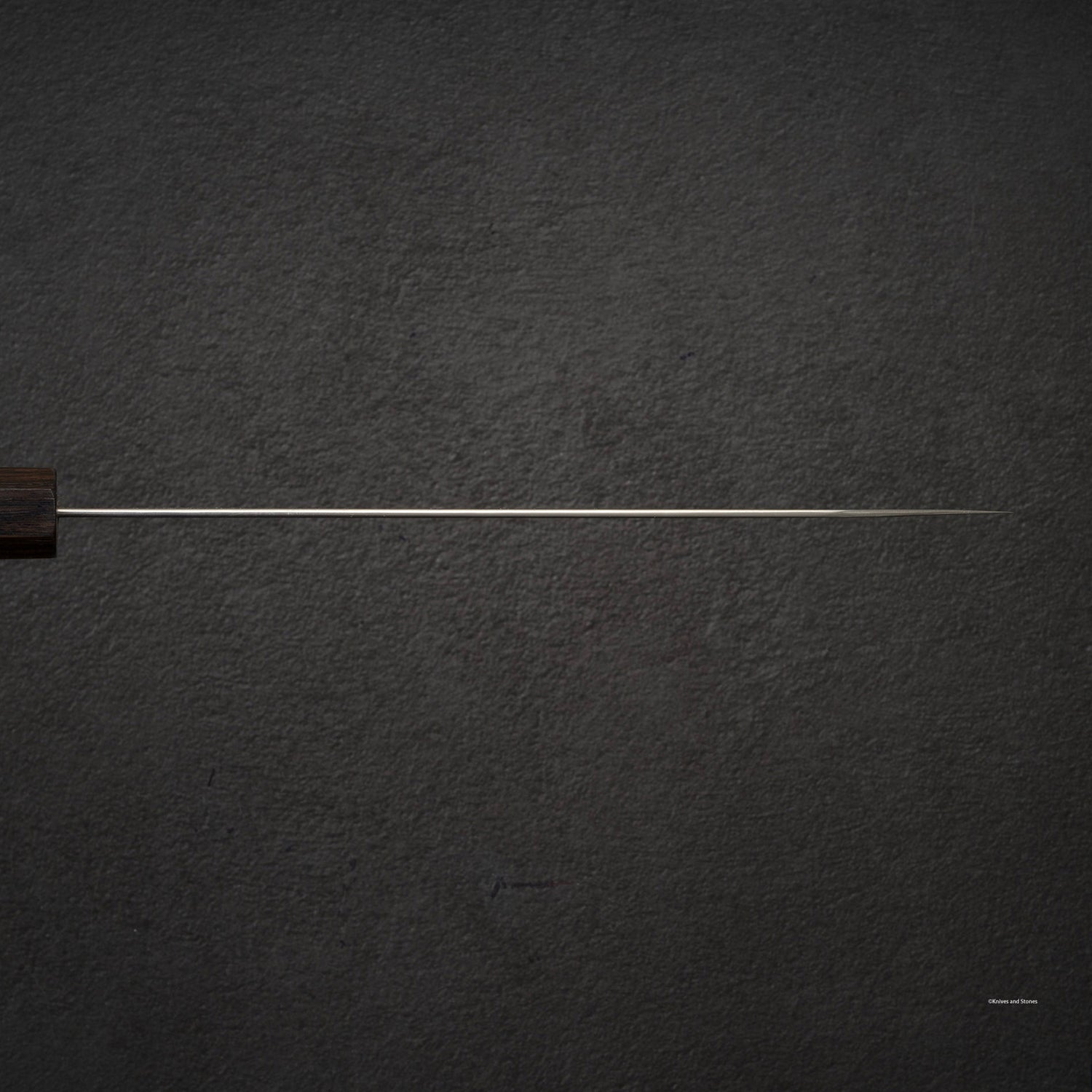
Width @ Heel 1.7 mm | 1/16″
Width @ Mid 2.0 mm | 5/64″
Width @ 1cm from Tip 0.5 mm | 1/64″
Steel VG10 | Stainless
Blade Construction Sanmai - Stainless Damascus Clad
Hardness (HRC) 59 - 61
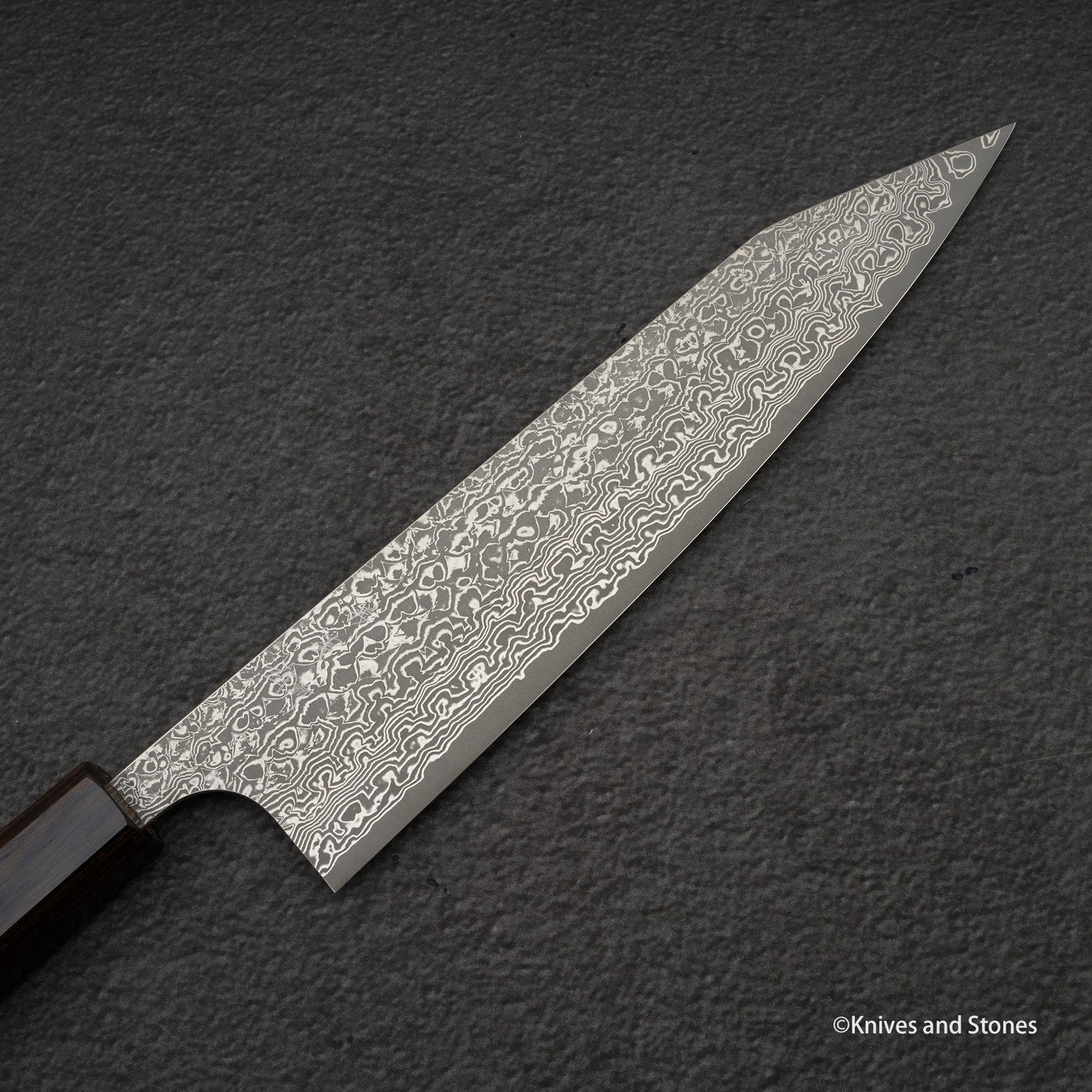
Surface Finish Etched
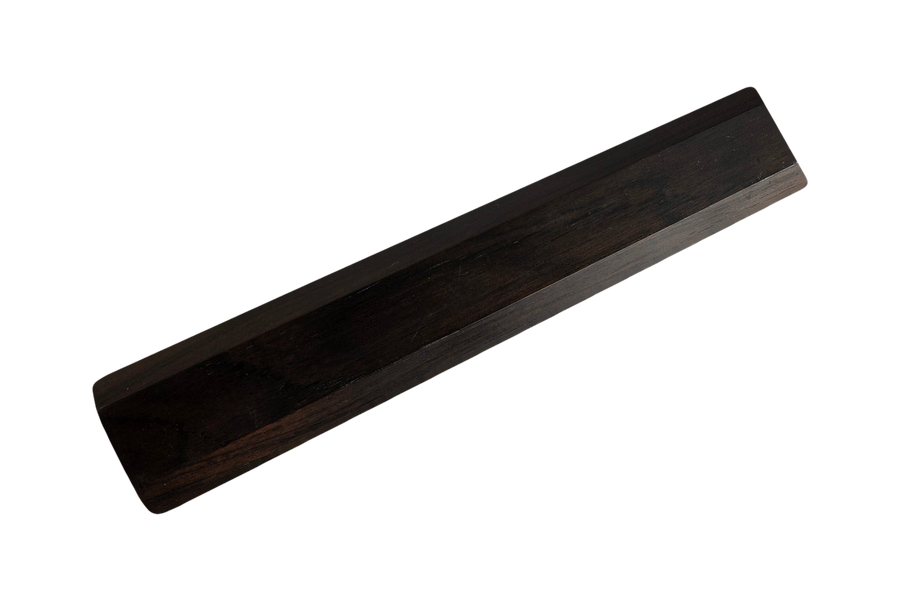
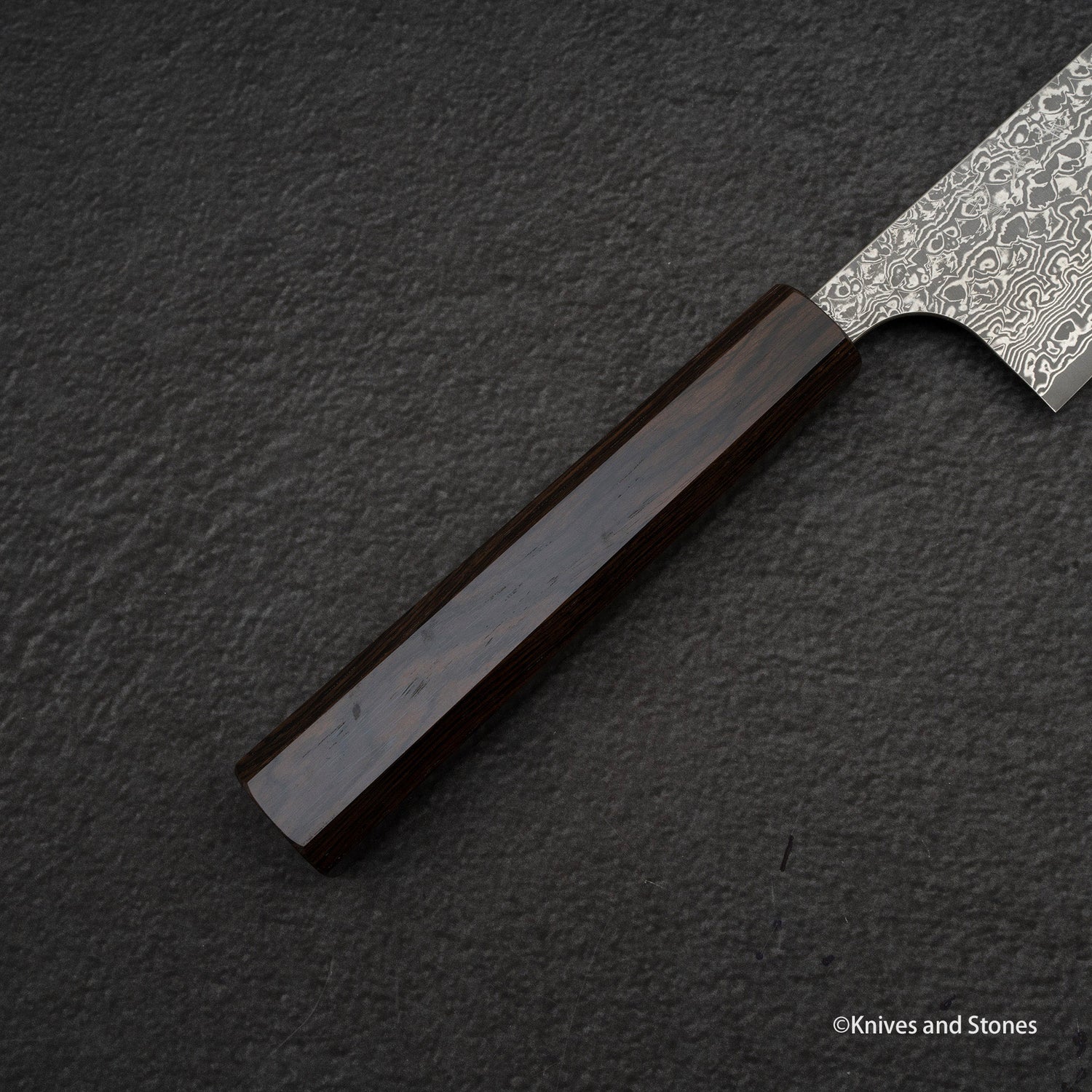
Handle Octagonal Ebony
Region Echizen
Best for
  • Enthusiasts
  • Pro chefs
  • Free shipping for knives over AU$200 Australia wide.
  • World-wide shipping via DHL Express, 3 to 5 days.


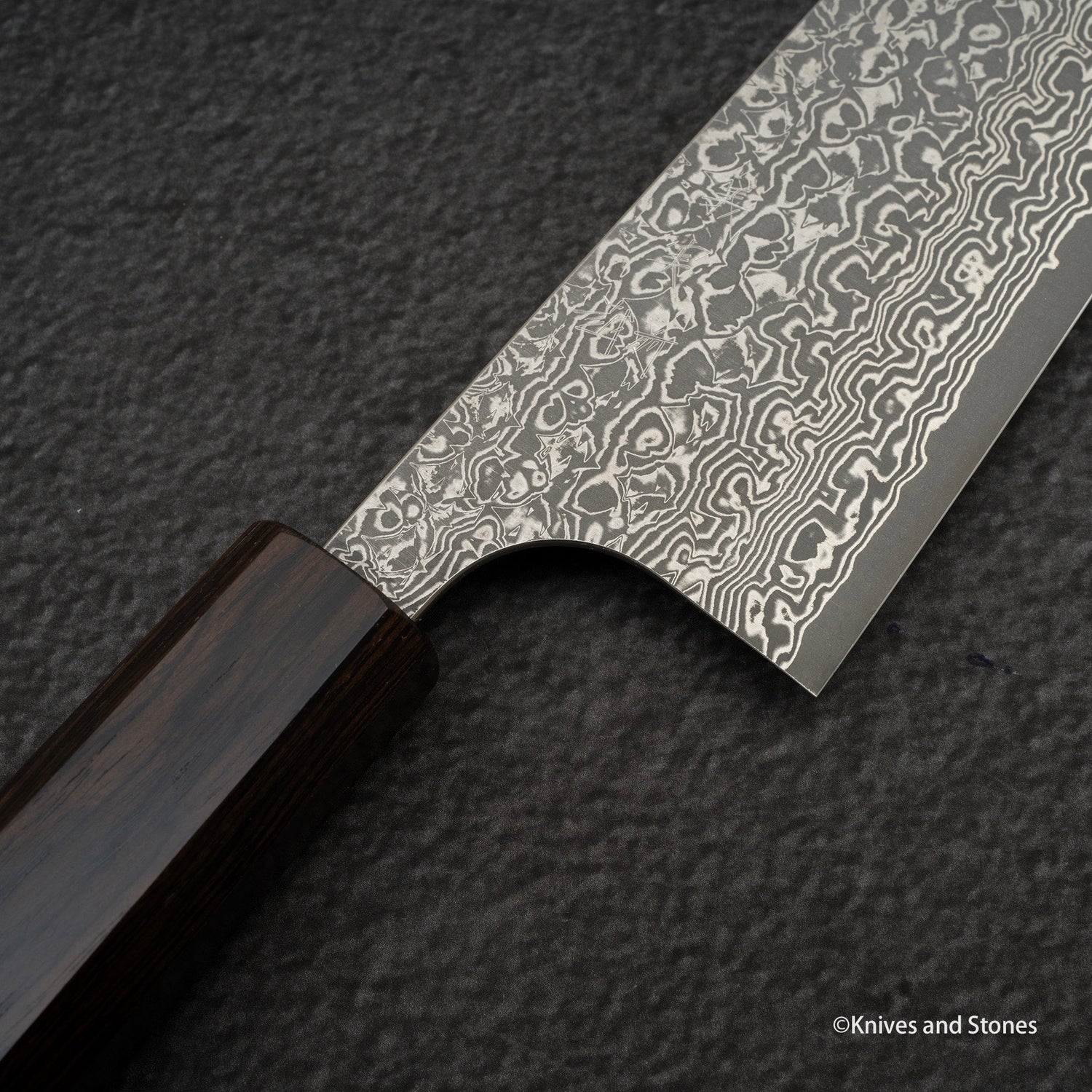
This VG10 line forged by Yoshimi Kato is one of the most elegant knife I've ever seen, the geometry, profile and finish are all dialed in precisely and combined into a package that offers great cutting performance and appearance.

As a managerial member of the Takefu Knife Village, Yoshimi Kato works closely with Yu Kurosaki, the current representative of this leading association in the industry. As a result, their knives shares many similarities like very thin grind, innovative finishing and high level of finish.

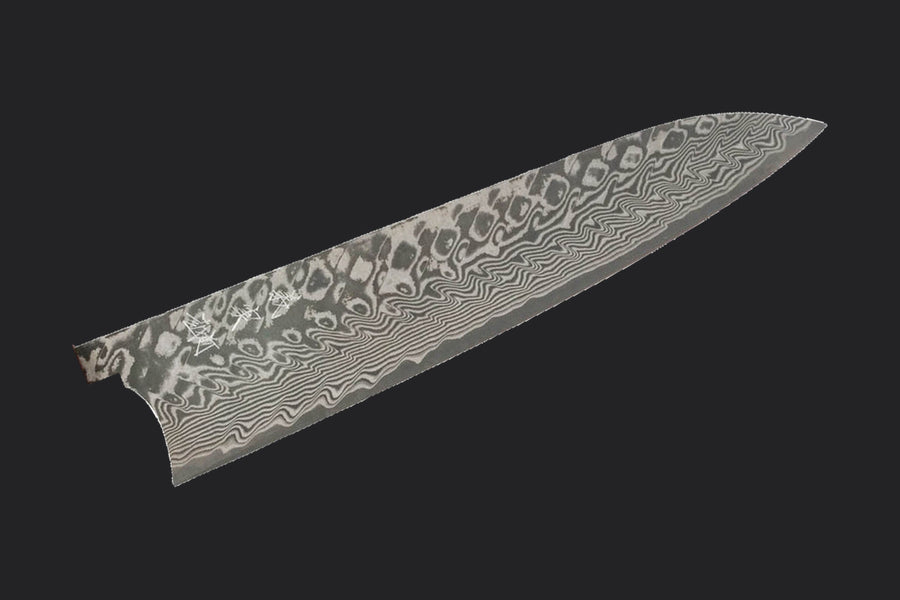
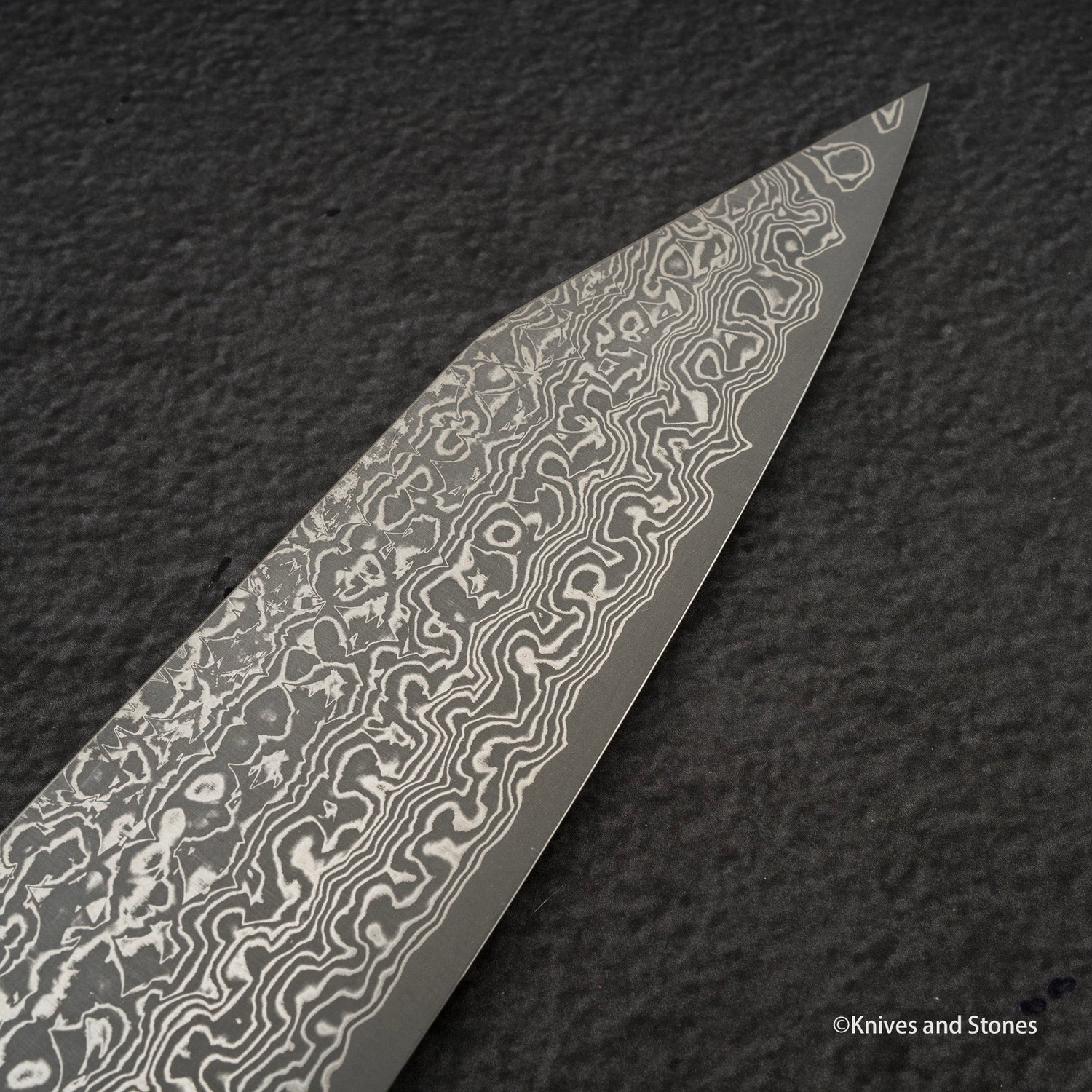
This line is a good representative of those features: the blades takes a slender profile, with a thin neck, the length is measured from the heel, which leads to a long, elegant knife which is good for slicing; the fit and finish is excellent, all the exposed corners are rounded and polished, with the spine being polished all the way to the tip; damascus pattern is uniform, paired with a Kurozome etching, leads to a dazzling look with quite a high contrast.

Besides the look, these thin blades cuts extremely well, due to the bevel that starts half way of the blade, there is nearly no sticking compair with other knife with same finish, the potato slice still automatically peel off naturally with a relatively thin slice. Spliting roots and slicing iup onion is a breeze, as the thin blade offers superb food penetration and minimal resistance throughout the cut.

One downside I can say about this line is the core steel, at its price, you can have a lot more options that use SG2 as core steel, which offers more edge retention and hardness compare to VG10. The etched finish can take a more obvious mark when scratched. However, by going one step down in core steel, you would gain a much higher level of craftsmanship, this knife is definitely ranked at the top for the users seek ultimate level of finish and wouldn't mind a different core steel.

Video Review

Pros Cons
  • Excellent performance
  • Thin behind the edge
  • Great artistic
  • High budget
  • Etched damascus can be hard to maintain
Care Instruction
  1. Don't cut hard things! Japanese knives are brittle so bone hacking is a NO NO!
  2. Wash with neutral detergent after use, and wipe dry;
  3. Please don't wash knife with dishwasher, it will damage the wood handle;
  4. Be careful not to leave the knife close to a heat source for a long time;
  5. It is a lot more dangerous to cut with a blunt knife than a sharp knife!
  6. It is best to sharpen a Japanese knife regularly on a waterstone.

Yoshimi Kato

Yoshimi Kato: Damascus knives from Takefu

Kato Knife Manufacturing Inc. is Yoshimi Kato's workshop in the Takefu Knife Village. The company was founded in May 1948, and Yoshimi Kato, its third-generation representative, began knife smithing in July 2012. The workshop works in hand-forged Damascus and heat treatment of high-end steels.

Read more

Kato Knife Manufacturing, or カトウ打刃物製作所, traces back to 1948, when the Kato family first set up in what later became the Takefu Knife Village cooperative. Hiroshi Kato (加藤 弘), the second generation, spent over fifty years at the anvil and helped found the cooperative itself.

Yoshimi is the company's third-generation representative and began knife smithing in July 2012.

His Damascus patterns are multi-layered, and his heat treatment is consistent across a wide range of steels, from SG2 and VG10 to Aogami Super and Ginsan. Every step of production happens in-house.

The Kintaro and Kanehiro lines are made at the Kato workshop, and they have a following among cooks who want both looks and cutting performance.

“Three generations of Echizen knife making at Takefu Knife Village.”

Est. 1948 | 昭和23年
Known for Hand-forged Damascus, masterful heat treatment of SG2 and Aogami Super
Website kato-knife-mfg.jp Read more about Yoshimi Kato

Yoshimi Kato · Echizen

Knife details

Frequently asked questions

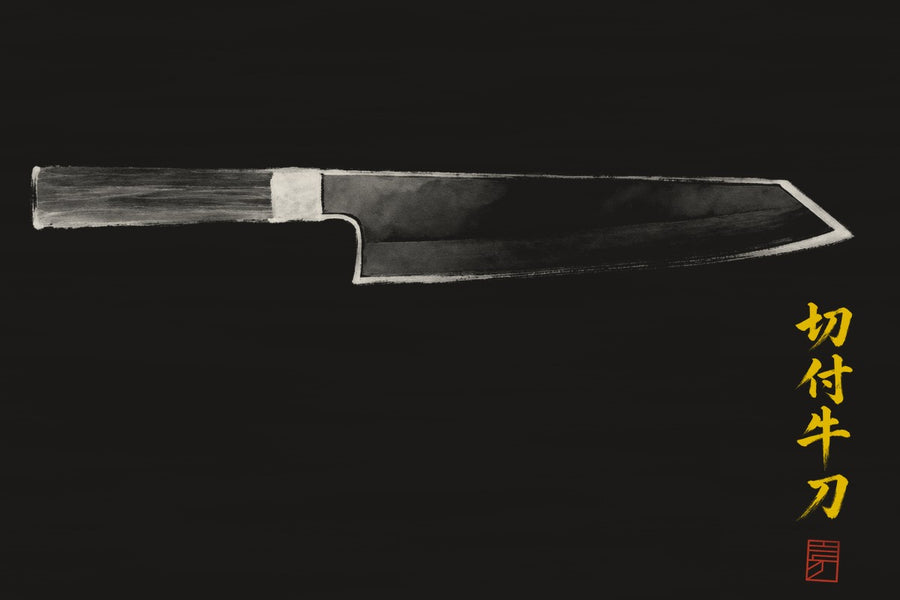
Is a K-tip Gyuto the same as a traditional Kiritsuke?

Not quite - and it is the single most common point of confusion when people shop for a kiritsuke. The two knives share the same striking angled, reverse-tanto tip, but underneath that tip they are very different tools.

A K-tip gyuto is normally a double-bevel knife: it is ground on both sides like any Western-style chef's knife, so it is forgiving to use, and sharpened exactly the way you would sharpen a normal gyuto. You get the dramatic kiritsuke look with the everyday usability of an all-purpose chef's knife.

A traditional kiritsuke, including the kiritsuke-yanagiba (slicer), is a single-bevel knife, ground on one side only. It is historically a master chef's knife: it takes real practice to use well, is set up for right-handed users by default, and needs single-bevel sharpening technique to maintain.

So if you want the kiritsuke silhouette with no learning curve, choose a K-tip gyuto. If you specifically want the traditional single-bevel discipline - and the precision it allows on fish and vegetables - choose a true kiritsuke. At Knives and Stones we stock both, and each product page tells you which construction you are looking at.

Does VG10 rust?

Yes, it can, though it rusts less readily. VG10 (V金10号) is a stainless steel, and stainless strictly means a steel that rusts less, not one that never rusts.

Takefu, which makes VG10, lists 15% chromium, above the 10.5% that defines stainless steel, and describes its corrosion resistance as excellent. Dry the knife after washing.

How hard is VG10?

Takefu, the steelmaker behind VG10, gives HRC 60 or more as a standard value. The hardness of a finished knife depends on its maker.

Takefu says the steel's 15% chromium, 1% molybdenum and 1.55% cobalt give it high hardness and a long-lasting edge, and that it is easy to sharpen.

Yoshimi Kato knives — what are they known for?

Yoshimi Kato is known for hand-forged Damascus knives with thin geometry and strong cutting performance, working primarily in SG2 and Aogami Super steels from his workshop in Echizen's Takefu Knife Village. He is the third-generation representative of Kato Knife Manufacturing, which was established in 1948. His reputation rests on precise heat treatment of premium steels and distinctive Damascus patterns.

Kato also produces knives for the Masakage brand. In recent years he has drawn inspiration from his friend Yu Kurosaki, another Takefu Knife Village smith, and developed newer designs such as the Hyo line. His new gallery and workshop recently opened next to Kurosaki's gallery in Takefu, reflecting the close creative relationship between the two makers.

Is Yoshimi Kato part of a knife-making family?

Yes. Yoshimi Kato is the third generation of a smithing house in Echizen, Fukui, founded in May 1948, and he is its representative today.

The company, Kato Uchihamono Seisakusho, is in Echizen City, with its knife department at Takefu Knife Village. The first generation founder was a certified traditional craftsman, and the second generation began knife smithing in 1949.

How is Yoshimi Kato's name written in Japanese?

The company writes his name 加藤義実, so that is the form on its own materials. The form 加藤義實 uses the traditional character for 実.

Both spellings name the same smith, so either search brings you to the same maker.

You May Also Like