PRAHRAN STORE NOW OPEN · THU–MON · 10AM–6PM

Masutani  |  SKU: MASU_SKDA_SA170_Green

Masutani Sekka VG10 Nashiji Damascus Santoku 170mm Western Handle

Sale price $127.98 Regular price $149.95
Color: Teal Handle

In Stock Now

Availability

  • St Peters, NSW —
    2 Bishop St, Unit 2, St Peters NSW 2044
  • Crows Nest, NSW —
    107 West St, Shop 1, Crows Nest NSW 2065
    Pickup only
  • Prahran, VIC —
    180 Commercial Road, Shop 1, Prahran VIC 3181
    Pickup only

Goes well with

Detailed Specifications
Line Masutani Sekka VG10 Nashiji Damascus
Profile Santoku / Santoku
Bevel Type Double Bevel
Weight 143 g | 5.0 oz
Edge Length 169 mm | 6 21/32″
Heel Height 42 mm | 1 21/32″
Width @ Heel 1.8 mm | 5/64″
Width @ Mid 1.8 mm | 5/64″
Width @ 1cm from Tip 1.4 mm | 1/16″
Steel VG10 | Stainless
Blade Construction Sanmai - Stainless Clad
Maker's hardening hardness 60 HRC or more
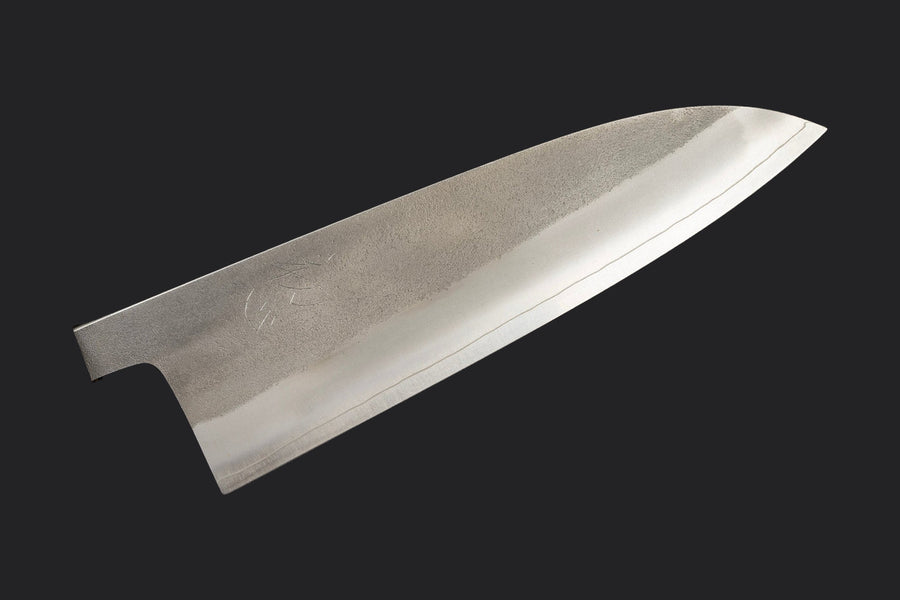
Surface Finish Nashiji
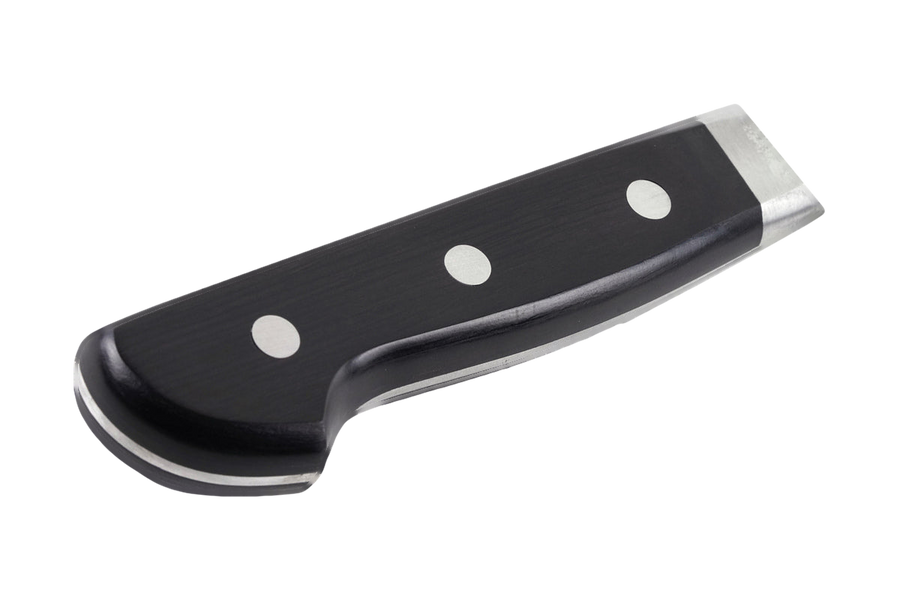
Handle Western Pakka Wood with Bolster
Region Echizen
Best for
  • First-timers
  • Gift buyers
  • Household

Free shipping for knives over AU$200 Australia wide.

World-wide shipping via DHL Express, 3 to 6 days (not available in the UK).


Sekka (雪華, Snowflake) is a name that earns its keep once you look closely at the blade. The Nashiji finish on this line isn't the uniform, smooth pear-skin texture you'd find on the VG1 — it's rougher and more irregular, scattered with deeper indentations and angular marks that sit across a matte, chalky surface. Beneath it, the Damascus cladding runs in tight, distinct parallel layers near the edge. Together they create something that genuinely resembles snow layered over a textured landscape — quiet, organic and surprisingly considered for a knife at this price.

The geometry follows Masutani's Echizen approach — a concave grind coming down from the Shinogi line to a thin edge, hand sharpened to a standard that most budget lines don't bother with. Food release is reliable when cutting ingredients with enough height to reach the Shinogi line, and the low thickness behind the edge means the knife enters most food without fuss. VG10 keeps maintenance simple and edge retention solid.

For first-timers and household cooks who want something with a bit more visual character than a plain stainless knife, the Sekka is a genuinely appealing option at a price that leaves little to complain about.

Pros Cons
  • Excellent performance
  • Budget friendly
  • Thin behind the edge
  • A little bit brittle
Care Instruction
  1. Don't cut hard things! Japanese knives are brittle so bone hacking is a NO NO!
  2. Wash with neutral detergent after use, and wipe dry;
  3. Please don't wash knife with dishwasher, it will damage the wood handle;
  4. Be careful not to leave the knife close to a heat source for a long time;
  5. It is a lot more dangerous to cut with a blunt knife than a sharp knife!
  6. It is best to sharpen a Japanese knife regularly on a waterstone.

Masutani

Masutani Hamono, a knife workshop in Echizen

Masutani Hamono Seisaku (増谷刃物製作) is a knife workshop in Takefu, Echizen City, Fukui, headed by its president, Kunio Masutani, whom we have met; it forges under its own mark. The company says it has carried Echizen's forged-knife tradition through four generations, and that it makes knives of the kind professionals use as knives for the home, by its craftsmen's hands: thin with spring, tough and supple.

Read more

Masutani sets out its own range as VG1 stainless in tsuchime, nashiji and migaki finishes, and VG10 stainless in a layered Damascus pattern. Its shop page adds a new Sekka (雪華) pattern and says the VG10 stainless it uses keeps its edge long.

Among the lines we list, the VG10 Damascus knives are Kokuryu, in nakiri, slim nakiri, tsuchime gyuto, tsuchime santoku and small santoku, with a wa or Western handle; Sairyu (彩流), in gyuto, nakiri, santoku and small santoku; and a Sekka VG10 nashiji Damascus santoku.

In VG1 we list nashiji and tsuchime knives in gyuto, santoku, small santoku, nakiri and slim nakiri, and there is a chef knife starter set.

“A Takefu knife workshop in its fourth generation, by its own account.”

Est. 1974 | 昭和49年
Known for VG1 and VG10 stainless knives, including Damascus
Website masutani-hamono.shop Read more about Masutani

Masutani · Echizen

Knife details

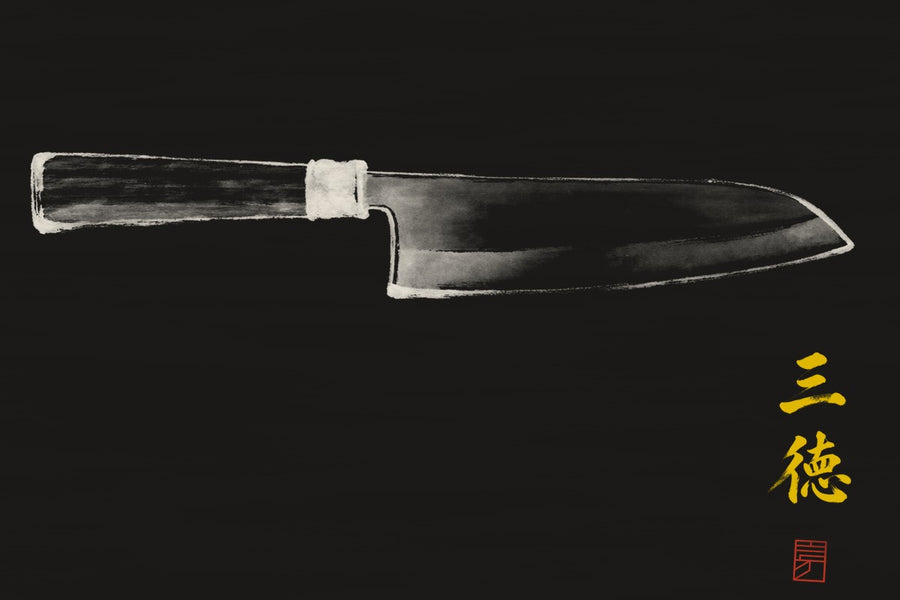
Santoku — knife profile
Profile

Santoku

三徳

Santoku · Double bevel

An all-purpose knife for meat, fish and vegetables, with a wide blade and a rounded tip.

Read more
Steel properties
  1. Hardness Good
  2. Edge retention Good
  3. Toughness Good
  4. Rust resistance High
  5. Ease of sharpening Good
  6. Sharpness Good
Our ratings, inferred from published lab tests and composition.

Our edge-retention grade is a kitchen rating. It weighs the hardness each steel is sold at, which keeps a thin edge from rolling, twice as heavily as lab wear tests, and the final grade is our judgment from selling and sharpening these knives for over a decade. Lab card-cutting tests measure abrasive wear only, so they can rank carbon steels lower. Tap ? for the lab figure.

Steel

VG10

V金10

Stainless · Takefu Special Steel

Takefu stainless, 1% carbon, 15% chromium, 1.55% cobalt. Easy to sharpen.

Read more
CladdingCoreClad line
Construction

Sanmai - Stainless Clad

三枚

3 layers · stainless clad

Hard core between two stainless layers, bare only at the edge; the cladding resists rust.

Read more
Nashiji — blade surface finish
Finish

Nashiji

Pear-skin texture

A fine matte texture like the skin of a nashi pear. It may help food release.

Read more
Western Pakka Wood with Bolster handle
Handle

Western Pakka Wood with Bolster

Western with bolster

Pakka wood western grip with a bolster. Resin-laminated wood resists water; entry-level.

Frequently asked questions

Gyuto or santoku: which should I choose?

The gyuto came to Japan with the beef-eating culture of the Meiji era, and that is where its name comes from. Tojiro says it is used for all kinds of cooking, which is why it is also called the chef's knife.

The santoku is a household knife that combines the good points of the nakiri and the gyuto. Tojiro describes it as all-purpose, from vegetables to meat and fish, double-bevel and built on the same construction as a Western knife.

Choose a gyuto if you want more length and reach. Choose a santoku if you want a shorter all-purpose knife. Tojiro's own size figures: gyuto 150 to 210mm for household use and up to 360mm for professional use, santoku 165 to 170mm for household use.

Rock chop or up-and-down chop: which knife shape suits me?

Match the shape to your stroke. Rock chopping keeps the tip on the board and rolls the curved belly through the food, so a gyuto or a Western chef's knife suits it, and Japanese knives rock fine as long as you rock gently.

Up-and-down chopping, the Chinese style, wants a straight run of edge, so a nakiri, usuba, santoku or bunka suits it better; a curved edge chopped straight down easily leaves pieces joined. Neither shape is better; it depends on how you cut.

What does santoku mean?

A Japanese dictionary explains the name of the santoku (三徳包丁) as coming from the three things it handles: meat, fish and vegetables. The same dictionary entry points from the santoku to the bunka (文化包丁), treating the two as one knife.

One Japanese knife maker guide distinguishes the two by the tip. It says that in the Showa era the bunka was made with its tip cut at an angle, and the santoku came after it by rounding that tip.

Does VG10 rust?

Yes, it can. Takefu, which makes VG10 (V金10), lists it among its stainless steels, and the JSSA notes that stainless strictly means rust-resistant, not rust-proof.

Takefu lists VG10's chromium content as 15% and describes its corrosion resistance as excellent. We recommend drying the knife after washing.

How hard is VG10?

Takefu, the steelmaker behind VG10, gives HRC 60 or more as its hardening hardness, measured straight after quenching. The hardness of a finished knife depends on its maker.

Takefu says the steel's 15% chromium, 1% molybdenum and 1.55% cobalt give it high hardness and a long-lasting edge, and that it is easy to sharpen.

What is the difference between VG10 and SG2?

Both are Takefu blade steels, and they differ in class and in what Takefu publishes about each. Takefu lists VG10 as a stainless steel with 1.00% carbon, 15.00% chromium, 1.00% molybdenum, 0.25% vanadium and 1.55% cobalt, at a hardening hardness of HRC 60 or more.

Takefu describes SG2, its Super Gold 2, as a blade steel created by powder metallurgy, lists its composition as not disclosed, and SG2 runs 61 to 65 HRC depending on the maker. Takefu also calls SG2 a powdered stainless high-speed steel.

Is VG-10 a good steel for a first Japanese knife?

Yes. VG-10 is our default suggestion for a first Japanese knife, because it is stainless and easy to sharpen, and it holds a good working edge through everyday home cooking.

VG-10 is made by Takefu Special Steel, with about 1% carbon, 15% chromium and 1.55% cobalt, and is usually hardened to around 60 HRC. Takefu describes it as corrosion resistant and easy to sharpen. Day to day you rinse it and wipe it dry, with none of the rust watching carbon steel asks for.

It is also a kind steel to learn sharpening on. It takes an edge readily on a basic waterstone, so you can feel when your technique is working. A harder steel such as SG2 holds its edge longer but is less forgiving on the stone, as our VG-10 vs SG2 comparison explains.

Stainless steel can still stain: VG-10 will spot if it is left wet with acidic food on the edge, and it should never go in the dishwasher. Like any hard, thin Japanese edge, it should also stay away from bones, frozen food and glass boards. If your household is rough on knives, the slightly softer AUS-10 is the safer choice.

Steel is only part of the decision. Heat treatment and grind change how the same VG-10 cuts from one maker to the next, so choose the shape and size first. Our first Japanese knife guide walks through that.

How many generations has Masutani been making knives?

Four. Masutani's own page says it has carried the 700-year tradition of Echizen forged knives, Echizen uchihamono, across four generations.

The workshop, 増谷刃物製作, works in Takefu, Echizen City, Fukui.