PRAHRAN STORE NOW OPEN · THU–MON · 10AM–6PM

Anryu  |  SKU: ANRY_B2TS_PE150_EB

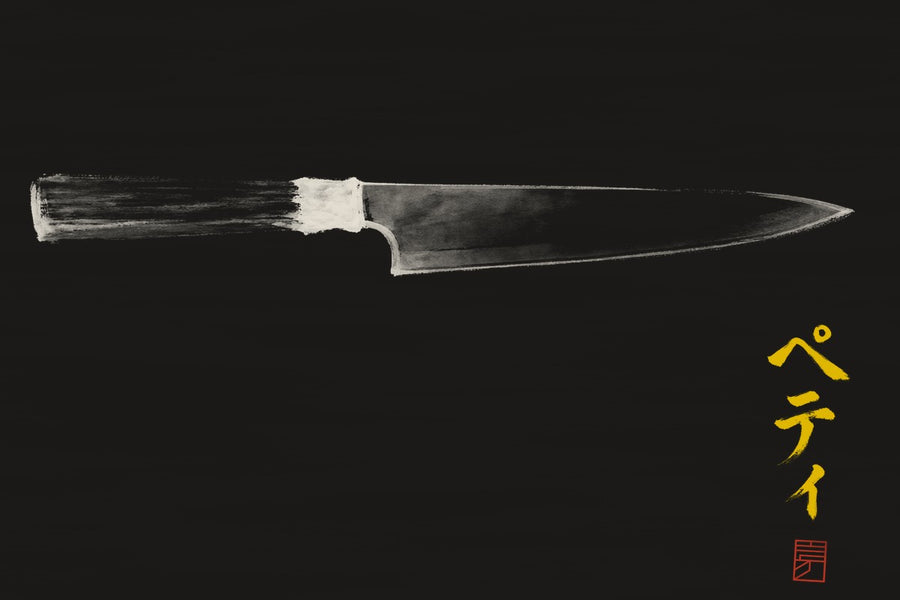
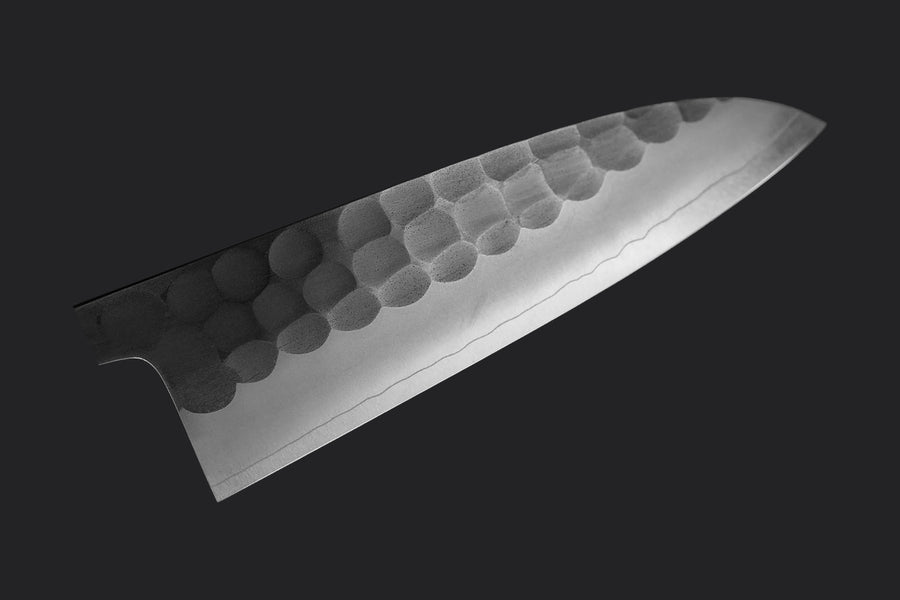
Anryu Blue 2 Tsuchime Petty 150 mm

Regular price $219.95

IMPORTANT: Carbon steel knives can rust or patina quickly if not cared for properly. They require regular cleaning, drying, and oiling. If you are unfamiliar with carbon steel maintenance, we recommend choosing a stainless steel option instead.

Sold out right now

Leave your email and we’ll send one message the moment it’s back in stock.

One email, no marketing. Privacy policy.

Availability

  • St Peters, NSW —
    2 Bishop St, Unit 2, St Peters NSW 2044
  • Crows Nest, NSW —
    107 West St, Shop 1, Crows Nest NSW 2065
    Pickup only
  • Prahran, VIC —
    180 Commercial Road, Shop 1, Prahran VIC 3181
    Pickup only
Detailed Specifications
Line Anryu Blue 2 Tsuchime Stainless Clad
Profile Petty / Utility knife
Bevel Type Double Bevel
Weight 93 g | 3.3 oz
Edge Length 150 mm | 5 29/32″
Heel Height 34 mm | 1 11/32″
Width @ Heel 3.9 mm | 5/32″
Width @ Mid 1.7 mm | 1/16″
Width @ 1cm from Tip 0.9 mm | 1/32″
Steel Blue 2 / Aogami #2 | Carbon
Blade Construction Sanmai - Stainless Clad
Hardness (HRC) 61 - 63
Surface Finish Tsuchime
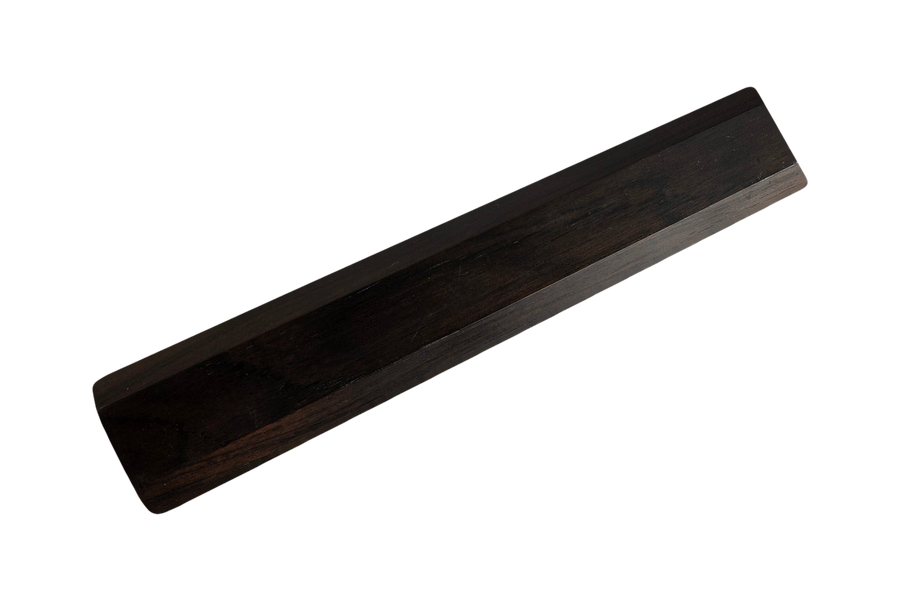
Handle Octagonal Ebony
Region Echizen
Best for
  • Pro chefs
  • Students
  • Enthusiasts
  • Free shipping for knives over AU$200 Australia wide.
  • World-wide shipping via DHL Express, 3 to 5 days.


This line forged by Anryu Hamono really displays what a very experience craftsman can bring to you when it comes to knifemaking. It combines the wicked edge that a carbon steel can obtain, the ease of maintenance of the stainless clad and a whole lot of hand forging features that really gives a knife some "soul", all at a very approachable price.

Takumi Ikeda(池田 拓視), the fifth generation blacksmith of Anryu Hamono was trained under the guidance of Katsushige Anryu(安立 勝重). Anryu san has been forging in this industry ever since 1981, and he is still work in the workshop working on some less labour intensive tasks with all of his white hair to this date. That many years of forging have undoubtly given his abundant knowledge that result in knives with amazing performance.

The geometry is something we cannot avoid talking with Anryu's knives, they all have a very thick spine near the handle, thicker than most of the Yanagiba, but this tapers down quickly into a rather thin blade. To obtain this kind of geometry require extensive experience in forging and cannot be done by machine, that means the craftsmen at Anryu Hamono put in quite some time to get each of the blade to their desired shape.

The benefit of this intricate geometry and material distribution is better to be felt in hand than told, but to put it in words, a concentrated mass around the pinch grip is that you can move the tip easily will less mass at the end, but at the same time the weight near your hand ensures the blade won't feel like a piece of paper, which increase stability. Long story short, these blades handles like Porsches, nimble but determined and precise.

Matching the mamzing handling is a equally amazing sharpness, the choice of Blue 2 found a good balance in the spectrum of Hitachi Metal carbon steels. It has a superior edge retention compare to the White 2 steel but kept most of the classic carbon steel "Flavour"(edge finess and ease of sharpening) unlike the Blue Super. The Sabre grind and the micro edge allows these blades to penetrate right into the surface and drop through them without much resistance, it is so nice to cut with Anryu knives that I would say the Kireaji(切れ味, Overall feel of cutting) is on par with Yoshikane knives, which are known for their performance.

Anryu Knives are really something that flew under the radars of many people, the amount of time and the level of skill that result them is incredible. This Migaki Tsuchime line offers you a shiny knife with high level of craftsmanship, amazing handling and experience and little compromises on maintainability, it is one of the few knives that I would say is being sold for too cheap.

Pros Cons
  • Budget friendly
  • Excellent performance
  • Great OOTB
  • Prone to rust
  • Need extra care
Care Instruction
  1. Don't cut hard things! Japanese knives are brittle so bone hacking is a NO NO!
  2. Wash with neutral detergent after use, and wipe dry;
  3. Please don't wash knife with dishwasher, it will damage the wood handle;
  4. Be careful not to leave the knife close to a heat source for a long time;
  5. It is a lot more dangerous to cut with a blunt knife than a sharp knife!
  6. It is best to sharpen a Japanese knife regularly on a waterstone.
  7. Oil the (carbon) knife if storing for an extended period of time to prevent rust.

Anryu Hamono

Anryu Hamono (安立打刃物), Echizen

Anryu Hamono (安立打刃物) is an Echizen workshop listed by Takefu Knife Village. The Village's page lists five generations: Hanzaburo Anryu, who established it in 1873; Shimanosuke Anryu, from 1930 to 1947; Shouri Anryu, from 1947 to 1981; Katsushige Anryu, from 1981 to 2020; and Takumi Ikeda, a certified traditional craftsman, from 2021.

Read more

According to the same page, the company took the name 安立打刃物 in January 2021.

We stock its Aogami Super kurouchi knives and its Blue 2 tsuchime knives.

“An Echizen workshop that Takefu Knife Village lists across five generations since 1873.”

Est. 1873 | 明治6年
Known for Aogami Super kurouchi and Blue 2 tsuchime knives
Website takefu-knifevillage.jp Instagram @takumi_ikeda Read more about Anryu Hamono

Anryu Hamono · Echizen

Knife details

Frequently asked questions

What is a petty knife and when do I need one?

A petty knife is a small Japanese utility knife, typically with a blade between 120mm and 180mm, designed for precision tasks like peeling, trimming, and slicing fruits and vegetables. You need one when your main chef’s knife feels too large for detail work, think deveining shrimp, cutting garnishes, or any in-hand peeling where a bigger blade gets in the way. Its slightly longer and slimmer profile than a Western paring knife gives you more control for intricate cuts without sacrificing the nimble feel you want for small jobs. If you regularly find yourself reaching for a smaller blade for finishing work, a petty fills that gap cleanly.

A petty is not a replacement for a gyuto or santoku. It lacks the blade length and belly for efficient chopping, rocking, or breaking down larger proteins. If your work is mostly bulk prep, like dicing onions or slicing roasts, a petty will feel slow and underpowered. It also won’t handle heavy tasks like splitting bones or prying, so treat it as a precision tool, not an all-rounder.

The petty’s role in a Japanese kitchen is as the smaller counterpart to the gyuto, built for tasks where a full-size blade is clumsy. At Knives and Stones, the petty category covers a range of steels including VG10, White#2, Swedish Steel, VG5, SG2, and MV, from makers like Sakai Takayuki, Masamoto Sohonten, Ryusen, Nigara, Hatsukokoro, and Sentan. Most are double-beveled, and the blade length runs from 120mm to 180mm, which is what gives it that balance of reach and precision. For more on how this fits into your knife kit, see the Knives and Stones Education Centre.

How long is a petty knife?

Petty knife lengths vary by maker: KAI's guide defines a petty (ペティナイフ) as a small knife with a narrow blade measuring 150 mm or under. Its table gives 90 to 150 mm, and it describes the shape as a smaller gyuto with a pointed tip.

We list petty knives from 70 mm to 165 mm, including lengths above the limit used in KAI's guide.

Will a carbon steel knife rust, and how do I look after it?

Yes, carbon steels such as Aogami (Blue) and Shirogami (White) are not stainless steels, so left wet they can spot or rust.

Care is simple once it becomes habit. Wipe the blade as you go, especially after acidic food like citrus, tomato or onion. When you finish, wash it in warm water with a little soap and dry it straight away with a towel. Do not let it air dry, leave it in the sink or the dish rack, or put it in the dishwasher. Store it dry: on a magnetic strip, in a saya or in a block in a dry spot.

If the knife will sit unused for a while, wipe on a thin layer of oil before storing. In our video James shows that mineral oil can stand in for camellia (tsubaki) oil, and he picks one labelled medical grade; we list the Kitchen Knife / Cutting Board Mineral Oil Medical Grade for this. If you find light rust, lift it with a rust eraser and a little water, then dry and oil the blade; we list the CKK and Naniwa rust erasers.

What is the difference between Blue 2 and White 2 steel?

Proterial lists 1.05 to 1.15% carbon for both steels; its Blue 2 table lists 0.20 to 0.50% chromium and 1.00 to 1.50% tungsten, while its White 2 table lists neither.

Proterial describes White 2 as a carbon steel with minimum impurities and high hardness, and Blue 2 as an alloy steel with tungsten and chromium to improve heat-treatment properties and wear resistance, with a hardening hardness of over 60 HRC for both. In its Japanese materials, Proterial calls its Aogami (青紙) steels high-carbon steel (高炭素鋼). Neither steel is close to the JSSA's 10.5% minimum for stainless.

Is Anryu still making knives after Katsushige Anryu?

Yes. Takefu Knife Village lists Takumi Ikeda as the workshop's fifth generation from 2021, after the fourth generation, Katsushige Anryu, who led it from 1981 to 2020.

The workshop was established in Echizen in 1873 and took the name 安立打刃物 in January 2021. Ikeda is a certified traditional craftsman (伝統工芸士).

You May Also Like