PRAHRAN STORE NOW OPEN · THU–MON · 10AM–6PM

Myojin Riki  |  SKU: MYOJ_G3UKB_PE150

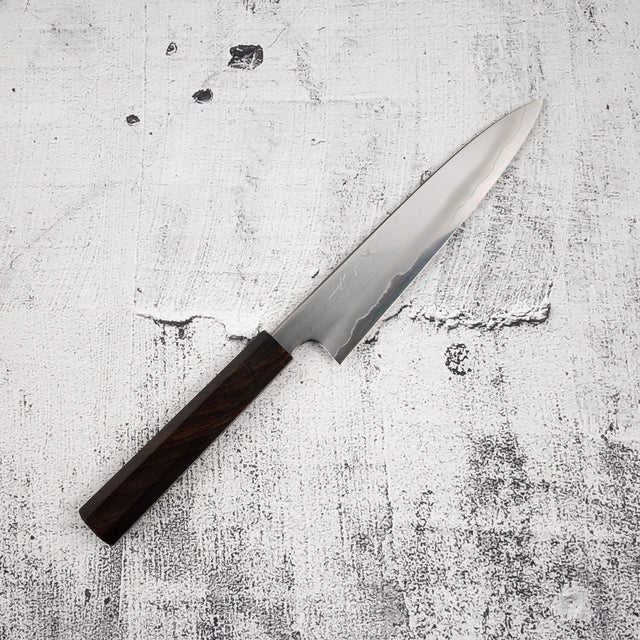
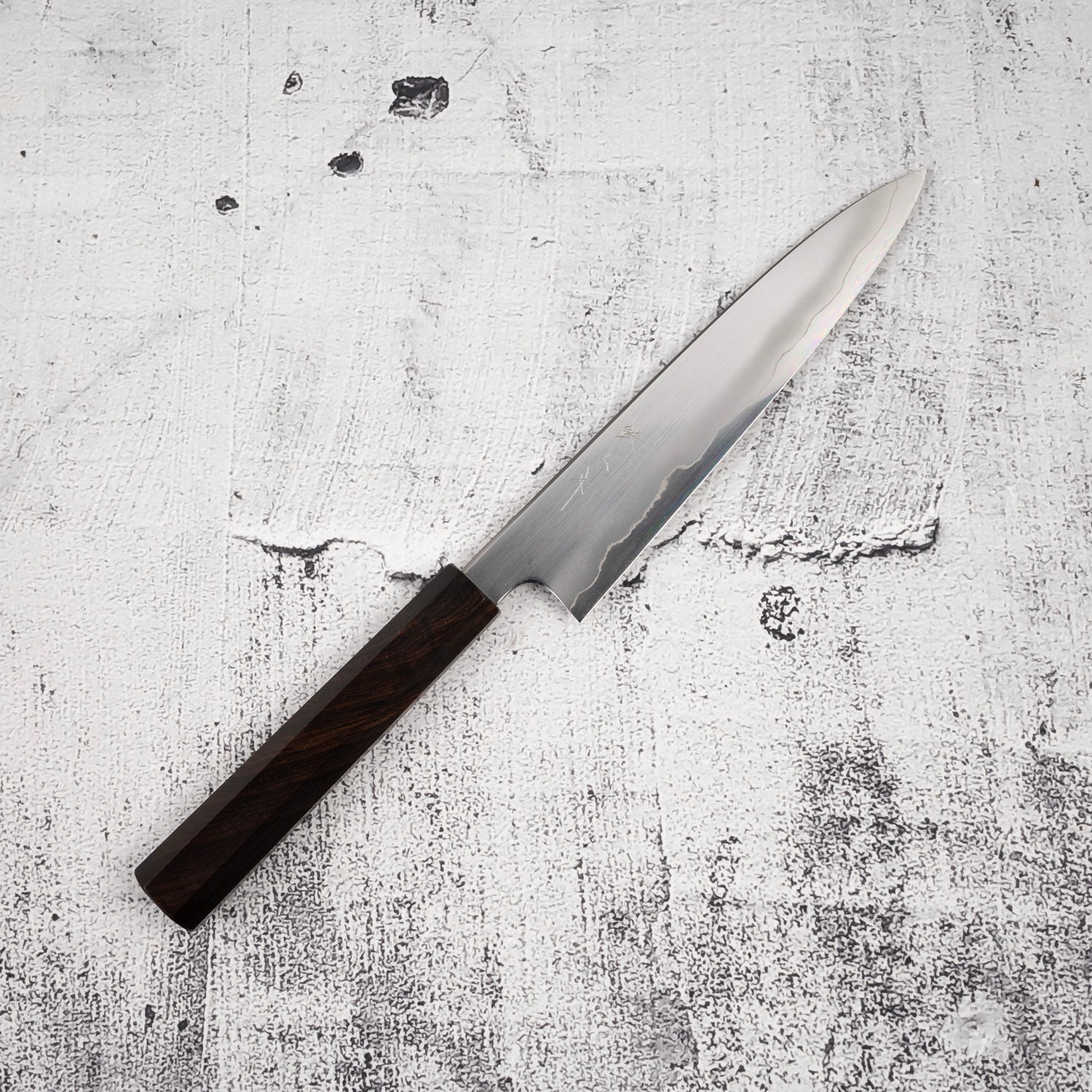
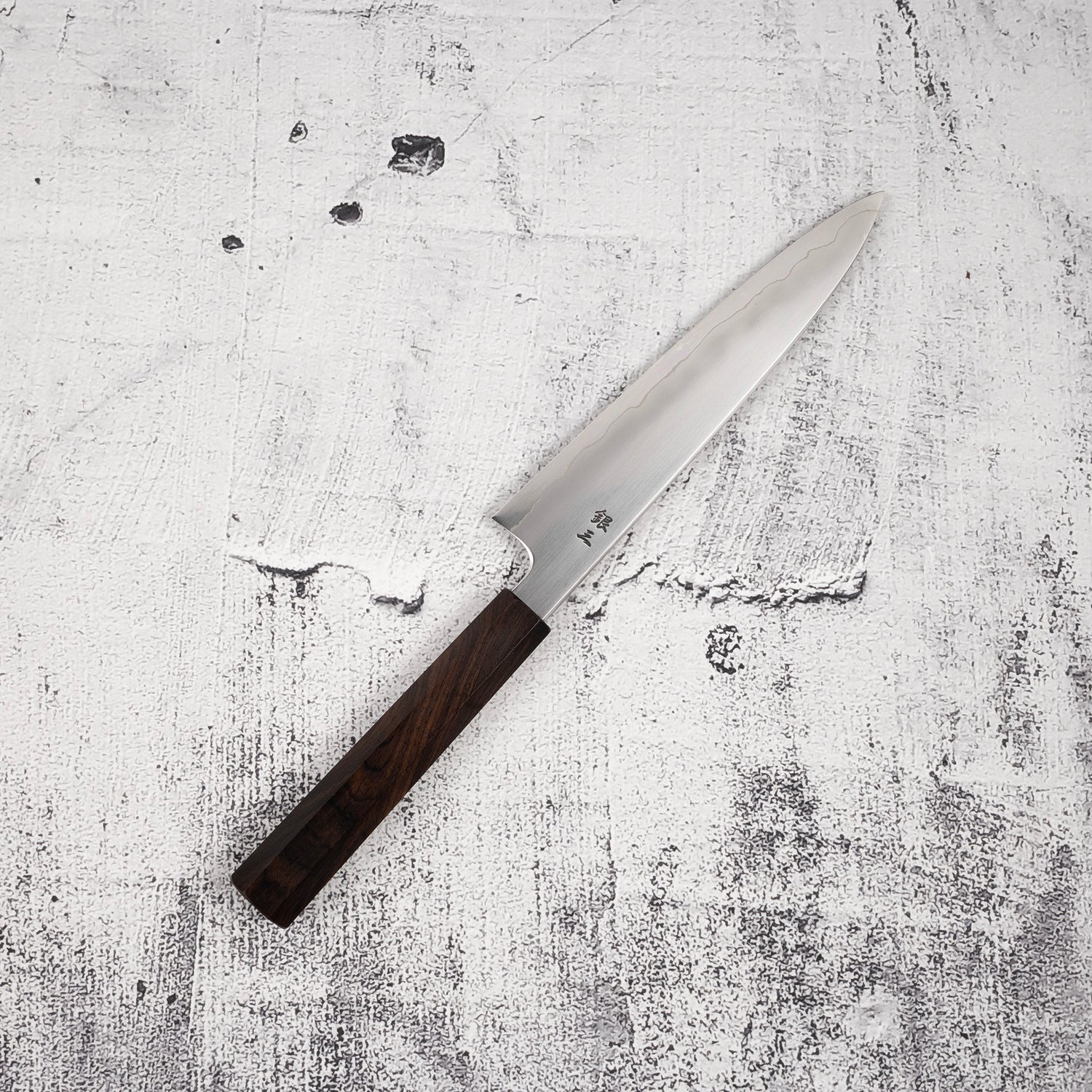
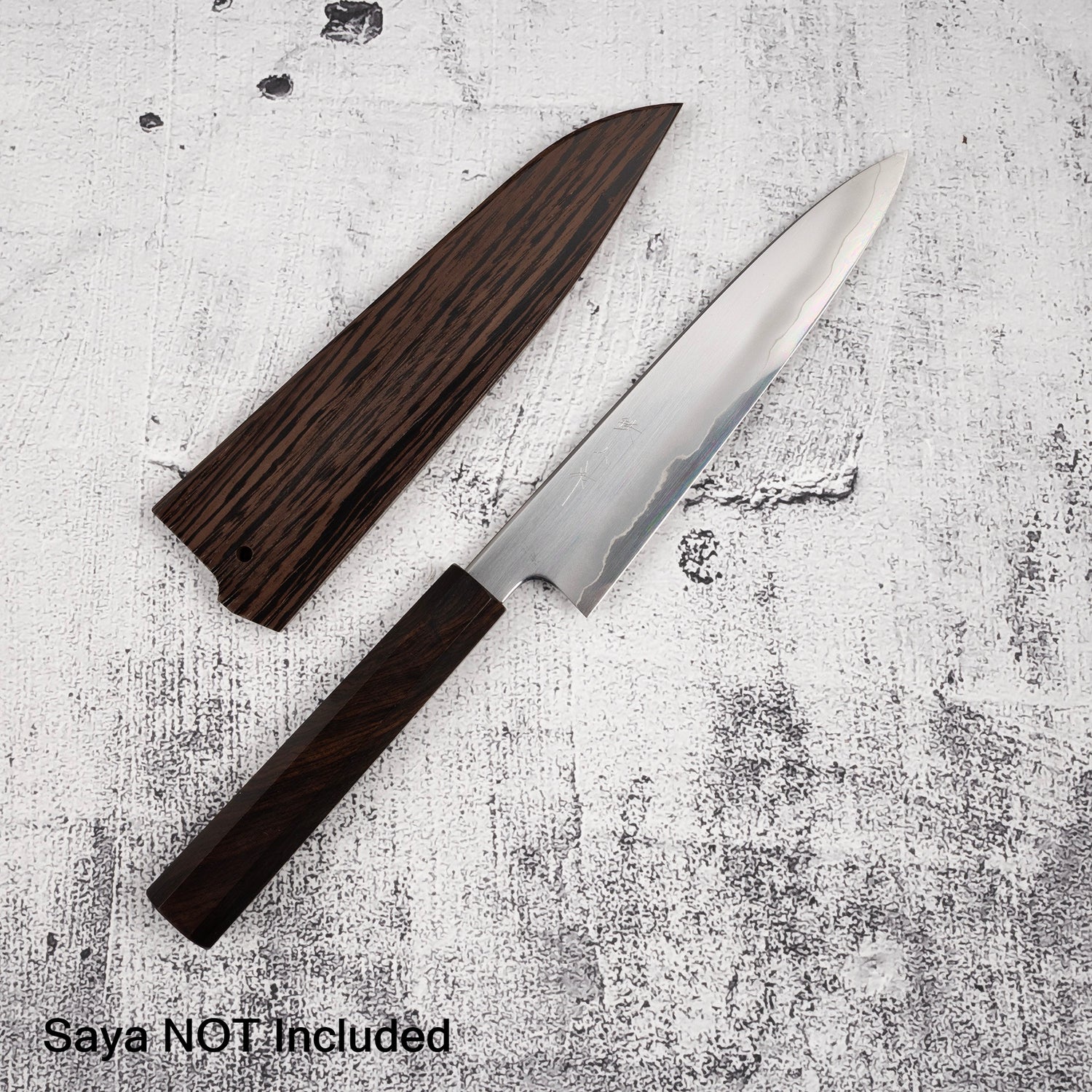
Tetsujin Ginsan Ukiba Petty 165mm Ebony Handle

Sale price $339.98 Regular price $399.95

Sold out right now

Leave your email and we’ll send one message the moment it’s back in stock.

One email, no marketing. Privacy policy.

Availability

  • St Peters, NSW —
    2 Bishop St, Unit 2, St Peters NSW 2044
  • Crows Nest, NSW —
    107 West St, Shop 1, Crows Nest NSW 2065
    Pickup only
  • Prahran, VIC —
    180 Commercial Road, Shop 1, Prahran VIC 3181
    Pickup only

Goes well with

Detailed Specifications
Line Tetsujin Ginsan Ukiba
Profile Petty / Utility knife
Bevel Type Double Bevel
Weight 89 g | 3.1 oz
Edge Length 158 mm | 6 7/32″
Heel Height 33 mm | 1 19/64″
Width @ Heel 2.7 mm | 7/64″
Width @ Mid 2.0 mm | 5/64″
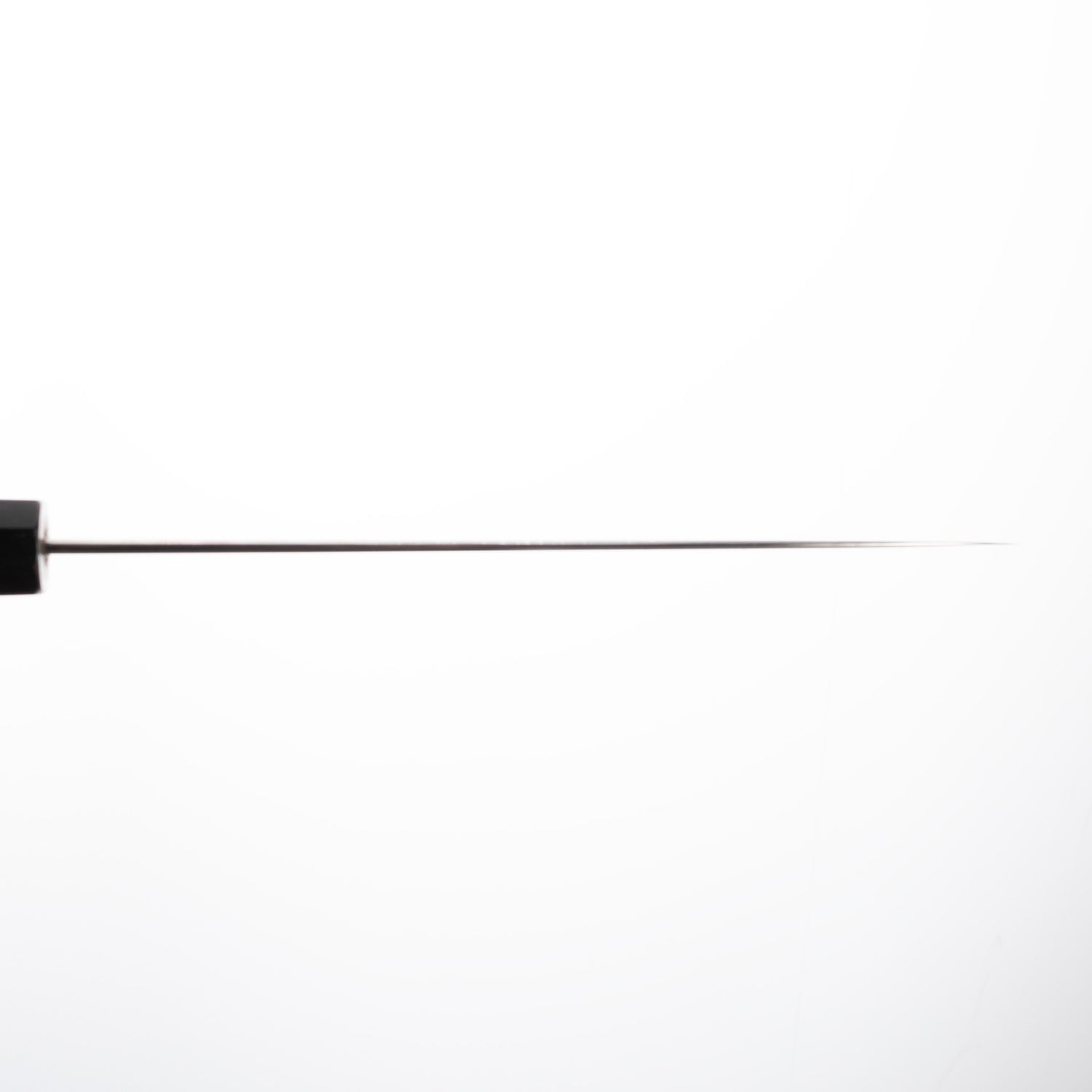
Width @ 1cm from Tip 0.8 mm | 1/32″
Steel Ginsan / Silver #3 | Stainless
Blade Construction Sanmai - Stainless Clad
Typical hardness 60 to 62 HRC
Surface Finish Ukiba
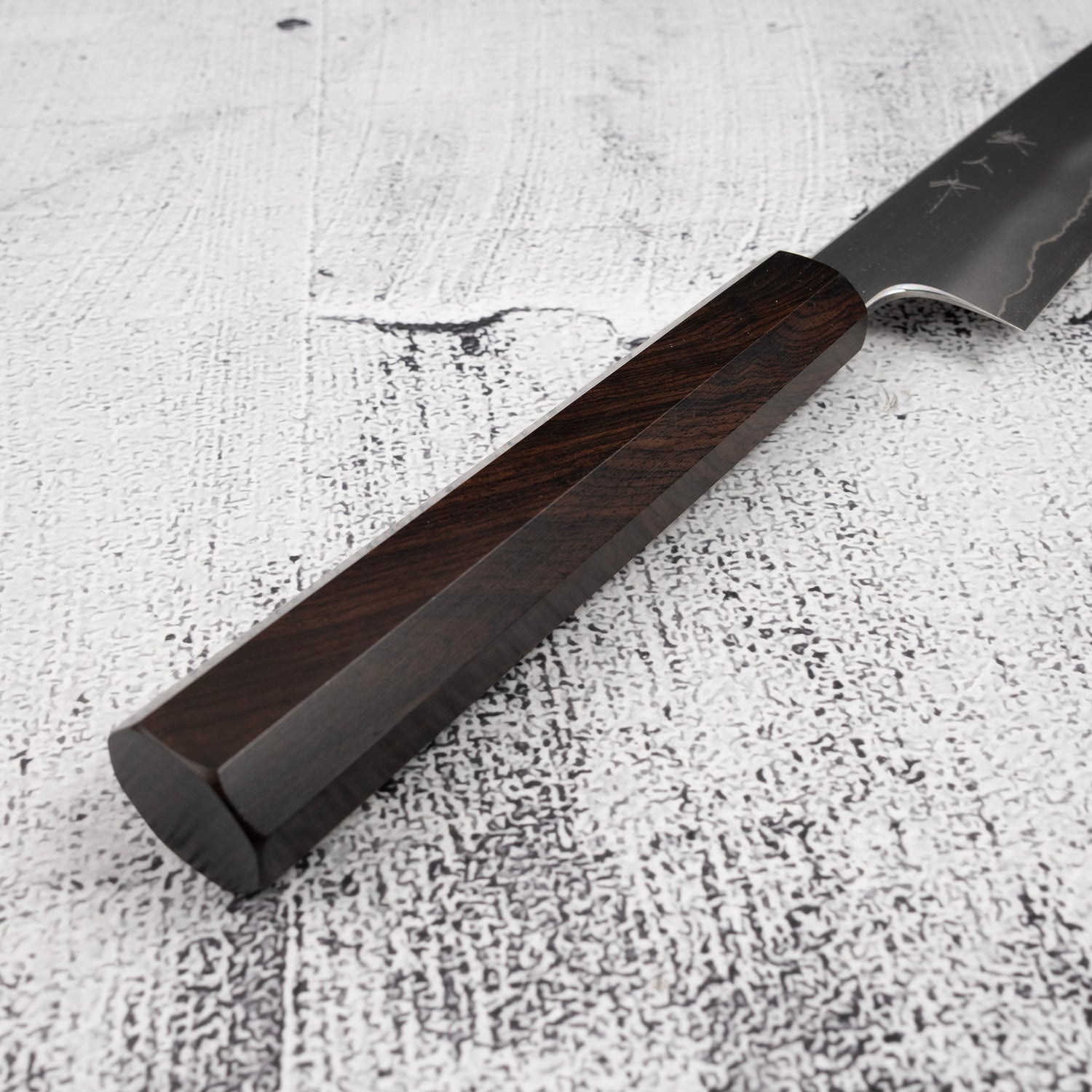
Handle Octagonal Ebony
Region Tosa
Best for
  • Pro chefs
  • First-timers
  • Students

Free shipping for knives over AU$200 Australia wide.

World-wide shipping via DHL Express, 3 to 6 days (not available in the UK).


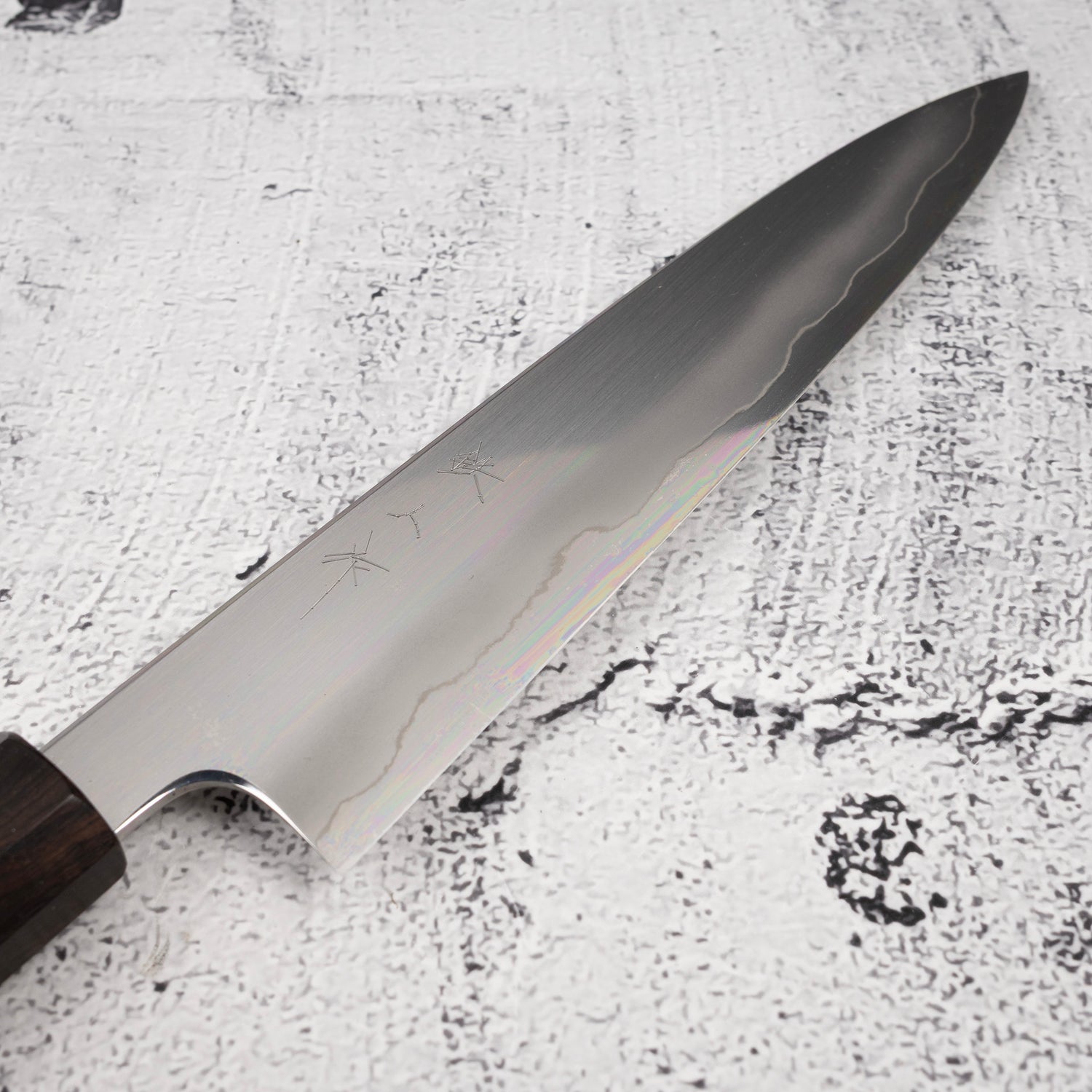
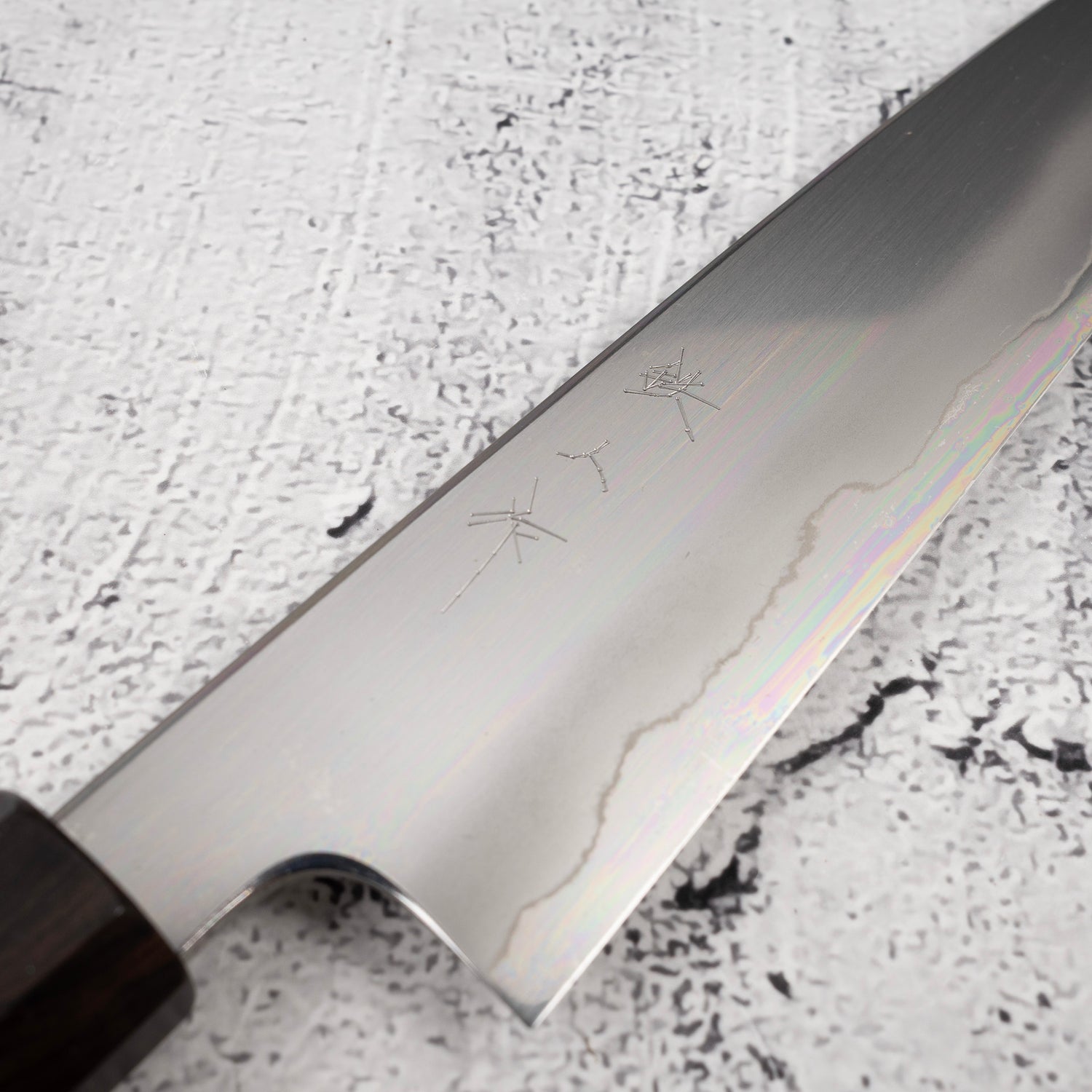
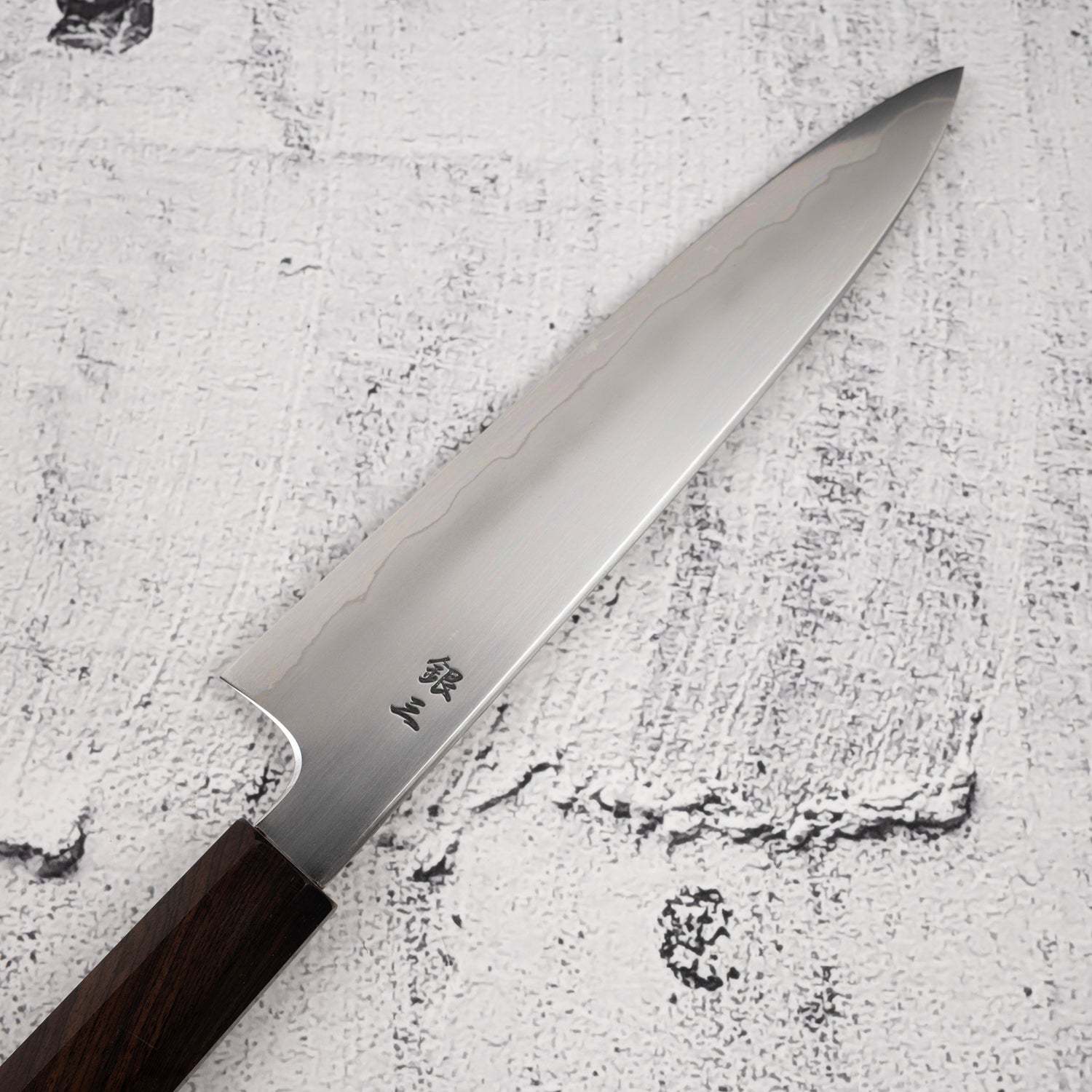
The Tetsujin Ginsan Ukiba pairs Myojin’s very thin cutting geometry with a level of finishing that rewards a closer look. The appeal is in the refinement: a more highly polished blade surface, a softer cloudy band above the edge, and carefully finished contact points. Behind that restrained appearance is an excellent cutter, with the same geometry and performance that make the Kasumi version so appealing.

Myojin takes the Migaki finish to a higher grit than you commonly find on brushed blades, giving the surface a finer, more polished appearance. The hazy band on the cladding is equally well treated, with a softer texture and less of the grittiness found on more ordinary examples. These surfaces sit beautifully together, while the shiny core steel and the organic cladding line from Toru Tamura’s forging give the eye something to follow. The finish itself is familiar, but the quality of its execution makes this version stand out.

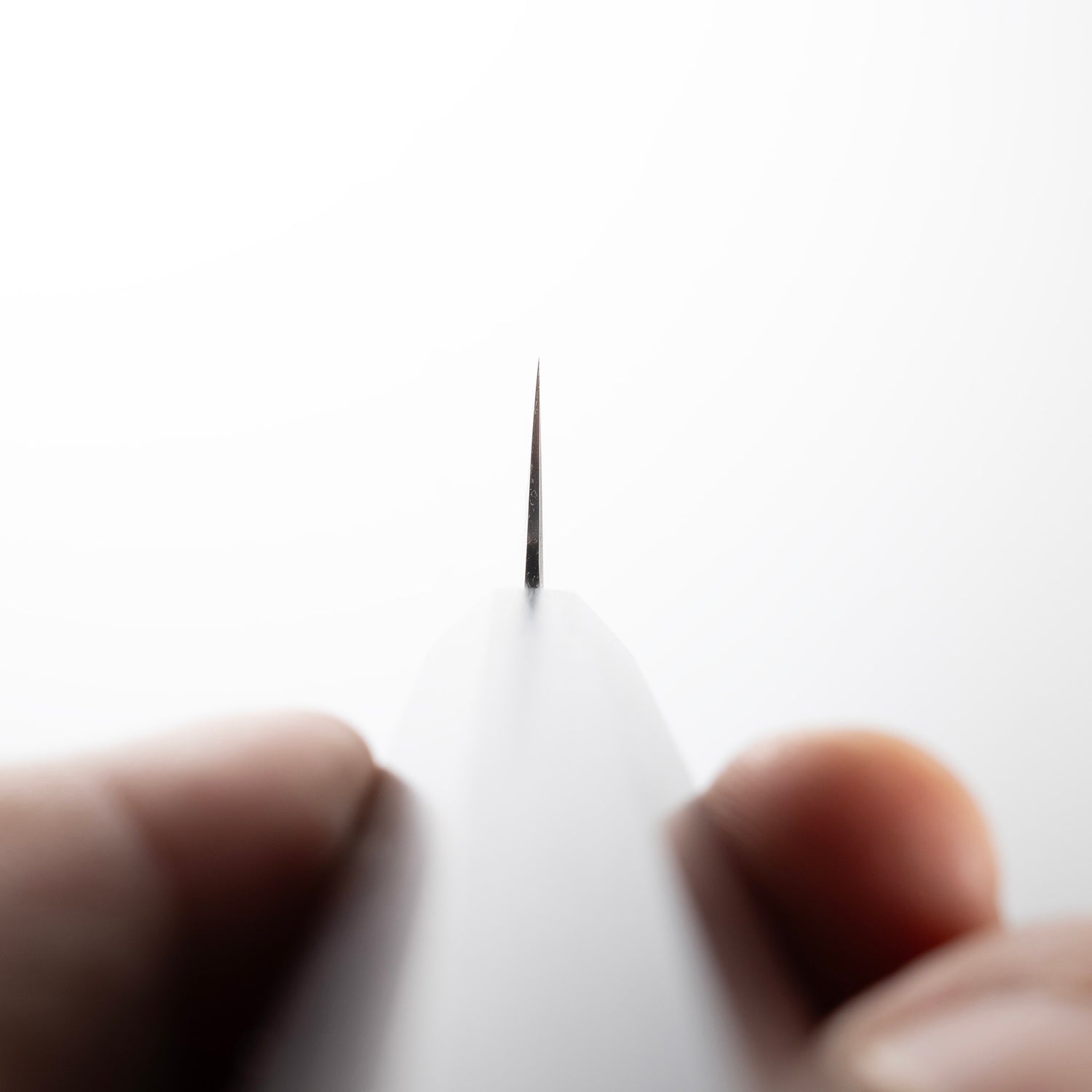
On the board, the very low thickness behind the edge gives the knife excellent entry into food. That thin geometry continues to make a difference as the blade travels deeper into the cut, particularly through dense, firm ingredients where a thicker bevel would demand noticeably more effort. This is where the Tetsujin earns its place as a laser: the cutting feels light and smooth, with little resistance building as more of the blade passes through the food. The attention paid to the grind is just as apparent in use as the finishing is when looking at it.

That geometry also helps the knife remain pleasant to use between sharpenings. Ginsan doesn’t offer the longest edge retention, but the blade continues to move through food with relatively low resistance after the edge has lost some of its initial sharpness. The ease of bringing Ginsan back to a keen edge makes this a reasonable trade-off for someone who values cutting smoothness and is happy to sharpen regularly.

The chamfered, mirror-polished spine and smoothed choil complete the experience, reducing hot spots where your fingers contact the blade. These are small details individually, but together with the fine grind they make the knife feel thoroughly considered.

There is very little practical difference between this and the Kasumi version. The cloudy section contacting the food has essentially the same surface characteristics, and the price is identical. Choosing the Ukiba comes down to preferring that finer Migaki surface and the contrast it creates around the edge, while keeping the cutting performance and finishing quality shared by both.

Pros Cons
  • Budget friendly
  • Excellent performance
  • Easy to look after
  • Non-premium steel
Care Instruction
  1. Don't cut hard things! Japanese knives are brittle so bone hacking is a NO NO!
  2. Wash with neutral detergent after use, and wipe dry;
  3. Please don't wash knife with dishwasher, it will damage the wood handle;
  4. Be careful not to leave the knife close to a heat source for a long time;
  5. It is a lot more dangerous to cut with a blunt knife than a sharp knife!
  6. It is best to sharpen a Japanese knife regularly on a waterstone.

Myojin Riki

Myojin Riki Seisakusho, a Tosa knife workshop

The workshop 明神利器製作所, whose knives we list as Myojin Riki, is in Susaki, Kochi. Kochi City's craft page names its second generation as 明神 直人.

Kochi City's page on Tosa crafts describes the workshop as carrying work from forging to finishing in one continuous process. The page says it sharpens a hamaguri-ba (蛤刃) edge, ground convex, a technique the workshop's second generation learned through several years of training in Fukui, and that it also takes sharpening-only orders from outside Kochi Prefecture.

Among the lines we list, the Hatsukokoro x Myojin Shirasagi single-bevel knives cover Blue 2 kurouchi yanagiba, K-tip yanagiba, sakimaru yanagiba and honesuki, White 2 deba, left-handed mioroshi deba, left-handed yanagiba and honesuki, and a Ginsan yanagiba. We also list Myojin Cobalt Special gyuto, santoku and bunka.

“A Tosa workshop in Susaki, Kochi, described by Kochi City's craft page as working from forging through finishing.”

Known for A convex hamaguri-ba edge, as Kochi City's craft page describes
Instagram @tetsujin_labo Read more about Myojin Riki

Myojin Riki · Tosa

Knife details

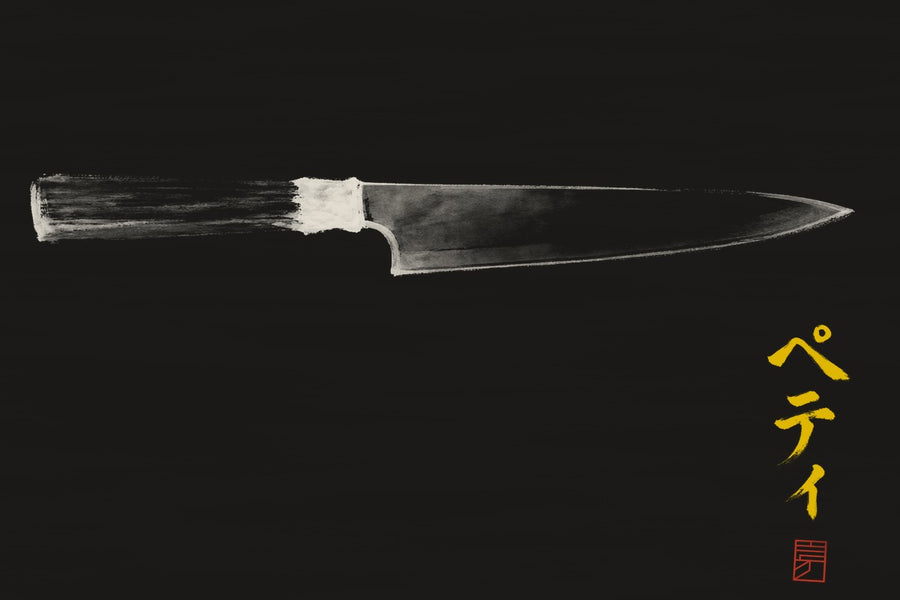
Petty — knife profile
Profile

Petty

ペティ

Utility knife · Double bevel

Small, slim double-bevel utility knife for peeling, trimming and small board jobs.

Read more
Steel properties
  1. Hardness Fair
  2. Edge retention Fair
  3. Toughness High
  4. Rust resistance High
  5. Ease of sharpening High
  6. Sharpness High

Our ratings, inferred from published lab tests and composition.

Steel

Ginsan / Silver #3

GIN3

Stainless · Hitachi Metals (now Proterial)

Proterial's GIN 3 stainless: 0.95 to 1.10% carbon, 13.00 to 14.50% chromium, hardening hardness over 59 HRC.

Read more
CladdingCoreClad line
Construction

Sanmai - Stainless Clad

三枚

3 layers · stainless clad

Hard core between two stainless layers, bare only at the edge; the cladding resists rust.

Read more
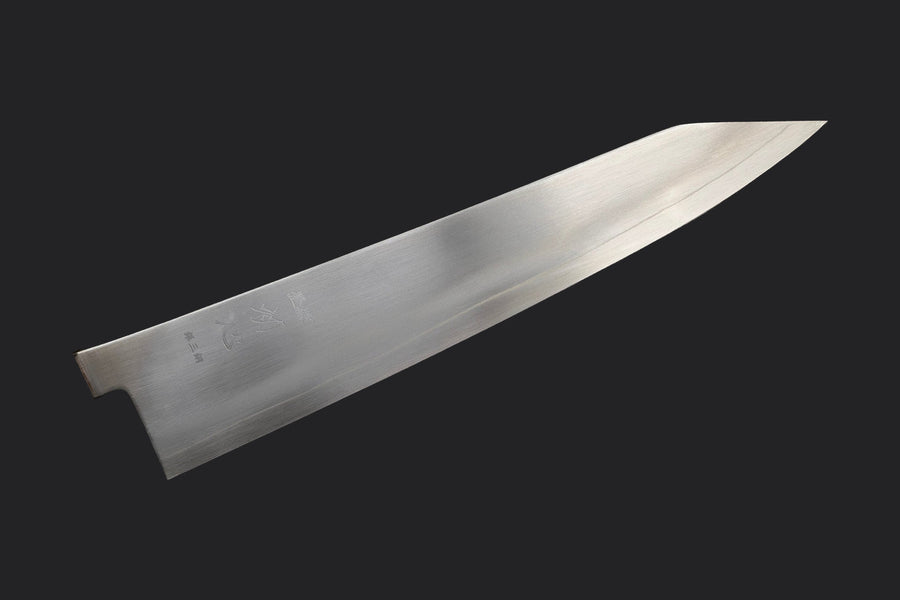
Ukiba — blade surface finish
Finish

Ukiba

Floating-edge finish

Polished core with a sandblasted matt band above the clad line; the edge seems to float.

Read more
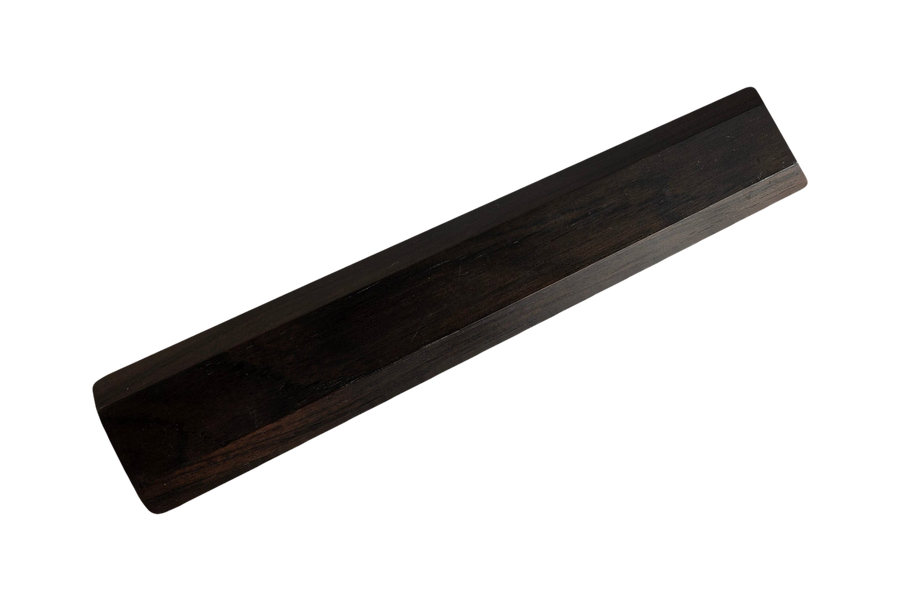
Octagonal Ebony handle
Handle

Octagonal Ebony

Octagonal WA

Dense, dark ebony in the eight-sided wa shape. The flats give a sure grip for either hand.

Frequently asked questions

What is a petty knife and when do I need one?

A petty is a small utility knife, from the French petit. It is commonly shaped like a small gyuto and runs from 120 to 150 mm, up to 180 mm. Its clearest role is detailed work where a larger knife feels cumbersome: fruit peeling, garnish work, condiments, and small board work beside a gyuto or santoku.

A knife maker, Tojiro, frames the petty as a useful second knife, not an automatic necessity, and recommends santoku plus petty or gyuto plus petty combinations. It is not a replacement for a full size chef's knife; it lacks the blade length and belly for efficient chopping, rocking, or breaking down larger proteins. Treat it as a precision tool, not an all-rounder.

How long is a petty knife?

Petty knife lengths vary by maker: KAI's guide defines a petty (ペティナイフ) as a small knife with a narrow blade measuring 150 mm or under. Its table gives 90 to 150 mm, and it describes the shape as a smaller gyuto with a pointed tip.

We list petty knives from 70 mm to 165 mm, including lengths above the limit used in KAI's guide.

What is Ginsan steel, and why do some Japanese knives use it?

Ginsan, also known as Silver 3, is a stainless steel from Proterial, the Yasugi Specialty Steel division. Proterial describes it as a stainless steel which has hardness and sharpness comparable to carbon steel, and lists its uses as kitchen knives and scissors.

Knife makers use it when they want the corrosion resistance of a stainless together with the hardness and sharpness that Proterial compares to carbon steel. The steel maker lists 59 HRC or over after hardening, but that is a heat treatment figure, not a finished knife figure.

Dry it after use, like any stainless knife. Its performance depends on the heat treatment and construction of the specific knife, not the steel name alone.

Is Ginsan stainless?

Yes. Proterial lists the steel as GIN 3 with 13.00 to 14.50% chromium, above the Japan Stainless Steel Association's 10.5% minimum for stainless steel.

Proterial describes it as a stainless steel with hardness and sharpness comparable to carbon steel, used in various kitchen knives and scissors, and the association notes that stainless, strictly, means it rusts less. Wash the knife and dry it after use.

What is the Tetsujin Ginsan Ukiba knife line, and who is it for?

Tetsujin Ginsan Ukiba combines Toru Tamura's forging with Naohito Myojin's sharpening. It has a stainless-clad sanmai blade and an Ukiba finish. K&S recommends the line for first-time buyers, students and professional cooks.

What is the hamaguri-ba edge on the knives we list as Myojin Riki?

A hamaguri-ba edge, written 蛤刃, is a convex edge shape, and it is the shape the workshop 明神利器製作所 sharpens its knives to. Kochi City's craft page records that the workshop's second generation, whose name the page gives as 直人, learned it over several years of training in Fukui.

The same page says the workshop also takes sharpening-only orders from outside Kochi.

Does Myojin Riki forge its own knives?

Yes. Kochi City's craft page for his workshop 明神利器製作所 says the work runs from forging through finishing in one continuous process, 鍛造から仕上げまで一貫して行う.

That page lists the workshop in Susaki, Kochi.

You May Also Like