Drag to spin · pinch or scroll to zoom

Yoshikane  |  SKU: YOSH_W2NAKU_SU24

Yoshikane White 2 KU Nashiji Sujihiki 240mm, Stainless Clad Ebony by Hatsukokoro

Sale price $283.00 Regular price $332.00

IMPORTANT: Carbon steel knives can rust or patina quickly if not cared for properly. They require regular cleaning, drying, and oiling. If you are unfamiliar with carbon steel maintenance, we recommend choosing a stainless steel option instead.

Availability

Goes well with

Detailed Specifications
Line Hatsukokoro By Yoshikane KU White 2 Nashiji
Profile Sujihiki / Slicing knife
Bevel Type Double Bevel
Weight 185 g | 6.5 oz
Edge Length 241 mm | 9 31/64″
Heel Height 41 mm | 1 39/64″
Width @ Heel 4.0 mm | 5/32″
Width @ Mid 2.0 mm | 5/64″
Width @ 1cm from Tip 0.9 mm | 1/32″
Steel White 2 / Shirogami #2 | Carbon
Blade Construction Sanmai - Stainless Clad
Maker's hardening hardness 60 HRC or more
Surface Finish Nashiji
Handle Octagonal Ebony
Region Sanjo
Best for
  • Pro chefs
  • Students
  • Enthusiasts

World-wide shipping via DHL Express, 3 to 6 days (not available in the UK).


The Yoshikane KU Nashiji line puts a carbon steel core inside stainless cladding that is easy to look after.

At its core is Hitachi White #2, a pure carbon steel that takes a keener, more refined edge than harder steels with more chromium. Yoshikane's thin, convex grind and significant blade taper let the knife slice with minimal resistance and virtually no wedging, even in dense potatoes.

The finish leaves the nashiji (pear skin) texture darker and more subdued under a rugged kurouchi (KU) coating, a matte, utilitarian look.

You still get close fit and finish: a highly polished spine and choil for comfort, and a clear contrast between the rough finish and the polished edge.

For pure cutting performance, the line offers real value.

Pros Cons
  • Excellent performance
  • Great for professionals
  • Thin behind the edge
  • High budget
  • Prone to rust
Care Instruction
  1. Don't cut hard things! Japanese knives are brittle so bone hacking is a NO NO!
  2. Wash with neutral detergent after use, and wipe dry;
  3. Please don't wash knife with dishwasher, it will damage the wood handle;
  4. Be careful not to leave the knife close to a heat source for a long time;
  5. It is a lot more dangerous to cut with a blunt knife than a sharp knife!
  6. It is best to sharpen a Japanese knife regularly on a waterstone.
  7. Oil the (carbon) knife if storing for an extended period of time to prevent rust.

Customer reviews

5.0
Based on 1 verified review
★★★★★Great knife

Feels great to use

Yoshikane Hamono

Traditional Sanjo Knife Maker.

Yoshikane is a knife maker in Sanjo, Niigata, founded in 1919 by the first generation, whose name the company writes as 吉田金吉, in the district of Shimotajima. More than a century later the company still works from Sanjo, and it has been incorporated as Yoshikane Hamono K.K. since 2022. Its history records a fourth-generation succession in 2013, naming the successor as 山本和臣.

The greeting on the company's page says that Sanjo is known nationwide as a hardware town, a standing that comes from the history of the smiths who made blades and carpentry tools and the hardware wholesalers who traded them, carrying the work from one region across the country. It says Yoshikane has carried on the old Sanjo smithing line through its century of work, making knives one by one by traditional methods. The greeting gives the motto 不易流行 and explains it: amid the way things change at speed, some things stay firmly the same. Its writer says that in the knife making he puts his care into, he tests the deep meaning of those words every day.

The company's own history marks 1919 as the year it began making Japanese knives under a brand of its own and as OEM work for Sanjo hardware wholesalers; 1922, when the second generation took the name and the company added two further house brands; 1948, when the third generation began making double bevel knives; and 2002, when it moved to the Kaneko Shinden industrial estate and showed at Ambiente in Germany under the Yoshikane name, which began its export in earnest.

As of October 2026, the Yoshikane knives we list include SKD Nashiji and White 2 Nashiji knives, each in gyuto, K-tip gyuto, santoku, bunka, nakiri, petty, sujihiki and honesuki, some stainless clad and some under the Hatsukokoro name.

“A Sanjo knife maker since 1919, now in its fourth generation.”

Est. 1919 | 大正8年
Known for Sanjo knives made one by one by hand, the company says
Website yoshikanehamono.com Read more about Yoshikane Hamono

Yoshikane Hamono · Sanjo

Knife details

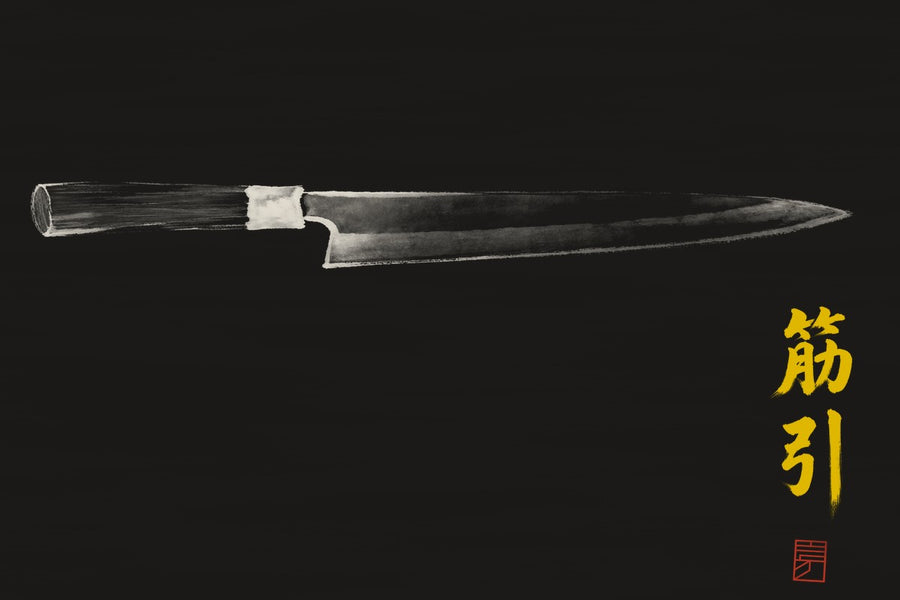
Sujihiki — knife profile
Profile

Sujihiki

筋引

Slicing knife · Double bevel

A long, narrow slicer for dividing large meat; Tojiro says it cuts sashimi too.

Read more
Steel properties
  1. Hardness Very good
  2. Edge retention Good
  3. Toughness Good
  4. Rust resistance Low
  5. Ease of sharpening High
  6. Sharpness Very high
Our ratings, inferred from published lab tests and composition.

Our edge-retention grade is a kitchen rating. It weighs the hardness each steel is sold at, which keeps a thin edge from rolling, twice as heavily as lab wear tests, and the final grade is our judgment from selling and sharpening these knives for over a decade. Lab card-cutting tests measure abrasive wear only, so they can rank carbon steels lower. Tap ? for the lab figure.

Steel

White 2 / Shirogami #2

白二鋼

Carbon · Hitachi Metals (now Proterial)

Proterial carbon steel, 1.05 to 1.15% carbon, no chromium or tungsten; not stainless.

Read more
CladdingCoreClad line
Construction

Sanmai - Stainless Clad

三枚

3 layers · stainless clad

Hard core between two stainless layers, bare only at the edge; the cladding resists rust.

Read more
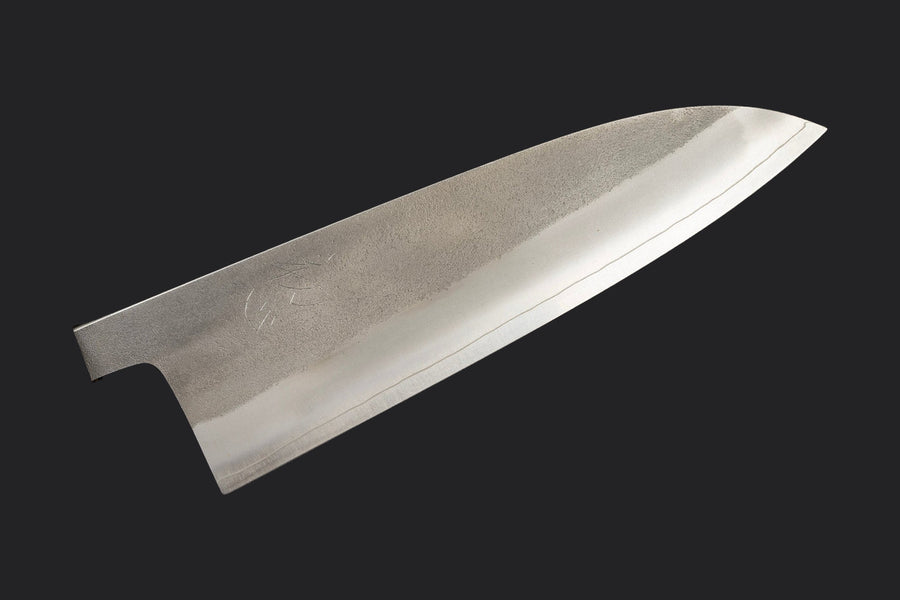
Nashiji — blade surface finish
Finish

Nashiji

梨地

Pear-skin texture

A fine matte texture like the skin of a nashi pear. It may help food release.

Read more
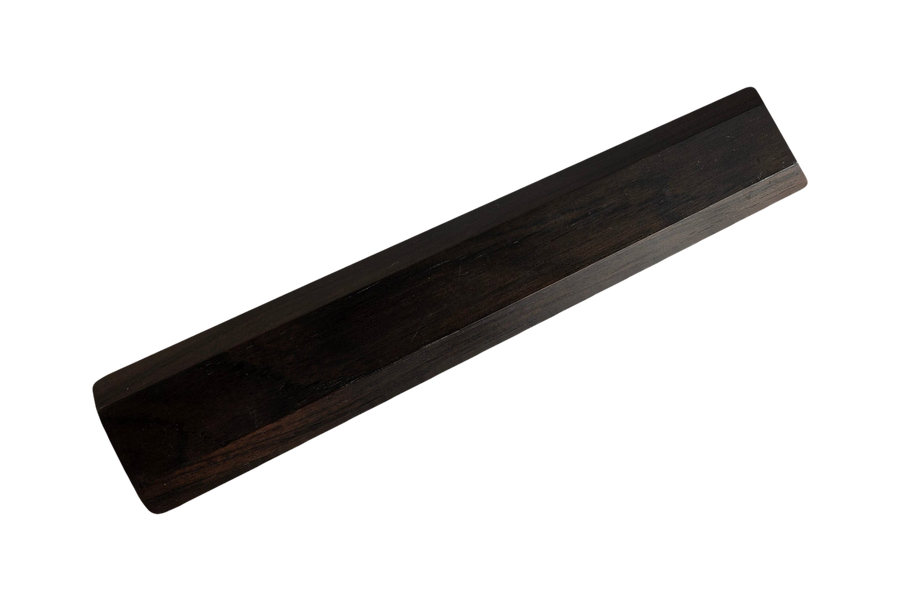
Octagonal Ebony handle
Handle

Octagonal Ebony

Octagonal WA

Dense, dark ebony in the eight-sided wa shape. The flats give a sure grip for either hand.

Frequently asked questions

What size sujihiki should I buy?

Between 210 and 270 mm, depending on where it will work. One Japanese maker lists 210 to 240 mm, double-bevel, for home use and 240 to 270 mm, single- or double-bevel, for professional kitchens.

Another, in Sakai, recommends 240 mm at home, with the size of your board in mind, and 270 mm for professional use.

Sujihiki or yanagiba: which do I need?

Most home cooks need the sujihiki. Choose the yanagiba when slicing raw fish for sashimi and sushi is the main job and you are prepared to learn single bevel sharpening.

A sujihiki is a long, narrow, double bevel slicer. Tojiro describes it as the knife for dividing large pieces of meat, known abroad as a slicer or carving knife, and says its length lets it cut sashimi as well. It carves roasts, trims sinew and portions fish, works in either hand and sharpens like any double bevel knife. Sujihiki run from about 210 to 300 mm, and 240 mm suits most home boards.

A yanagiba is the single bevel sashimi knife. It is ground on one side with a hollow back, and each slice is one long pull from heel to tip, so raw fish is cut cleanly rather than sawn. The edge is too fine for bones or anything hard. It is made for one hand and most are right handed, so check the listing if you are left handed. Sharpening means working the whole bevel and keeping the back flat. Yanagiba run from about 240 to 330 mm, with 270 and 300 mm the common sizes.

So for roasts, portioning meat and the occasional side of fish, buy a sujihiki. For regular sashimi and sushi work, buy a yanagiba and keep it for fish.

Which knife do I need for sushi and sashimi at home?

For occasional sushi at home, a sharp sujihiki (筋引) does the job. Tojiro describes it as a long, double-bevel slicer that can also be used for sashimi, and a double bevel works in either hand.

If sashimi is the point of the meal, choose a yanagiba (柳刃). Tojiro calls it the Kansai-style sashimi knife, now used across Japan, and it slices in one long pull from heel to tip. It is single bevel, so buy the one made for your hand.

If you start from whole fish, add a deba (出刃). Tojiro describes it as very thick and heavy, made for breaking fish down. The deba takes the fish apart and the slicer then cuts the fillets.

Shirogami 1 vs Shirogami 2: what is the difference?

Shirogami 1 (White 1) has more carbon than Shirogami 2 (White 2): Proterial lists 1.25 to 1.35% carbon for Shirogami 1 and 1.05 to 1.15% for Shirogami 2, with the same silicon (0.10 to 0.20%) and manganese (0.20 to 0.30%) ranges for both.

Proterial describes both as carbon steel with minimum impurities, Shirogami 1 with the highest hardness and Shirogami 2 with high hardness, and gives a hardening hardness of over 60 HRC for both. It lists Shirogami 1 for the highest quality tipped tools, planes, chisels and razors, and Shirogami 2 for high quality tipped tools, chisels, razors, sickles, axes and gravers.

What is the difference between White 1, White 2 and White 3?

White 1, White 2 and White 3 are Proterial's Shirogami 1, Shirogami 2 and Shirogami 3. Proterial lists carbon at 1.25 to 1.35% for Shirogami 1, 1.05 to 1.15% for Shirogami 2 and 0.80 to 0.90% for Shirogami 3, with the same silicon and manganese ranges for all three and no chromium listed.

Proterial describes all three as carbon steel with minimum impurities, at highest, high and middle hardness in that order, and gives a hardening hardness of over 60 HRC for each.

What is the difference between Blue 2 and White 2 steel?

Blue 2 is White 2 with tungsten and a little chromium added. Blue 2 holds its edge longer. White 2 sharpens faster and takes a very keen edge. Both are carbon steels that will rust if left wet.

The figures come from Proterial, which makes both. Each has 1.05 to 1.15% carbon. Blue 2 (Aogami 2) adds 1.00 to 1.50% tungsten and 0.20 to 0.50% chromium. White 2 (Shirogami 2) lists neither, and Proterial describes it as a carbon steel with minimum impurities. Proterial says the tungsten and chromium improve heat treatment and wear resistance, and gives a hardening hardness over 60 HRC for both.

In use, the tungsten forms hard carbides that resist wear, so a Blue 2 edge lasts longer between sharpenings. White 2 has none, so it comes back on a whetstone very quickly. The chromium in Blue 2 is far below the 10.5% a steel needs to be stainless, so it gives no real rust protection. Wipe either steel dry after use and expect a patina.

Choose Blue 2 if you want to sharpen less often. Choose White 2 if you enjoy sharpening and want the keenest edge. We list both widely: Blue 2 from Nigara, Myojin Riki and Anryu, and White 2 from Masamoto Sohonten, Sakai Takayuki and Yoshikane.

How old is Yoshikane?

Yoshikane's own company page dates the founding to Taisho 8, 1919, when the founder, whose name the company writes as 吉田金吉, started the business in Shimotajima, Sanjo.

The same page records a fourth-generation succession in 2013, naming the successor as 山本和臣, and the company's incorporation as 株式会社吉金刃物 in 2022.

Is Yoshikane written 吉金 or 吉兼?

Both forms are correct, for two different things: the company writes its own name 吉金刃物, as the maker's site shows.

That page also records 吉兼 and 吉兼久 as the workshop's own brands, added in 1922.

You May Also Like