PRAHRAN STORE NOW OPEN · THU–MON · 10AM–6PM

Kurosaki  |  SKU: KURO_SGSKEI_GY240_IRW

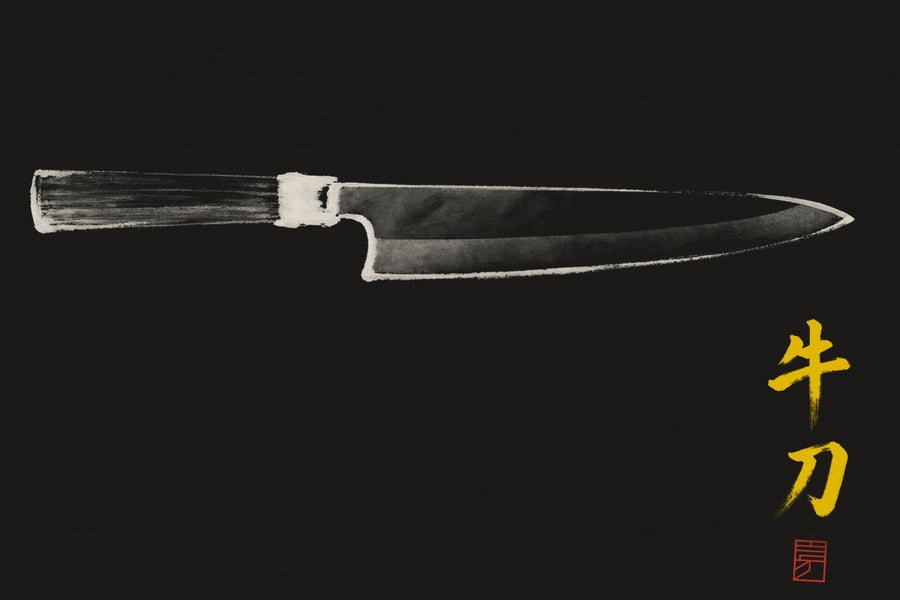
Kurosaki Senko Ei(閃光 銳) SG2/R2 Gyuto 270mm with Ironwood Western Handle

Regular price $799.95

Sold out right now

Leave your email and we’ll send one message the moment it’s back in stock.

One email, no marketing. Privacy policy.

Availability

  • St Peters, NSW —
    2 Bishop St, Unit 2, St Peters NSW 2044
  • Crows Nest, NSW —
    107 West St, Shop 1, Crows Nest NSW 2065
    Pickup only
  • Prahran, VIC —
    180 Commercial Road, Shop 1, Prahran VIC 3181
    Pickup only
Detailed Specifications
Line Kurosaki Senko SG2
Profile Gyuto / Chef's knife
Bevel Type Double Bevel
Weight 285 g | 10.1 oz
Edge Length 275 mm | 10 53/64″
Heel Height 60 mm | 2 23/64″
Width @ Heel 2.0 mm | 5/64″
Width @ Mid 2.0 mm | 5/64″
Width @ 1cm from Tip 0.7 mm | 1/32″
Steel SG2 / R2 | Powdered | Stainless
Blade Construction Sanmai - Stainless Clad
Hardness (HRC) 62 - 64
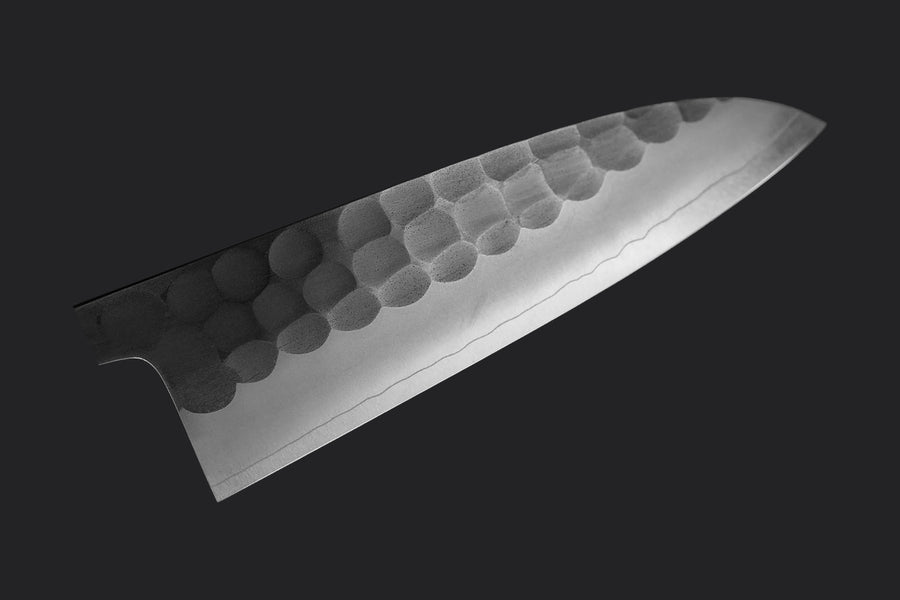
Surface Finish Tsuchime
Handle Special Handle
Region Takefu
Best for
  • Pro chefs
  • Enthusiasts
  • Free shipping for knives over AU$200 Australia wide.
  • World-wide shipping via DHL Express, 3 to 5 days.


Yu Kurosaki's Senko line is built on SG2 powdered stainless steel, which holds a long edge and stays sharp under heavy use. The hammered pattern is inspired by flashes of light, and its texture helps food release from the blade, for a smoother, more efficient cut. The Senko knives are well balanced and ergonomic, precise and comfortable whether slicing delicate vegetables or tougher proteins, for professional chefs and home cooks alike.

Pros Cons
  • Great OOTB
  • Excellent performance
  • Great for professionals
  • Easy to look after
  • Relatively hard to sharpen
Care Instruction
  1. Don't cut hard things! Japanese knives are brittle so bone hacking is a NO NO!
  2. Wash with neutral detergent after use, and wipe dry;
  3. Please don't wash knife with dishwasher, it will damage the wood handle;
  4. Be careful not to leave the knife close to a heat source for a long time;
  5. It is a lot more dangerous to cut with a blunt knife than a sharp knife!
  6. It is best to sharpen a Japanese knife regularly on a waterstone.

Yu Kurosaki

Yu Kurosaki, Echizen smith

Yu Kurosaki (黒崎優) is an Echizen smith who has run his own workshop, Kurosaki Uchihamono (黒﨑打刃物), since founding it in 2014, and who was certified as a traditional craftsman in 2019.

His site describes his knives as Echizen forged knives made one by one by a craftsman's hand, with time and care.

Read more

Before going out on his own, Yu Kurosaki spent twelve years at Kanehiro Uchihamono, from 2002 to 2014. He trained under Hiroshi Kato and Takeshi Saji. The Takefu Knife Village profile lists his work as double-bevel forged knives and custom knives.

In a 2022 interview with the magazine NIHONMONO he describes his knives in his own words as thin, sharp and tough. The same interview credits him with five original designs: Shizuku, Fujin, Raijin, Juhyo and Senko.

We carry a lot of his work, and we list two of those designs: the Raijin in VG10W and the Shizuku in SG2.

“An Echizen smith with his own workshop since 2014.”

Est. 2014 | 平成26年
Known for Raijin and Shizuku knives, forged by hand
Website kurosakiknives.jp Instagram @kurosakiknives Read more about Yu Kurosaki

Yu Kurosaki · Takefu

Knife details

Frequently asked questions

Gyuto or santoku: which should I choose?

Both are all-purpose Japanese knives, and for most home cooks either will handle the bulk of daily prep. The choice comes down to length, blade shape, and how you like to cut.

A gyuto is the Japanese chef's knife, with a gently curved edge that lets you rock and slide through cuts as well as chop. Tojiro's guide to Western knife shapes gives 150 to 210mm as the household size for a gyuto and up to 360mm for professional use. The extra length and pointed tip give you reach and versatility, from proteins to large produce.

Tojiro's guide to Japanese knife shapes gives 165 to 170mm as the household size for a santoku, which has a flatter profile and a rounded sheep's-foot tip. It rewards a straight up-and-down push cut, feels nimble in smaller hands or tight kitchens, and is the classic Japanese household knife.

Rule of thumb: choose a gyuto if you want one do-everything knife with more reach, or a santoku if you prefer a compact, easy-to-control blade. Plenty of our customers end up owning both.

What is a gyuto knife used for?

The gyuto (牛刀) is a chef's knife for all kinds of cooking, and it is basically double-bevel. A knife maker's guide says it came to Japan in the Meiji era with the culture of eating beef, which gave it its name, but it does not cut only meat.

A Japanese dictionary describes the gyuto as slimmer than a santoku, with a pointed tip, used widely for meat, fish and vegetables.

What gyuto length should I choose?

A knife maker's guide lists 150 to 210 mm, double-bevel, for home use, and 180 to 360 mm, single- or double-bevel, for professional kitchens.

We suggest starting with a 210 mm gyuto for a home kitchen, and stepping up to 240 mm if you regularly cut large pieces and have the board for it.

240mm vs 210mm gyuto: which size should I choose?

Get the 210mm. We only point people to a 240mm when they have about 45cm of usable board, cook in volume, and regularly break down big roasts or whole fish.

On the gyutos we've measured for our product pages, the extra length is real. As of October 2026, the 210mm gyutos we list have a median edge of 213mm from heel to tip, across the 111 we have measured; the 240mm ones have a median of 240mm, across 100. The 240s are also heavier, 212g against 175g at the median, and a touch taller at the heel, 50mm against 48mm.

That length buys you a longer stroke. A 240 goes through a big piece of meat in one or two pulls and moves a board of chopped vegetables with less shuffling. It costs you board space and control. On a small board the tip hangs off the edge, and fine work like herbs and shallots feels like more knife than the job needs.

Japanese or German kitchen knives: which should I buy?

Our advice: choose a Japanese knife if you want the keenest edge and do not mind caring for a harder blade, and a German knife if you want a tougher, more forgiving knife you can hone casually and use for heavy prep. On two Japanese knife steels, the steel makers' own figures start at 60 HRC: Takefu Special Steel rates VG10 at 60 HRC or more, and Proterial lists the hardening hardness of Aogami 2 (Blue 2) as over 60 HRC.

Our care advice for a Japanese knife: keep it off bone, frozen food and very hard squash, and use a wooden or plastic board.

What is the flat spot on a knife, and is it the same as the "sweet spot"?

The flat spot is the straight run of edge from the heel towards the middle, the part that meets the board along its length. At our counter we call it the sweet spot; elsewhere "sweet spot" often means the balance point, so ask which one someone means.

Past the flat, the edge curves up towards the tip (the belly), which suits a swinging or pulling stroke. Sharpeners also say "flat spot" for a worn patch of edge, so when you mean the shape, "the flat part of the edge" is clearer.

SG2 steel knives at Knives and Stones

SG2 is my go-to recommendation for anyone who wants a stainless knife that performs like carbon steel without the fuss. At 62 HRC or more (Takefu's figure), it takes a screaming edge and holds it far longer than VG-10 or AEB-L, all while being rust-resistant. You get the best of both worlds: no patina worry, but real cutting performance.

SG2 vs AS steel for kitchen knives — which is better?

Neither is objectively better, it just depends on whether you value stainless convenience or a laser-sharp carbon edge. Go with SG2 if you want a knife that holds a screaming edge without any babysitting. Choose AS if you are chasing the thinnest possible edge and don't mind wiping the blade down after every use.

SG2 is a powdered stainless steel from Takefu, rated at 62 HRC or more. It is tough and resists corrosion, which is why I reach for it when working with acidic foods. Aogami Super is high carbon, and Proterial gives it a hardening hardness of over 60 HRC. It sharpens to a hair-whittling edge that lasts slightly longer than SG2, but it will rust if you neglect it.

You May Also Like