PRAHRAN STORE NOW OPEN · THU–MON · 10AM–6PM

Yu Kurosaki  |  SKU: KS-ASKS-SA170-GLD

Kurosaki Kokusen AS Santoku 170mm - Gold Ferrule

Sale price $305.98 Regular price $359.95

IMPORTANT: Carbon steel knives can rust or patina quickly if not cared for properly. They require regular cleaning, drying, and oiling. If you are unfamiliar with carbon steel maintenance, we recommend choosing a stainless steel option instead.

In Stock Now

Availability

  • St Peters, NSW —
    2 Bishop St, Unit 2, St Peters NSW 2044
  • Crows Nest, NSW —
    107 West St, Shop 1, Crows Nest NSW 2065
    Pickup only
  • Prahran, VIC —
    180 Commercial Road, Shop 1, Prahran VIC 3181
    Pickup only

Goes well with

Detailed Specifications
Line Yu Kurosaki Kokusen Ei Aogami Super Kurouchi
Profile Santoku / Santoku
Bevel Type Double Bevel
Weight 150 g | 5.3 oz
Edge Length 170 mm | 6 11/16″
Heel Height 47 mm | 1 27/32″
Width @ Heel 1.8 mm | 5/64″
Width @ Mid 1.8 mm | 5/64″
Width @ 1cm from Tip 1.2 mm | 3/64″
Steel Blue Super / Aogami Super | Carbon
Blade Construction Sanmai - Stainless Clad
Typical hardness 62 to 65 HRC
Surface Finish Kurouchi Tsuchime
Handle Octagonal Ebony
Region Takefu
Best for
  • Pro chefs
  • Enthusiasts

Free shipping for knives over AU$200 Australia wide.

World-wide shipping via DHL Express, 3 to 6 days (not available in the UK).


If you are familiar with the older Yu Kurosaki knives, you would remember the Shizuku, Fujin and Raijin that all comes in two different core steels: R2 and Aogami Super. The Senko series inherent that tradition and offer the Kokusen(黒閃, Black Flash) as the Aogami Super alternative to the Senko line. As the name implies, the blade comes in a darker Kurouchi finish, which makes it easy to distinct from the R2 Senko.

The Kokusen Ei can be considered identical to the Senko Ei, except the core steel. They boast Yu Kurosaki's signature concave grind that bring the thickness down significantly behind the edge. Pairing with the thin spine thickness, this laser feels weightless whether you are handling it of cutting through dense roots. The Ei(鋭, acute) name is given to the K-tip designs, the very steep angle at the end of the knife forms a very thin tip which helps a lot when dosing precise slices.

The cladding of this line is stainless, which is a big plus in easy of maintenance, whether you are an enthusiastic knife collector or a chef in professional kitchen, you could benefit from the sharpness of the carbon steel core without having patina all over the blade. The cladding features the star shaped hammer pattern, which is a distinct character that identify the Senko line.

If you you are looking for a high performance knife from a famous maker with a characterful finish, Senko families will definitely fit in that place, the addition of the Kokusen can satisfy the carbon steel lovers with the top notch Aogami Super steel, ensuring a even finer Kireaji that people always love from Yu Kurosaki.

Pros Cons
  • Excellent performance
  • Thin behind the edge
  • Excellent fit and finish
  • Prone to rust
  • A little bit brittle
Care Instruction
  1. Don't cut hard things! Japanese knives are brittle so bone hacking is a NO NO!
  2. Wash with neutral detergent after use, and wipe dry;
  3. Please don't wash knife with dishwasher, it will damage the wood handle;
  4. Be careful not to leave the knife close to a heat source for a long time;
  5. It is a lot more dangerous to cut with a blunt knife than a sharp knife!
  6. It is best to sharpen a Japanese knife regularly on a waterstone.
  7. Oil the (carbon) knife if storing for an extended period of time to prevent rust.

Yu Kurosaki

Yu Kurosaki, Echizen smith

Yu Kurosaki (黒崎優) is an Echizen smith who has run his own workshop, Kurosaki Uchihamono (黒﨑打刃物), since founding it in 2014, and who was certified as a traditional craftsman in 2019.

His site describes his knives as Echizen forged knives made one by one by a craftsman's hand, with time and care.

Read more

Before going out on his own, Yu Kurosaki spent twelve years at Kanehiro Uchihamono, from 2002 to 2014. He trained under Hiroshi Kato and Takeshi Saji. The Takefu Knife Village profile lists his work as double-bevel forged knives and custom knives.

In a 2022 interview with the magazine NIHONMONO he describes his knives in his own words as thin, sharp and tough. The same interview credits him with five original designs: Shizuku, Fujin, Raijin, Juhyo and Senko.

We carry a lot of his work, and we list two of those designs: the Raijin in VG10W and the Shizuku in SG2.

“An Echizen smith with his own workshop since 2014.”

Est. 2014 | 平成26年
Known for Raijin and Shizuku knives, forged by hand
Website kurosakiknives.jp Instagram @kurosakiknives Read more about Yu Kurosaki

Yu Kurosaki · Takefu

Knife details

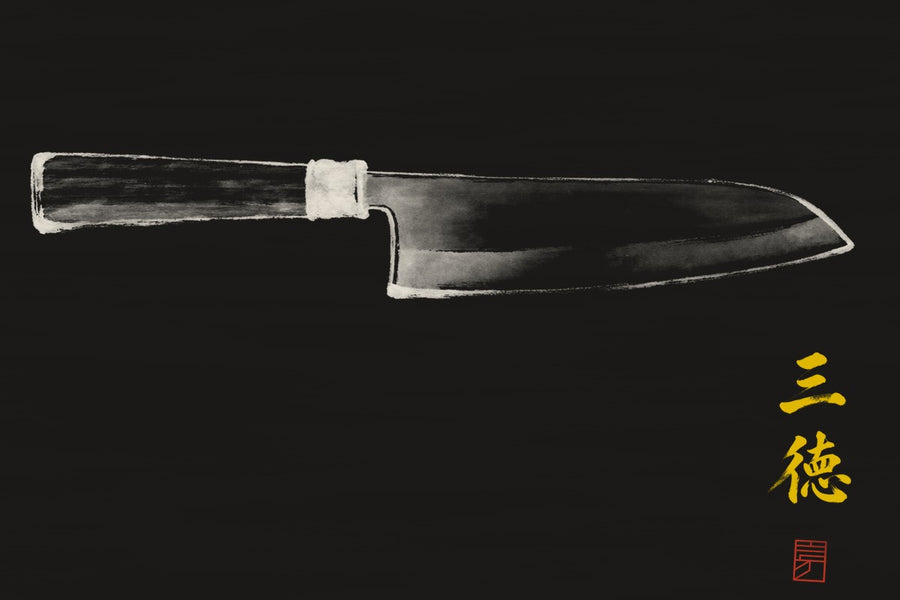
Santoku — knife profile
Profile

Santoku

三徳

Santoku · Double bevel

An all-purpose knife for meat, fish and vegetables, with a wide blade and a rounded tip.

Read more
Steel properties
  1. Hardness Very high
  2. Edge retention Very good
  3. Toughness Good
  4. Rust resistance Low
  5. Ease of sharpening Good
  6. Sharpness High
Our ratings, inferred from published lab tests and composition.

Our edge-retention grade is a kitchen rating. It weighs the hardness each steel is sold at, which keeps a thin edge from rolling, twice as heavily as lab wear tests, and the final grade is our judgment from selling and sharpening these knives for over a decade. Lab card-cutting tests measure abrasive wear only, so they can rank carbon steels lower. Tap ? for the lab figure.

Steel

Blue Super / Aogami Super

青紙スーパー

Carbon · Hitachi Metals (now Proterial)

Proterial carbon steel, 1.45% carbon, tungsten and vanadium, hardening hardness over 60 HRC. Long edge; rusts.

Read more
CladdingCoreClad line
Construction

Sanmai - Stainless Clad

三枚

3 layers · stainless clad

Hard core between two stainless layers, bare only at the edge; the cladding resists rust.

Read more
Kurouchi Tsuchime — blade surface finish
Finish

Kurouchi Tsuchime

黒打槌目

Forge scale · hammered

Hammer marks under dark forge scale. May help food release; bevel and edge need care.

Read more
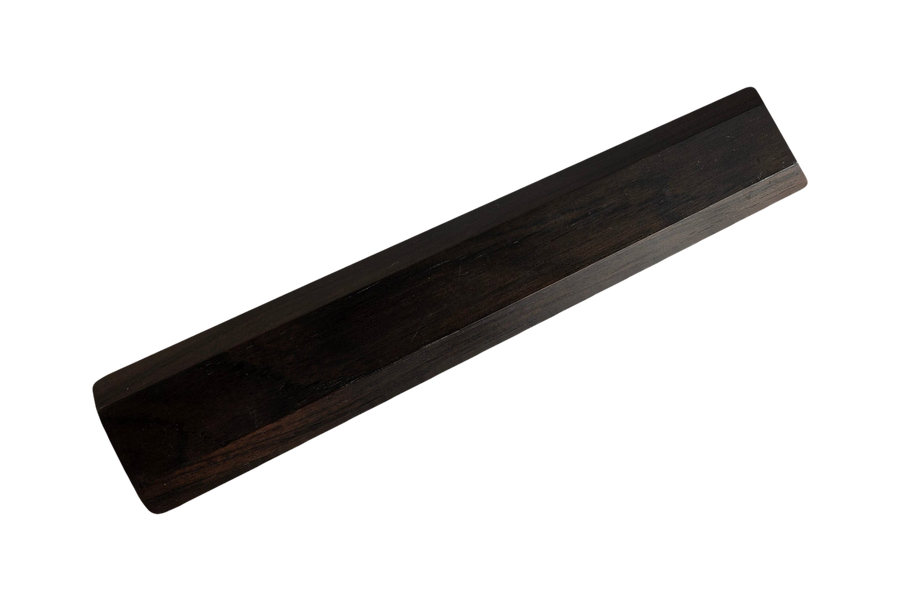
Octagonal Ebony handle
Handle

Octagonal Ebony

Octagonal WA

Dense, dark ebony in the eight-sided wa shape. The flats give a sure grip for either hand.

Frequently asked questions

Gyuto or santoku: which should I choose?

The gyuto came to Japan with the beef-eating culture of the Meiji era, and that is where its name comes from. Tojiro says it is used for all kinds of cooking, which is why it is also called the chef's knife.

The santoku is a household knife that combines the good points of the nakiri and the gyuto. Tojiro describes it as all-purpose, from vegetables to meat and fish, double-bevel and built on the same construction as a Western knife.

Choose a gyuto if you want more length and reach. Choose a santoku if you want a shorter all-purpose knife. Tojiro's own size figures: gyuto 150 to 210mm for household use and up to 360mm for professional use, santoku 165 to 170mm for household use.

Rock chop or up-and-down chop: which knife shape suits me?

Match the shape to your stroke. Rock chopping keeps the tip on the board and rolls the curved belly through the food, so a gyuto or a Western chef's knife suits it, and Japanese knives rock fine as long as you rock gently.

Up-and-down chopping, the Chinese style, wants a straight run of edge, so a nakiri, usuba, santoku or bunka suits it better; a curved edge chopped straight down easily leaves pieces joined. Neither shape is better; it depends on how you cut.

What does santoku mean?

A Japanese dictionary explains the name of the santoku (三徳包丁) as coming from the three things it handles: meat, fish and vegetables. The same dictionary entry points from the santoku to the bunka (文化包丁), treating the two as one knife.

One Japanese knife maker guide distinguishes the two by the tip. It says that in the Showa era the bunka was made with its tip cut at an angle, and the santoku came after it by rounding that tip.

Will a carbon steel knife rust, and how do I look after it?

Yes, carbon steels such as Aogami (Blue) and Shirogami (White) are not stainless steels, so left wet they can spot or rust.

Care is simple once it becomes habit. Wipe the blade as you go, especially after acidic food like citrus, tomato or onion. When you finish, wash it in warm water with a little soap and dry it straight away with a towel. Do not let it air dry, leave it in the sink or the dish rack, or put it in the dishwasher. Store it dry: on a magnetic strip or in a ventilated block in a dry spot.

If the knife will sit unused for a while, wipe on a thin layer of oil before storing. In our video James shows that mineral oil can stand in for camellia (tsubaki) oil, and he picks one labelled medical grade; we list the Kitchen Knife / Cutting Board Mineral Oil Medical Grade for this. If you find light rust, lift it with a rust eraser and a little water, then dry and oil the blade; we list the CKK and Naniwa rust erasers.

What is Aogami Super (Blue Super) steel?

Aogami Super, also called Blue Super, is a knife steel made by Proterial. Proterial describes it as an alloy steel with tungsten, chromium and vanadium, to improve heat-treatment properties and wear resistance. In its Japanese materials, Proterial calls its Aogami (青紙) steels high-carbon steel (高炭素鋼). Its own figures put carbon at 1.40 to 1.50%, tungsten at 2.00 to 2.50%, vanadium at 0.30 to 0.50% and chromium at 0.30 to 0.50%.

Proterial gives it a hardening hardness of 60 HRC or more. The uses it lists for the grade are high quality planes, other tipped tools, kitchen knives and sickles. Proterial's hardening note calls for quenching in water, with oil as the alternative.

With chromium well under the 10.5% the Japan Stainless Steel Association sets for stainless, it is not a stainless steel. Wipe it dry after use, do not leave it wet or in the sink, and do not leave acidic food on it.

How do I keep aogami carbon steel from rusting?

Keep it dry and keep it clean, because Aogami (Blue) steel is not stainless. Wipe the blade as you cut, especially after acidic food like citrus, tomato or onion. When you finish, wash it by hand in warm water with a little soap and dry it straight away with a towel. Do not leave it wet in the sink or the dish rack, and never put it in the dishwasher. Store it dry, on a magnetic strip or in a ventilated block, and if it will sit unused for a while, wipe on a thin layer of oil first.

Why it rusts: Proterial, which makes these steels, lists Aogami as an alloy steel in its English steel table and calls it high-carbon steel (高炭素鋼) in its Japanese materials. Each grade lists only 0.20 to 0.50% chromium, and that is not enough to make the steel stainless, so water left sitting on the blade will spot it.

A grey-blue patina builds with use and is normal, but it does not replace this care. If an orange rust spot appears, lift it early: Will a carbon steel knife rust? covers rust removal and everyday care.

What is the difference between Aogami Super and Blue 2?

The difference is in Proterial's own figures: Aogami Super has 1.40 to 1.50% carbon, 2.00 to 2.50% tungsten, 0.30 to 0.50% chromium and 0.30 to 0.50% vanadium, against Aogami 2 (Blue 2) at 1.05 to 1.15% carbon, 1.00 to 1.50% tungsten and 0.20 to 0.50% chromium.

Proterial describes both as alloy steels with tungsten and chromium to improve heat-treatment properties and wear resistance, and also names vanadium for Aogami Super. In its Japanese materials, Proterial calls its Aogami (青紙) steels high-carbon steel (高炭素鋼). Both pages list hardening hardness over 60 HRC, and Proterial lists Aogami Super for high-quality planes, other tipped tools, kitchen knives and sickles.

Is Yu Kurosaki a good Japanese knife maker?

Yes. We think his knives are worth buying if you want a thin, sharp knife that is also a piece of craft. Yu Kurosaki, a smith in Echizen, Fukui, trained for twelve years at Kanehiro Uchihamono (カネ弘打刃物), set up his own workshop in 2014, and was certified as a traditional craftsman (伝統工芸士) in Echizen forged blades in 2019. In a 2022 interview with the magazine Nihonmono he described his knives as thin, sharp and tough.

What you pay for is the grind and the finish. His own designs include Senko, Fujin, Shizuku and Raijin, and he told NHK he set out to polish hammered (tsuchime) knives to a lustre, so they look like jewellery. James has used his own Kurosaki gyuto for everything from julienne and mincing to breaking down poultry and filleting fish, and it is still his go-to knife.

One thing to weigh: an edge ground this thin can chip if you twist it in bone or use it on frozen food, so cut through the joints and leave frozen food to a heavier knife. We list his knives in SG2, VG XEOS and COSP stainless steels, and in Aogami Super carbon steel in his Kokusen line. The Yu Kurosaki maker page has his full story.