Crows Nest store now open from Friday to Tuesday, in store specials!

Kurosaki  |  SKU: KS-SACO-SA180

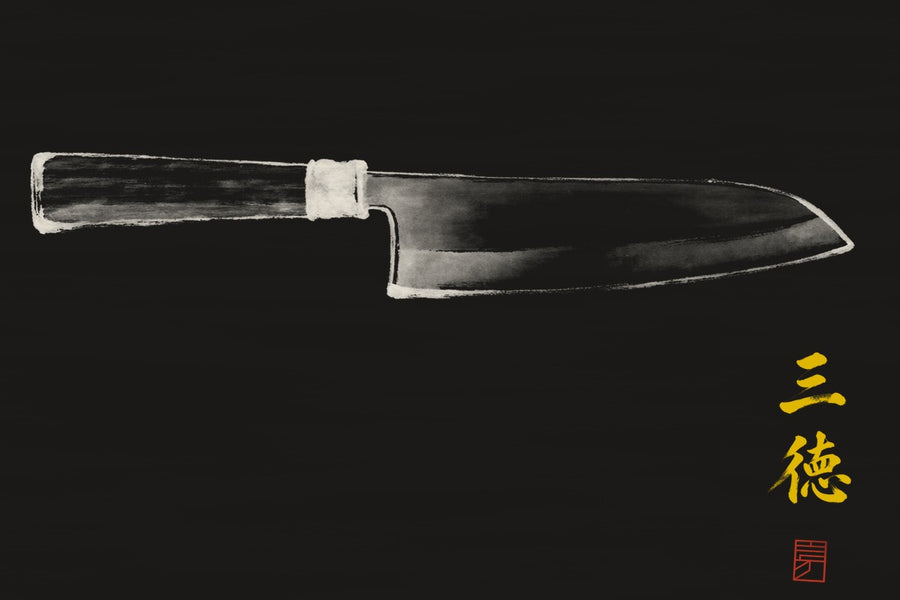
Kurosaki Sasame COSP Santoku 170mm

Regular price $459.95

Pickup available at Crows Nest

Usually ready in 24 hours

Add a saya or K&S Knife Roll to receive $20 bundle discount!

Kurosaki Sasame COSP Tsuchime
Santoku
Double Bevel
Weight 159 g | 5.6 oz
Edge Length 170 mm | 6 11/16″
Heel Height 45 mm | 1 49/64″
Width @ Heel 3.0 mm | 1/8″
Width @ Mid 1.9 mm | 5/64″
Width @ 1cm from Tip 1.0 mm | 3/64″
Steel COSP (Cobalt Special) | Stainless
Blade Construction Sanmai - Stainless Clad
Hardness (HRC) 60 - 62
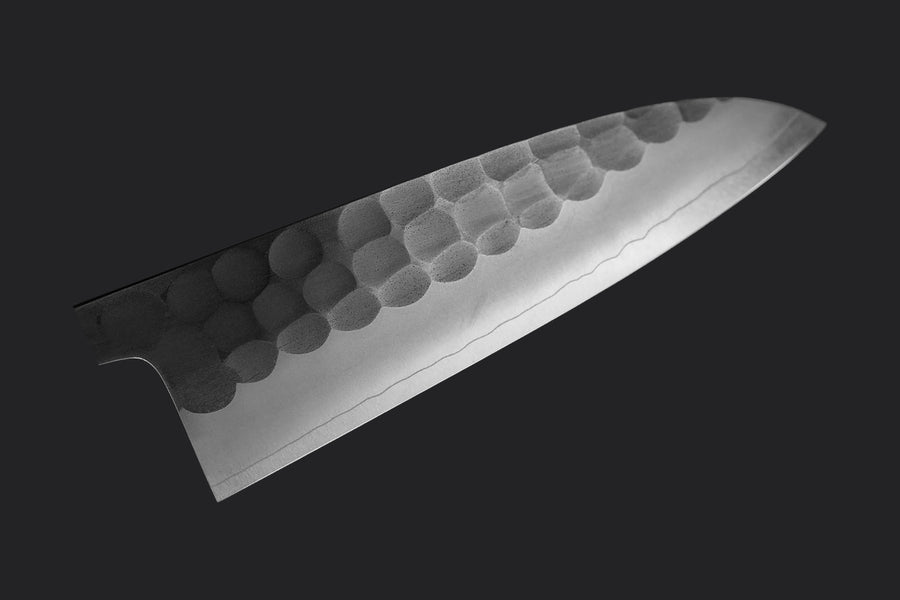
Surface Finish Tsuchime
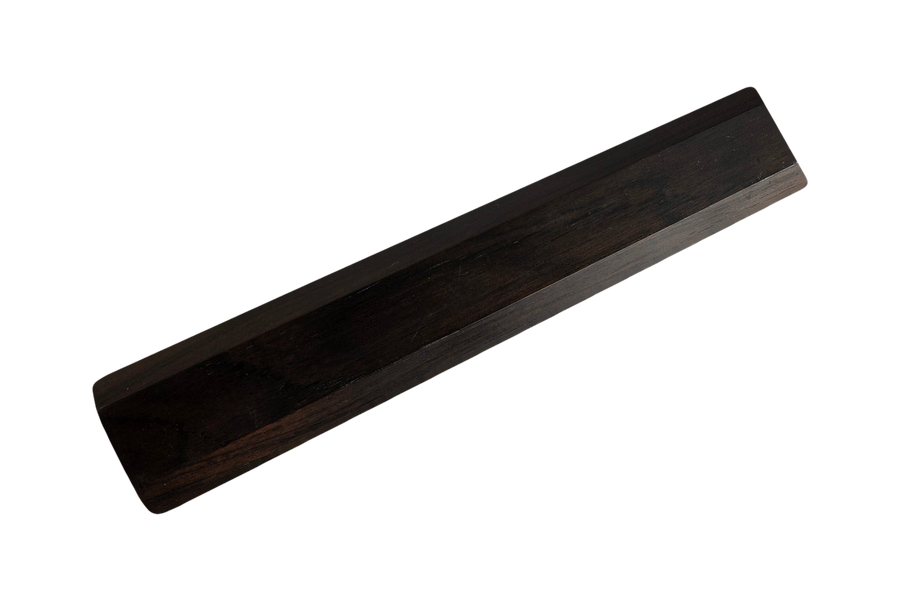
Handle Octagonal Ebony
Region Takefu
Best for
  • Pro chefs
  • Enthusiasts
  • Free shipping for knives over AU$200 Australia wide.
  • World-wide shipping via DHL Express, 3 to 5 days.


Sasame(笹目, Bamboo Pattern) a line crafted by Yu Kurosaki that is built a little bit different. With the Gekko, Senko and Kokusen using stamping method to produce the blank, the knives from the Sasame are all forged, which can be identified by its thick Machi(neck) and distal taper in the spine. This adds rigidity to the blade and made it feel very confident and precise to use, and the stainless nature will make this a line highly suitable for professionals in busy kitchen.

The combination of forging and stainless steel may seems simple, but it is something worth noting. When steel is heated up for forging, the stainless steel will be harder and deform less compare to carbon steel, there is also a smaller temperature zone you can forge them at. For these reasons, you would rarely see forged stainless steel knives.

When forging, many blacksmiths would like to thin down the blade but kept the neck and tang thick, which increases the rigidity of the blade agains t bending and torsion and gives some weight to the knife. As the result, the knife will feel very responsive and follow your desired cutting trajectory especially when cutting hard objects, and thin, high performance blade(that Kurosaki san and other Echizen smiths are known for) won't feel gossamery.

The Sasame itself inherent some of the features that we love about Kurosaki san's knives: great finish, thin and aggressive bevel geometry and a bamboo leaf pattern that proudly display its identity. The nuance is, the bevel of Sasame is not a concave grind, but a convex instead, which does improve the food release and smoothness of the cut. Pairing with the highly polished bevel surface, Sasame is the best gliding knife I've every tested from Kurosaki.

Using the Cobalt Special as the core steel, the Sasame wouldn't be as pricy as the R2/SG2 Shizuku/Fujin that are also forged, it is a successor to the previous COSP line Raijin, and is a great option for professionals and knife enthusiasts.

Pros Cons
  • Great for professionals
  • Excellent performance
  • Thin behind the edge
  • High budget
  • A little bit brittle
Care Instruction
  1. Don't cut hard things! Japanese knives are brittle so bone hacking is a NO NO!
  2. Wash with neutral detergent after use, and wipe dry;
  3. Please don't wash knife with dishwasher, it will damage the wood handle;
  4. Be careful not to leave the knife close to a heat source for a long time;
  5. It is a lot more dangerous to cut with a blunt knife than a sharp knife!
  6. It is best to sharpen a Japanese knife regularly on a waterstone.

Yu Kurosaki

Yu Kurosaki -- the leading knife maker from Takefu.

Yu Kurosaki, a master artisan in his forties, is renowned in Japanese knife making for his hand-forged blades, earning him awards and global recognition. His journey began in his teenage years, and after a twelve-year apprenticeship under Hiroshi Kato, he established his own workshop in 2014. Kurosaki excels not only in craftsmanship but also in innovative finishing techniques, notably seen in his Tsuchime and Suminagashi finishes. Recognized by the Japanese government as a “master blacksmith,” he is the youngest to receive this title. Highly esteemed for his unconventional blade designs, Kurosaki consistently surprises observers with each new creation. By blending modern metallurgical technologies with traditional forging methods, his knives boast unmatched quality, sharpness, and performance, cementing his status as a leading figure in the industry.

Read more

Yu Kurosaki, a master artisan in his forties, stands at the forefront of Japanese knife making, celebrated for his hand-forged blades that have garnered prestigious awards and global recognition. His journey began in his teenage years, and after a twelve-year apprenticeship under Hiroshi Kato, he established his own workshop in 2014. Kurosaki excels not only in craftsmanship but also in innovative finishing techniques, notably seen in his Tsuchime and Suminagashi finishes. Recognized by the Japanese government as a “master blacksmith,” he is the youngest to receive this title. Highly esteemed for his unconventional blade designs, Kurosaki consistently surprises observers with each new creation. By blending modern metallurgical technologies with traditional forging methods, his knives boast unmatched quality, sharpness, and performance, cementing his status as a leading figure in the industry.

Drawing from over 700 years of Echizen artisans' tradition, Kurosaki infuses his knives with unforgettable impressions and unparalleled cutting pleasures. His creations, meticulously crafted in small batches, have gained widespread popularity overseas, often becoming coveted collectibles. Presently situated at the esteemed Takefu Knife Village in Echizen, Fukui Prefecture, alongside other talented artisans, Yu Kurosaki continues to push the boundaries of knife making, surprising and delighting enthusiasts with each new creation.

“the leading figure of the young Japanese blacksmith, sharp knives with artistic design. ”

Est. 2014 | 平成26年
Known for Extreme performance, unique hammered pattern.
Website kurosakiknives.jp Instagram @kurosakiknives Read more about Yu Kurosaki
Yu Kurosaki — Takefu
Profile: Santoku
Profile

Santoku

The Santoku knife, embodying the meaning "three uses," is a cornerstone in Japanese kitchens, adept at slicing, dicing, and mincing. Esteemed for its versatility, it features a blade length typically between 15cm and 20cm (6 to 8 inches), catering to a wide array of culinary tasks. Distinguished by its less pointy tip compared to the Gyuto, the Santoku boasts a unique profile that contributes to its functionality and popularity. Its design is tailored to provide ease and efficiency in preparation, also because of its less aggressive prrofile, making it a preferred choice for home cooks.
Composition

COSP (Cobalt Special) Element Composition

Compare with
    COSP (Cobalt Special)
    16.0% 12.0% 8.0% 4.0% 0
    C Carbon 1.05%
    Primary hardening element. Raises hardness and wear resistance — but too much increases brittleness and corrosion susceptibility. As a reference: German 1.4112 (~0.5%) sits at the low end; VG-10 (~1.0%) is a common mid-range; SG2 (1.25–1.45%) and ZDP-189 (~3.0%) represent high and extreme ends respectively.
    C
    1.05%
    Cr Chromium 16.0%
    Raises corrosion resistance; 13%+ qualifies steel as stainless. Also improves hardenability and wear resistance. In kitchen use, higher chromium levels contribute to a slight drag or sticking sensation when cutting — a trade-off for the rust resistance it provides.
    Cr
    16.0%
    V Vanadium 0.25%
    Forms extremely hard carbides for superior edge retention. Also refines grain structure, improving toughness.
    V
    0.25%
    Mo Molybdenum 1.5%
    Improves hardenability and toughness. Boosts corrosion resistance and helps the steel hold hardness under heat.
    Mo
    1.5%
    W Tungsten 0.25%
    Forms hard carbides for wear resistance and edge retention. Gives the steel hardness even at elevated temperatures.
    W
    0.25%
    Co Cobalt 2.5%
    Allows higher hardening temperatures, increasing hardness and wear resistance. Slightly reduces toughness at high levels.
    Co
    2.5%
    C — Carbon Cr — Chromium V — Vanadium Mo — Molybdenum W — Tungsten Co — Cobalt
    Hardness 60–62 HRC
    555759616365+
    Steel
    COSP (Cobalt Special)
    Category
    Stainless
    Manufacturer
    Takefu Special Steel, Japan 🇯🇵
    Hardness
    60–62 HRC
    Steel

    COSP (Cobalt Special)

    • Manufacturer
      • Takefu Special Steel, Japan
    • Nature Stainless
    • Hardness60–62 HRC
    Takefu Special Steel's Cobalt Special steel, often referred to as Cobalt Steel, is a premium high-performance steel known for its exceptional edge retention and hardness. This steel incorporates a significant amount of cobalt in its composition, enhancing its wear resistance and strength. The addition of cobalt, along with other elements like carbon, chromium, and molybdenum, allows the steel to achieve a high level of hardness without compromising its toughness. Cobalt Special steel is designed to maintain a sharp edge for extended periods, even under rigorous use, making it highly valued for crafting high-end kitchen knives and cutting tools.
    Makers such as Mojin and Kurosaki have some excellent COSP offerings.
    Construction: Sanmai - Stainless Clad
    Construction

    Sanmai - Stainless Clad

    Sanmai(Three-Piece) is a common construction for double bevel knives where two pieces of softer cladding steel are forgewelded to each side of a harder core steel. The harder but more brittle core steel will form the hard cutting edge after heat treating, and the softer cladding will support the core to increase the overall strength of the blade.

    The soft cladding enables the thinning process to be a lot easier than a honyaki or monosteel construction. And in the case where the cladding steel are stainless in nature, it can offer protection for the carbon or semi-stainless cores against rusting and discoluoring.

    Finish: Tsuchime
    Finish

    Tsuchime

    The "Tsuchime" finish in Japanese kitchen knives refers to a distinctive hammered texture on the blade's surface. This traditional technique not only adds a unique aesthetic appeal but also provides practical benefits, such as reducing drag and preventing food from sticking to the blade during slicing. It's a hallmark of craftsmanship that blends functionality with artistry, making each knife not only a tool but a piece of art.

    Handle
    Handle

    Handle Specs

    • Profile Octagonal WA
    • Material
      • Ebony

    This handle, crafted from a single piece of ebony, exemplifies minimalist elegance and functional design. Its unique octagonal shape, featuring a subtle taper, offers a comfortable grip and a visually appealing geometric profile. The ebony wood, known for its deep, rich color and durability, has been meticulously milled from a single block, ensuring a seamless construction that highlights the wood's natural beauty and grain. The handle's surface has been highly polished, achieving a glossy finish that not only enhances the ebony's luxurious dark hue but also provides a smooth, tactile experience for the user. This design choice reflects a minimalist approach, focusing on simplicity, quality, and usability. The combination of the octagonal shape with the taper adds a modern twist to the classic material, making it a standout piece that blends traditional craftsmanship with contemporary aesthetics.

    1 / 5

    You May Also Like