PRAHRAN STORE NOW OPEN · THU–MON · 10AM–6PM

Myojin Riki  |  SKU: MYOJ_COMI_GY240EB

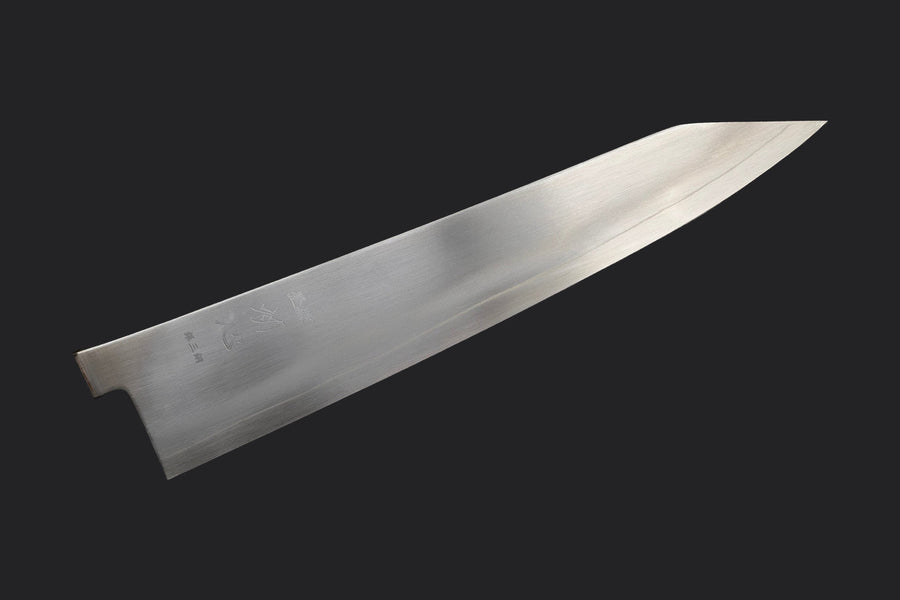
Myojin Riki Cobalt Special Steel Gyuto 240mm Ebony Handle

Regular price $439.95

Sold out right now

Leave your email and we’ll send one message the moment it’s back in stock.

One email, no marketing. Privacy policy.

Availability

  • St Peters, NSW —
    2 Bishop St, Unit 2, St Peters NSW 2044
  • Crows Nest, NSW —
    107 West St, Shop 1, Crows Nest NSW 2065
    Pickup only
  • Prahran, VIC —
    180 Commercial Road, Shop 1, Prahran VIC 3181
    Pickup only
Detailed Specifications
Line Myojin Cobalt Special COSP
Profile Gyuto / Chef's knife
Bevel Type Double Bevel
Weight 222 g | 7.8 oz
Edge Length 233 mm | 9 11/64″
Heel Height 51 mm | 2 1/64″
Width @ Heel 2.6 mm | 7/64″
Width @ Mid 2.6 mm | 7/64″
Width @ 1cm from Tip 0.6 mm | 1/32″
Steel COSP (Cobalt Special) | Stainless
Blade Construction Sanmai - Stainless Clad
Hardness (HRC) 60 - 62
Surface Finish Ukiba
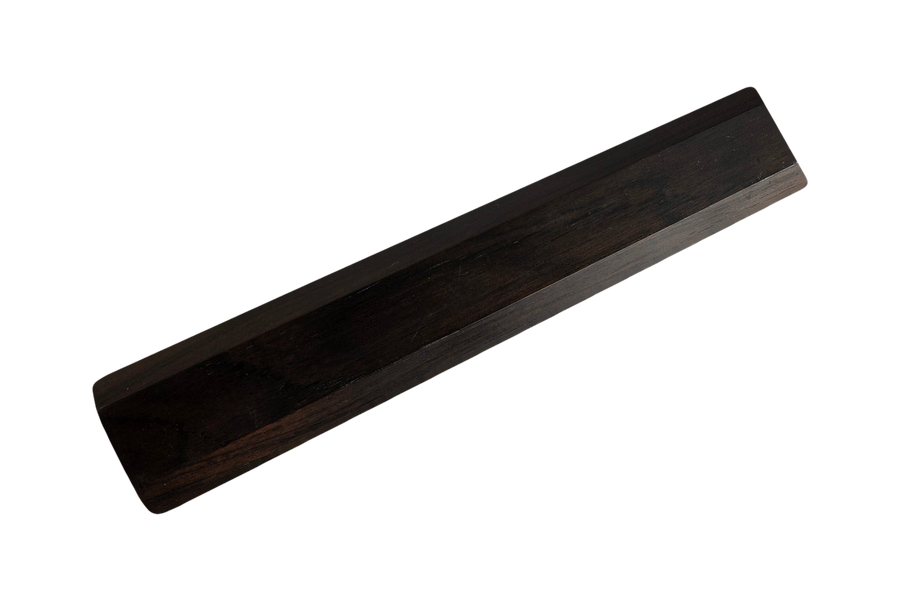
Handle Octagonal Ebony
Region Tosa
Best for
  • First-timers
  • Pro chefs
  • Free shipping for knives over AU$200 Australia wide.
  • World-wide shipping via DHL Express, 3 to 5 days.


The Cobalt Special (COSP) knives from Myojin Riki feature blades crafted from Cobalt Special steel, a high-end Japanese stainless steel known for superior edge retention, sharpness, and corrosion resistance. Enriched with carbon and chromium, it offers excellent durability. The addition of cobalt, molybdenum, and vanadium enhances its hardness and wear resistance, making it ideal for everyday use.

Pros Cons
  • Easy to look after
  • Excellent fit and finish
  • Thin behind the edge
  • More sharpening needed
Care Instruction
  1. Don't cut hard things! Japanese knives are brittle so bone hacking is a NO NO!
  2. Wash with neutral detergent after use, and wipe dry;
  3. Please don't wash knife with dishwasher, it will damage the wood handle;
  4. Be careful not to leave the knife close to a heat source for a long time;
  5. It is a lot more dangerous to cut with a blunt knife than a sharp knife!
  6. It is best to sharpen a Japanese knife regularly on a waterstone.

Myojin Riki

Myojin Riki Seisakusho, a Tosa knife workshop

Myojin Riki Seisakusho (明神利器製作所) is a knife workshop in Uranouchi, Susaki, Kochi. It is headed by Naohito Myojin, son of Tateo Myojin.

Kochi City's page on Tosa crafts describes the workshop as carrying work from forging to finishing in one continuous process. The page says it sharpens a hamaguri-ba (蛤刃) edge, ground convex, a technique learned through several years of training in Fukui, and that it also takes sharpening-only orders from outside Kochi Prefecture.

Among the lines we list, the Hatsukokoro x Myojin Shirasagi single-bevel knives cover Blue 2 kurouchi yanagiba, K-tip yanagiba, sakimaru yanagiba and honesuki, White 2 deba, left-handed mioroshi deba, left-handed yanagiba and honesuki, and a Ginsan yanagiba. We also list Myojin Cobalt Special gyuto, santoku and bunka.

“A Tosa workshop in Susaki, Kochi, described by Kochi City's craft page as working from forging through finishing.”

Known for A convex hamaguri-ba edge, as Kochi City's craft page describes
Instagram @tetsujin_labo Read more about Myojin Riki

Myojin Riki · Tosa

Knife details

Frequently asked questions

Gyuto or santoku: which should I choose?

Both are all-purpose Japanese knives, and for most home cooks either will handle the bulk of daily prep. The choice comes down to length, blade shape, and how you like to cut.

A gyuto is the Japanese chef's knife, with a gently curved edge that lets you rock and slide through cuts as well as chop. Tojiro's guide to Western knife shapes gives 150 to 210mm as the household size for a gyuto and up to 360mm for professional use. The extra length and pointed tip give you reach and versatility, from proteins to large produce.

Tojiro's guide to Japanese knife shapes gives 165 to 170mm as the household size for a santoku, which has a flatter profile and a rounded sheep's-foot tip. It rewards a straight up-and-down push cut, feels nimble in smaller hands or tight kitchens, and is the classic Japanese household knife.

Rule of thumb: choose a gyuto if you want one do-everything knife with more reach, or a santoku if you prefer a compact, easy-to-control blade. Plenty of our customers end up owning both.

What is a gyuto knife used for?

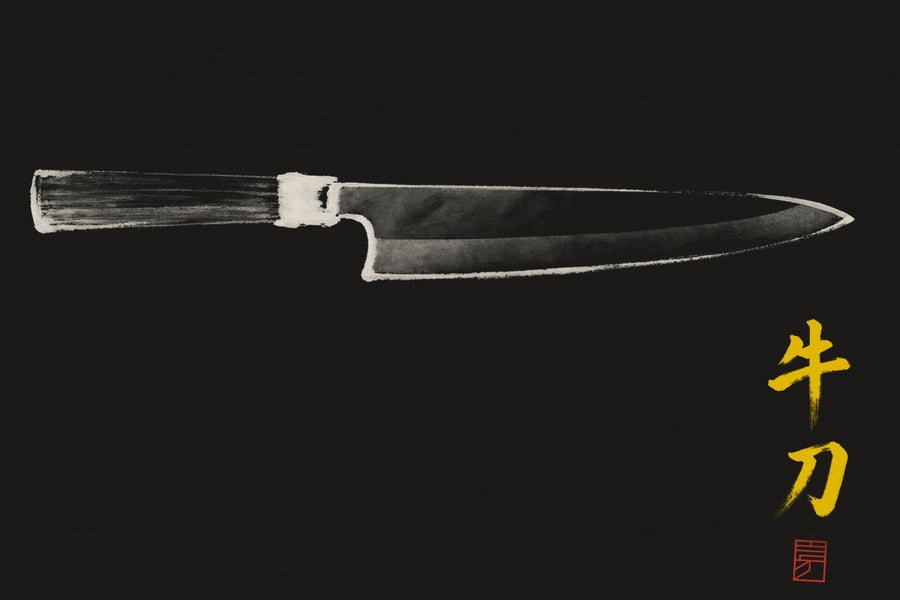
The gyuto (牛刀) is a chef's knife for all kinds of cooking, and it is basically double-bevel. A knife maker's guide says it came to Japan in the Meiji era with the culture of eating beef, which gave it its name, but it does not cut only meat.

A Japanese dictionary describes the gyuto as slimmer than a santoku, with a pointed tip, used widely for meat, fish and vegetables.

What gyuto length should I choose?

A knife maker's guide lists 150 to 210 mm, double-bevel, for home use, and 180 to 360 mm, single- or double-bevel, for professional kitchens.

We suggest starting with a 210 mm gyuto for a home kitchen, and stepping up to 240 mm if you regularly cut large pieces and have the board for it.

240mm vs 210mm gyuto: which size should I choose?

Get the 210mm. We only point people to a 240mm when they have about 45cm of usable board, cook in volume, and regularly break down big roasts or whole fish.

On the gyutos we've measured for our product pages, the extra length is real. As of October 2026, the 210mm gyutos we list have a median edge of 213mm from heel to tip, across the 111 we have measured; the 240mm ones have a median of 240mm, across 100. The 240s are also heavier, 212g against 175g at the median, and a touch taller at the heel, 50mm against 48mm.

That length buys you a longer stroke. A 240 goes through a big piece of meat in one or two pulls and moves a board of chopped vegetables with less shuffling. It costs you board space and control. On a small board the tip hangs off the edge, and fine work like herbs and shallots feels like more knife than the job needs.

Japanese or German kitchen knives: which should I buy?

Our advice: choose a Japanese knife if you want the keenest edge and do not mind caring for a harder blade, and a German knife if you want a tougher, more forgiving knife you can hone casually and use for heavy prep. On two Japanese knife steels, the steel makers' own figures start at 60 HRC: Takefu Special Steel rates VG10 at 60 HRC or more, and Proterial lists the hardening hardness of Aogami 2 (Blue 2) as over 60 HRC.

Our care advice for a Japanese knife: keep it off bone, frozen food and very hard squash, and use a wooden or plastic board.

What is the flat spot on a knife, and is it the same as the "sweet spot"?

The flat spot is the straight run of edge from the heel towards the middle, the part that meets the board along its length. At our counter we call it the sweet spot; elsewhere "sweet spot" often means the balance point, so ask which one someone means.

Past the flat, the edge curves up towards the tip (the belly), which suits a swinging or pulling stroke. Sharpeners also say "flat spot" for a worn patch of edge, so when you mean the shape, "the flat part of the edge" is clearer.

What is Cobalt Special (CoSP) steel?

Cobalt Special (CoSP) is Takefu's stainless blade steel for cutlery: Takefu's page describes it as super high-grade and made by a special remelting process that gives a uniform composition and finely dispersed carbides.

Takefu's table gives 1.05% carbon, 16.00% chromium, 1.50% molybdenum, 0.25% vanadium, 0.25% tungsten and 2.50% cobalt, with a hardness of HRC 60 or more. In Takefu's description, tungsten improves tempering resistance, molybdenum adds corrosion resistance, vanadium gives a finer microstructure, and cobalt strengthens the matrix and helps keep a long-lasting edge. Its 16.00% chromium is above the JSSA's 10.5% minimum for stainless, which the JSSA says strictly means rusts less; wash and dry the knife after use.

What does a Myojin Riki hamaguri-ba (clam) edge mean?

A hamaguri-ba edge, written 蛤刃, is a convex edge shape, and it is the shape the workshop 明神利器製作所 sharpens its knives to. Kochi City's craft page records that Myojin Riki learned it over several years of training in Fukui.

The same page says the workshop also takes sharpening-only orders from outside Kochi.

You May Also Like