Crows Nest store now open from Friday to Tuesday, in store specials!

Masutani  |  SKU: MASU_VG1TS_SLNA165

Masutani VG1 Tsuchime Nakiri 165mm Slim

Regular price $129.95
Tax included Shipping calculated at checkout.

Pickup currently unavailable at Crows Nest

Detailed Specifications
Line Masutani VG1 Tsuchime
Profile Nakiri
Bevel Type Double Bevel
Weight 151 g | 5.3 oz
Edge Length 167 mm | 6 37/64″
Heel Height 45 mm | 1 49/64″
Width @ Spine 1.5 mm | 1/16″
Width @ Mid 1.5 mm | 1/16″
Width @ 1cm from Tip 1.5 mm | 1/16″
Steel VG1 | Stainless
Blade Construction Sanmai - Stainless Clad
Hardness (HRC) 58 - 61
Surface Finish Tsuchime
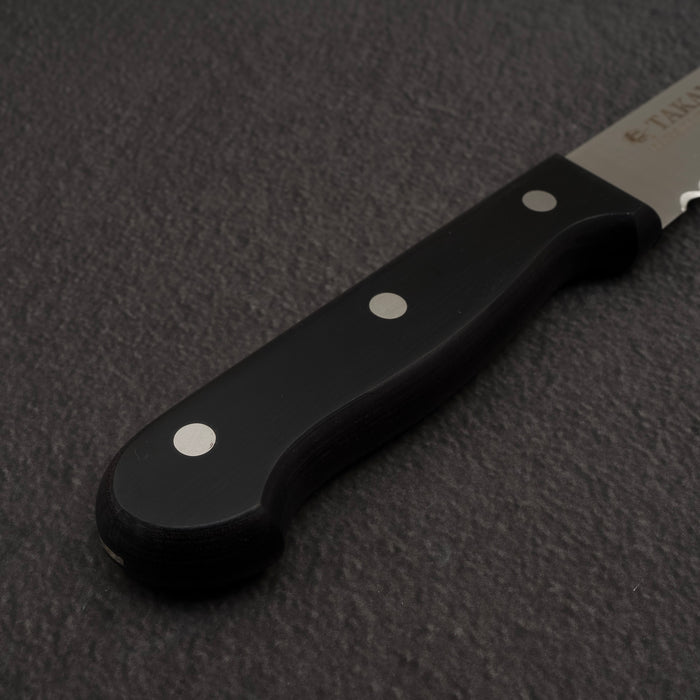
Handle Western Pakka Wood no Bolster
Region Echizen
Best for
  • First-timers
  • Students
    • Free shipping for knives over AU$200 Australia wide.
    • World-wide shipping via DHL Express, 3 to 5 days.


    Masutani's VG1 Tsuchime (Hammered) line probably offers one of the best price / performance ratio amongest all the K&S offerings. The VG1 steel in stainless clad with hammered finish brings a simple and classic look to the knife.

    VG1 is very much similar to its favorite rival VG10 steel in terms of durability and corrosion resistance. With thin grind behind the edge, the Masutani is more like a laser to allow you can cut through food effortlessly. 


    Care Instruction
    1. Don't cut hard things! Japanese knives are brittle so bone hacking is a NO NO!
    2. Wash with neutral detergent after use, and wipe dry;
    3. Please don't wash knife with dishwasher, it will damage the wood handle;
    4. Be careful not to leave the knife close to a heat source for a long time;
    5. It is a lot more dangerous to cut with a blunt knife than a sharp knife!
    6. It is best to sharpen a Japanese knife regularly on a waterstone.
    Masutani

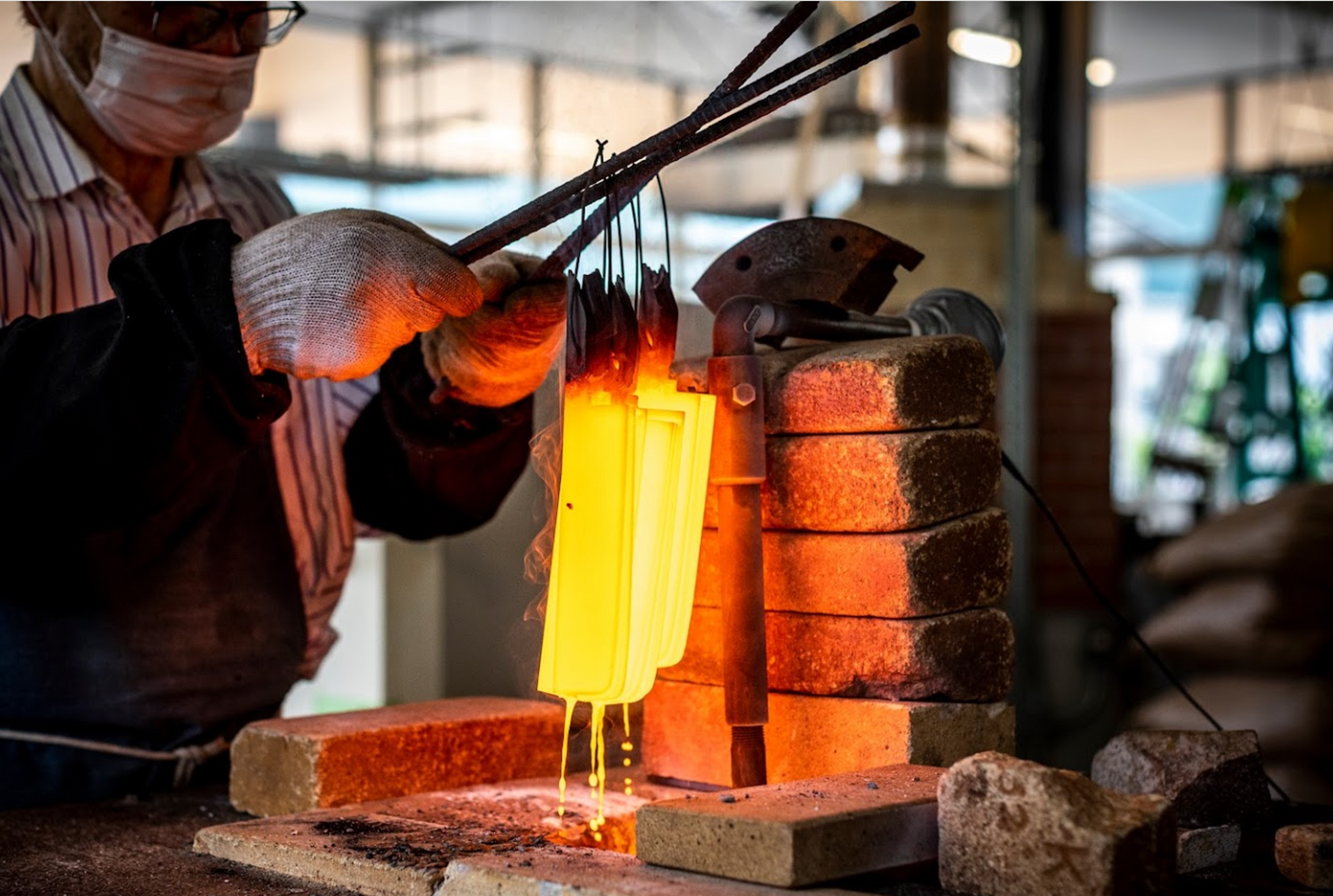
    Masutani Hamono, leveraging both VG-1 and VG-10 steel, has established itself within the competitive sphere of Japanese knife-making by offering a cutting feel comparable to premium Echizen brands such as Kurosaki and Takamura. This alignment in performance with high-end brands, despite their more accessible price point, positions Masutani knives as exceptional within their category. Their craftsmanship ensures a blend of traditional skill and modern technology, making Masutani knives highly regarded for their sharpness and durability, leading the way in value-for-money within the Japanese knife market.

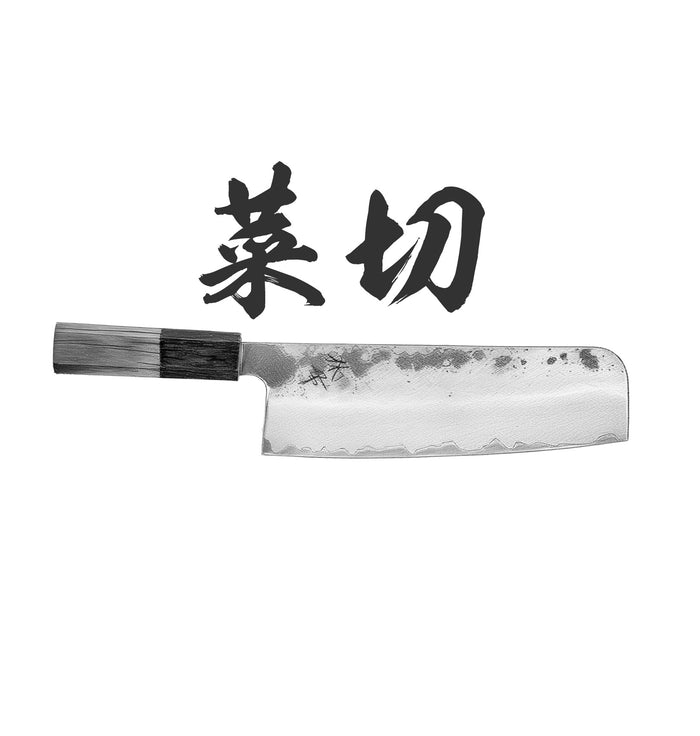
    • Profile: Nakiri

      The Nakiri knife is a distinctive tool in the Japanese kitchen, resembling a slender, shorter variant of a Chinese cleaver and serving as the household counterpart to the professional-grade Usuba. It is characterized by its relatively flat edge profile, designed specifically for a chopping motion ideal for vegetable preparation. Unlike knives intended for slicing or sawing motions, the Nakiri's design emphasizes straight, clean cuts through vegetables without the need for pushing or pulling. Its blade is notably thin, underscoring its specialization for tasks that do not involve contact with bones, even small ones. This specialization makes the Nakiri an indispensable tool for those seeking precision and ease in vegetable preparation.

      Slide for more >>

    • Steel: VG1

      VG1 is the starting point of our V steel series, which is refined using high-quality raw materials with minimal impurities. It is a stainless blade steel with a fine structure, high toughness, exceptional hot forging, easy heat treatment, and excellent corrosion resistance.

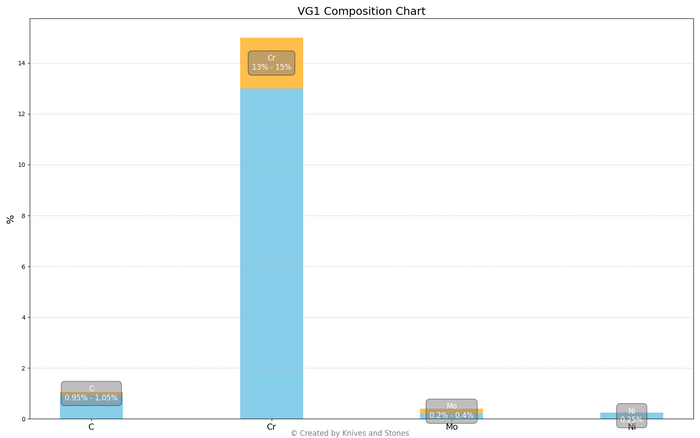
      Since it contains 1.0% carbon (C), hard primary and secondary carbides coexist in the matrix, contributing to wear resistance.
      It contains 14% chromium (Cr), which is maximally effective in improving corrosion resistance and strength. Molybdenum (Mo), together with chromium (Cr), forms hard complex carbides, which greatly contribute to improved wear resistance and corrosion resistance.

      VG1 has achieved the four major requirements for knives: (1) high hardness, (2) high toughness, (3) high wear resistance, and (4) high corrosion resistance, making it suitable for a wide range of uses, including knives, hair cutting shears, and industrial machine blades for food processing.

      Manufacturer:

      • Takefu Special Steel, Japan

      Nature: Stainless

      Hardness: 58- 61

      << Slide for more >>

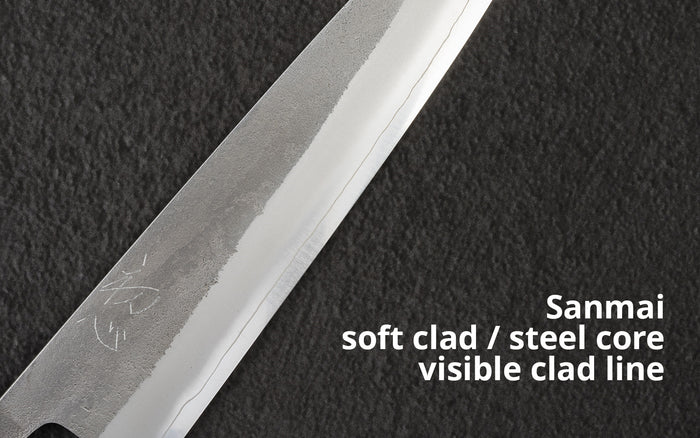
    • Construction: Sanmai - Stainless Clad

      Sanmai(Three-Piece) is a common construction for double bevel knives where two pieces of softer cladding steel are forgewelded to each side of a harder core steel. The harder but more brittle core steel will form the hard cutting edge after heat treating, and the softer cladding will support the core to increase the overall strength of the blade.

      The soft cladding enables the thinning process to be a lot easier than a honyaki or monosteel construction. And in the case where the cladding steel are stainless in nature, it can offer protection for the carbon or semi-stainless cores against rusting and discoluoring.

      << Slide for more >>

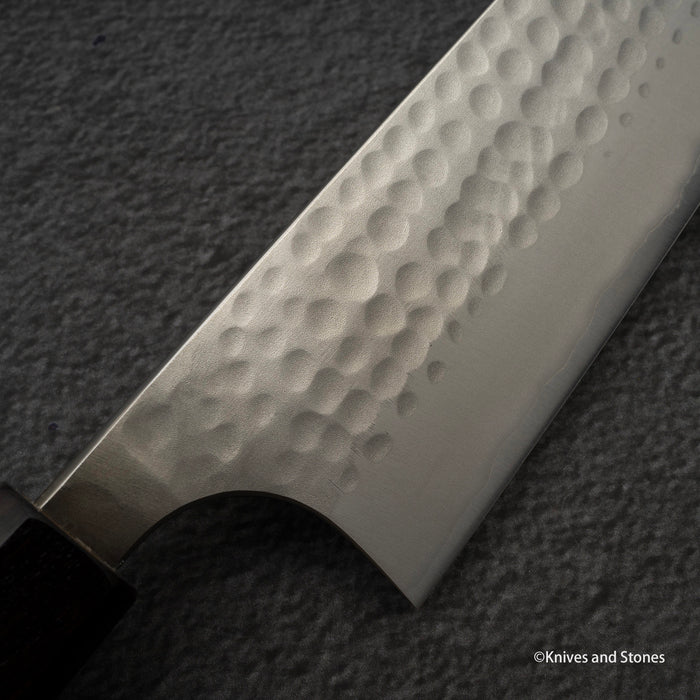
    • Finish: Tsuchime

      The "Tsuchime" finish in Japanese kitchen knives refers to a distinctive hammered texture on the blade's surface. This traditional technique not only adds a unique aesthetic appeal but also provides practical benefits, such as reducing drag and preventing food from sticking to the blade during slicing. It's a hallmark of craftsmanship that blends functionality with artistry, making each knife not only a tool but a piece of art.

      << Slide for more >>

    • Handle Specs

      Profile: Western without bolster

      Material:

      • Pakka Wood

      The most basic handle designed for mass production knives. Affordable and lightweight but still have decent durability thanks to the very stable resin infused wood firbre

      << Slide for more