
★★★★★Great value workhorse
A solid stainless steel workhorse and a great choice for the price. Nice finish, comfortable handle, rounded spine and choil, and it looks amazing
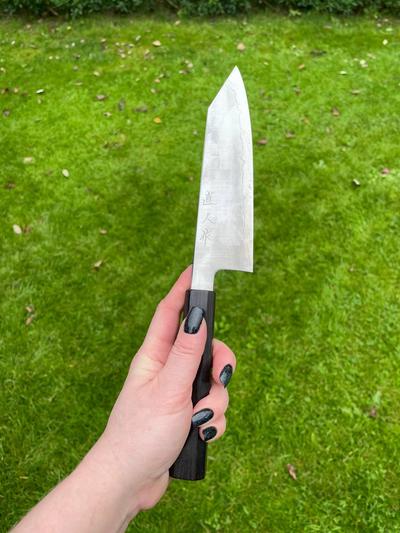



Myojin Cobalt Special COSP Bunka 180mm Ebony Handle is backordered and will ship as soon as it is back in stock.
Sold out right now
Leave your email and we’ll send one message the moment it’s back in stock.
One email, no marketing. Privacy policy.
We match the delivered price (including shipping) of in-stock items from reputable specialist knife retailers. Clearance and pre-owned items excluded. Each request is checked by our team.
Delivery unavailable for this item. Available for in-store pickup only.
| Line | Myojin Cobalt Special COSP |
| Profile | Bunka / K-tip santoku |
| Bevel Type | Double Bevel |
| Weight | 131 g | 4.6 oz |
| Edge Length | 169 mm | 6 21/32″ |
| Heel Height | 48 mm | 1 57/64″ |
| Width @ Heel | 2.1 mm | 5/64″ |
| Width @ Mid | 1.9 mm | 5/64″ |
| Width @ 1cm from Tip | 0.8 mm | 1/32″ |
| Steel | COSP (Cobalt Special) | Stainless |
| Blade Construction | Sanmai - Stainless Clad |
| Hardness (HRC) | 60 - 62 |
| Surface Finish | Ukiba |
| Handle | Octagonal Black Chacate |
| Region | Tosa |
| Best for |
|

| Pros | Cons |
|
|
A solid stainless steel workhorse and a great choice for the price. Nice finish, comfortable handle, rounded spine and choil, and it looks amazing
Great balance in hand
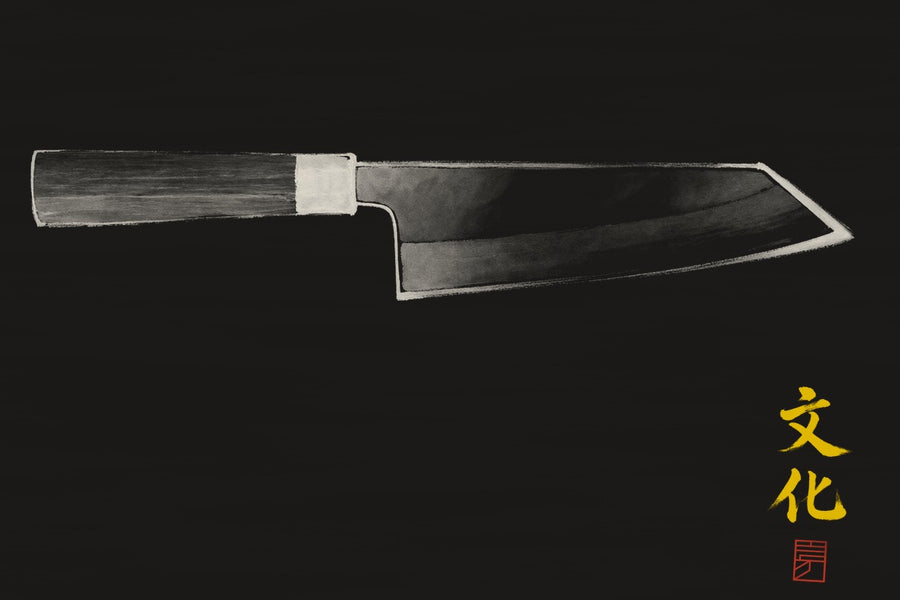
文化
K-tip santoku · Double bevel
A compact all-rounder like a santoku; a Sakai maker says its angled K-tip suits fine work.
Read moreコバルトスペシャル鋼
Stainless · Takefu Special Steel
Takefu stainless with 2.50% cobalt; Takefu says the cobalt helps the edge last.
Read more三枚
3 layers · stainless clad
Hard core between two stainless layers, bare only at the edge; the cladding resists rust.
Read more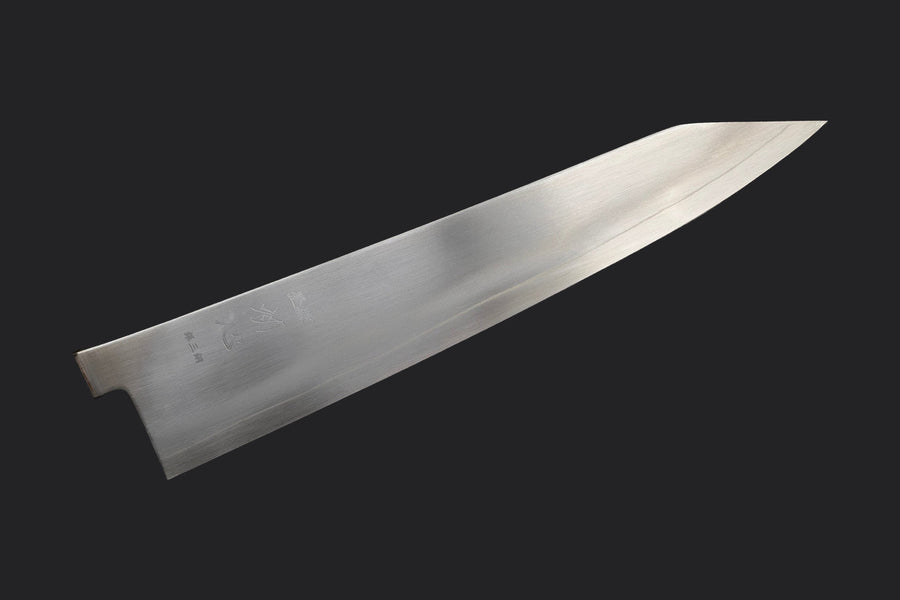
Floating-edge finish
Polished core with a sandblasted matt band above the clad line; the edge seems to float.
Read more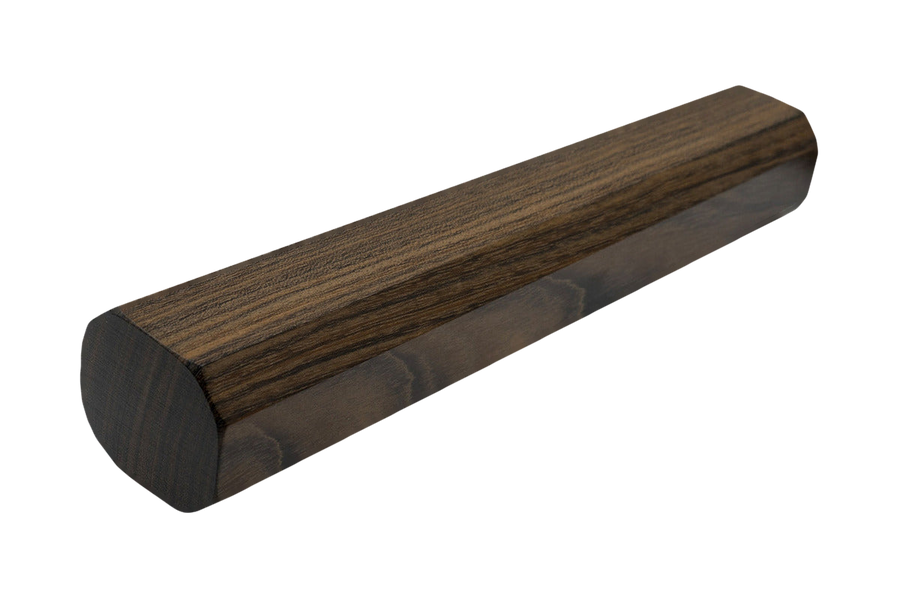
Octagonal WA
Black chacate, a dense dark African wood near ebony, eight-sided; may show pale sapwood.

The Myojin Riki Cobalt Special COSP Bunka 180mm is a stainless-clad general-purpose knife best fit for first-timers and professional chefs seeking a pointier Santoku profile with high edge retention. Crafted in Tosa by Naohito Myojin, this double-bevel blade features an Ukiba surface finish and measures 169mm in edge length with a 48mm heel height. The distinctive reverse tanto tip and straighter edge facilitate precise slicing, dicing, and chopping of vegetables and meats, while the thin geometry behind the edge supports clean cutting performance.
This san-mai stainless clad construction uses Takefu Special Steel COSP, achieving 60-62 HRC through cobalt enrichment for wear resistance and corrosion stability. The blade tapers from 2.1mm at the spine to 0.8mm near the tip and weighs 131g, pairing with an octagonal Ebony handle for balanced control. As a stainless steel option, it offers easier care than reactive alternatives while maintaining the exceptional grinding standards Myojin Riki is known for. Users should note that this specific steel composition may require more frequent sharpening sessions to maintain optimal performance despite its high hardness rating.
Join our Rewards Program & Newsletter to receive a 7% OFF coupon and exclusive member perks.
*Limited to one use per customer · Minimum spend A$30 · Valid 30 days
THANKS FOR SIGNING UP!
Click the confirmation link we just emailed you, and your 7% OFF code arrives straight away.
Can’t see it? Give it a minute, then search for Knives & Stones or check your spam folder.
