PRAHRAN STORE NOW OPEN · THU–MON · 10AM–6PM

Hatsukokoro  |  SKU: HS-ST-W2SLC-CK195

Hatsukokoro Sentan White 2 Stainless Clad Chinese Cleaver 195mm

Regular price $169.00

IMPORTANT: Carbon steel knives can rust or patina quickly if not cared for properly. They require regular cleaning, drying, and oiling. If you are unfamiliar with carbon steel maintenance, we recommend choosing a stainless steel option instead.

Sold out right now

Leave your email and we’ll send one message the moment it’s back in stock.

One email, no marketing. Privacy policy.

Availability

  • St Peters, NSW —
    2 Bishop St, Unit 2, St Peters NSW 2044
  • Crows Nest, NSW —
    107 West St, Shop 1, Crows Nest NSW 2065
    Pickup only
  • Prahran, VIC —
    180 Commercial Road, Shop 1, Prahran VIC 3181
    Pickup only
Detailed Specifications
Line Hatsukokoro Sentan White 2 Chinese Cleaver
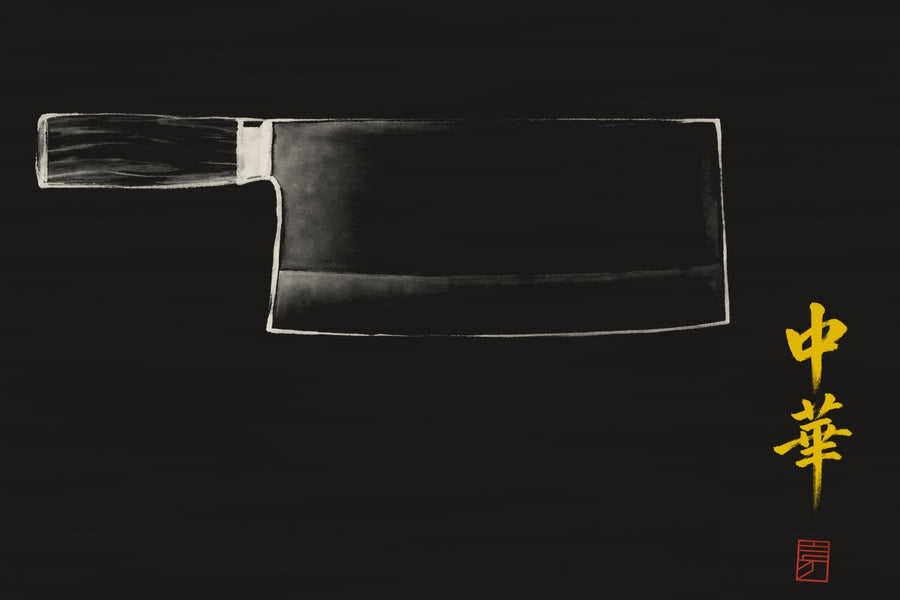
Profile Chuka (Cleaver) / Chinese cleaver
Bevel Type Double Bevel
Weight 309 g | 10.9 oz
Edge Length 193 mm | 7 19/32″
Heel Height 95 mm | 3 47/64″
Width @ Heel 3.5 mm | 9/64″
Width @ Mid 3.4 mm | 9/64″
Width @ 1cm from Tip 2.9 mm | 7/64″
Steel White 2 / Shirogami #2 | Carbon
Hardness (HRC) 60 - 64
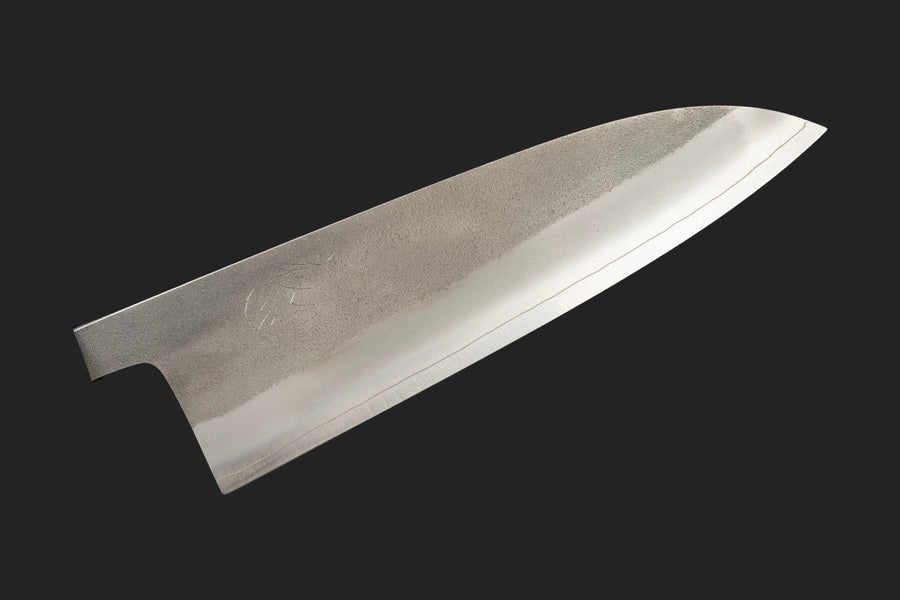
Surface Finish Nashiji
Handle
Region Hyogo
Best for
  • Pro chefs
  • Enthusiasts
  • Free shipping for knives over AU$200 Australia wide.
  • World-wide shipping via DHL Express, 3 to 5 days.


The Sentan Chinese cleaver pairs a Shirogami #2 carbon steel core, hardened to 60 to 64 HRC, with stainless cladding. The cladding protects the outer surfaces while the cutting edge keeps the sharpening ease and bite of carbon steel, which is the combination most chuka buyers have been missing.

This is a true thin slicer: a tall, rectangular blade in the 195 to 200 mm range, ground thin behind the edge, at weights around 285 to 309 g. The defined tip handles scoring and carving while the flat edge takes heavy chopping, with no bone contact.

The core is reactive carbon steel, so the routine matters: wipe the blade and dry it immediately after use rather than leaving it on the wet edge of the sink. Used and cared for like that, the Sentan goes through a potato as nicely as a top Japanese gyuto, and it makes breaking down vegetables, herbs and portions of meat a one-knife job.

Pros Cons
  • Excellent performance
  • Thin behind the edge
  • Great for professionals
  • Need extra care
  • High budget
Care Instruction
  1. Don't cut hard things! Japanese knives are brittle so bone hacking is a NO NO!
  2. Wash with neutral detergent after use, and wipe dry;
  3. Please don't wash knife with dishwasher, it will damage the wood handle;
  4. Be careful not to leave the knife close to a heat source for a long time;
  5. It is a lot more dangerous to cut with a blunt knife than a sharp knife!
  6. It is best to sharpen a Japanese knife regularly on a waterstone.
  7. Oil the (carbon) knife if storing for an extended period of time to prevent rust.

Hatsukokoro

Hatsukokoro, a knife brand from Amagasaki

Hatsukokoro (初心) is a knife brand from Amagasaki, Hyogo, launched in 2019. It is a brand rather than a forge: it works with knife makers instead of forging itself.

The name comes from the proverb 初心忘るべからず, roughly never forget your beginner's mind. For the same characters the brand chose the gentler reading hatsukokoro over shoshin.

The brand's own catalogue names the place behind some of its lines, and the maker behind a few: Shinkiro comes from Fukushima, and Hayabusa HAP40, Saihyo and Sunaarashi from Seki City, while for others the maker or the place stays private. Some of our listing titles also carry the maker alongside the brand, such as Hatsukokoro x Yoshikane and the Hatsukokoro x Yoshihiro Yauji collaboration.

The Hatsukokoro lines we list include both carbon and stainless steels. Our listings include Hayabusa in SG2 and Aogami Super, Saihyo in SG2 and Ginrei in Ginsan. Carbon steel kurouchi lines include Aosagi, Aokitae, Kurokaze and Kurogane.

“A knife brand from Amagasaki that works with knife makers rather than forging.”

Est. 2019 | 令和元年
Known for Lines made with partner makers, from Seki City to Fukushima
Website handk.co Instagram @handk_official Read more about Hatsukokoro

Hatsukokoro · Hyogo

Knife details

Frequently asked questions

Can a chuka cleaver cut bone?

It depends on the blade thickness. A knife maker's guide sorts the chuka cleaver (中華包丁) into three thicknesses, each suited to different foods.

The thin kind (薄刃), the lightest, is for the everyday foods a supermarket sells; the medium-thick kind (中厚刃) can also cut hard foods such as bone-in chicken and fish bones; and the thick kind (厚刃), the heaviest and meant for experienced users, suits bone-in block meat and frozen food. Check the thickness of your blade before you cut any bone.

Shirogami 1 vs shirogami 2 — what is the difference?

Shirogami 1 (White 1) has a higher carbon content than Shirogami 2 (White 2), roughly 1.3% vs 1.1%.

White 2 (Shirogami #2) has about 1.1% carbon and, per Proterial, a hardening hardness of over 60 HRC; White 1 sits around 1.3% carbon. That 0.2% difference is the core spec gap. More carbon generally means you can push hardness higher and hold a keener edge, but it also makes the steel more brittle and less forgiving. White 2 trades a bit of that potential peak sharpness for slightly better toughness and ease of sharpening.

Shirogami 1 carries a certain prestige. Sukenari's Nobuo Hanaki once told me directly that they only use White 1 for their mizu-honyaki because it is the pure form of carbon steel, it carries that halo. Among traditional smiths, White 1 is still spoken of as the benchmark.

Is Hatsukokoro a maker or a brand, and who makes the knives?

Hatsukokoro (初心) is a brand, not a forge. H&K, a company founded in 2013 and based in Amagasaki, Hyogo, created it in 2019.

H&K names the producer for some lines, for example Shinkiro by Takahiro Nihei in Fukushima, Ginyou by Yoshihiro Yauji in Echizen and Kurosagi by Motokyuichi Hamono in Nagasaki, and keeps others confidential. Some knives we stock carry the maker in the title, such as Hatsukokoro x Yoshikane SKD Nashiji.

What does the name Hatsukokoro mean?

The name comes from the Japanese proverb 初心忘るべからず, which means don't forget your original intention. The company read it gently as hatsukokoro rather than shoshin.

H&K created the brand in 2019, six years after the company was founded, and chose the name for its knife line.

Which Hatsukokoro line should I pick, carbon or stainless?

Pick by how much care you want to give. The carbon lines, Blue 1, Blue 2 and AS kurouchi, need drying and a little oil after use. The SG2, HAP40, Ginsan and VG10 lines are low maintenance, so they suit a busy kitchen or someone who just wants to cook.

Neither is better; it depends on your routine. If you will dry and oil the blade after each use, a carbon line can suit you, and if you want the least fuss, a stainless line is the easier choice.

You May Also Like