PRAHRAN STORE NOW OPEN · THU–MON · 10AM–6PM

Hatsukokoro  |  SKU: HS-HAB-ZDP189MK-GY210

Hatsukokoro Hayabusa ZDP189 Migaki Gyuto 210mm

Regular price $389.95

Sold out right now

Leave your email and we’ll send one message the moment it’s back in stock.

One email, no marketing. Privacy policy.

Availability

  • St Peters, NSW —
    2 Bishop St, Unit 2, St Peters NSW 2044
  • Crows Nest, NSW —
    107 West St, Shop 1, Crows Nest NSW 2065
    Pickup only
  • Prahran, VIC —
    180 Commercial Road, Shop 1, Prahran VIC 3181
    Pickup only
Detailed Specifications
Line Hatsukokoro Hayabusa ZDP-189
Profile Gyuto / Chef's knife
Bevel Type Double Bevel
Weight 130 g | 4.6 oz
Edge Length 209 mm | 8 15/64″
Heel Height 46 mm | 1 13/16″
Width @ Heel 2.3 mm | 3/32″
Width @ Mid 1.7 mm | 1/16″
Width @ 1cm from Tip 0.7 mm | 1/32″
Steel ZDP-189 | Powdered | Stainless
Blade Construction Sanmai - Stainless Damascus Clad
Hardness (HRC) 63 - 66
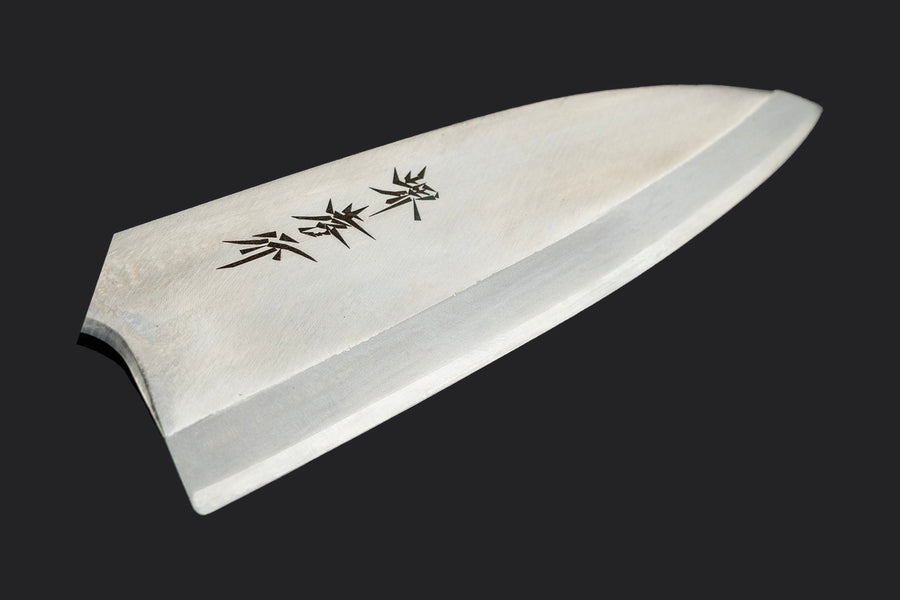
Surface Finish Migaki
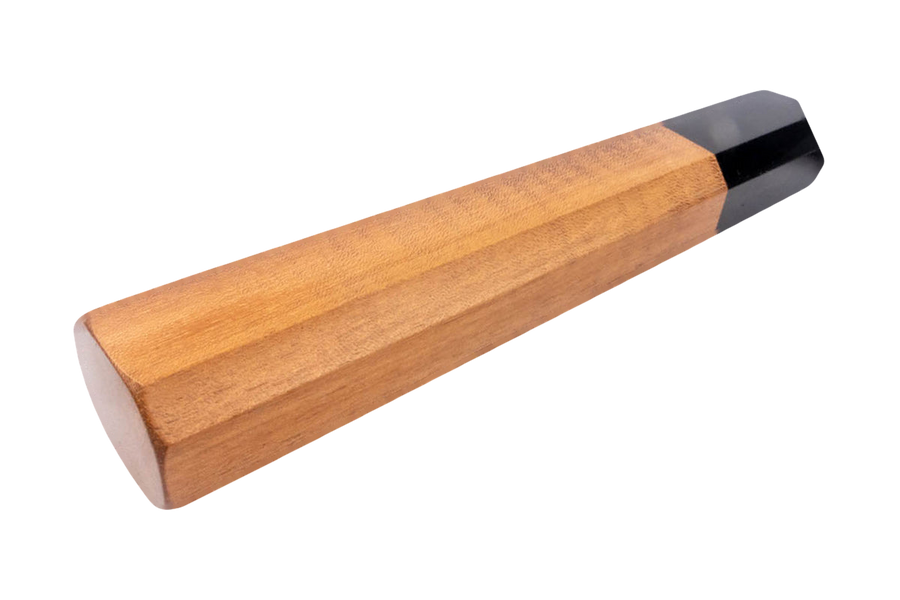
Handle Octagonal Teak Black Ferrule
Region Hyogo
Best for
  • Pro chefs
  • Enthusiasts
  • Free shipping for knives over AU$200 Australia wide.
  • World-wide shipping via DHL Express, 3 to 5 days.


Another addition to the ever popular Hatsukokoro Hayabusa(隼,Peregrine Falcon) line, featuring the edge retention king: ZDP-189 powdered steel. With over 3% of carbon content and up HRC 67, the Hayabusa ZDP-189 line is designed for those seeking the ultimate long lasting edge.

Previously this steel was almost found exclusively on Sukenari knives, and they usually comes with a rather big price tag. That situations may just change with the introduction of the Hayabuse ZDP-189 series, with a fit and finish that is arguably on par with the Sukenari, these hyper steel blades comes in with a price that is close to some SG2 knives. Hayabusa also offers a very thin grind, as a result it is a lightweight laser, with a thin flexible blade.

For those who are fascinated by the knives with cutting edge(pun intended) powder metallurgy and extreme numbers, this undoubtedly will be the easiest way to get your hands on the ZDP-189 steel.

Pros Cons
  • Budget friendly
  • Great for professionals
  • Excellent performance
  • Relatively hard to sharpen
  • Fit and finish can be improved
Care Instruction
  1. Don't cut hard things! Japanese knives are brittle so bone hacking is a NO NO!
  2. Wash with neutral detergent after use, and wipe dry;
  3. Please don't wash knife with dishwasher, it will damage the wood handle;
  4. Be careful not to leave the knife close to a heat source for a long time;
  5. It is a lot more dangerous to cut with a blunt knife than a sharp knife!
  6. It is best to sharpen a Japanese knife regularly on a waterstone.

Hatsukokoro

Hatsukokoro, a knife brand from Amagasaki

Hatsukokoro (初心) is a knife brand from Amagasaki, Hyogo, launched in 2019. It is a brand rather than a forge: it works with knife makers instead of forging itself.

The name comes from the proverb 初心忘るべからず, roughly never forget your beginner's mind. For the same characters the brand chose the gentler reading hatsukokoro over shoshin.

The brand's own catalogue names the place behind some of its lines, and the maker behind a few: Shinkiro comes from Fukushima, and Hayabusa HAP40, Saihyo and Sunaarashi from Seki City, while for others the maker or the place stays private. Some of our listing titles also carry the maker alongside the brand, such as Hatsukokoro x Yoshikane and the Hatsukokoro x Yoshihiro Yauji collaboration.

The Hatsukokoro lines we list include both carbon and stainless steels. Our listings include Hayabusa in SG2 and Aogami Super, Saihyo in SG2 and Ginrei in Ginsan. Carbon steel kurouchi lines include Aosagi, Aokitae, Kurokaze and Kurogane.

“A knife brand from Amagasaki that works with knife makers rather than forging.”

Est. 2019 | 令和元年
Known for Lines made with partner makers, from Seki City to Fukushima
Website handk.co Instagram @handk_official Read more about Hatsukokoro

Hatsukokoro · Hyogo

Knife details

Frequently asked questions

Gyuto or santoku: which should I choose?

Both are all-purpose Japanese knives, and for most home cooks either will handle the bulk of daily prep. The choice comes down to length, blade shape, and how you like to cut.

A gyuto is the Japanese chef's knife, with a gently curved edge that lets you rock and slide through cuts as well as chop. Tojiro's guide to Western knife shapes gives 150 to 210mm as the household size for a gyuto and up to 360mm for professional use. The extra length and pointed tip give you reach and versatility, from proteins to large produce.

Tojiro's guide to Japanese knife shapes gives 165 to 170mm as the household size for a santoku, which has a flatter profile and a rounded sheep's-foot tip. It rewards a straight up-and-down push cut, feels nimble in smaller hands or tight kitchens, and is the classic Japanese household knife.

Rule of thumb: choose a gyuto if you want one do-everything knife with more reach, or a santoku if you prefer a compact, easy-to-control blade. Plenty of our customers end up owning both.

What is a gyuto knife used for?

The gyuto (牛刀) is a chef's knife for all kinds of cooking, and it is basically double-bevel. A knife maker's guide says it came to Japan in the Meiji era with the culture of eating beef, which gave it its name, but it does not cut only meat.

A Japanese dictionary describes the gyuto as slimmer than a santoku, with a pointed tip, used widely for meat, fish and vegetables.

What gyuto length should I choose?

A knife maker's guide lists 150 to 210 mm, double-bevel, for home use, and 180 to 360 mm, single- or double-bevel, for professional kitchens.

We suggest starting with a 210 mm gyuto for a home kitchen, and stepping up to 240 mm if you regularly cut large pieces and have the board for it.

240mm vs 210mm gyuto: which size should I choose?

Get the 210mm. We only point people to a 240mm when they have about 45cm of usable board, cook in volume, and regularly break down big roasts or whole fish.

On the gyutos we've measured for our product pages, the extra length is real. As of October 2026, the 210mm gyutos we list have a median edge of 213mm from heel to tip, across the 111 we have measured; the 240mm ones have a median of 240mm, across 100. The 240s are also heavier, 212g against 175g at the median, and a touch taller at the heel, 50mm against 48mm.

That length buys you a longer stroke. A 240 goes through a big piece of meat in one or two pulls and moves a board of chopped vegetables with less shuffling. It costs you board space and control. On a small board the tip hangs off the edge, and fine work like herbs and shallots feels like more knife than the job needs.

Japanese or German kitchen knives: which should I buy?

Our advice: choose a Japanese knife if you want the keenest edge and do not mind caring for a harder blade, and a German knife if you want a tougher, more forgiving knife you can hone casually and use for heavy prep. On two Japanese knife steels, the steel makers' own figures start at 60 HRC: Takefu Special Steel rates VG10 at 60 HRC or more, and Proterial lists the hardening hardness of Aogami 2 (Blue 2) as over 60 HRC.

Our care advice for a Japanese knife: keep it off bone, frozen food and very hard squash, and use a wooden or plastic board.

What is the flat spot on a knife, and is it the same as the "sweet spot"?

The flat spot is the straight run of edge from the heel towards the middle, the part that meets the board along its length. At our counter we call it the sweet spot; elsewhere "sweet spot" often means the balance point, so ask which one someone means.

Past the flat, the edge curves up towards the tip (the belly), which suits a swinging or pulling stroke. Sharpeners also say "flat spot" for a worn patch of edge, so when you mean the shape, "the flat part of the edge" is clearer.

ZDP-189 steel pros and cons for kitchen knives

ZDP-189 holds an edge longer than any other steel we sell. The price is a blade that chips more easily, takes a long time to sharpen and is only modestly rust resistant. It's a specialist's steel, and we wouldn't make it your first Japanese knife, or your second.

The good:

  • Edge life. In Knife Steel Nerds' CATRA testing it lasted about 162% as long as 440C, well past SG2. On a board full of meat and tendon it keeps cutting long after most stainless knives have gone dull.
  • Hardness. Proterial gives a hardening hardness of over 65 HRC, so it takes and holds a very fine edge.
  • Bite. Roughly 30% of the steel is chromium carbide, more of it and coarser than in SG2, and you can feel the edge grip fibrous protein.

The bad:

  • Chipping. At that hardness it won't forgive bone, frozen food, a twist in the cut or a glass board.
  • Sharpening. We find it slow on most waterstones, with vague feedback, and much happier on a diamond plate. Given the choice, we'd rather not sharpen it at all.
  • Rust. The spec sheet says about 20% chromium, but the 3% carbon ties most of that up in carbides. Larrin Thomas's modelling puts the chromium left in the steel near 6.5%, and in his water test a ZDP-189 sample rusted inside eight hours while SG2 and VG10 stayed clean. Treat it as stainless, not stainproof, and dry it straight after use.

It suits a cook who already sharpens on stones, cuts a lot of protein and treats knives gently. For most people SG2 is the better buy. We call SG2 the goldilocks of high-performance cutlery steels: a little softer than ZDP-189, but tougher, more stainless and far easier to keep sharp. Our SG2 vs ZDP-189 page has the full comparison.

ZDP-189 comes and goes in our range. When it's in, it's Hatsukokoro's Hayabusa line and Sukenari's Hairline line.

What is in ZDP-189?

On Proterial's own figures, ZDP-189 carries 3.00% carbon and 20.00% chromium, with the molybdenum, tungsten, vanadium and cobalt figures kept closed.

Proterial describes it as a stainless blade steel made by a powder metallurgy process, lists its hardening hardness as over 65 HRC, and gives it for custom knives and high-quality cutlery tools.

You May Also Like