

Takeshi Saji Diamond Damascus R2 Sujihiki 270mm Ironwood Handle
Takeshi Saji Diamond Damascus R2 Sujihiki 270mm Ironwood Handle is backordered and will ship as soon as it is back in stock.
Sold out right now
Leave your email and we’ll send one message the moment it’s back in stock.
One email, no marketing. Privacy policy.
We match the delivered price (including shipping) of in-stock items from reputable specialist knife retailers. Clearance and pre-owned items excluded. Each request is checked by our team.
Availability
Delivery unavailable for this item. Available for in-store pickup only.
-
St Peters, NSW —2 Bishop St, Unit 2, St Peters NSW 2044
-
Crows Nest, NSW —107 West St, Shop 1, Crows Nest NSW 2065Pickup only
-
Prahran, VIC —180 Commercial Road, Shop 1, Prahran VIC 3181Pickup only
Detailed Specifications
| Line | Saji SG2 Diamond Damascus |
| Profile | Sujihiki / Slicing knife |
| Steel | SG2 / R2 | Powdered | Stainless |
| Blade Construction | Sanmai - Stainless Clad |
| Hardness (HRC) | 62 - 64 |
| Surface Finish | Etched |
| Handle | |
| Region | Takefu |
| Best for |
|

| Pros | Cons |
|
|
- Don't cut hard things! Japanese knives are brittle so bone hacking is a NO NO!
- Wash with neutral detergent after use, and wipe dry;
- Please don't wash knife with dishwasher, it will damage the wood handle;
- Be careful not to leave the knife close to a heat source for a long time;
- It is a lot more dangerous to cut with a blunt knife than a sharp knife!
- It is best to sharpen a Japanese knife regularly on a waterstone.
Knife details
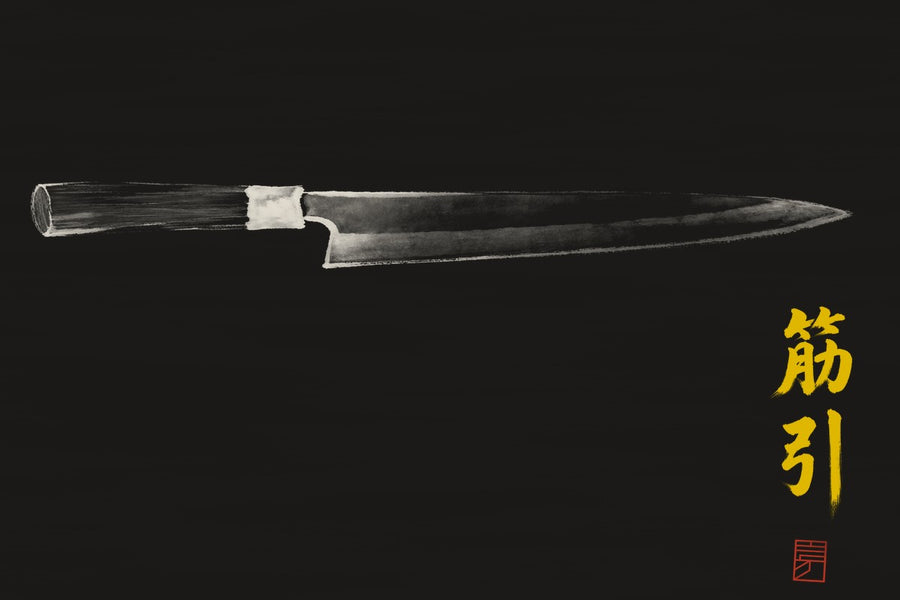
Sujihiki
筋引
Slicing knife · Double bevel
A long, narrow slicer for dividing large meat; Tojiro says it cuts sashimi too.
Read moreSG2 / R2
スーパーゴールド2
Stainless · Takefu Special Steel
Takefu powder stainless, 62+ HRC. Long edge; resists rust.
Read moreSanmai - Stainless Clad
三枚
3 layers · stainless clad
Hard core between two stainless layers, bare only at the edge; the cladding resists rust.
Read more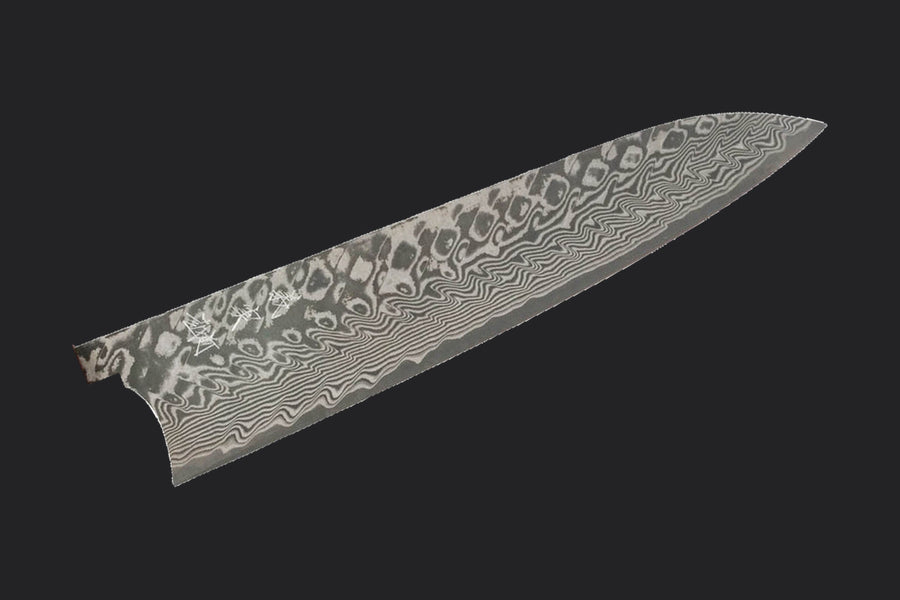
Etched
Acid-etched pattern
Acid darkens the layers at different rates to show the damascus. Heavy thinning fades it.
Read moreFrequently asked questions
What size sujihiki should I buy?
Sujihiki or yanagiba: which do I need?
SG2 steel knives at Knives and Stones
SG2 vs AS steel for kitchen knives — which is better?
R2 steel vs SG2 — are they the same?
How old is Saji Uchihamono?
You May Also Like
-
Takeshi Saji VG10 Rainbow Damascus Sujihiki 240mmRegular price $799.95Unit price
-
Nigara SG2 Tsuchime Matt Migaki Santoku 180mm Western Maple BurlRegular price $529.95Unit price
-
Nigara SG2 Tsuchime Matt Migaki Bunka 180mm Western Maple BurlRegular price $549.95Unit price
-
Nigara SG2 Kurouchi Tsuchime Gyuto 240mm Western IronwoodRegular price $649.95Unit price
-
Shiro Kamo Suminagashi SG2 Damascus Gyuto 240mm, Stabilized Curly Maple HandleRegular price $499.95Unit price
-
K&S Arare SG2 Nakiri 165mm by Iron Clad, Black Charcate HandleRegular price $279.95Unit price
-
Sukenari SG2 Honyaki Yanagiba 300mm, Ebony Handle Brass FerruleRegular price $2,399.95Unit price
-
Sukenari SG2 Honyaki Yanagiba 270mm, Ebony Handle Horn FerruleRegular price $2,199.95Unit price


