PRAHRAN STORE NOW OPEN · THU–MON · 10AM–6PM

Hatsukokoro  |  SKU: HS-ST-W2SLC-CK195

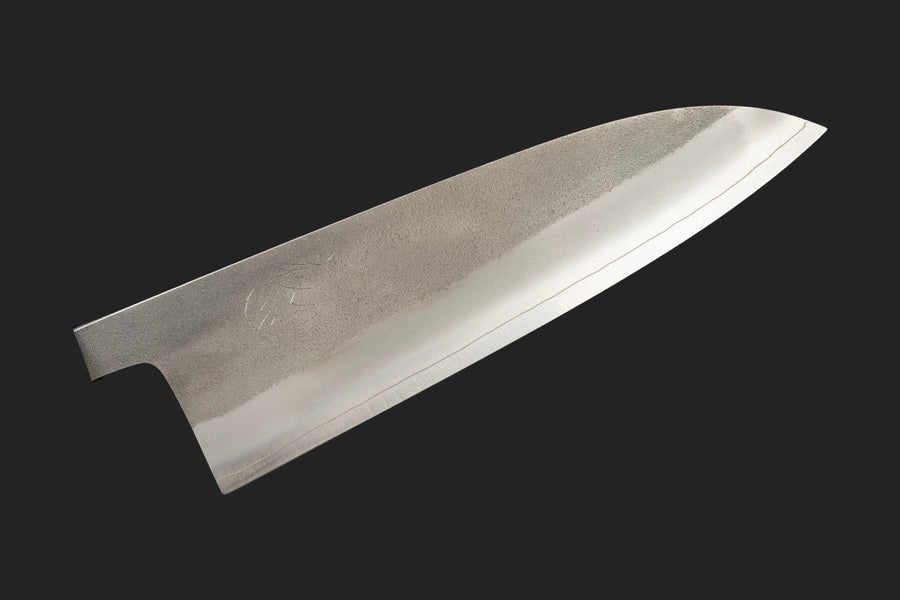
Hatsukokoro Sentan White 2 Stainless Clad Chinese Cleaver 195mm

Regular price $169.00

IMPORTANT: Carbon steel knives can rust or patina quickly if not cared for properly. They require regular cleaning, drying, and oiling. If you are unfamiliar with carbon steel maintenance, we recommend choosing a stainless steel option instead.

Sold out right now

Leave your email and we’ll send one message the moment it’s back in stock.

One email, no marketing. Privacy policy.

Availability

  • St Peters, NSW —
    2 Bishop St, Unit 2, St Peters NSW 2044
  • Crows Nest, NSW —
    107 West St, Shop 1, Crows Nest NSW 2065
    Pickup only
  • Prahran, VIC —
    180 Commercial Road, Shop 1, Prahran VIC 3181
    Pickup only
Detailed Specifications
Line Hatsukokoro Sentan White 2 Chinese Cleaver
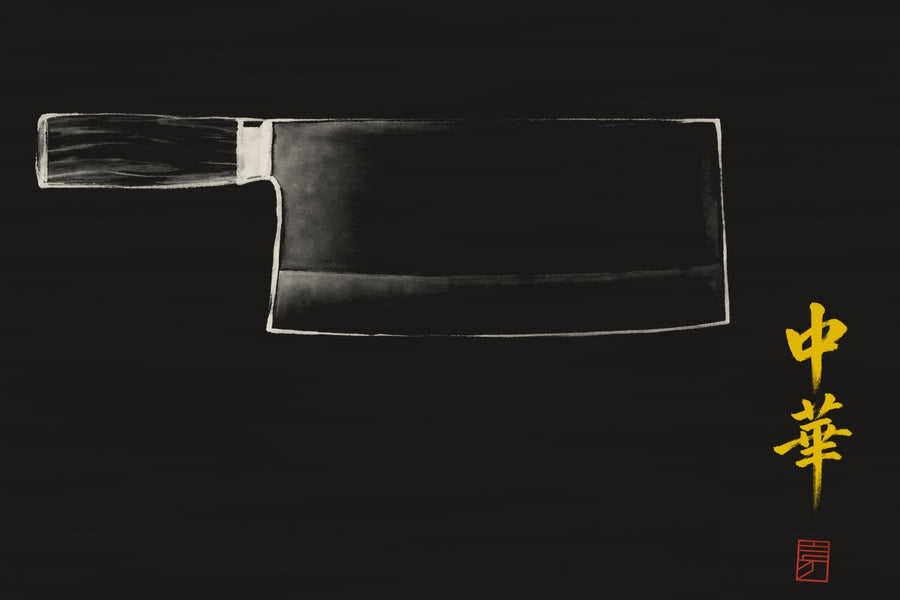
Profile Chuka (Cleaver) / Chinese cleaver
Bevel Type Double Bevel
Weight 309 g | 10.9 oz
Edge Length 193 mm | 7 19/32″
Heel Height 95 mm | 3 47/64″
Width @ Heel 3.5 mm | 9/64″
Width @ Mid 3.4 mm | 9/64″
Width @ 1cm from Tip 2.9 mm | 7/64″
Steel White 2 / Shirogami #2 | Carbon
Hardness (HRC) 60 - 64
Surface Finish Nashiji
Handle
Region Hyogo
Best for
  • Pro chefs
  • Enthusiasts
  • Free shipping for knives over AU$200 Australia wide.
  • World-wide shipping via DHL Express, 3 to 5 days.


The Sentan Chinese cleaver pairs a Shirogami #2 carbon steel core, hardened to 60 to 64 HRC, with stainless cladding. The cladding protects the outer surfaces while the cutting edge keeps the sharpening ease and bite of carbon steel, which is the combination most chuka buyers have been missing.

This is a true thin slicer: a tall, rectangular blade in the 195 to 200 mm range, ground thin behind the edge, at weights around 285 to 309 g. The defined tip handles scoring and carving while the flat edge takes heavy chopping, with no bone contact.

The core is reactive carbon steel, so the routine matters: wipe the blade and dry it immediately after use rather than leaving it on the wet edge of the sink. Used and cared for like that, the Sentan goes through a potato as nicely as a top Japanese gyuto, and it makes breaking down vegetables, herbs and portions of meat a one-knife job.

Pros Cons
  • Excellent performance
  • Thin behind the edge
  • Great for professionals
  • Need extra care
  • High budget
Care Instruction
  1. Don't cut hard things! Japanese knives are brittle so bone hacking is a NO NO!
  2. Wash with neutral detergent after use, and wipe dry;
  3. Please don't wash knife with dishwasher, it will damage the wood handle;
  4. Be careful not to leave the knife close to a heat source for a long time;
  5. It is a lot more dangerous to cut with a blunt knife than a sharp knife!
  6. It is best to sharpen a Japanese knife regularly on a waterstone.
  7. Oil the (carbon) knife if storing for an extended period of time to prevent rust.

Hatsukokoro

Rising star of the industry

Hatsukokoro as a brand works extensively with the Japanese kitchen knife industry. Through collaboration with makers and manufacturers across the Japan, they’ve designed and created a huge collection of different knives, covering every possible price range while having a great value in many of their product lines. Their capabilities to incorporate resources have built a strong relation with knife makers, and more and more are happy to send their knives down to Amagasaki and have them delivered across the world.

“The rapidly expanding new brand in the industry based in Amagasaki, offering great varieties by working close with different makers across entire Japan to the entire globe while innovating in product design and metal fabrication.”

Est. 2019 | 令和元年
Known for Wide product availability, good performance at a competitive price.
Website handk.co Instagram @handk_official Read more about Hatsukokoro

Hatsukokoro · Hyogo

Knife details

Frequently asked questions

Shirogami 1 vs shirogami 2 — what is the difference?

Shirogami 1 (White 1) has a higher carbon content than Shirogami 2 (White 2), roughly 1.3% vs 1.1%, making it the purer carbon steel and the one some craftsmen still regard as the best, though in practice the two have become harder to distinguish as modern metallurgy has made both quite pure.

White 2 (Shirogami #2) has about 1.1% carbon and a hardness range of 60-64 HRC; White 1 sits around 1.3% carbon. That 0.2% difference is the core spec gap. More carbon generally means you can push hardness higher and hold a keener edge, but it also makes the steel more brittle and less forgiving. White 2 trades a bit of that potential peak sharpness for slightly better toughness and ease of sharpening.

Shirogami 1 carries a certain prestige. Sukenari's Nobuo Hanaki once told me directly that they only use White 1 for their mizu-honyaki because it is the pure form of carbon steel, it carries that halo. Among traditional smiths, White 1 is still spoken of as the benchmark. That said, in recent years the improvement in metallurgical manufacturing has narrowed the real-world gap. The rumor is that both grades are now so pure that separating them in practice is no longer straightforward. I've also heard that Hitachi has stopped producing White 1, though I can't confirm that.

You May Also Like