PRAHRAN STORE NOW OPEN · THU–MON · 10AM–6PM

Takamura  |  SKU: TKMR_CMTCM_SA170

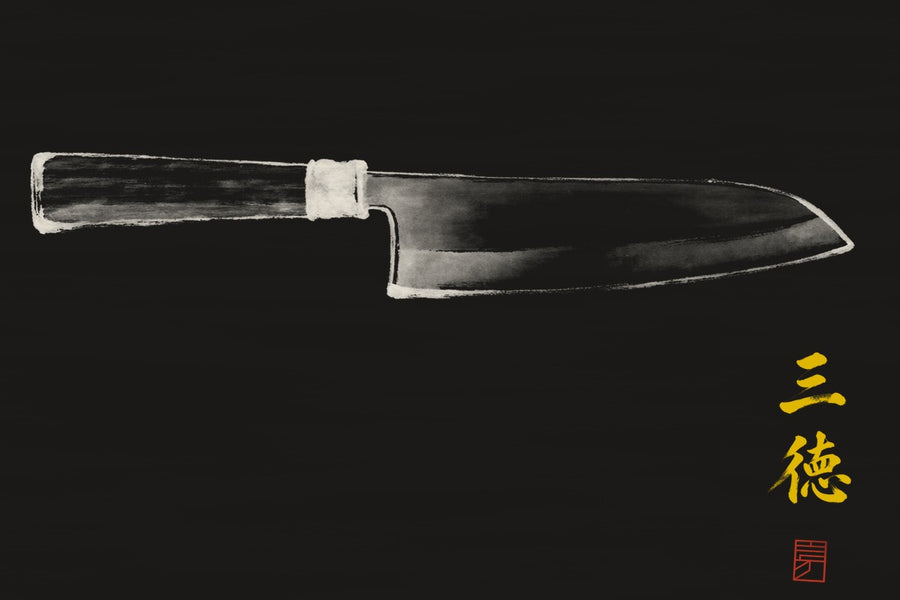
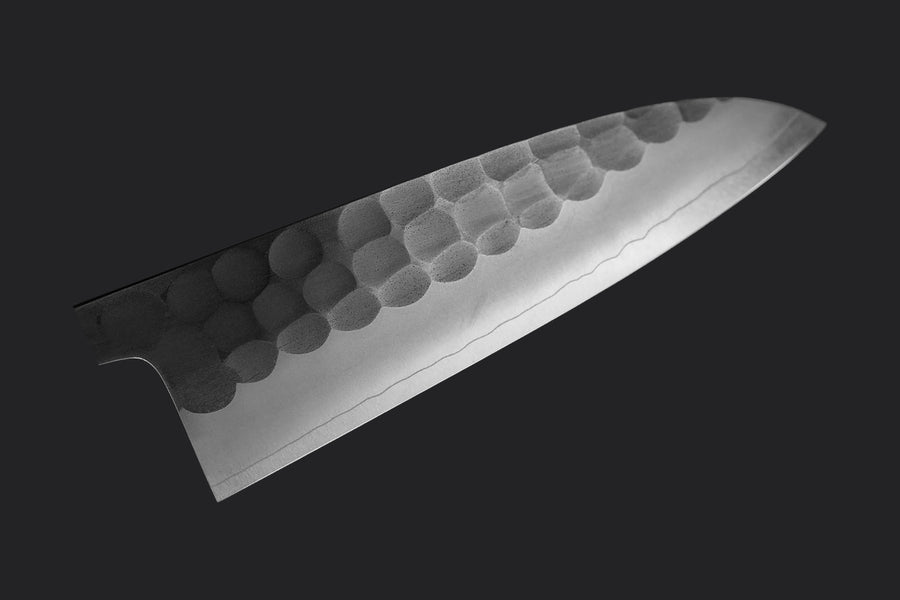
Takamura Chromax Tsuchime Santoku 170mm

Regular price $208.00

Sold out right now

Leave your email and we’ll send one message the moment it’s back in stock.

One email, no marketing. Privacy policy.

Availability

  • St Peters, NSW —
    2 Bishop St, Unit 2, St Peters NSW 2044
  • Crows Nest, NSW —
    107 West St, Shop 1, Crows Nest NSW 2065
    Pickup only
  • Prahran, VIC —
    180 Commercial Road, Shop 1, Prahran VIC 3181
    Pickup only
Detailed Specifications
Line Takamura Chromax Tsuchime
Profile Santoku / Santoku
Bevel Type Double Bevel
Weight 152 g | 5.4 oz
Edge Length 172 mm | 6 49/64″
Heel Height 46 mm | 1 13/16″
Width @ Heel 1.5 mm | 1/16″
Width @ Mid 1.5 mm | 1/16″
Width @ 1cm from Tip 0.8 mm | 1/32″
Steel Chromax | Semi-stainless
Blade Construction Sanmai - Stainless Clad
Hardness (HRC) 60 - 62
Surface Finish Tsuchime
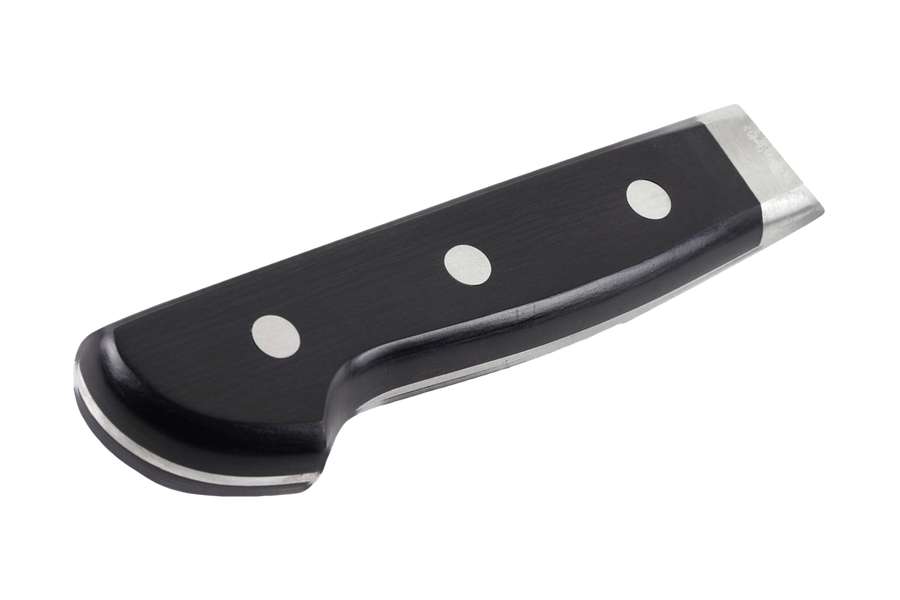
Handle Western Pakka Wood with Bolster
Region Echizen
Best for
  • Pro chefs
  • Enthusiasts
  • Free shipping for knives over AU$200 Australia wide.
  • World-wide shipping via DHL Express, 3 to 5 days.


•Signature blade geometry from Takamura: One of the best performing knives that excels at cutting dense produces. Achieved through very low thickness (1.5mm at spine across the entire knife) and a hand sharpened bevel with just enough convex for food release.

•Chromax steel, a semi-stainless steel that is almost identical to A2/SKD, with some resistance to rust than pure carbon steel but retains the ability to gain a very sharp edge.

•Great consistency in finish, clean Migaki bevel that forms nice contrast against textured Tsuchime

•Excellent value for a Santoku with top notch performance

•Limited availability, like any other Takamura knives

Pros Cons
  • Excellent performance
  • Thin behind the edge
  • Budget friendly
  • Prone to rust
  • A little bit brittle
Care Instruction
  1. Don't cut hard things! Japanese knives are brittle so bone hacking is a NO NO!
  2. Wash with neutral detergent after use, and wipe dry;
  3. Please don't wash knife with dishwasher, it will damage the wood handle;
  4. Be careful not to leave the knife close to a heat source for a long time;
  5. It is a lot more dangerous to cut with a blunt knife than a sharp knife!
  6. It is best to sharpen a Japanese knife regularly on a waterstone.
  7. Semi-stainless steel won't rust easily but may still patina

Takamura Hamono Seisakujo

Takamura Hamono, an Echizen workshop since 1945

Takamura Hamono is the Echizen workshop known by its mark Takamura saku (高村作), founded in December 1945 by its first generation after the Second World War. Its stated creed is good material, good forging and heat treatment, and good sharpening, and it says it makes its knives start to finish in house.

Read more

Takamura's own history page writes the founder's name only in kanji (高村勇); we know him as Isamu Takamura. The page says he was born in 1910, began smith training at 13 in 1923, and in December 1945 set up the forge that is now Takamura Hamono. Its early products were nakiri and farm blades, and as the times changed, home and professional kitchen knives became its main work. In 1954 the second generation, Toshiyuki, set out to make a stainless knife that cuts well, and the workshop forged stainless knives in integrated production from 1958, with tsuchime stainless knives following in 1964.

Its history lists the powder steel milestones: powder high-speed steel clad knives from 1982, powder stainless high-speed steel clad knives from 1985, and forged powder stainless Damascus knives from 1987. Takamura says it began making knives in such new materials earlier than anyone else. The history also records small ceremonial knives the workshop made for Ise Jingu, including for the Shikinen Sengu. Toshiyuki received the Fukui governor's award for excellent skill in 1987, was named a Contemporary Master Craftsman in 2015 and received the Medal with Yellow Ribbon in 2016. Takamura says its professional knives sell in more than 20 countries, including Germany, Sweden and Australia.

Its history also lists the Brazen TAKAMURA professional line (2002) and the Uchigumo forged powder stainless Damascus (2003), and the company says its iiza yobocho series won the iF Design Award 2017 gold, a first for Japan's knife industry. We list its SG2 Migaki in gyuto and santoku, and the Chromax Tsuchime santoku.

“An Echizen workshop making kitchen knives since 1945, known by its mark Takamura saku.”

Est. 1945 | 昭和20年
Known for Powder steel knives, which its history lists from 1982
Website takamurahamono.jp Instagram @terukazutakamura Read more about Takamura Hamono Seisakujo

Takamura Hamono Seisakujo · Echizen

Knife details

Frequently asked questions

Gyuto or santoku: which should I choose?

Both are all-purpose Japanese knives, and for most home cooks either will handle the bulk of daily prep. The choice comes down to length, blade shape, and how you like to cut.

A gyuto is the Japanese chef's knife, with a gently curved edge that lets you rock and slide through cuts as well as chop. Tojiro's guide to Western knife shapes gives 150 to 210mm as the household size for a gyuto and up to 360mm for professional use. The extra length and pointed tip give you reach and versatility, from proteins to large produce.

Tojiro's guide to Japanese knife shapes gives 165 to 170mm as the household size for a santoku, which has a flatter profile and a rounded sheep's-foot tip. It rewards a straight up-and-down push cut, feels nimble in smaller hands or tight kitchens, and is the classic Japanese household knife.

Rule of thumb: choose a gyuto if you want one do-everything knife with more reach, or a santoku if you prefer a compact, easy-to-control blade. Plenty of our customers end up owning both.

Rock chop or up-and-down chop: which knife shape suits me?

Match the shape to your stroke. Rock chopping keeps the tip on the board and rolls the curved belly through the food, so a gyuto or a Western chef's knife suits it, and Japanese knives rock fine as long as you rock gently.

Up-and-down chopping, the Chinese style, wants a straight run of edge, so a nakiri, usuba, santoku or bunka suits it better; a curved edge chopped straight down easily leaves pieces joined. Neither shape is better; it depends on how you cut.

What does santoku mean?

A Japanese dictionary explains the name of the santoku (三徳包丁) as coming from the three things it handles: meat, fish and vegetables. The same dictionary entry points from the santoku to the bunka (文化包丁), treating the two as one knife.

One Japanese knife maker guide distinguishes the two by the tip. It says that in the Showa era the bunka was made with its tip cut at an angle, and the santoku came after it by rounding that tip.

Is Chromax stainless?

Not fully, which is why our Chromax steel page calls it semi-stainless. Takefu calls this stainless-clad composite Stainless Chromax: a core of its V-Gin1, Gin2 or V-Gin3B steel clad in soft stainless steel, with the core forming the cutting edge.

Those core steels carry 4.5 to 8% chromium, under the 10.5% that defines stainless steel, so the edge can rust, though Takefu says V-Gin1 resists corrosion far better than carbon steel. Dry the knife after washing.

What does the stamp on a Takamura blade say?

The workshop is known by the mark 高村作, read Takamura saku, which means made by Takamura. The workshop's own site introduces Takamura Hamono Seisakujo by that mark.

The site tells how the founder, Isamu, set the workshop up after the Second World War, and speaks of his three sons.

You May Also Like